
Auto Dealers Email List
Popular Data Lists
- Specialty Lists
- Business Lists
- Consumer Lists
- Charity Donors Mailing Lists
- New & Used Car Dealerships Contact Database
- Franchise Dealers Contact Database
- Non-Profit Donors List
- Animal Welfare Donors List
- Affluent Travel Customer Mailing List
- Affluent Client Leads for Financial Advisors
- Affluent Household Database – USA
- Wealthy Donors Contact Database
Send us a message
Fields marked with an * are required
Auto Dealers Email List: Targeted Contact Data for the Automotive Retail Sector
Why Selling to Dealerships Is Harder Than It Looks
According to NADA Data 2025, the United States has 16,990 franchised new-car dealerships generating approximately $1.3 trillion in total annual sales. Add independent used car lots, commercial vehicle dealers, and multi-brand dealer groups and the automotive retail sector represents one of the most commercially active B2B target markets in the country.
Yet reaching dealership decision makers is notoriously difficult. A franchise dealership has a Dealer Principal, a General Manager, and a full layer of department heads covering finance, service, parts, and marketing. The person who decides whether to take a meeting with your company depends entirely on what you are selling. A DMS vendor needs the Dealer Principal. An F&I product company needs the Finance Director. A digital marketing agency needs the Marketing Manager. A parts supplier needs the Parts Director.
Independent lots present a different problem. They are typically owner-operated with no corporate email domain, no LinkedIn presence, and no published org chart. Standard B2B databases were not built for either profile.
This is precisely why a well-sourced, role-specific auto dealers email list is not just useful for vendors in this space. It is the difference between a campaign that reaches real buyers and one that lands in a general inbox and never moves forward.

What an Auto Dealers Email List Contains
A verified auto dealers email list is a structured B2B database of automotive retail contacts segmented by role, dealership type, brand franchise, geography, and business size. Unlike a generic business directory, a purpose-built dealership list is designed to route outreach to the specific individual inside each rooftop who holds purchasing authority for the product or service being offered.
Core data fields typically included in an auto dealers contact list:
- Full name and direct email address of the contact
- Job title and department (Dealer Principal, General Manager, Finance Director, Service Manager, Parts Director, Marketing Manager, Fleet Sales Manager)
- Dealership name and brand franchise (Ford, Toyota, BMW, Chevrolet, and others)
- Dealership type: new car franchise, independent used car, certified pre-owned, commercial vehicle, or multi-brand dealer group
- Physical address, city, state, and ZIP code
- Direct phone number and mobile number where available
- Number of locations operated by the dealer group
- Annual revenue tier or volume classification
- DMS platform in use, where data is available
The value of this list is not in the volume of contacts. It is in the specificity. Reaching a General Manager at a Toyota franchise in Texas is a completely different campaign than reaching the owner of an independent pre-owned lot in Ohio. A good list treats them as separate targets with separate data profiles.
Franchise Dealerships vs. Independent Lots: Why the Data Differs
One of the most important distinctions in automotive retail contact data is the difference between franchise dealerships and independent used car operations. These two segments require very different data sourcing strategies, and conflating them in a single campaign almost always reduces results.
Franchise dealerships operate under manufacturer agreements. They are licensed by a brand, required to meet facility and training standards, and must use OEM-certified software systems. They tend to have defined org structures, formal vendor evaluation processes, and department-level decision making. A franchise dealer buying a new F&I product, a CRM platform, or a reconditioning software system will typically involve multiple stakeholders before a contract is signed.
Independent used car lots operate differently. Most are small businesses with a single owner who makes every purchasing decision. They buy based on price, speed, and relationship rather than through a formal vendor evaluation. Their contact information is harder to find through standard B2B databases because they have limited corporate digital footprint.
A properly segmented auto dealers email list will allow you to separate these two audiences and build messaging that reflects how each actually makes buying decisions. Sending a franchise-level enterprise pitch to an independent lot owner wastes the contact. Sending a simplified, relationship-first message to a Dealer Principal at a multi-location group undersells your offering.
Key Decision Maker Roles in Automotive Retail
Understanding which title to target is the single most important segmentation decision you will make before running a campaign against a dealership list. Here is how purchasing authority breaks down across the most common roles:
- Dealer Principal: The licensed owner of the franchise. Controls all major vendor relationships, capital investment decisions, and any new product categories entering the dealership. The right contact for DMS platforms, floor plan financing, facility upgrades, and major technology investments.
- General Manager: Runs day-to-day operations across all departments. Often involved in vendor renewals and operational technology decisions. The right contact for DMS add-ons, CRM tools, reconditioning software, and staffing solutions.
- Finance Director (F&I Manager): Controls the finance and insurance office. Evaluates and selects F&I products, lender relationships, menu software, and deal desking tools. One of the highest-influence roles for product vendors targeting per-deal revenue.
- Service Manager: Oversees the fixed ops department. Makes or heavily influences purchasing decisions for service scheduling software, parts procurement, technician training, and aftersales technology.
- Parts Director: Controls parts inventory purchasing. The right target for parts suppliers, inventory management platforms, and cataloguing tools.
- Marketing Manager: Manages the dealership’s marketing budget and vendor relationships across digital advertising, SEO, social media, email, and video. The right contact for agencies, advertising platforms, and reputation management vendors.
- Fleet Sales Manager: Handles commercial and fleet vehicle sales. Relevant for fleet management software vendors, commercial vehicle financing companies, and fleet-specific technology providers.

Who Buys Auto Dealer Email Lists and Why
The range of vendors and service providers who use auto dealer contact data for outreach is broad. The automotive retail sector is supported by an entire ecosystem of B2B suppliers, and virtually all of them need direct access to specific roles inside dealerships to grow their business.
- Dealer Management System vendors: DMS platforms are the operational core of every dealership. CDK Global and Reynolds and Reynolds have historically dominated US market share, but cloud-native challengers are actively competing for the business. DMS vendors use dealership lists to identify rooftops running competitor systems and target them with upgrade outreach.
- F&I product companies: Finance and insurance products, including extended warranties, GAP insurance, tire protection, and appearance packages, are sold at the point of vehicle delivery. F&I product vendors need direct access to Finance Directors and Dealer Principals across franchise and independent dealerships.
- Digital marketing agencies: Dealerships spend heavily on advertising. Agencies specialising in automotive digital marketing, SEO, paid search, social media, and video use dealership contact lists to prospect for new clients at scale.
- Parts and accessories suppliers: OEM and aftermarket parts suppliers use auto dealer lists to reach Parts Directors and Service Managers at dealerships evaluating new supplier relationships or alternative sourcing.
- Automotive training and certification providers: Sales training companies, compliance training providers, and manufacturer-approved certification programs use dealership contact lists to reach GMs, Sales Managers, and HR leads.
- Insurance and liability coverage providers: Dealers carry significant insurance obligations covering inventory, liability, employee coverage, and cyber risk. Insurance providers use dealership lists to reach Dealer Principals and business managers evaluating their coverage.
- Reconditioning and vehicle preparation vendors: Detailing services, PDR providers, window tinting companies, and paint protection vendors use dealership lists to reach Service Managers and Used Car Directors.
- Technology and SaaS vendors: CRM platforms, inventory pricing tools, digital retailing software, service scheduling systems, and key control platforms all rely on dealership contact data to reach the right department head for each product category.
How EV Adoption Is Creating New Decision Maker Roles
The shift toward electric vehicles is changing the structure of automotive retail in ways that have direct implications for anyone building a dealership outreach list. Traditional franchise dealerships built around combustion vehicles are adding new roles and new vendor relationships to handle EV inventory, charging infrastructure, technician certification, and customer education.
EV-focused vendors, charging equipment suppliers, battery technology training providers, and software companies building tools for EV service and diagnostics need dealership contact data that identifies rooftops actively selling or transitioning to electric vehicle lines. A static, undifferentiated auto dealer list cannot support this kind of targeting.
A well-maintained dealership database tracks franchise brand alongside inventory type and allows vendors to isolate, for example, all Ford franchise dealers who have added F-150 Lightning to their inventory, or all Chevrolet dealers who are certified for Ultium platform servicing. This is the level of segmentation that drives results in the current automotive retail environment.
Segmentation Options for Auto Dealer Contact Lists
A quality auto dealers email list can be filtered across multiple dimensions to match your campaign to the specific profile of dealerships most likely to convert. Common segmentation options include:
- By dealership type: New car franchise, independent used car, certified pre-owned, commercial vehicle dealer, powersports dealer, RV dealer, or multi-brand dealer group.
- By franchise brand: Ford, Toyota, General Motors brands, Honda, BMW, Mercedes-Benz, Stellantis brands, and others. Franchise-specific segmentation is essential for vendors whose products are OEM-relevant or brand-certified.
- By role or job title: Dealer Principal, General Manager, Finance Director, Service Manager, Parts Director, Marketing Manager, Fleet Sales Manager, or Used Car Director.
- By geography: State, city, metro area, or ZIP code. Local and regional vendors typically need geographic segmentation more than national ones do.
- By dealership size: Single rooftop vs. multi-location dealer group. Large dealer groups have centralised purchasing for many categories, which changes the decision-making dynamic and the contact you need to reach.
- By revenue tier: Useful for vendors whose product pricing or minimum contract value has a floor that makes small independent lots a poor fit.
- By DMS platform in use: Available for a subset of contacts, this filter is particularly valuable for technology vendors whose product integrates with or competes against specific DMS platforms.
Multi-Channel Outreach Using Dealership Contact Data
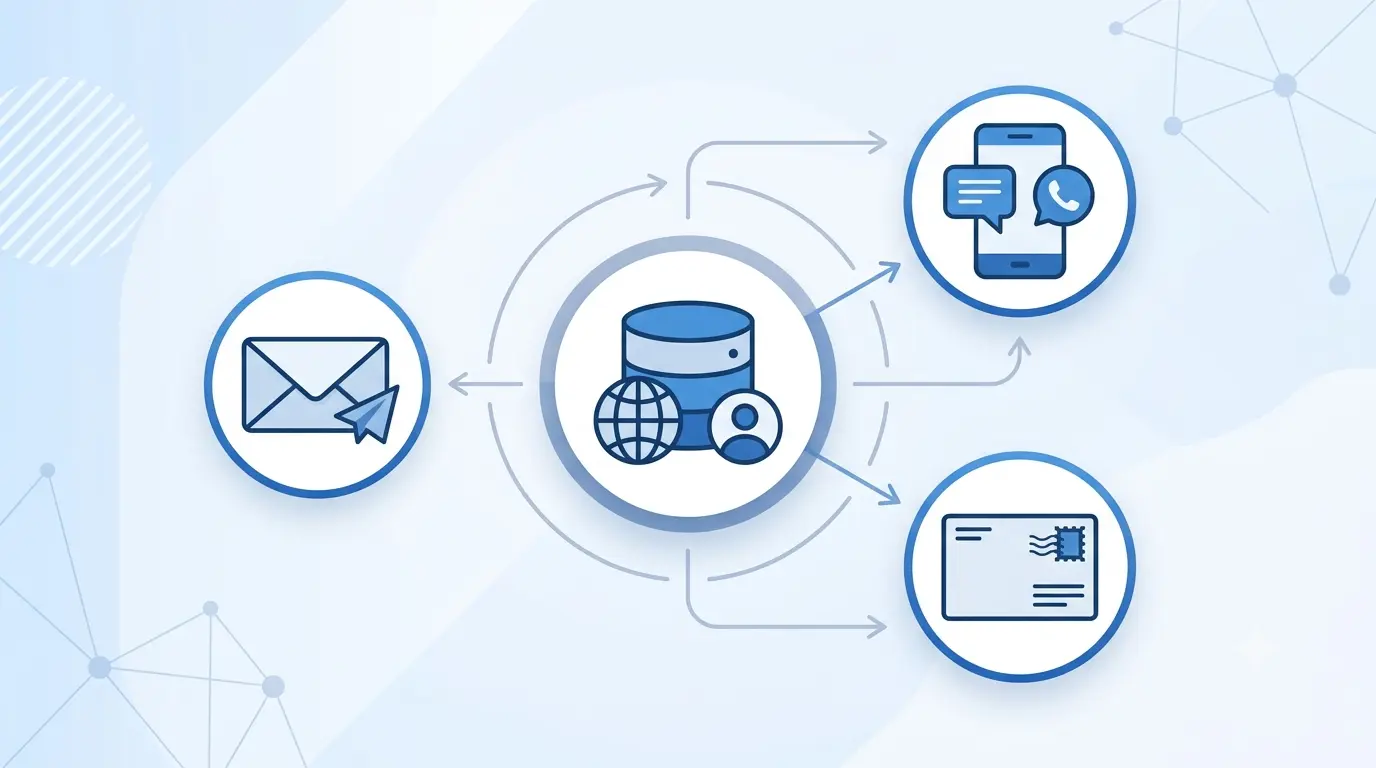
Auto dealer contact lists are not limited to email campaigns. Dealership decision makers are busy professionals who filter cold email aggressively. The vendors who consistently win new dealership business combine email with at least one additional outreach channel, using the same verified contact data across all of them.
Direct mail remains highly effective for reaching Dealer Principals and General Managers. A physical piece sent to a named executive at the dealership address cuts through digital noise in a way email cannot. This is especially useful for high-value initial outreach before a follow-up email sequence begins.
Telemarketing to direct-dial numbers at the dealership level allows sales teams to reach Service Managers and Parts Directors who are often on the shop floor and not checking email during the day.
Coordinating email, direct mail, and phone outreach against the same verified contact record increases reach rate significantly without adding new contacts to the campaign. The contact data you already hold works harder across three channels than it does against one.
What Separates a Verified List From a Generic Directory
Many vendors in the auto dealer data market compile their lists by scraping public business directories, state dealer license registries, and manufacturer locators. The result is a database that tells you a dealership exists and gives you a main phone number, but nothing about who to speak with, what role they hold, or whether the contact information is current.
A verified auto dealers email list is built differently. Verification involves cross-referencing multiple data sources, confirming that email addresses are active, and matching job titles to actual individuals at specific rooftops rather than mapping a title to a dealership address and hoping for the best.
Working through an independent list broker adds a further layer of value. Rather than being limited to one provider’s database, a broker accesses lists from across the market and can combine sources to fill geographic gaps, add roles that one database covers better than another, or build a custom file that no single vendor could produce on their own. With access to more than 70,000 lists across providers, the options available through a broker are substantially wider than anything a single-source data vendor can offer.
List Access Options
Depending on your campaign structure and how you plan to use dealership contact data over time, there are three main access models available:
- List rental: Access to a defined set of dealership contacts for a single campaign use. The right starting point for vendors testing a new segment, geographic market, or outreach channel before committing to a larger investment.
- List purchase: Outright ownership of the contact records for ongoing use across multiple campaigns, sales cycles, and outreach channels. The right choice for vendors running continuous prospecting against the dealership market.
- Custom list build: A purpose-built file assembled across multiple data sources to match your exact targeting criteria: specific franchise brands, roles, geographies, dealer group sizes, or DMS platforms. The right option when no standard list fully matches your ideal customer profile.
Compliance Considerations
Any B2B outreach campaign targeting auto dealerships must comply with the regulations governing each country where the contacts are located. In the United States, federal and state-level privacy frameworks apply to both email and telemarketing outreach. In Canada, CASL sets rules for commercial electronic messages. In the UK, PECR and the Data Use and Access Act 2025 govern direct marketing communications.
Telemarketing campaigns targeting dealerships must also account for Do Not Call registrations and scrubbing requirements before dialling. A reputable list provider will supply data that accounts for these requirements and can confirm the compliance framework under which the list was compiled.
Responsibility for outreach compliance sits with the organisation running the campaign, not the list provider. Make sure your email sending practices, opt-out handling, and follow-up cadences are aligned with the regulations governing your target market before launching.
Frequently Asked Questions
It is a verified B2B database containing contact information for decision makers at automotive retail businesses, including new car franchise dealerships, independent used car lots, commercial vehicle dealers, and multi-brand dealer groups. It typically includes names, direct email addresses, job titles, phone numbers, dealership name, franchise brand, and location data.
It depends on what you are selling. DMS platforms and major capital decisions go to the Dealer Principal. F&I products go to the Finance Director. Service and parts technology goes to the Service or Parts Manager. Marketing and advertising services go to the Marketing Manager. If you are unsure, targeting the General Manager is a reasonable default for initial outreach at franchise dealerships.
Yes. A well-segmented auto dealers list can be filtered by brand franchise so you can isolate Toyota dealers, Ford dealers, BMW dealers, or any other OEM network. This is particularly useful for vendors whose products are OEM-certified or brand-specific.
Franchise dealerships operate under a manufacturer license and are required to meet brand standards, use OEM-certified systems, and report to the manufacturer. Independent dealers are privately owned businesses that buy and sell used vehicles without a manufacturer affiliation. They have different org structures, purchasing processes, and data availability.
Yes. A full-contact dealership list includes mailing addresses and phone numbers alongside email, allowing you to run a coordinated multi-channel campaign from a single verified dataset.
Ask your provider how frequently the data is verified and when the records were last updated. Data freshness matters especially for job titles at dealerships, where staff turnover in roles like Finance Director and Marketing Manager can be high.
Yes. Multi-location dealer groups typically have centralised purchasing for technology, insurance, and operational services. Decision making is concentrated at the group level rather than the individual rooftop. Targeting a Regional Director of Operations or a Chief Operating Officer at a dealer group is more efficient than reaching individual GMs at each location.
Yes, provided the data is sourced ethically and your outreach complies with the regulations governing each country where the contacts are located. Working with a reputable list broker who can confirm the compliance framework behind their data is the best way to protect your campaign.
Why Work With Prospects Influential
Prospects Influential is an independent list broker with more than 30 years of experience in direct marketing data. We work with vendors, agencies, and service providers selling into the automotive retail sector to source contact data that matches their specific product category, target role, and geographic market.
Unlike single-source data vendors who can only offer what is in their own database, we access more than 70,000 lists across multiple providers. That means we can build a dealership contact file tailored to your exact franchise, role, location, and dealer group size requirements rather than asking you to adapt your campaign to whatever a single database happens to contain.
All contact data we supply is compliant with the regulations governing each country where the contacts reside. We serve clients across the United States and Canada, and our team is available to help you identify the right list structure before you commit.
To request a list count or discuss your auto dealer outreach campaign, contact our team for a consultation.