Every outreach campaign lives or dies on the quality of its contact data. Reach the right decision maker through a channel they actually use, and response rates climb. Reach the wrong person, or reach the right person the wrong way, and you burn your sender reputation, waste budget, and in some cases break the law.
The pressure to fill a pipeline pushes many marketers toward shortcuts: scraped databases, bought lists of unknown origin, and personal email addresses harvested from social platforms. Those shortcuts carry real costs. Spam complaints rise, deliverability drops, and regulators in the US, Canada, and Europe now enforce privacy rules with meaningful penalties.
You do not have to choose between effective prospecting and respect for privacy. This guide walks through the ethical ways to find professional contact details, how to verify a professional profile without touching anyone’s private email, and the privacy guidelines that keep your outreach compliant on both sides of the border.
What Counts as Ethical When Finding Professional Contact Information?
Ethically finding professional contact information means collecting business contact details from public, consented, or properly licensed sources, using them only for legitimate professional communication, respecting opt-outs and platform rules, and complying with laws such as CAN-SPAM, CASL, TCPA, and GDPR. If someone deliberately withheld a detail, ethical research does not try to extract it.
Three quick tests separate ethical research from everything else:
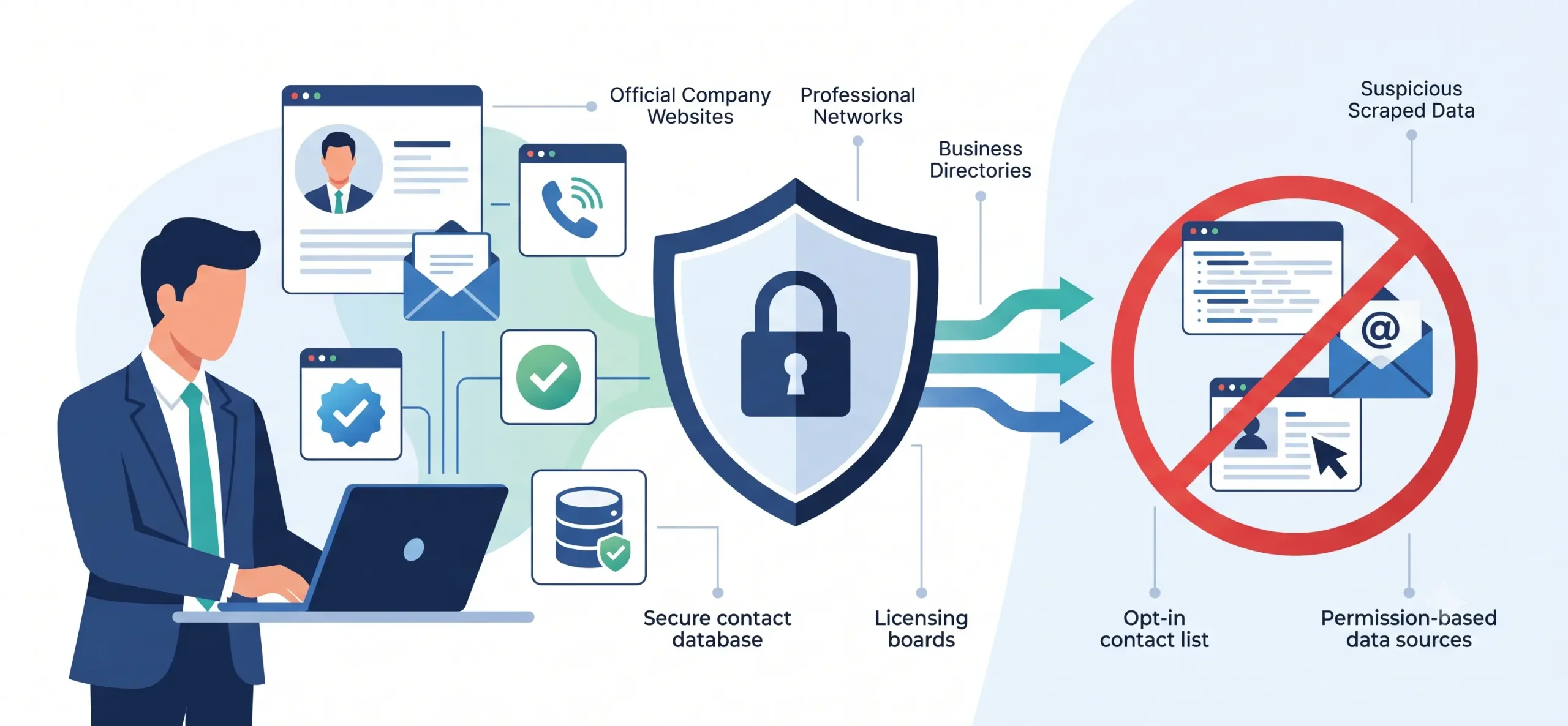
The source test. Did the person publish this detail for professional contact, consent to share it, or agree to its licensed use? Company bios, licensing boards, and opt-in databases pass. Breach dumps and scraped profiles fail.
The purpose test. Are you using a business detail for relevant business communication? A work email used for a relevant B2B offer passes. A personal mobile number used for cold sales texts fails.
The respect test. Would the person be surprised or upset to learn how you found them? If honesty about your method would embarrass you, the method is wrong.
Keep those three tests in mind and nearly every tactic below sorts itself into the right column.
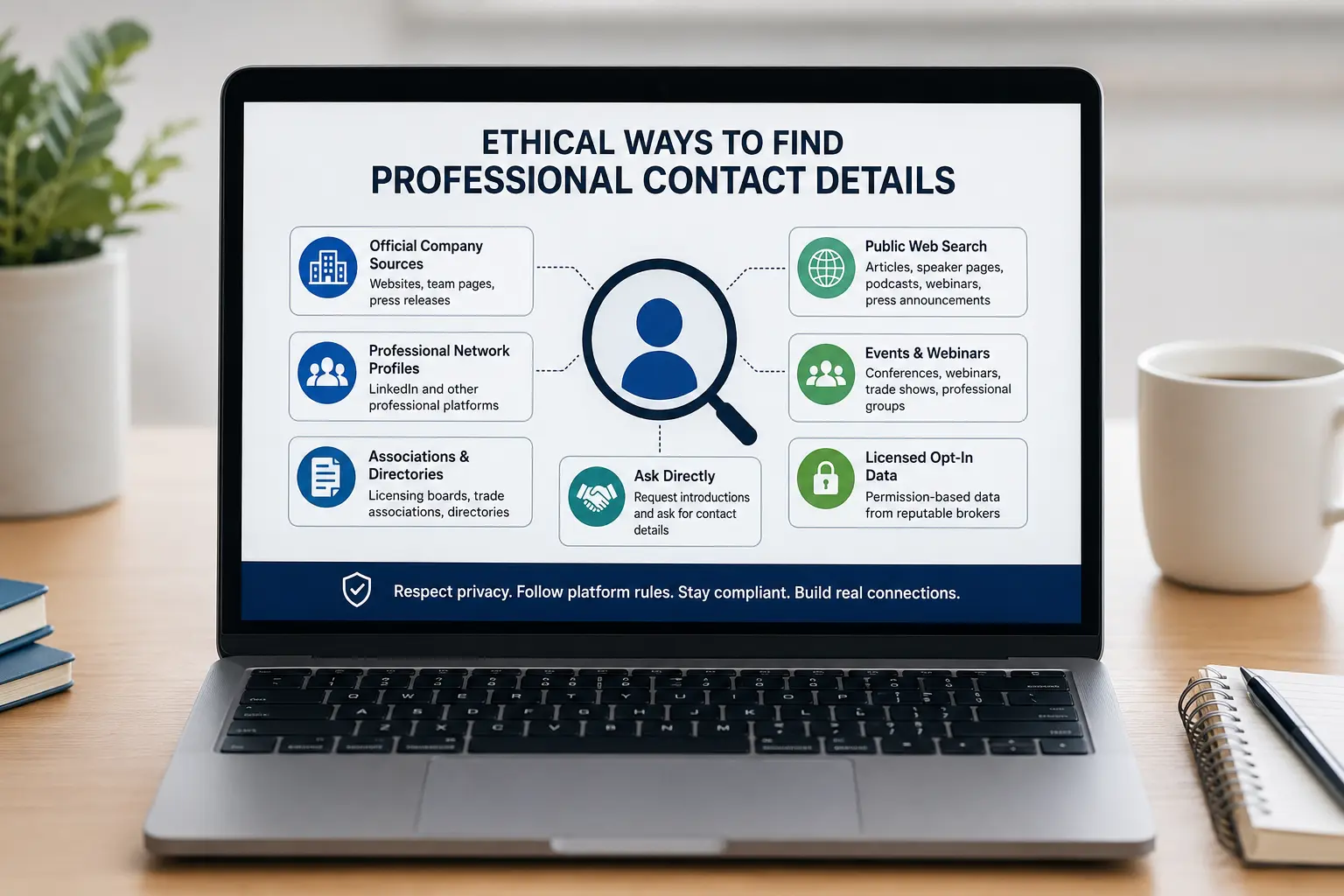
7 Ethical Ways to Find Professional Contact Details
1. Start With Official Company Sources
Company websites remain the most underused source of legitimate contact data. Team pages, “About Us” sections, press releases, investor relations pages, and media kits all publish names, titles, and contact details specifically so people can get in touch. A detail published on an official company page carries implicit consent for professional contact, which makes it the cleanest starting point available.
Role-based addresses (sales@, media@, info@) are fine for first contact. A polite note to the right department, asking to be connected with the right person, often produces a direct address given willingly.
2. Use Professional Network Profiles the Way They Were Designed
Platforms like LinkedIn give every member control over who sees their contact information. Working within those controls is the ethical path: review the contact info section on profiles you can access, send a personalized connection request that explains why you want to connect, and once connected, ask for the best way to reach them.
What crosses the line is automated scraping and bulk extraction, which violate platform terms of service and, depending on jurisdiction, privacy law. If a person hides their contact details behind privacy settings, that choice deserves respect.
3. Check Professional Associations, Licensing Boards, and Directories
Regulated professionals often publish contact details as a condition of their license. State and provincial licensing boards list physicians, dentists, lawyers, real estate agents, insurance brokers, and financial advisors, complete with practice addresses and often phone numbers. Trade associations, chambers of commerce, and industry member directories work the same way: professionals join them to be found.
These sources serve double duty. They give you a contact channel and confirm that the person holds the credential their profile claims.
4. Search Public Web Sources With Intent
A surprising amount of professional contact information sits in plain sight: article bylines, conference speaker pages, published research papers, podcast show notes, webinar panels, and company press announcements. Targeted searches combining a name, company, and terms like “contact” or “email” surface details people published themselves. Our full guide to finding email addresses and phone numbers covers these search techniques step by step.
The ethical boundary here is simple: information someone published about themselves in a professional context is fair to use for professional contact. Information published about them by a third party, or exposed without their knowledge, is not.
5. Meet People Where They Choose to Be Reached
Industry events, webinars, trade shows, and professional groups exist so that professionals can connect. A business card handed over at a conference is consent in its oldest form. Registrations for webinars you host, downloads from your own website, and inbound inquiries all create first-party contact data with clear, documented permission.
First-party data built this way converts better than anything you can find or buy, because the relationship started with a genuine expression of interest.
6. License Permission-Based Data From a Reputable Broker
When you need scale, permission-based licensed data is the ethical alternative to scraping. Business opt-in email listscontain professionals who agreed to receive relevant third-party offers, with the opt-in date and source documented for every record.
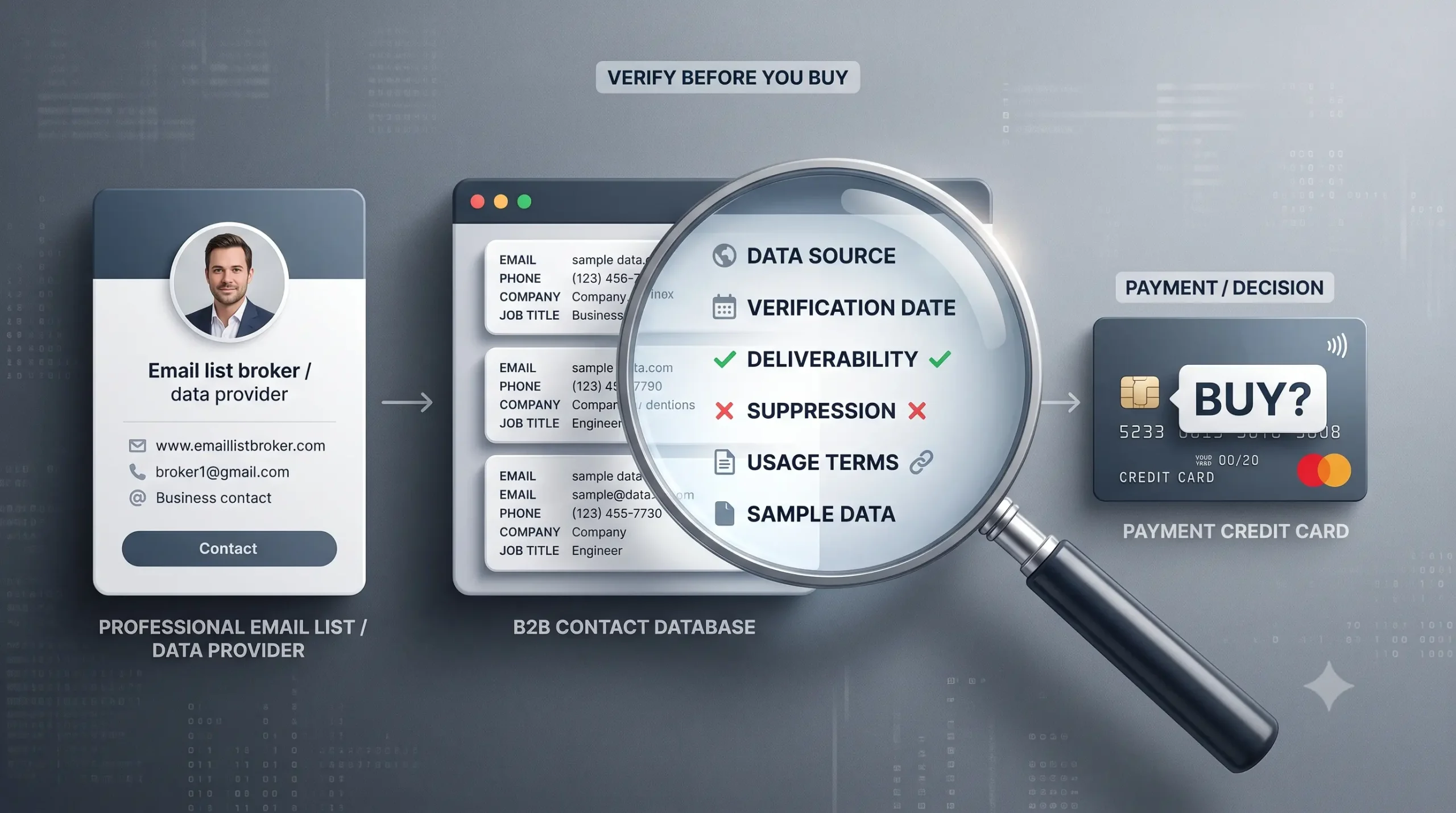
The key is vetting the source. Before licensing any list, ask where the data originated, when consent was collected, how often records are verified, and whether suppression files (do-not-call, deceased, undeliverable) are applied. An independent broker with no allegiance to a single data compiler can answer those questions across dozens of sources and steer you away from files that fail the provenance test. That vetting role is exactly what direct marketing list brokers exist to perform.
7. Ask Directly and Make It Worth Their Time
The most ethical method costs nothing: ask. Request an introduction through a mutual connection, reply to something the person published, or send a short message explaining who you are and why a conversation benefits them. When someone shares their details in response, you hold contact data with the strongest consent possible.
Direct asks scale poorly, but they close the loop on every other method. However you first found someone, your opening message can invite them to confirm the best channel, which converts a researched detail into a consented one.
How Do You Verify a Professional Profile Without Using an Email?
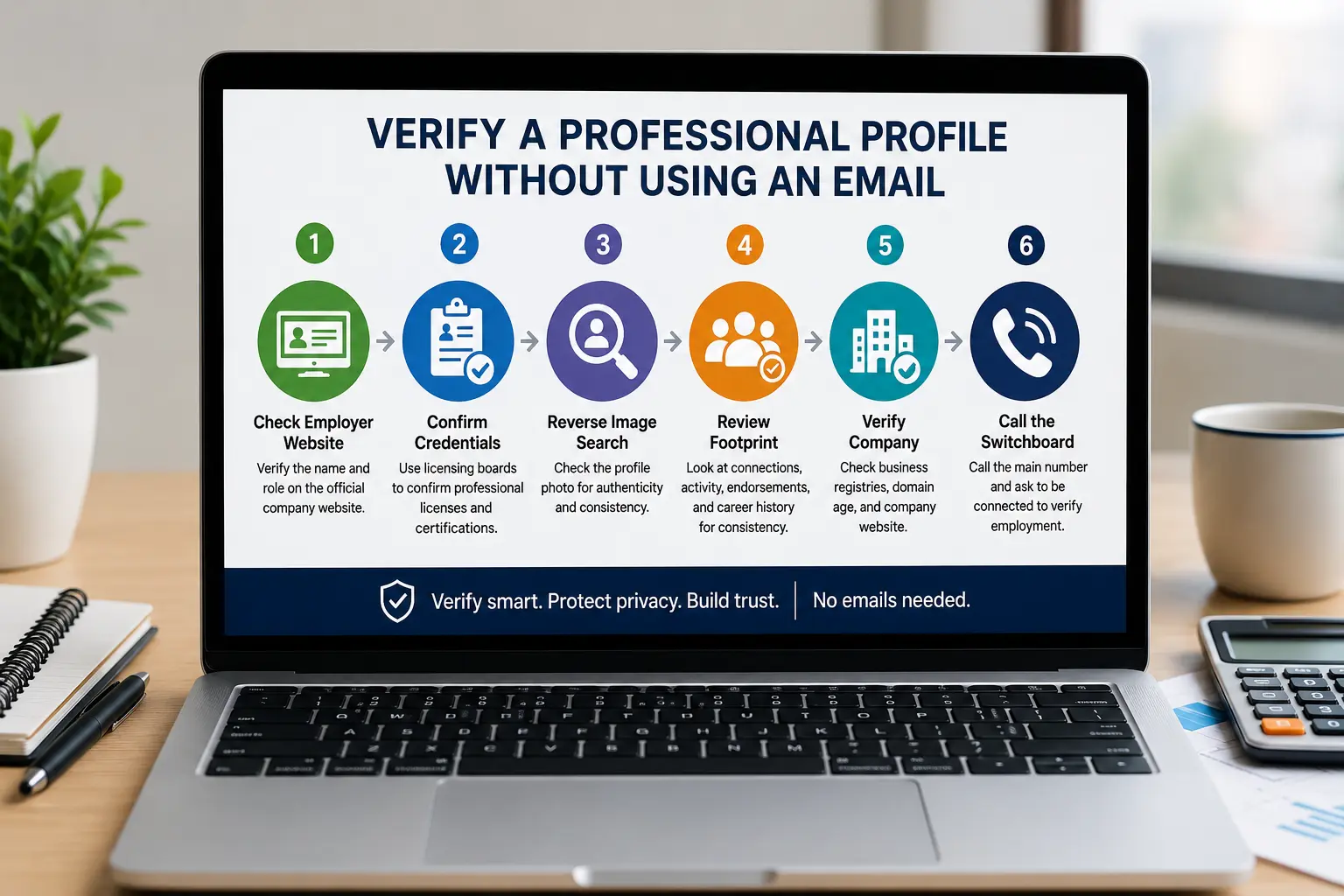
You can verify a professional profile without using an email by cross-checking the person’s name and role on their employer’s official website, confirming credentials through licensing boards, running a reverse image search on the profile photo, reviewing their publication and speaking history, and calling the company’s published main line to confirm the role.
Here is the full sequence:
Cross-reference the employer’s website. Check the team page, leadership page, or press releases for the person’s name and title. A genuine profile almost always leaves a footprint on the employer’s own domain.
Confirm credentials with licensing boards. For regulated professions, the licensing body’s public register settles the question in seconds. A profile claiming a credential that no board can confirm is a red flag.
Run a reverse image search. Profile photos lifted from stock libraries or other people’s accounts surface quickly in a reverse image search. Consistent photos across platforms support authenticity.
Review the footprint for consistency. Genuine professionals accumulate history: connection networks that match their industry, endorsements from real colleagues, activity spread over years rather than weeks, and consistent job dates across platforms.
Verify the company itself. Business registry records, the age of the company domain, and a working corporate website confirm that the organization behind the profile exists.
Call the switchboard. Dial the company’s published main number and ask to be connected to the person. You confirm employment without requesting anything private, and if the call connects, you have verified the profile and opened a conversation in one step.
None of these steps requires sending an email, guessing at addresses, or probing anyone’s private accounts. That matters, because verification attempts aimed at private emails cross the same ethical line as harvesting them.
How Do You Get Verified Contact Details From Professional Network Profiles?
To get verified contact details from professional network profiles, check the profile’s contact information section, send a personalized connection request that explains your reason for reaching out, and ask directly for the person’s preferred contact channel. For outreach at scale, licensed permission-based B2B data is the compliant route; scraping tools violate platform terms.
Details a person shares with you directly are verified by definition. For everything else, treat verification as a separate step: confirm the role against the employer’s website, and run any email address through a reputable verification service before sending, which protects your deliverability and confirms the mailbox exists without sending a message.
Resist the temptation of browser extensions that promise to “unlock” hidden emails and phone numbers in bulk. These tools work by matching profiles against scraped or aggregated databases of uncertain provenance. Even where the individual record is accurate, the collection method fails the source test, and platform enforcement against accounts using them has grown steadily stricter.
Privacy-Respectful Best Practices for Professional Contact Research
The queries people type into search engines say it well: marketers want privacy respectful ways to find professional contact information. These best practices keep your research on the right side of that line:
Collect the minimum you need. A name, title, company, and one business contact channel is enough to start a professional conversation. Resist building shadow dossiers.
Keep business and personal channels separate. Work email and office phone for business offers. Personal Gmail addresses and personal mobiles stay off B2B lists.
Record the source of every record. If you cannot say where a contact detail came from, you cannot defend using it. Provenance notes take seconds and settle compliance questions later.
Honor opt-outs immediately and everywhere. An unsubscribe from one campaign is an instruction, not a suggestion. Apply it across every channel you use.
Run suppression before every campaign. Do-not-call registries for phone outreach, deceased suppression and NCOA processing for direct mail, and undeliverable removal for email.
Store data securely and limit access. Contact databases deserve the same access controls as any other sensitive business asset.
Refresh or retire stale data. Professionals change roles constantly. Old records produce bounces, wrong-person calls, and complaints, all of which damage sender reputation.
Identify yourself honestly. Every message states who you are, why you are reaching out, and how to opt out. Pretexting has no place in professional research.
Which Laws Apply When You Contact Business Professionals?
Several laws govern how professional contact details can be collected and used, and they differ sharply by country and channel:
CAN-SPAM (US email). Permits unsolicited B2B email but requires truthful headers, a physical postal address, and a working unsubscribe mechanism honored promptly.
CASL (Canada). Far stricter. Canadian anti-spam law requires express or implied consent before sending commercial electronic messages. Documented opt-in data matters most for any campaign touching Canadian recipients.
TCPA and DNC rules (US phone). Calls and texts face consent requirements and do-not-call registry obligations. Compliant business telemarketing lists are scrubbed against DNC registries before delivery.
GDPR (EU and UK). Treats business contact details of individuals as personal data. B2B outreach can rest on legitimate interest, but that requires a documented balancing assessment, easy objection, and transparency about data sources.
CCPA/CPRA (California). Grants California residents rights to know, delete, and opt out of the sale of their personal information, which reaches many B2B data practices.
This overview is general information, not legal advice. Cross-border campaigns in particular deserve a compliance review, because a list that is lawful to email in the US may require consent you do not have in Canada.
Five Tactics to Avoid
Some methods fail the ethics tests no matter how they are dressed up:
Scraping platforms against their terms. Bulk extraction from LinkedIn or any other network breaches contracts you agreed to and often privacy law as well.
Buying cheap lists with no provenance. If a seller cannot document where records came from and when consent was collected, assume the answer is bad.
Emailing personal addresses with B2B offers. Personal inboxes sit outside the legitimate-interest logic that protects business outreach, and complaint rates reflect that.
Pretexting. Posing as someone else, inventing surveys, or fabricating reasons to extract contact details is deceptive by definition.
Using breach data or grey-market databases. Data exposed in a breach was never consented for marketing use, and touching it creates legal exposure that no campaign result justifies.
When DIY Research Stops Making Sense
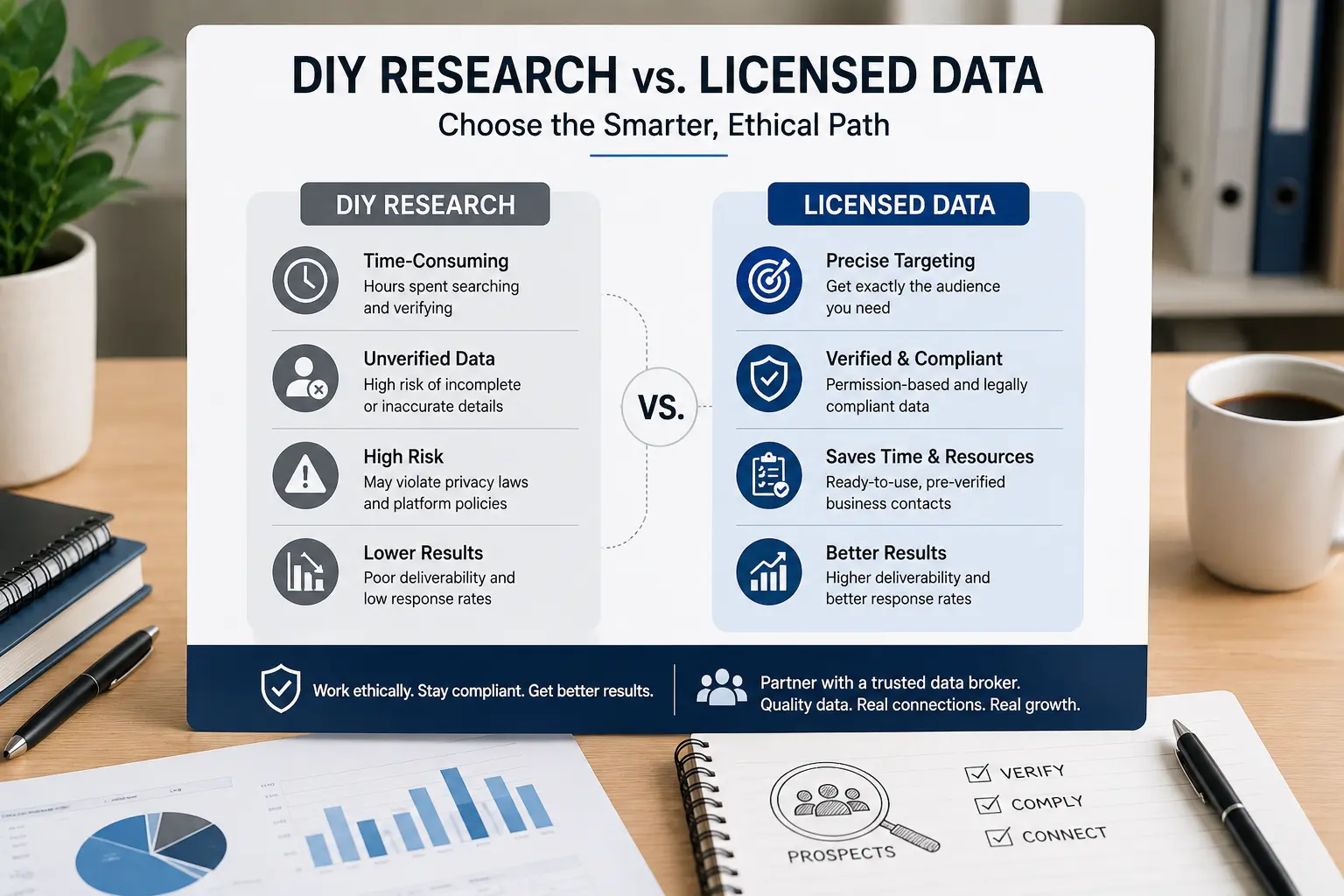
Manual research works beautifully for a dozen high-value prospects. It collapses at a thousand. Somewhere between those two numbers, most teams face a choice: adopt scraping tools that fail every test above, or license data from a source that did the consent and verification work properly.
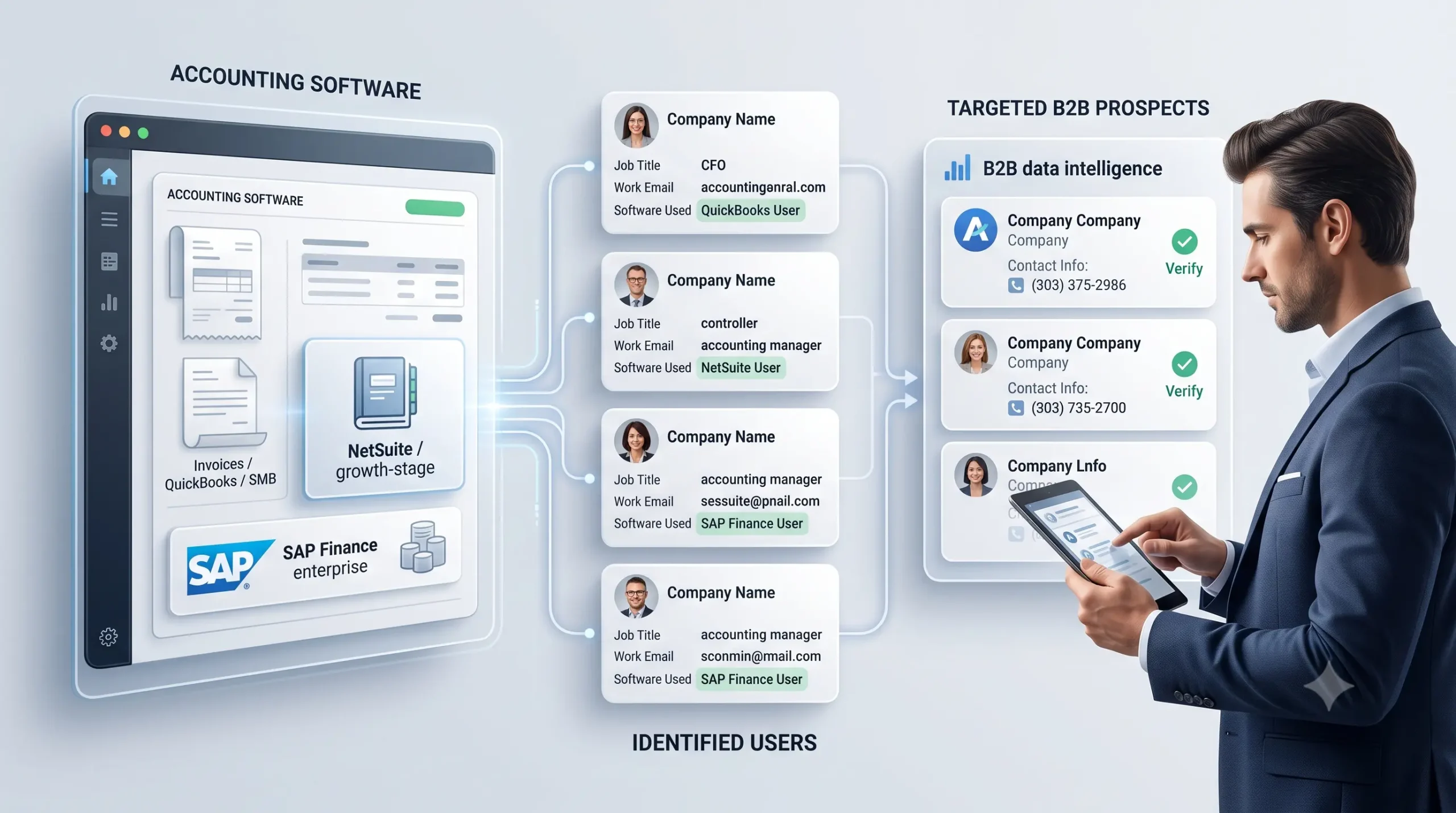
That is the problem a list broker solves. Instead of assembling records one search at a time, you define the audience (industry, job title, company size, geography, channel) and receive targeted business lists built from documented opt-in sources, verified regularly, and processed against suppression files before delivery. An independent broker adds one more layer of protection: with access to tens of thousands of lists and no allegiance to any single compiler, the recommendation is based on which source genuinely fits your campaign, not which one pays the highest margin.
Frequently Asked Questions
What is the most ethical way to find professional contact information? The most ethical methods use details people published for professional contact: official company pages, licensing board registers, association directories, and the contact sections of professional profiles. For scale, documented opt-in data licensed through a reputable broker preserves the same consent principle.
Is it legal to email someone whose business address I found online? In the US, CAN-SPAM permits unsolicited B2B email if you identify yourself truthfully, include a postal address, and honor unsubscribes. In Canada, CASL generally requires express or implied consent first. Where your recipients live determines which rules apply, so check before you send.
How can I verify a professional profile without using a private email? Cross-check the name and role on the employer’s website, confirm credentials through licensing boards, run a reverse image search on the profile photo, review the profile’s history for consistency, and call the company’s published main line. All five steps work without touching a private inbox.
Are email finder tools ethical to use? It depends on how they source data. Tools that verify deliverability of an address you already hold are fine. Tools that reveal hidden contact details by matching profiles against scraped databases fail the source test, whatever their marketing claims.
Is scraping LinkedIn profiles illegal? It violates LinkedIn’s terms of service, which is a contractual breach, and depending on the jurisdiction and the data collected, it can also breach privacy laws such as GDPR or CASL. Courts continue to test the edges, but for marketers the practical answer is that scraping creates legal and platform risk that permission-based data does not.
What is the difference between opt-in data and scraped data? Opt-in data comes from people who agreed, on a documented date and through a documented source, to receive relevant third-party communications. Scraped data was extracted without the person’s knowledge. The two can look identical in a spreadsheet, which is exactly why provenance documentation matters.
How do privacy laws differ between the US and Canada? The US permits unsolicited B2B email under CAN-SPAM’s opt-out model, while Canada’s CASL requires consent before sending. Phone outreach in both countries faces do-not-call obligations. Any campaign crossing the border should be built to the stricter Canadian standard.
How does a list broker keep contact data compliant? A reputable broker documents the opt-in source and date for every email record, scrubs phone files against do-not-call registries, applies deceased suppression and NCOA processing to mailing lists, and refreshes records on a regular verification cycle. You receive data with the compliance work already done and documented.
Finding professional contact details ethically is not a limitation. It is the strategy that protects your deliverability, your brand, and your legal standing while connecting you with people who are genuinely reachable. If you would rather skip the manual research entirely, contact our team for a no-obligation count and quote on permission-based business data. Our brokers in West Vancouver, BC and Bellingham, WA respond within one business day.