The green economy is no longer a niche. It’s a fast-growing, well-funded, policy-backed sector that spans dozens of industries and touches almost every part of the business world.
In 2026, companies working in renewable energy, carbon markets, sustainable agriculture, clean technology, and environmental services collectively represent one of the most active B2B market segments in North America. They’re buying equipment, software, consulting services, insurance, financial products, training, and a long list of other things from other businesses.
If your product or service is relevant to sustainability-focused organisations, you’re sitting in front of a large and genuinely motivated buyer market. The challenge is reaching them efficiently, because the green economy is spread across dozens of sub-sectors that don’t always show up clearly in standard business databases.
This guide covers who’s in the green economy, why they’re worth targeting, and how to build a marketing list that actually reaches them.
What the Green Economy Looks Like in 2026
The green economy isn’t a single industry. It’s a collection of business categories connected by a shared orientation toward environmental sustainability, energy transition, and reduced ecological impact.
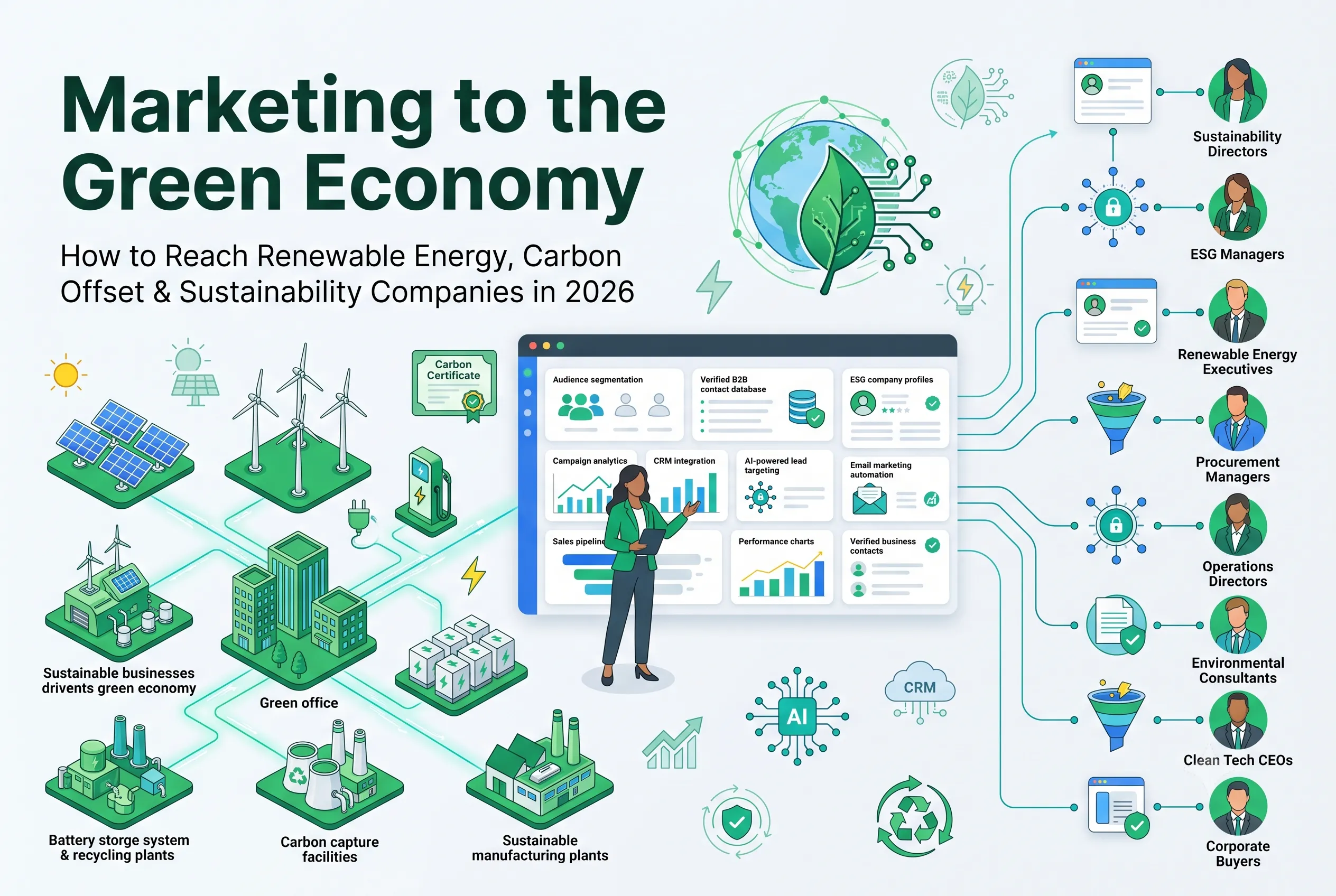
Some of the major segments include:
Renewable energy covers businesses involved in solar, wind, hydro, geothermal, and other non-fossil fuel energy sources. This includes developers, installers, consultants, equipment suppliers, and distributors. The sector has grown significantly in both Canada and the US as government incentives, falling technology costs, and corporate net-zero commitments drive adoption.
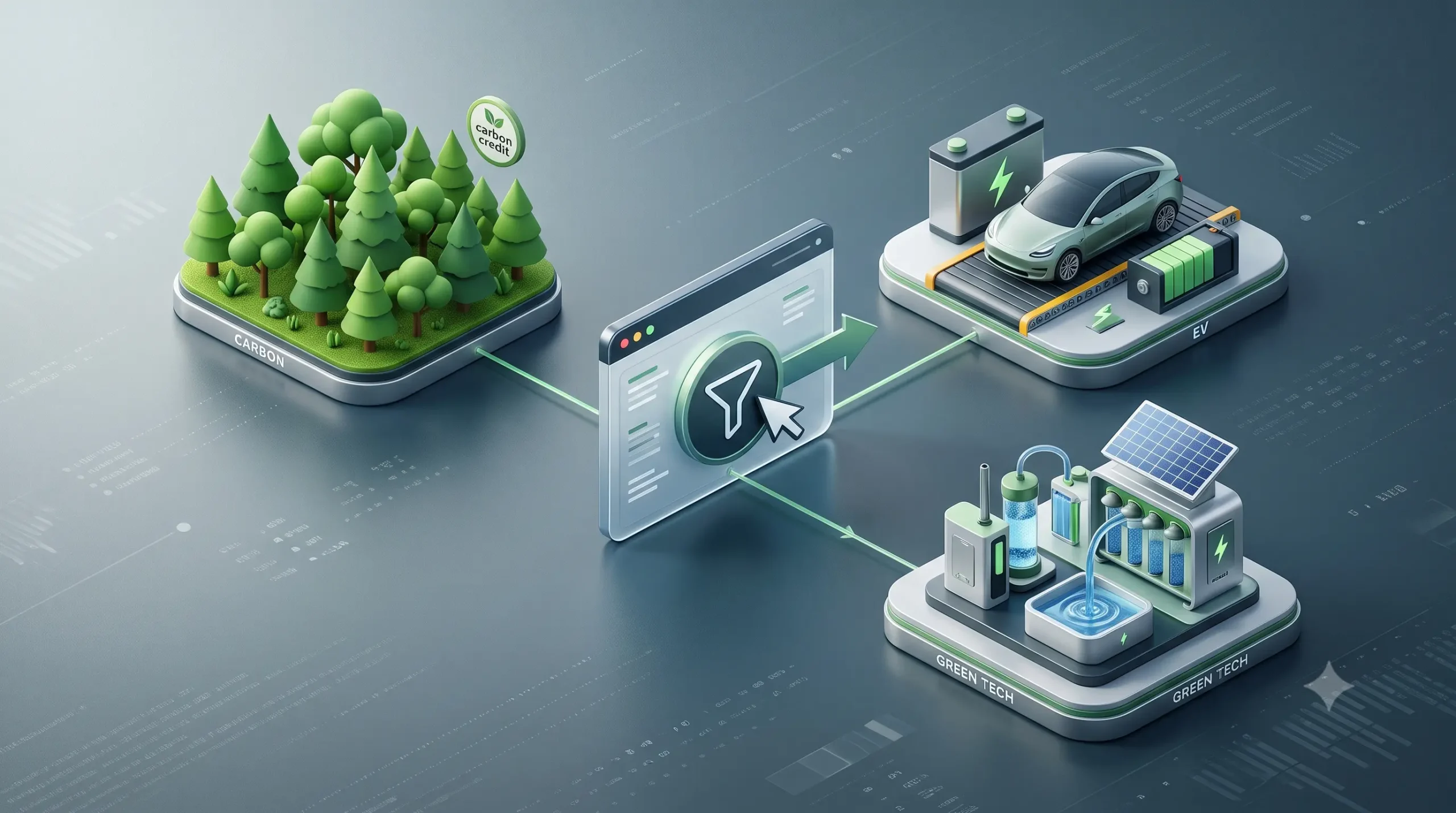
Carbon markets and offsetting has evolved from a niche financial product into a mainstream business category. Carbon offset providers, project developers, verification bodies, and carbon credit brokers now form a recognisable sub-sector, serving corporations under mandatory reporting requirements and voluntary sustainability commitments.
Clean technology covers a broad range of businesses developing or deploying technologies that reduce energy consumption, emissions, or resource use. This includes building automation companies, EV charging infrastructure providers, energy storage developers, and water treatment specialists.
Sustainable supply chain and fair trade includes businesses certified to environmental or social standards, suppliers to companies with ESG procurement policies, and service providers who help businesses measure and reduce their supply chain footprint.
Environmental consulting and services covers businesses that advise organisations on regulatory compliance, environmental impact assessment, sustainability reporting, and green certification.
Organic and natural products includes manufacturers and distributors in the organic food, personal care, and household products categories, where sustainability positioning is central to the brand proposition.
Why the Green Economy Is a Strong B2B Target in 2026
Several factors make sustainability-focused businesses a particularly attractive B2B market right now.
Policy tailwinds. Regulatory requirements around emissions reporting, sustainability disclosure, and environmental compliance are tightening in both Canada and the US. Businesses in the green economy are positioned to benefit from these requirements, creating a buyer market that is actively spending to grow capacity and meet demand.
ESG investment. Institutional investment in sustainability-linked businesses continues to increase. Well-funded companies buy more services, invest in better tools, and are less price-sensitive than businesses operating under constrained budgets.
Growth rates. Many sub-sectors of the green economy are growing faster than the broader economy. Renewable energy installation, carbon market participation, and clean tech adoption are all on upward curves. Fast-growing businesses have more needs and create more buying opportunities.
Network effects. Sustainability-focused businesses tend to operate within networks and communities (trade associations, certification bodies, industry conferences) that create referral and word-of-mouth opportunities for suppliers who develop a reputation within the sector.
The Challenge of Reaching Green Economy Businesses
Standard business databases are not built around sustainability as a category. You won’t find a single SIC code for “green businesses” or a straightforward filter for “sustainability-focused companies.”
What you find instead are businesses classified by their primary economic activity: a solar installation company classified under electrical contractors, a carbon offset developer classified under investment services, an organic food manufacturer classified under food processing. The sustainability dimension is embedded in the business, not visible in the classification.
This means that building a list of renewable energy, carbon offset, or environmental services companies requires either specialist knowledge of which classification codes and business types to combine, or access to curated datasets that have organised these businesses by sector.
Trying to reach the green economy through a generic business database with broad filters tends to produce a list with poor precision: too many businesses that are adjacent to sustainability but not actually in it, and too many that are missing entirely because they don’t show up under the obvious search terms.
How to Build a Targeted Green Economy Marketing List
A targeted approach to reaching sustainability-focused businesses starts with defining which part of the green economy you’re trying to reach, and being specific about what those businesses look like.
For renewable energy consultants and developers, the criteria might include specific SIC codes (electrical work contractors, engineering services, management consulting), plus additional filtering by company description or category to identify businesses whose primary activity is in the renewable energy space.
For carbon offset providers and project developers, the criteria might combine financial services and environmental consulting classifications with additional signals that indicate activity in carbon markets.
For organic food and fair trade brands, the criteria might combine food manufacturing SIC codes with certifications or category-specific signals that identify sustainability-oriented businesses within the broader food sector.
The common thread is that reaching these markets well requires more than a single database filter. It requires building a list around a clear, sector-specific brief.
We specialise in lists for businesses in the green economy, including:
- Renewable Energy Consultants Lists
- Carbon Offset Providers Lists
- Environmental and Green Businesses Lists
- Fair Trade Brands Lists
- Organic Food Brands Lists
What to Include in Your Green Economy List Brief
When briefing a list for a green economy campaign, the following information helps produce the best results:
Which segment of the green economy are you targeting? Renewable energy is a very different audience from organic food manufacturers or carbon market participants. The more specific you can be about the sub-sector, the more targeted the list.
What geography are you covering? Canada, the US, specific provinces or states, or a combination?
What size of organisation are you targeting? A startup renewable energy developer and a large utility operating green energy assets have very different buying behaviours and decision-making structures.
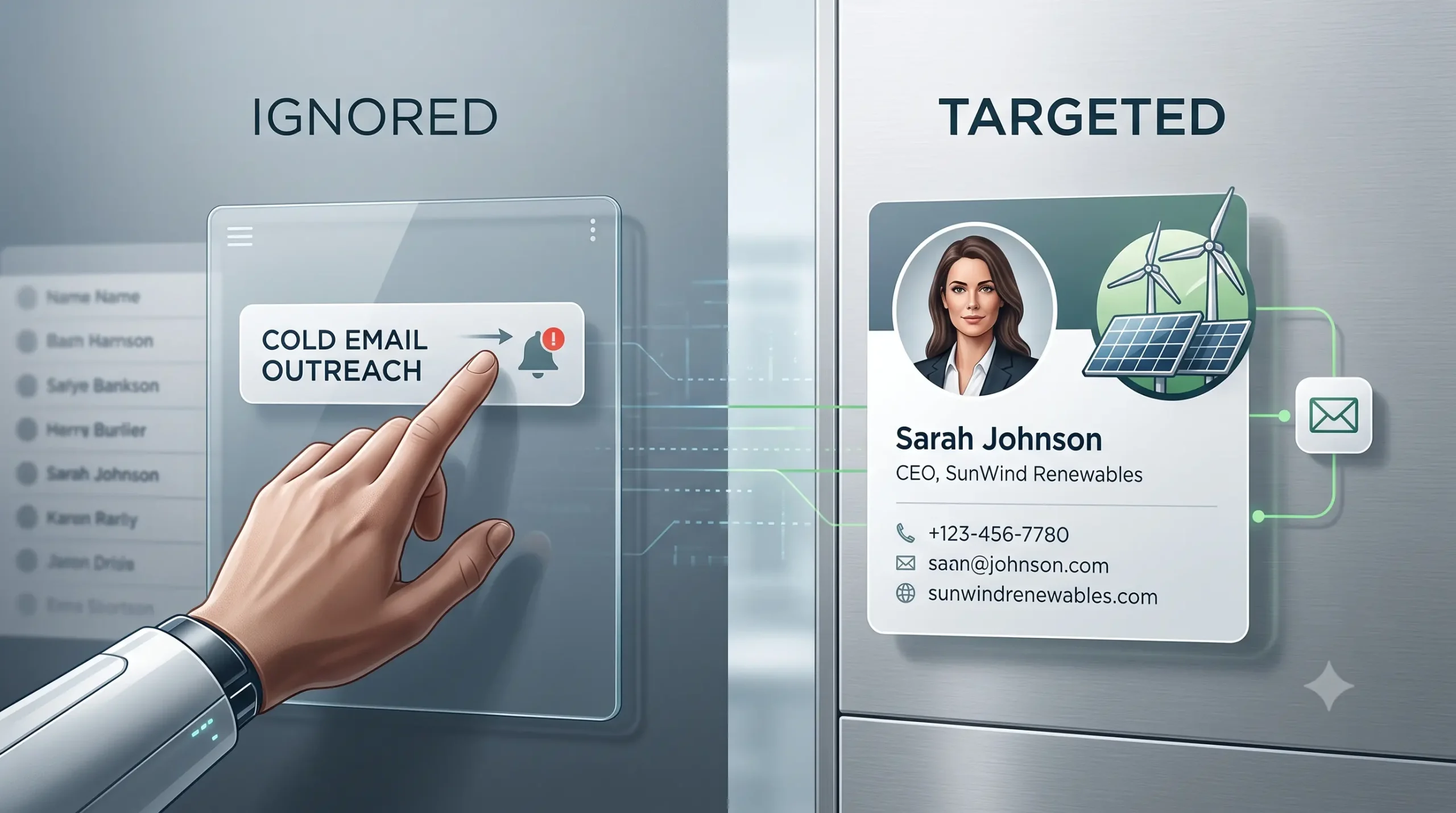
Who is the decision maker? Sustainability Director, Operations Manager, CEO, Procurement Manager? The contact title on the list needs to match the person who would actually buy what you’re selling.
What channel are you using? Email, phone, or direct mail?
A clear brief on all of these dimensions allows us to build a list that reflects your actual target market rather than a broad approximation of it.
Getting Started
If you’re trying to reach businesses in the renewable energy, clean tech, carbon markets, organic products, or broader environmental services sector, get in touch with us.
We’ll discuss your campaign goals, your target segment, and your geographic requirements, and prepare a list built specifically for the green economy audience you’re trying to reach. Lists are typically ready within one to two business days.