Choosing a list broker is one of the most consequential decisions in any direct marketing campaign. A good list is the difference between a campaign that generates leads and one that disappears into the void. A poor list wastes your budget, your team’s time, and in some cases, your sender reputation.
The problem is that it’s genuinely difficult to evaluate list brokers before you’ve used them. They all make similar promises. They all describe their data as current, targeted, and high-quality. The differences only become apparent when you run a campaign and see what happens.
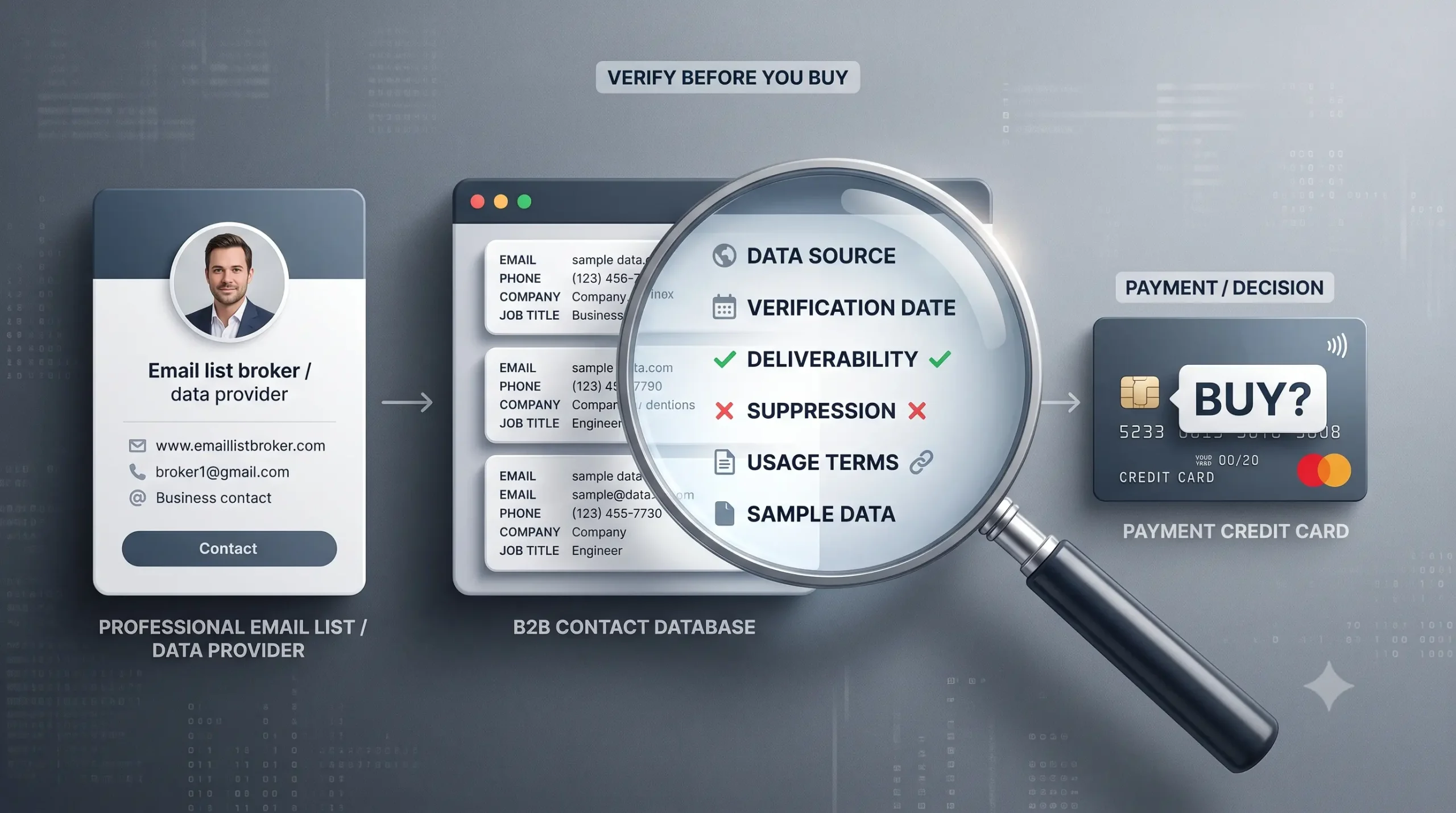
These seven questions are designed to surface those differences before you commit.
Question 1: Is the List Built to My Specific Criteria, or Pulled From a Pre-existing Database?
This is the most important distinction in the industry, and most buyers don’t ask about it.
There are two fundamentally different approaches to list provision. The first is a pre-compiled database: a large repository of contacts that has been assembled over time, from which you can filter and export records that roughly match your target. The second is a custom-built list: one prepared specifically to your brief, drawing on current sources matched to your precise criteria.
Database-driven lists are faster and cheaper. They’re also more generic and more likely to include stale data, because large databases simply cannot keep pace with the rate at which business contacts change.
Custom-built lists take longer to prepare but produce a more targeted result, because the list builder is actively selecting records that match your criteria rather than filtering a pre-existing pool.
Neither approach is inherently wrong, but knowing which one your provider uses tells you a lot about what to expect. If you’re targeting a niche industry in a specific geography with specific contact titles, a custom approach will almost always outperform a database export.
Question 2: How Current Is the Data?
Business contact data degrades over time. People change jobs. Companies move, restructure, or close. Phone numbers and email addresses change. Industry estimates suggest that a meaningful portion of B2B contact data goes stale every year, which means a list built 18 months ago on sources that haven’t been updated since is likely to contain a significant number of records that are no longer accurate.
Ask your list provider how recently the underlying data sources were updated. Ask how frequently those sources are checked. Ask specifically about the data type you’re using: email addresses age differently from phone numbers, which age differently from postal addresses.
A provider who can’t answer these questions clearly, or who deflects to general statements about “high quality” data, is not giving you the information you need to evaluate the risk.
Question 3: What Sources Does the Data Come From?
Business contact data comes from many sources: company registrations, trade directories, association memberships, self-reported business listings, website crawls, and others. The source affects both the type of contacts available and the reliability of the information.
Sources that businesses actively maintain (like trade association directories or professional registries) tend to be more current than sources that are scraped or compiled without the business’s involvement. Sources that include verification steps (where a business has confirmed or updated its own listing) tend to be more reliable than purely automated compilation.
Understanding the sources your list provider uses helps you evaluate both the quality of the data and the coverage of your target market. Some sources index certain industries or company sizes better than others. Knowing this helps you ask better follow-up questions about whether your specific target is well-represented.
Question 4: Does the List Come Pre-scrubbed Against Do-Not-Contact Lists?
For telemarketing campaigns, this is not optional. Lists used for outbound calling in Canada and the US must be checked against the National Do Not Call List (Canada) and the National Do Not Call Registry (US) before any calls are made. Using a list that hasn’t been scrubbed exposes your business to significant regulatory risk.
For email campaigns, the compliance question is different (CASL in Canada, CAN-SPAM in the US), but the principle is the same: the list needs to reflect the applicable rules for the channel you’re using.
Ask your provider directly whether the list you’re purchasing has been checked against the relevant do-not-contact lists for your campaign type and geography. Get a clear answer, not a vague assurance.
Question 5: Can the List Be Filtered to My Exact Specifications?
A list that broadly covers your industry is not the same as a list filtered to your specific criteria. The more precisely a list matches your target, the higher the proportion of contacts who are genuine prospects, and the better your campaign results will be.
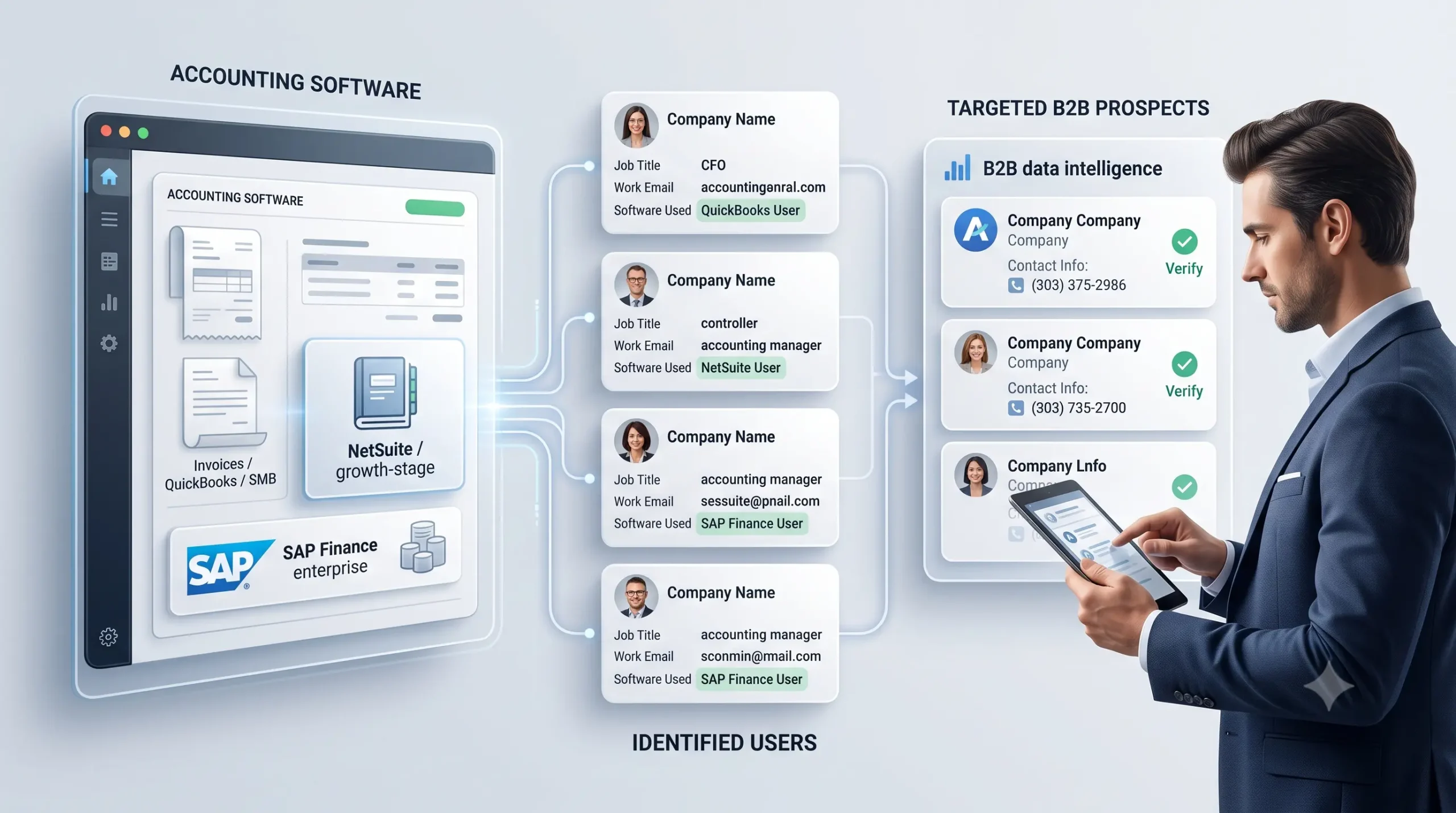
Think about all the dimensions that define your ideal prospect: industry (by SIC code or category), geography (by province, state, city, or FSA code), company size (by employee count or revenue), contact title or seniority level, and any other characteristics that distinguish your best customers from everyone else.
Ask your list provider whether they can apply all of these filters, not just the obvious ones. A provider who can only filter by industry and geography but not by company size or contact title is giving you a less targeted product than one who can work across all relevant dimensions.
Question 6: How Many Times Can I Use the List?
This is a question many buyers don’t think to ask, and the answer varies significantly between providers.
Some list providers operate on a single-use model: you license the list for one campaign, and using it again requires a new purchase. Others sell lists on a per-use or subscription basis. Others sell lists outright, with no restrictions on use.
If you’re planning multiple campaigns to the same audience, or you want to use the same list across email, direct mail, and telemarketing, understanding the usage terms before you buy is important. A list that costs the same but can be used without restriction is worth significantly more than one that must be re-purchased for each campaign.
Question 7: What Is the Turnaround Time?
List turnaround time matters for campaign planning. A provider who needs three weeks to deliver a custom list creates a bottleneck that affects your entire campaign timeline. A provider who can deliver within a day or two gives you more flexibility.
Ask specifically how long it takes from the point of briefing to the point of receiving the list, and whether that timeline varies depending on the complexity or volume of the request.
How Prospects Influential Answers These Questions
We think these questions are the right ones to ask any list provider, including us. Here’s how our approach maps to each:
Custom vs. database: We prepare lists based on your specific brief, built to your exact criteria rather than exported from a generic database.
Data currency: We work from current sources matched to your target, not a fixed database that ages between updates.
Sources: Our lists draw on business and consumer data sources appropriate to the type of list you’re requesting and the geography you’re targeting.
Do-not-contact compliance: Lists for telemarketing campaigns are prepared with the relevant do-not-call registries in mind.
Filtering: We can filter by industry (SIC code), geography (including FSA codes for Canadian campaigns), company size, contact title, and other criteria depending on your brief.
Usage: Lists we provide come with no usage cap. Once you receive your list, it’s yours to use across as many campaigns as you need.
Turnaround: We typically deliver lists within one to two business days of receiving a complete brief.
If you’re ready to discuss a list for your next campaign, get in touch with us. We’re happy to answer any of these questions as they apply to your specific requirements.
You can also explore our business list options and consumer list options to get a sense of the range of lists we can prepare.