The promise of the big B2B contact database is compelling: millions of verified contacts, searchable by industry, title, and location, available instantly. Sign up, pay a monthly fee, filter your target audience, and start your campaign.
In practice, it rarely works that cleanly. And for many businesses, the hidden costs of generic database tools have turned what looked like an efficient solution into an expensive frustration.
This post looks at why generic databases underperform for targeted campaigns, what those failures actually cost, and when a custom-built list is the better option.
The Problem With Generic B2B Databases
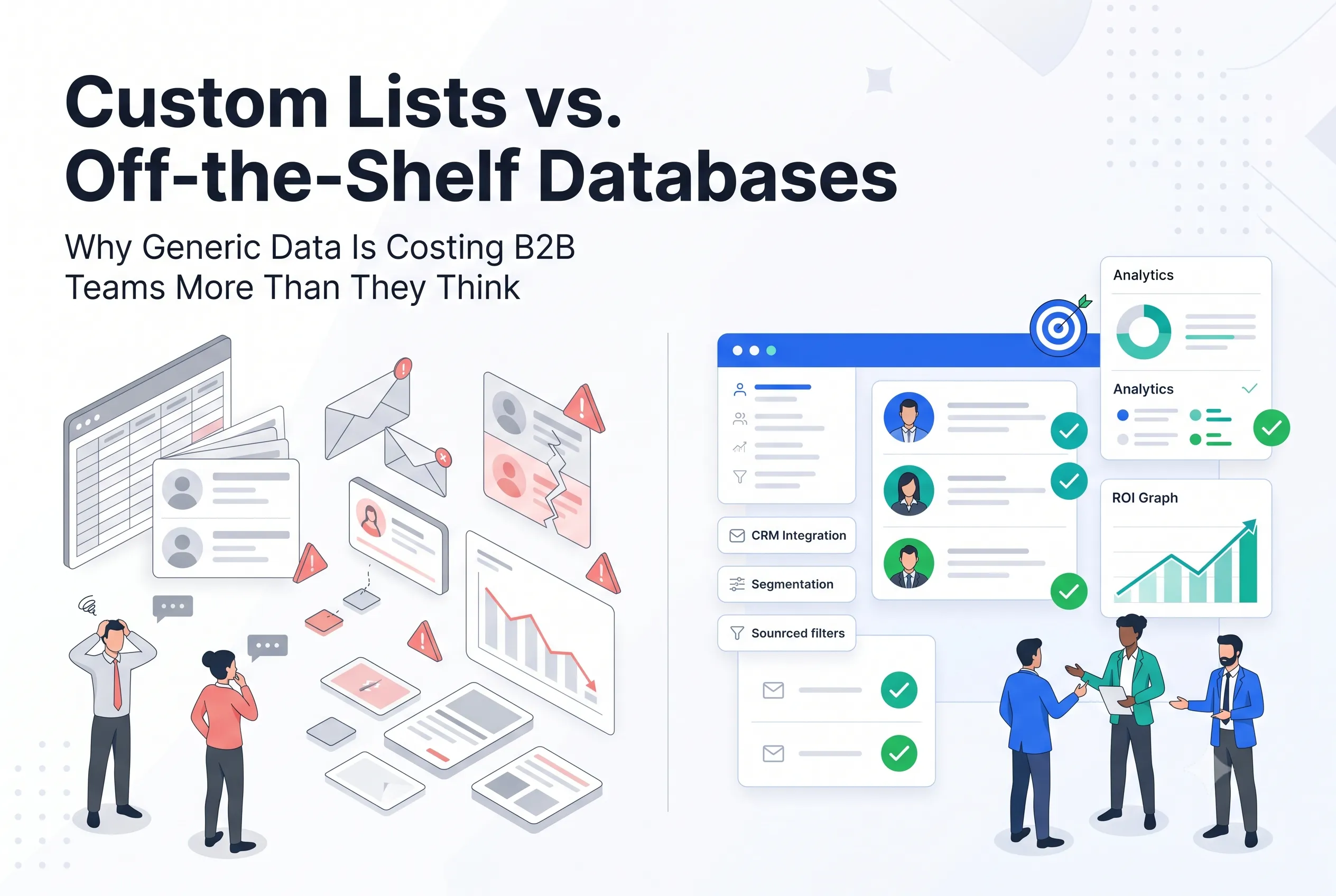
The major B2B contact database platforms have made it easier than ever to export a list of contacts matching a broad set of criteria. They’ve also created a set of expectations about data quality and targeting precision that their actual performance often doesn’t match.
Here’s what practitioners are consistently finding in 2026:
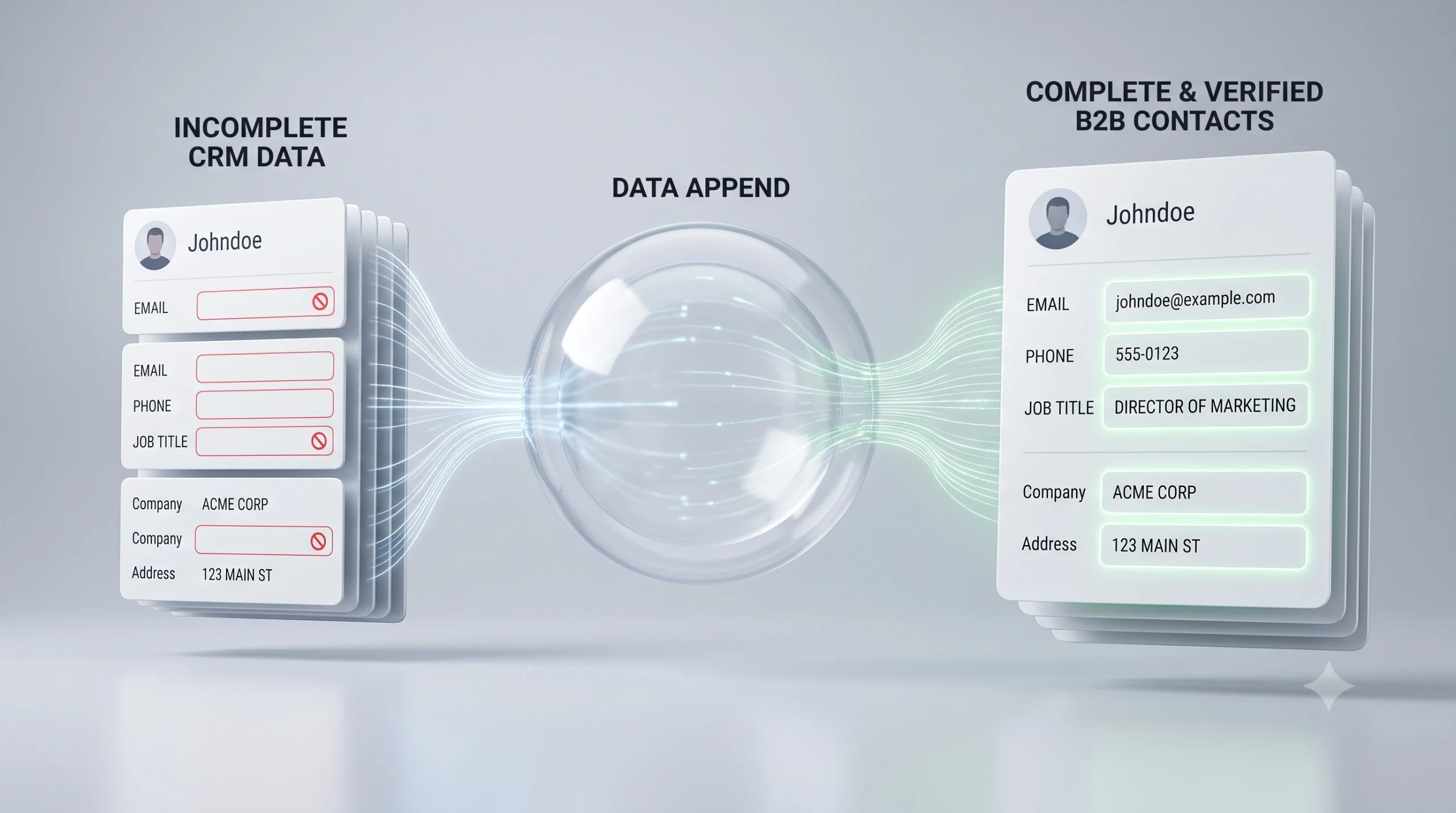
Data decays faster than databases refresh. The average professional changes jobs every few years. When someone moves on, their work email address stops working, their direct phone number is reassigned, and their listed title becomes inaccurate. Database providers attempt to keep pace with this churn, but maintaining currency across millions of records is genuinely difficult. The result is that a meaningful portion of any given export from a major database will contain contacts who have changed roles or left the organisation since the data was collected.
Cold email campaigns run from database exports routinely see bounce rates in the 20 to 30 percent range. For context, a bounce rate above 5 percent starts affecting sender reputation with email service providers. Above 10 percent, deliverability problems become serious.
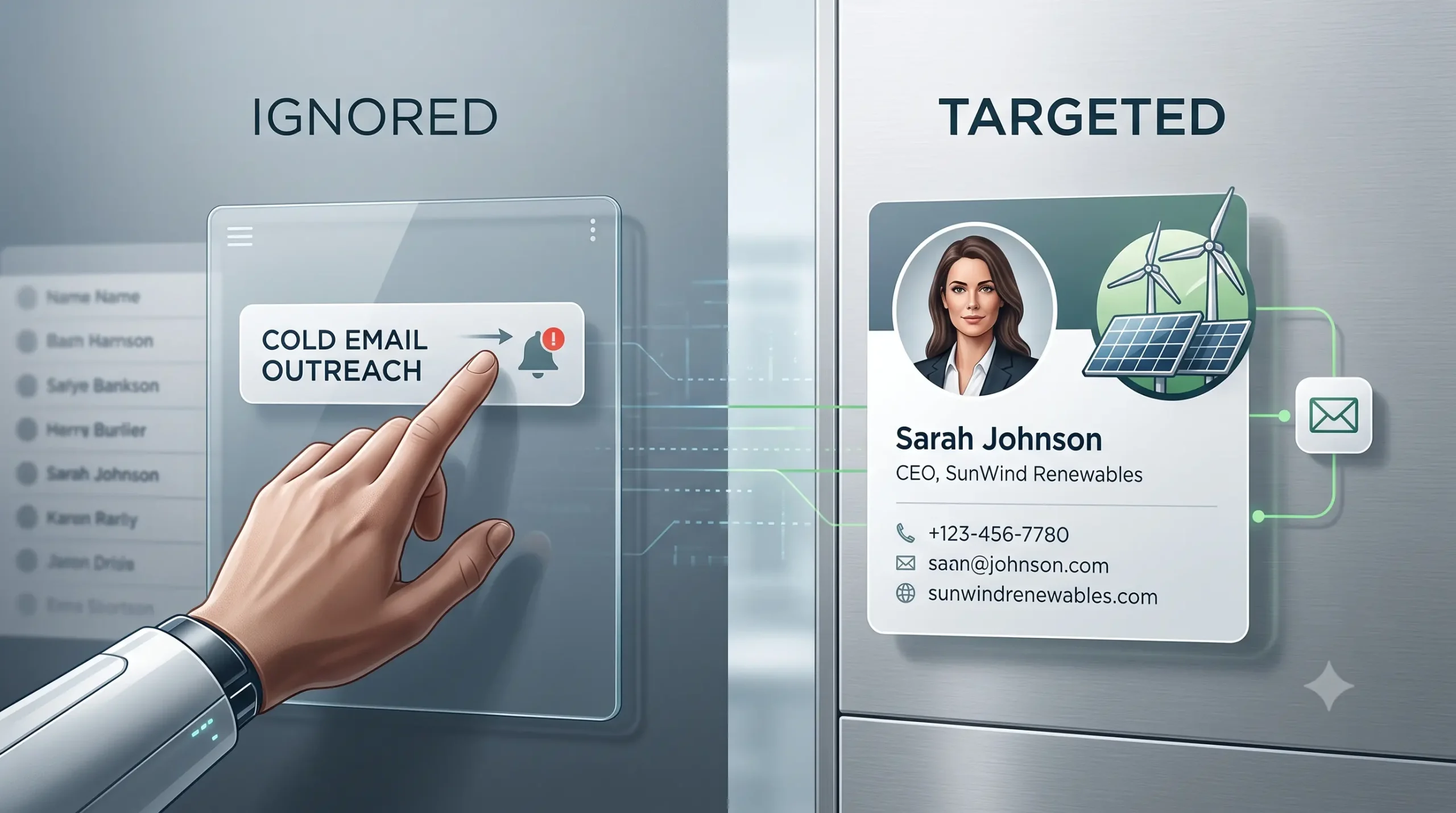
Generic databases are oversaturated for common targets. If you’re targeting, say, VPs of Marketing at mid-size SaaS companies in the US, so is every other B2B SaaS vendor, every agency, every recruiter, and every tool provider in the space. The people on that list have seen thousands of cold outreach messages. Response rates for this type of highly contested target have fallen sharply. The list itself is not the differentiator it used to be.
Filtering precision is limited. Most database platforms let you filter by job title, industry category, company size, and location. What they often can’t do is reflect the nuances of your actual target: a specific sub-industry, a specific type of company within a broader category, contacts at the decision-making level rather than the title level, or geographic targeting at the city or postal code level rather than the state or province level.
The result is an exported list that broadly covers your target but contains a significant proportion of records that aren’t actually relevant to your campaign. You pay for all of them. Only some of them convert.
The Hidden Costs of Poor Data Quality
When a business uses a generic database and campaigns underperform, the failure is often attributed to the wrong things: the offer wasn’t compelling enough, the email subject line was off, the timing was wrong. The data quality problem is invisible because it’s spread across thousands of records rather than visible in a single obvious failure.
Running the numbers makes the cost clearer.
If you export 2,000 contacts from a database at a cost of $0.10 per record ($200 total), and 25 percent of those records contain stale or inaccurate data, you’ve paid for 500 useless contacts. If your sales team is spending time on outreach to those contacts (at even $40 per hour of loaded cost), and each contact takes five minutes of effort before it’s identified as dead, that’s 42 hours of wasted time. Around $1,700 of labour cost on top of the list cost, for zero return.
That’s before factoring in the deliverability damage from high bounce rates, the cost of list cleaning tools if you try to verify before sending, or the opportunity cost of your team spending time on dead contacts rather than real prospects.
Across a full year of campaigns, the compound cost of poor data quality is significant. Industry research has put the annual cost of bad data at over $12 million for average-sized organisations, though for most businesses the number is lower. The point is that the cost is real and often invisible until someone adds it up.
What a Custom-Built List Looks Like
A custom-built list starts from a different premise. Instead of filtering a pre-existing database of millions of records, a specialist list provider builds a list specifically to your brief, drawing on sources matched to your target.
The brief for a custom list specifies exactly who you’re trying to reach:
- Industry or sub-industry (by SIC code or category description)
- Geography (by country, province/state, city, or postal code / FSA code)
- Company size (by employee count or revenue range)
- Contact title or seniority level
- Channel requirements (email address, phone number, or postal address)
- Any other specific criteria relevant to your campaign
The list that comes back reflects those specifications across every record. You’re not getting a broad export and then filtering out the irrelevant ones. You’re getting a list where each record was selected because it matches what you asked for.
This approach takes longer than an instant database export. A custom list typically takes one to two business days to prepare. For most campaigns, that’s a reasonable timeline that fits comfortably into the planning process.
When Custom Lists Are the Better Choice
Custom lists aren’t the right solution for every situation. For very broad, high-volume prospecting where speed matters more than precision, a large database might be more practical. But for a significant range of B2B marketing scenarios, a custom approach consistently outperforms the generic database alternative:
Niche industries. If your target is a specific sub-sector (renewable energy consultants, industrial automation companies, specialty chemical manufacturers), a generic database is likely to either undercount them or mix them with broadly similar but non-relevant businesses. A custom list built around the specific criteria for that sub-sector will be more complete and more accurate.
Geographic precision. If your campaign targets a specific city, a cluster of FSA codes, or an industrial zone in a particular region, a custom list built to that geographic specification will give you better coverage and fewer irrelevant records than a provincial or national database export filtered after the fact.
Multi-filter targeting. When you need to apply several criteria simultaneously (right industry, right company size, right geography, right title), the precision of the intersection matters. Generic databases often degrade in quality at the intersection of multiple filters, because the pool of records that genuinely meets all criteria is small and the database may be filling gaps with approximate matches.
Channels outside email. For direct mail and telemarketing campaigns, where the cost of a bad record (wasted postage, time on a dead number) is higher than in email, data quality is even more important. A custom list built specifically for a mailing or calling campaign is more likely to produce usable records than a database export that was primarily built for email.
Unlimited reuse. When you need a list you can use across multiple campaigns and over an extended period, owning a purpose-built file is more practical than maintaining a database subscription. A custom list, delivered as a file you own, can be used for email, direct mail, telemarketing, and any other outreach without usage restrictions or additional per-export charges.
A Straightforward Test
If you’ve been using a generic B2B database and aren’t sure whether the quality is good enough, run this check on your last export:
Take a sample of 100 records and manually verify the email addresses and company details against the companies’ actual websites and LinkedIn profiles. How many contacts are still at the companies listed? How many email formats match what’s publicly listed? How many companies have changed names, merged, or closed?
If you find a significant number of stale or inaccurate records in that sample, the same proportion exists across your full list. The math is straightforward, and it tends to make the case for a different approach more clearly than any amount of theoretical argument.
Getting a List Built to Your Specifications
If you’re planning a B2B campaign and want a list built to your exact criteria rather than exported from a generic database, get in touch with us.
Tell us who you’re trying to reach: the industry, the geography, the company size, the contact title, and the channel. We’ll prepare a list matched to those requirements. It’s typically ready within one to two business days, and once you have it, you can use it across as many campaigns as you need with no restrictions.
You can also explore our full range of business list options to get a sense of the targeting options available.
The list is the foundation. It’s worth getting it right.