The short answer
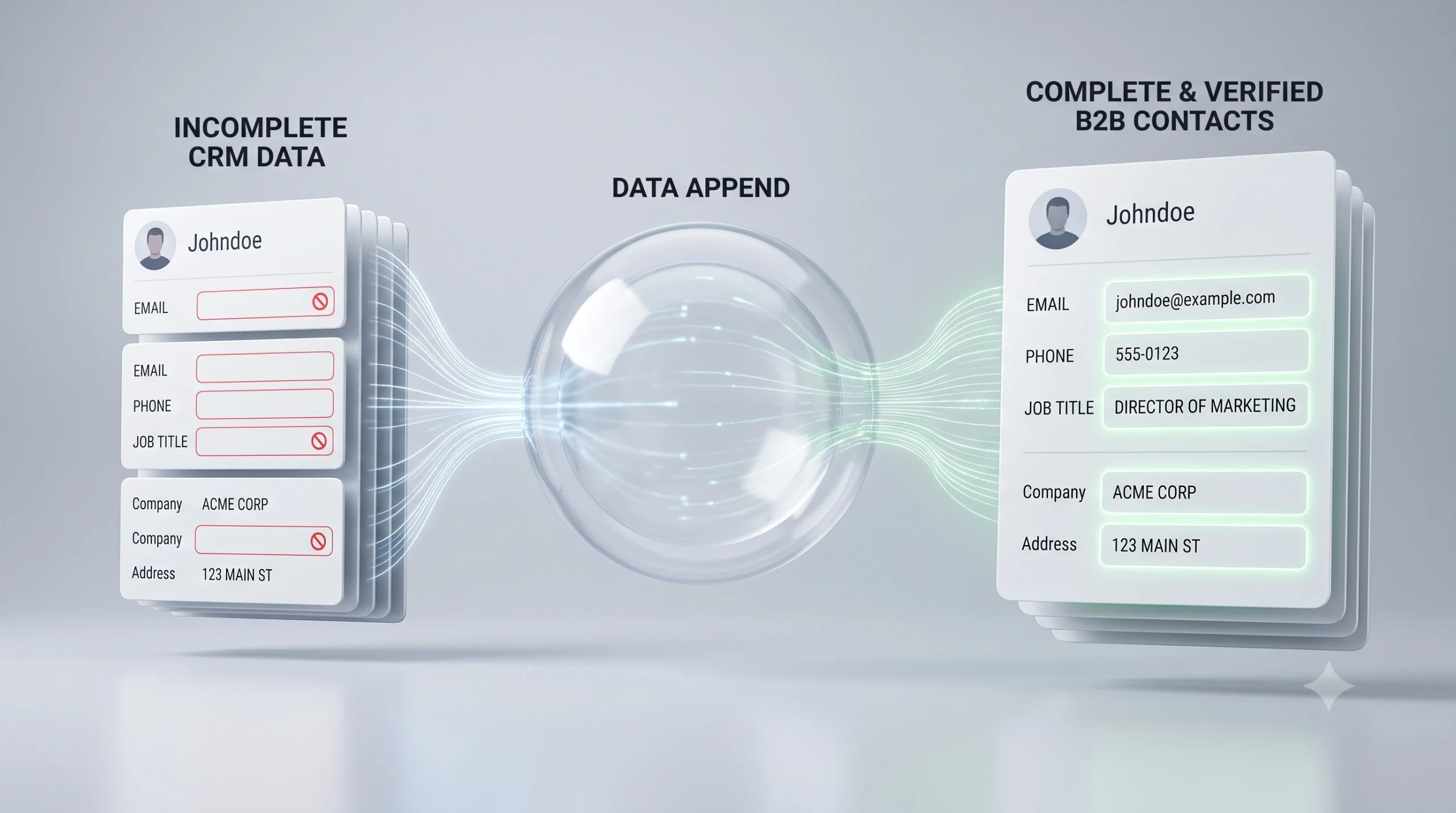
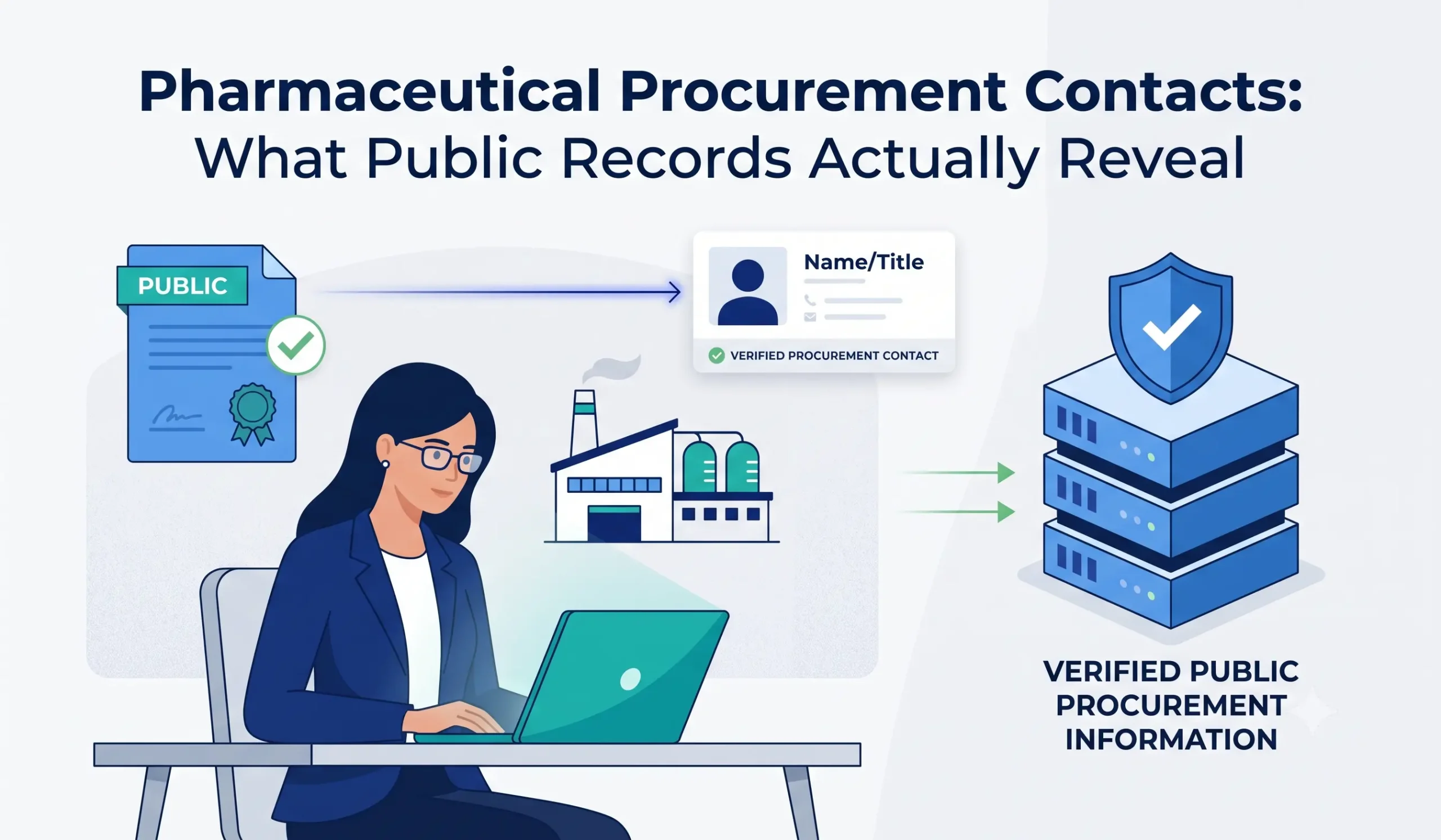
Public records reveal which companies are FDA-registered, which distributors hold state wholesale licenses, which providers carry NPI numbers, and which organizations win federal drug contracts. What they rarely reveal is a named buyer’s direct email or phone line. Public data qualifies the account and confirms legitimacy; a verified contact list supplies the person you actually need to reach.
Why this matters right now
Verifying who you buy from and who you sell to is no longer just good practice in pharmaceutical procurement. It is a federal requirement, and the last compliance window is closing.
The Drug Supply Chain Security Act, enacted in 2013, requires every buyer of prescription drugs to confirm that their trading partners are authorized, meaning appropriately licensed or registered, before any purchase and at least once a year after that. The enhanced electronic tracing requirements phased in across 2025 for manufacturers, wholesale distributors, and larger dispensers, according to guidance summarized by the FDA and industry bodies such as GS1 US.
Relevant news to highlight: The FDA’s exemption for qualifying small dispensers, and where applicable their trading partners, runs only until November 27, 2026, per FDA guidance tracked across the pharmaceutical supply-chain sector (DSCSA deadline overview, Supply Chain Wizard, May 2026). After that date the staggered timeline effectively closes, and the full trading-partner verification regime applies across the chain. Any company selling into, or buying within, US pharmaceutical distribution should treat the second half of 2026 as the moment supplier verification becomes universal, not optional.
For B2B teams that sell to pharmaceutical companies, hospitals, and distributors, this creates two parallel needs. You need to verify that the suppliers and partners you engage are legitimate, and you need accurate contact data for the procurement decision-makers who now operate inside a fully regulated, fully traceable system.
What public records actually reveal
A surprising amount of the pharmaceutical supply chain is documented in public and authoritative databases. These sources confirm that an organization exists, is licensed, and is active, which is the first half of qualifying any procurement target.
| Public source | What it reveals | Best used for |
|---|---|---|
| FDA Drug Establishment Registration (openFDA) | Registered manufacturers, repackagers, and their facilities | Confirming a supplier is a legitimate FDA-registered establishment |
| State boards of pharmacy / NABP | Wholesale distributor and 3PL licensure | Verifying an authorized trading partner under DSCSA |
| NPPES NPI Registry | Providers, pharmacies, and pharmacists by name and location | Confirming a dispensing entity and its registered details |
| HRSA 340B OPAIS | Covered entities and contract pharmacies in the 340B program | Identifying eligible hospitals, clinics, and their pharmacy partners |
| SAM.gov and USASpending.gov | Federal drug and medical contract awards and awardees | Finding organizations that already win government pharma business |
| SEC EDGAR | Public pharmaceutical company filings and named officers | Researching leadership at publicly traded manufacturers |
Used together, these sources build a defensible picture of the account: who is real, who is licensed, who holds contracts, and who sits at the top of the organization. Our guide to finding verified email addresses and phone numbers walks through the search techniques that turn these records into a working prospect file.
Where public records stop
Public data tells you the organization is legitimate. It rarely tells you who signs the purchase order, and in pharmaceutical procurement that person is almost never a single, easily findable name.
FDA and state databases are built for regulatory transparency, not for sales prospecting. They list corporate and facility details, license numbers, and sometimes a general contact, but not the direct line to a procurement director, a pharmacy buyer, or a value analysis committee member. Group Purchasing Organizations complicate this further. Much hospital and health-system buying flows through GPO contracts with organizations such as Vizient, Premier, and HealthTrust, so the real decision may sit with a category manager inside a GPO rather than an individual hospital. None of that surfaces in a public establishment record.
This is the gap that separates a qualified account from a reachable contact, and it is why teams that rely only on public data stall. To close it, you need a verified, permission-considered contact file layered on top of the public picture. Our hospital procurement managers email list is built for exactly this handoff, connecting the legitimate account to the person who authorizes spend.
How B2B teams actually reach pharmaceutical and hospital procurement
Reaching procurement in this sector is a committee sport played on a long clock. Public records get you to the door; a coordinated, multi-touch program gets you inside.
Map the buying committee, not the buyer
Healthcare purchasing decisions typically involve a group rather than one person. Industry analyses put the number of stakeholders in a B2B healthcare decision at roughly nine, spanning clinical, financial, IT, and procurement roles, with the cycle often stretching close to a year. Single-threaded outreach to one contact is the most common reason these deals die. Identify the procurement lead, the department director, the value analysis committee, and the finance sign-off, then reach them in parallel.
Time outreach to budget cycles and regulatory triggers
Health systems run on fiscal-year budgets that are usually finalized in the third and fourth quarters for the following year, and capital budgets often sit separately from operating budgets. Regulatory changes such as the DSCSA verification deadline also create natural openings, because they force procurement teams to re-examine which suppliers they can legally transact with.
Lead with compliance and evidence
Procurement in a regulated environment rewards sellers who raise compliance early rather than treating it as a late-stage hurdle. Case studies, third-party validation, and a clear cost-and-outcome argument carry more weight than volume outreach. Analyses of healthcare selling suggest it takes eight or more touchpoints across channels, including events, LinkedIn, and direct outreach, to convert a decision-maker, so email works best as the spine of a patient, multi-channel sequence rather than a one-time send. Pairing an outreach program with our pharmaceutical sales reps email list or medical device distributors email list lets you coordinate across the full supply chain rather than a single segment.
Verifying pharmaceutical supplier contacts
Verification in pharma has a specific, regulated meaning, and searchers looking for a supplier verification database usually need two different things at once.
The first is regulatory verification: confirming a supplier is an authorized trading partner. Under DSCSA, that means checking wholesale distributor and 3PL licensure through state boards of pharmacy and the NABP, and confirming FDA registration for manufacturers and repackagers. This is a legal precondition to purchasing, not a marketing nicety.
The second is data verification: confirming that the contact record for a procurement decision-maker is current. Roles in this sector turn over, titles shift, and email addresses change, so a name that was accurate last quarter may already be stale. The practical safeguards are the same ones that apply to any high-value list. Ask any data provider how often records are revalidated, request a sample before you buy, and measure your own bounce and engagement against what was promised. A record is a hypothesis about who to contact, confirmed only when the person responds.
Compliance for pharmaceutical procurement outreach
Marketing into healthcare sits under more scrutiny than most sectors, and procurement audiences report careless outreach quickly. Get the basics right before the first message.
CAN-SPAM (US): Commercial email needs accurate headers, a truthful subject line, a physical address, and a working unsubscribe you honor promptly.
CASL (Canada): Reaching Canadian distributors or health systems requires consent, clear sender identification, and an unsubscribe path.
TCPA (US): Any phone or SMS follow-up is governed by consent and do-not-call rules.
HIPAA context: B2B outreach to a procurement director about a product is not protected health information, but never build or enrich a list using patient data. Keep sourcing to business and professional records only.
A reputable broker delivers files built with these frameworks in mind. If your program also touches compliance stakeholders directly, our HIPAA compliance managers email list reaches the people who own data-handling decisions inside health organizations.
How to get a verified procurement list that performs
The difference between a list that opens doors and one that damages your sender reputation is sourcing, not record count. Buy on verification and fit.
Work with an independent broker rather than a single-source platform so the file is matched to your offer instead of to whatever one vendor holds. Ask for recency, a defined revalidation cycle, and a free sample to test fit before committing budget. When a standard segment does not match your target, a custom build to your brief, for example pharmacy directors within 340B hospitals in a specific region, will almost always outperform an off-the-shelf pull. Prospects Influential works as an independent broker with access to more than 70,000 lists across the US and Canada, which means the recommendation follows your campaign rather than one data source.
Frequently asked questions
Can I find pharmaceutical procurement contacts in public records?
You can confirm the organization, its licensure, and often its senior officers through FDA, state board, NPI, 340B, and federal contracting databases. You usually cannot find the direct email of a specific procurement buyer, which is where a verified contact list is needed.
What is a pharmaceutical supplier verification database?
It can mean two things. In a regulatory sense it refers to checking that a supplier is an authorized trading partner under DSCSA through FDA registration and state licensure. In a marketing sense it refers to a data file whose contact records have been validated as current.
Is DSCSA verification mandatory in 2026?
Yes for most of the chain. Enhanced requirements phased in through 2025, and the exemption for qualifying small dispensers runs until November 27, 2026, after which the staggered timeline effectively closes. Always confirm the current status against FDA guidance.
Who makes purchasing decisions in a hospital pharmacy?
Rarely one person. Decisions often involve a procurement lead, pharmacy director, value analysis committee, and finance sign-off, and much buying flows through GPO contracts such as Vizient, Premier, or HealthTrust.
How current is procurement contact data?
It varies by provider. Quality files are revalidated on a regular cycle because roles turn over frequently in this sector. Ask for the revalidation schedule and a sample before buying.
Is it legal to email hospital and pharma procurement contacts?
Yes, when the campaign follows CAN-SPAM in the US and CASL in Canada, and any phone follow-up respects TCPA. Build the list from business and professional records only, never from patient data.
How many touchpoints does it take to reach a healthcare buyer?
Analyses of healthcare selling suggest eight or more across channels, combining email, LinkedIn, events, and direct outreach, over a cycle that can approach a year.
Should I rent, purchase, or build a custom procurement list?
Rental suits a single campaign, purchase suits ongoing programs, and a custom build suits a specific target such as pharmacy directors in a defined region. A broker can advise which fits your goal.
Talk to a broker before your next procurement campaign
Public records prove an account is real, but they will not hand you the buyer. Prospects Influential connects the verified, licensed account to the procurement decision-maker who authorizes spend, with files built to your brief and to current compliance rules. Contact us for a no-obligation count and quote. Our brokers in West Vancouver and Bellingham respond within one business day on our contact page.