A question that comes up regularly on Quora under the B2B marketing and sales operations categories is some version of: “We have a CRM with 40,000 contacts and only about 30 percent have a valid email address. Is there a way to fill in the missing data without rebuilding the list from scratch?”
The answer is yes, and the process is called data append. It is one of the most consistently underused services in B2B marketing operations, not because companies do not need it but because most marketing teams do not encounter it until they are deep into a campaign that is already underperforming.
This post covers what data append actually is, how it works, who it is most valuable for, and how to evaluate a data append provider before you hand over your CRM file.
The Problem Data Append Solves
Most CRMs age poorly. Contacts are imported from trade shows, inbound forms, purchased lists, and manual entry. Over time, those contacts change jobs, move offices, switch email providers, and update their phone numbers. The CRM record stays the same while the person moves on.
The standard estimate in B2B data management is that business contact records decay at roughly 22 to 30 percent per year. For a 40,000-contact CRM, that means somewhere between 8,800 and 12,000 records are partially or fully outdated after 12 months.
The consequences compound quietly. Email campaigns to stale addresses produce hard bounces, which damage sender reputation, which causes deliverability to drop across the entire sending domain, which reduces open rates for the valid contacts who were never a problem to begin with.
Reddit threads in r/marketing and r/salesops consistently surface this pattern: a team notices declining email performance, investigates, and discovers the list quality has been degrading for 18 months while everyone assumed it was fine because nobody checked.
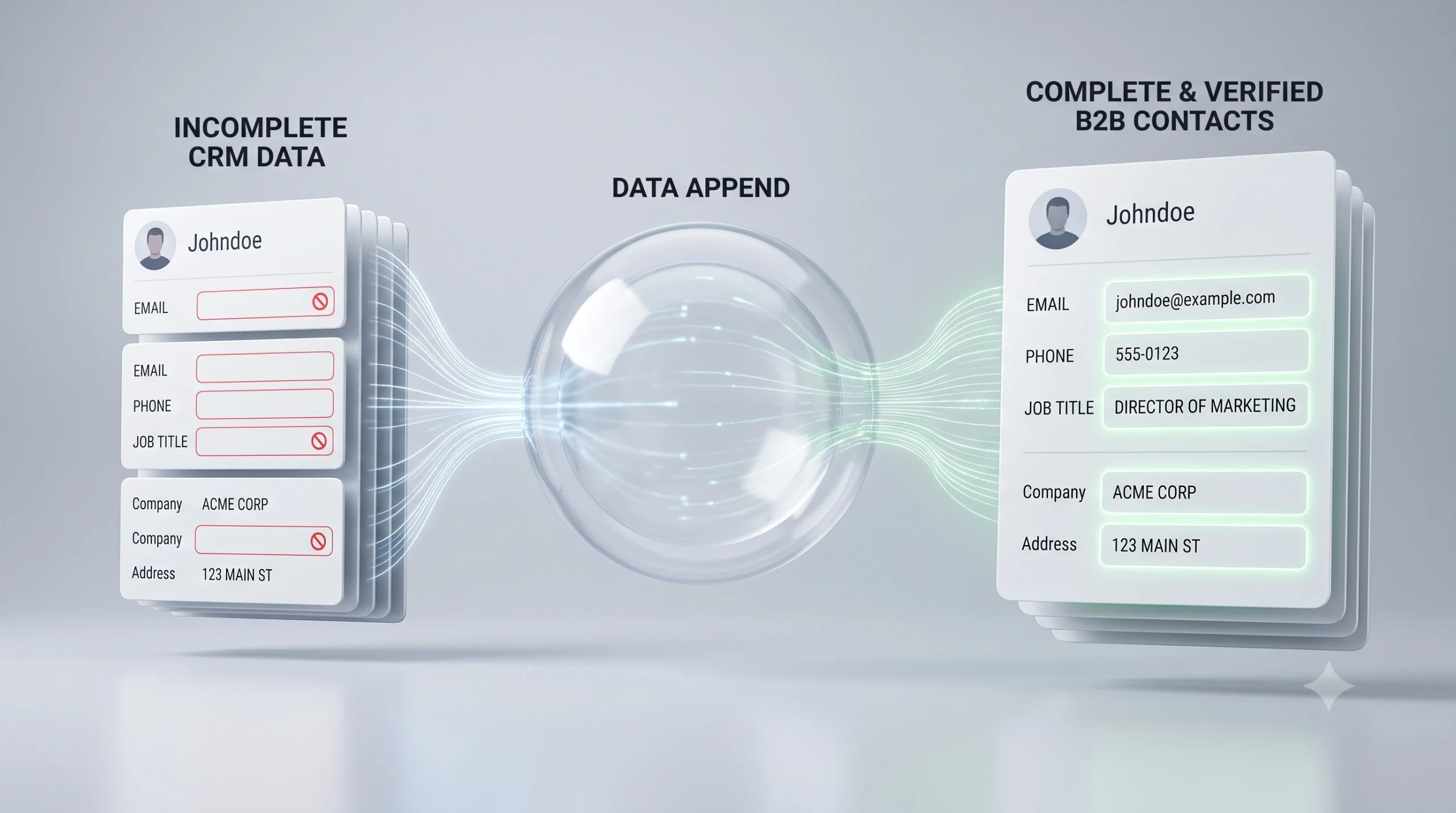
Data append is the process of taking your existing contact records, matching them against a verified third-party database, and filling in missing or outdated fields: email addresses, direct phone numbers, mobile numbers, job titles, company names, mailing addresses, and LinkedIn profiles. The result is a file that is more complete and more current than what you started with.
The Different Types of Data Append
Not all data append is the same service. The specific type you need depends on what data is missing and what channel you are trying to activate.
Email append is the most common request. You have records with names and mailing addresses or phone numbers, but the email addresses are missing or outdated. The data provider matches your records against their compiled email database and returns email addresses for the matched contacts. Match rates vary by file quality and provider, but a reputable service typically matches 30 to 60 percent of business contact records.
Reverse email append works in the opposite direction. You have email addresses but are missing physical addresses or phone numbers. This is common for companies that built an email subscriber list through inbound marketing but now want to expand into direct mail or telemarketing. A reverse append fills in the postal address or phone fields from a verified source.
Phone append adds direct dial numbers, mobile numbers, or both to records where only the main office line or no phone is listed. For sales development teams moving from email to phone outreach, phone append converts a flat email list into a multichannel contact file.
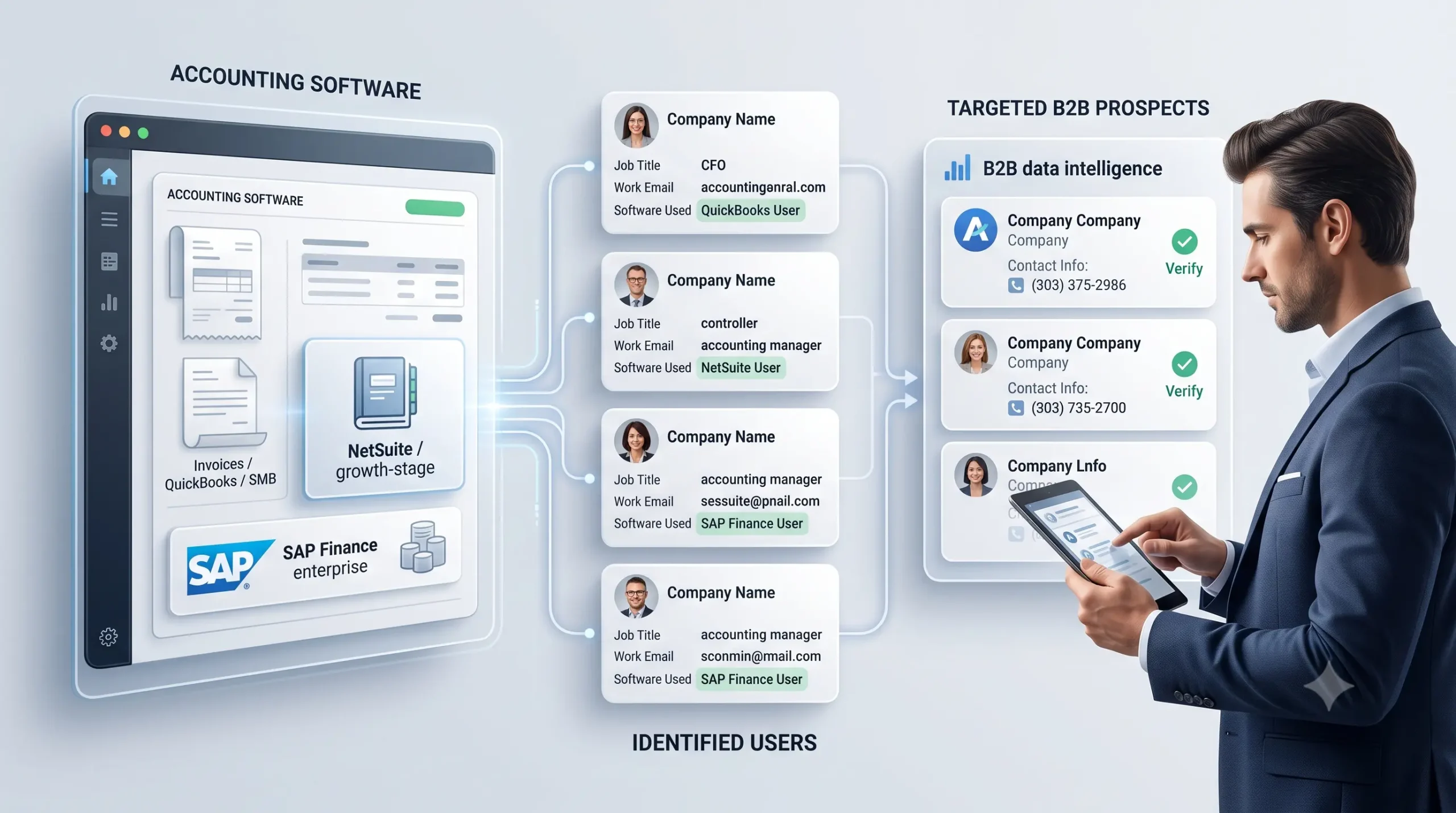
Demographic and firmographic append adds company-level or contact-level attributes that were not in your original data: industry classification, company revenue, employee count, job title standardization, LinkedIn URL, and so on. This is especially useful for lead scoring and segmentation when the source data was thin on context.
B2B data append is the term for any of the above services applied to business contacts, as distinct from consumer append which applies to residential records. The compliance considerations and data sources differ significantly between the two.
How the Matching Process Works
When you submit a file for data append, the provider runs a matching algorithm that attempts to link each record in your file to a corresponding record in their database. The match can happen on several identifiers: full name plus company, email domain plus name, phone number, or physical address.
Match quality depends on the uniqueness and accuracy of the identifiers you provide. A record with a full name, a company name, and a physical address is easier to match accurately than a record with only a first name and a job title. The more identifying fields your input file contains, the higher the match rate and the lower the risk of a false positive (matching your record to the wrong person at the same company).
After matching, a reputable provider runs the appended data through a verification step: email addresses are checked for domain validity and mailbox existence, phone numbers are tested against active line registries, and addresses may be run through NCOA (National Change of Address) processing to confirm currency.
The output is a file that has been matched, appended, and verified. Not every record will get a match. The provider should return the full file with appended fields where a match was found and blank fields where no match was available, rather than dropping unmatched records from the output.
Who Data Append Is Most Valuable For
The business cases that generate the clearest ROI from data append services fall into several recurring patterns.
- Companies with large inbound-sourced databases that collected contacts through content downloads, webinars, or event registrations but never captured a direct email or phone. These files often have business cards, job titles, and company names but incomplete contact channels. Append fills the gap before a sales outreach sequence begins.
- B2B teams preparing for a campaign to a cold or semi-warm list that has not been used in 12 or more months. Before spending on email sends or paid channel costs, running a data append and verification pass ensures the investment is going to reachable contacts.
- Companies that have merged or acquired a business and are integrating CRM files with different levels of data completeness. Append normalizes the merged file so both legacy databases meet the same contact quality standard.
- Sales development teams transitioning from email-only outreach to multichannel sequences that include direct dial calls. Phone append is the fastest way to equip an SDR team with direct numbers for a list that was built entirely through inbound email capture.
- Event and trade show follow-up teams working with badge scan data that often contains only name, company, and email, missing phone, direct address, and title details. Append enriches badge data into a full outreach-ready file before the follow-up sequence launches.
In a Quora thread about B2B database enrichment, a marketing operations director described the calculation: “We appended 18,000 records before our fall campaign. The cost of the append was less than one month of my email platform license. The deliverability improvement paid for it in the first send.”
What a Reputable Data Append Provider Looks Like
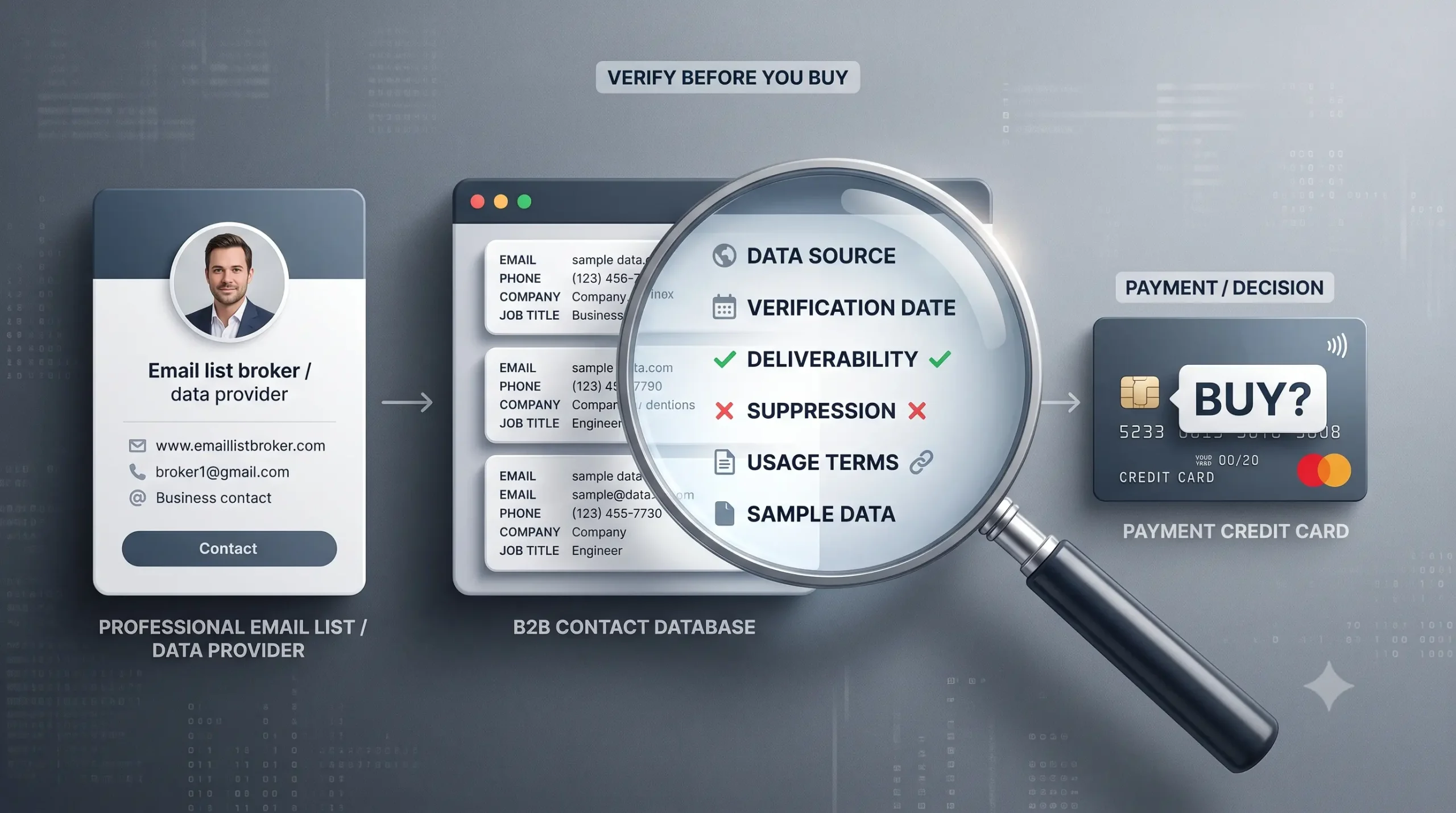
The data append industry has quality providers and low-quality vendors who will return a high-looking match rate by matching to outdated or unverified records. Before engaging a provider, ask the following.
What is your data sourcing? A reputable provider can explain where their database comes from: business directories, opt-in surveys, licensing agreements with data compilers, professional association records, and similar disclosed sources. Vague answers (“we aggregate from multiple sources”) without specifics are a red flag.
What verification steps do you run on appended data? The match is not sufficient on its own. The appended email needs to be verified as a live, deliverable mailbox, not just a syntactically valid address. The appended phone needs to be checked against active line registries. A provider who skips verification is delivering unvalidated matches, not clean data.
What is your match rate for B2B files? Honest providers will give you a range rather than a fixed guarantee, because match rate depends on input file quality. A provider promising 90 percent match rates for a business contact file is either overpromising or using low-confidence matches to inflate the number.
What are the compliance terms? Appended data comes with usage rights, just like a purchased list. Confirm that the provider’s data was collected in a manner consistent with CAN-SPAM requirements, and if your outreach extends into Canadian or European markets, that the sourcing is consistent with CASL and GDPR standards. Our compliance resource on CAN-SPAM requirements covers the key standards for US-based B2B email outreach.
Do you offer a suppression pass before delivery? A good provider will remove known opt-outs, DNC-registered numbers, and role-based email aliases from the appended output before they return the file. This saves you from suppression issues on your end and reduces the risk of outreach to contacts who have previously opted out of commercial communications.
Data Append vs. Buying a New List
A question that comes up in sales operations forums is whether it is better to append existing data or just buy a fresh list for the campaign.
The answer depends on the relationship to the existing contacts. If your CRM file contains leads who have already expressed some interest in your company (inbound inquiries, webinar attendees, past customers), appending that file is almost always the better investment. You are enhancing data with an existing signal of interest, which produces better campaign performance than cold outreach to a new purchased list.
If the existing file has no relationship history and you are treating it as a cold prospecting file, the comparison is closer. In that case, append quality versus new list quality should be evaluated on a cost-per-reachable-contact basis, accounting for match rate, verification, and deliverability guarantee.
Many effective campaigns use both: append the existing CRM file to recover contacts who have gone dark, and layer in a fresh purchased list to expand the addressable universe beyond current relationships.
For understanding how a list broker approaches both sourcing and data quality, our post on what a list broker does and how they work covers the full process. For a comparison of what separates quality data providers from low-quality ones, the guide on how mailing list brokers evaluate, test, and validate third-party lists is a useful reference before any data purchase or append engagement.
The Compliance Layer You Cannot Skip
Data append introduces a compliance consideration that some marketing teams miss: the appended data inherits the compliance obligations of the source database it came from. If the provider sourced email addresses from an opt-in panel, that is a legitimate collection basis. If the source is unclear, you inherit that uncertainty.
This matters under CAN-SPAM, which requires that you can identify the basis for contacting someone if challenged. It matters even more under GDPR for contacts in the EU, where the collection basis must be documented and defensible.
Before appending data for cross-border campaigns, confirm that your provider can document the collection methodology for contacts in each geography you are targeting. A provider who cannot answer that question cannot give you the compliance documentation you need.
If your CRM has gaps, our data append services can fill them. We append email addresses, phone numbers, mailing addresses, and firmographic fields against a verified, multi-source database. Match rates are disclosed upfront, verification is included, and suppression runs before delivery. Request a sample match against your file to see your estimated match rate before committing.
New to working with B2B data providers? Start with our guide on what a list broker does and how they work. For compliance requirements on US-based email outreach, see our resource on CAN-SPAM regulations.