The most common complaint you hear from marketers who have had a bad experience with email or mailing list data is not that they were scammed, exactly. It is that they bought something that was technically delivered but completely failed to perform, and by the time they realized that, there was no recourse.
High bounce rates. Emails to people who moved or changed jobs years ago. Phone numbers that ring to numbers no longer in service. A “100,000-record list” that after suppression and deduplication turns into 60,000, and after cleaning turns into 40,000 usable contacts.
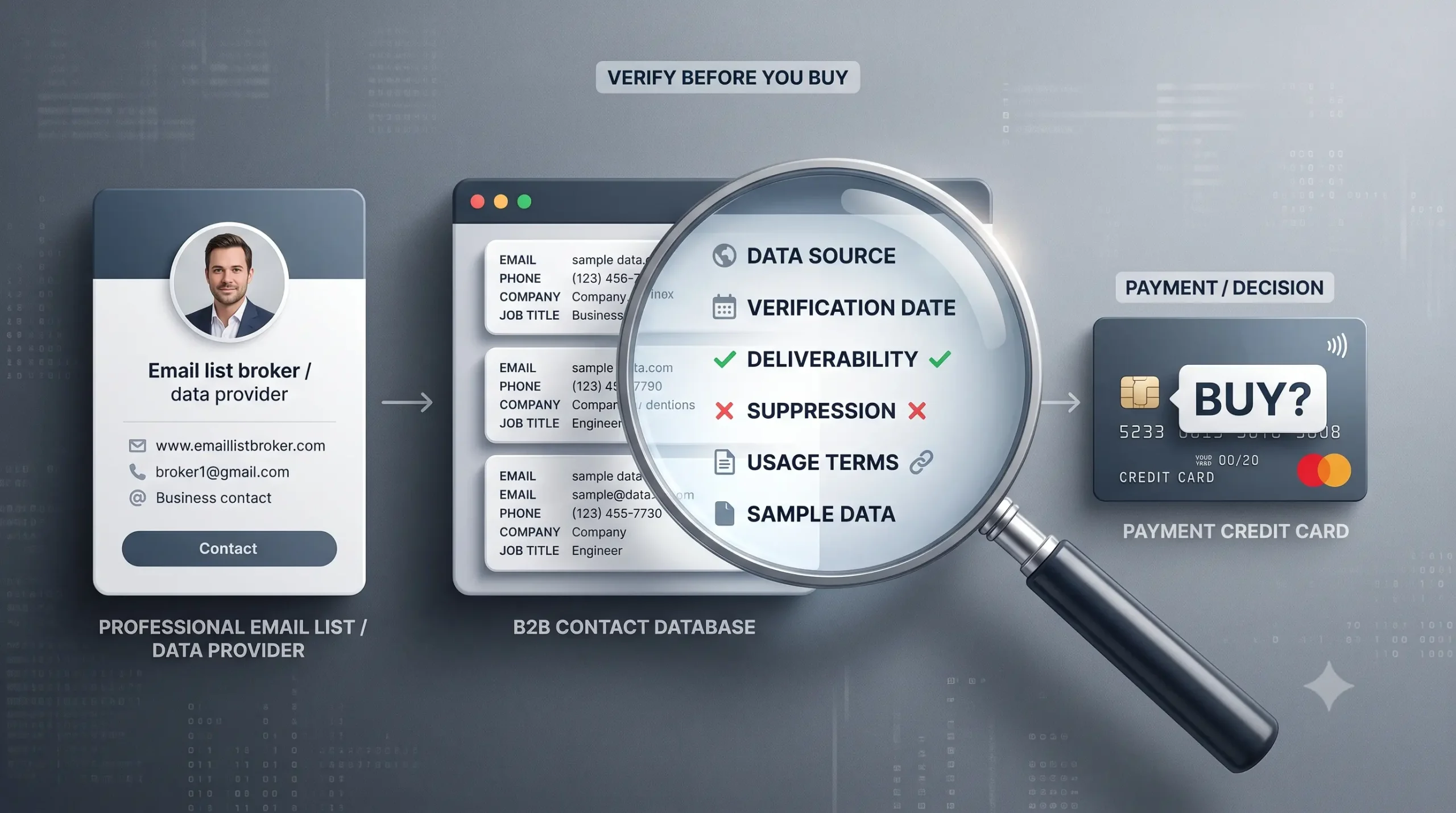
The problem is not always the data. Sometimes it is that the buyer did not know what to ask before paying. This post covers the six questions that separate an informed purchase from an expensive lesson. If you are new to how this industry works, start with our primer on what a list broker does and how they work before reading further, and understand the risks of buying lists without a mailing list broker on your side.
Question 1: What Is the Original Source of This Data?
This is the most important question and the one most buyers skip because they assume the broker has already vetted it.
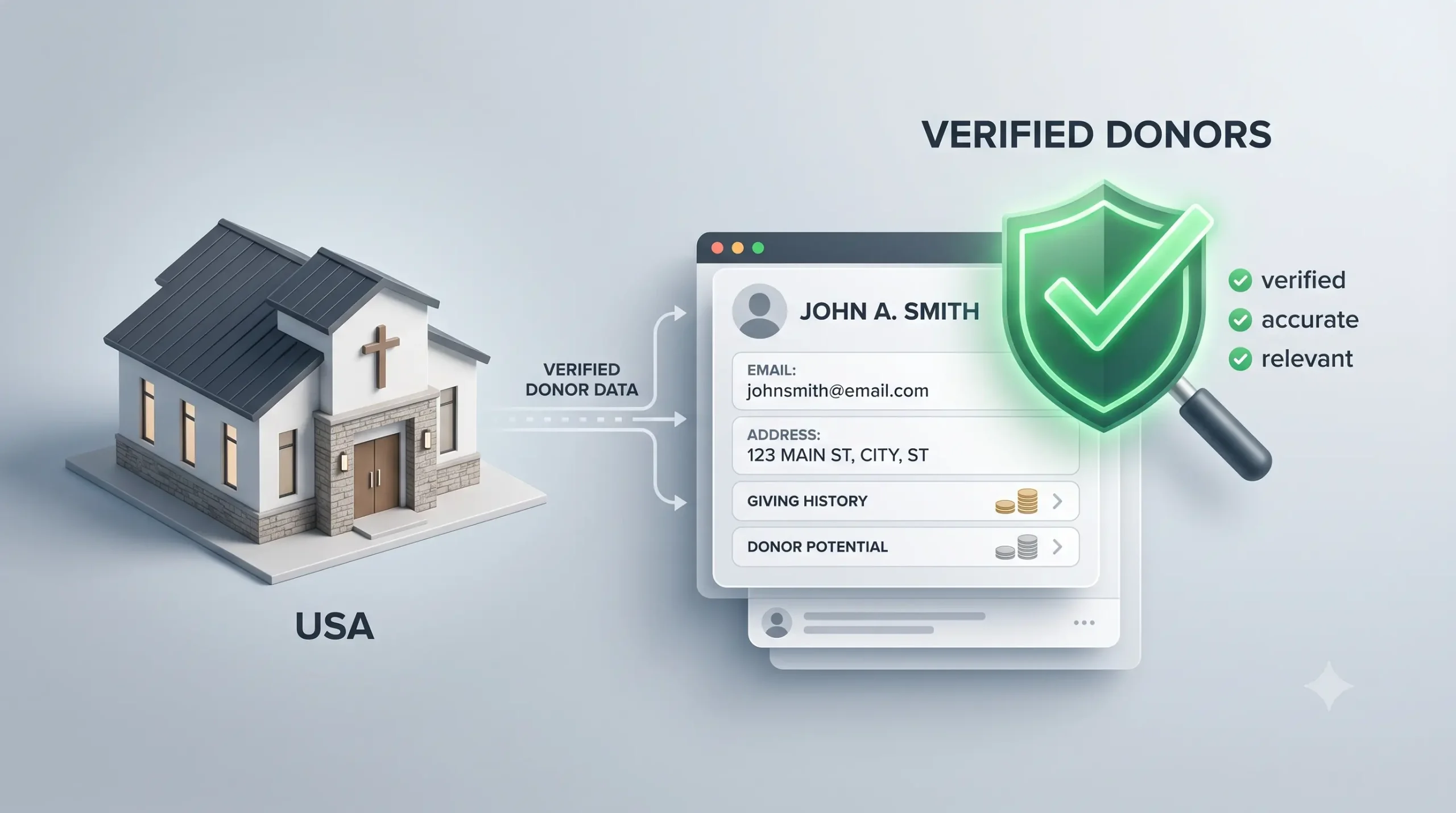
A reputable email list broker or mailing list broker can tell you, specifically, where their data comes from. The answer will reference things like: business directories, opt-in surveys, government records, professional association membership files, trade publication subscribers, or data licensing agreements with specific partners.
If the answer you get is vague (“we compile from multiple public sources”) or circular (“our database”), push for specifics. A broker who cannot describe their data sourcing cannot vouch for its quality or compliance lineage. That is a red flag regardless of what the price or the sales pitch says.
Data source transparency is also a compliance issue. CAN-SPAM requires that you can identify the basis for contacting someone if challenged. If your broker cannot tell you where the data came from, you cannot answer that question either.
Question 2: When Was This Data Last Verified?
All contact data decays over time. People change jobs, move offices, switch email addresses, and retire. In B2B data, the annual decay rate for business email addresses is estimated at roughly 22 to 30 percent per year. For mailing addresses, the USPS reports that approximately 40 million Americans move each year.
A list that was verified 18 months ago can have a meaningful percentage of bad records even if it looked clean at the time of verification. A reputable broker will tell you the verification date and, for mailing lists, whether the file has been run through NCOA (National Change of Address) processing, which updates addresses against the USPS’s record of address changes.
For email lists specifically, ask whether the records have been run through an email verification service that checks for syntax errors, domain validity, and mailbox existence. The answer should be yes, and the verification should be recent. Our post on how mailing list brokers evaluate, test, and validate third-party lists explains what a rigorous validation process looks like so you know what to expect.
Question 3: What Is the Deliverability Guarantee?
A quality list broker will stand behind their data with some form of deliverability commitment. This might be a stated threshold (for example, 85 to 95 percent deliverability guaranteed) with a replacement or credit process for records that fail beyond that threshold.
A broker who offers no deliverability guarantee and no recourse for bad data is essentially telling you the risk is entirely yours. That may be acceptable for a very small, very cheap test purchase. It is not acceptable for a significant campaign investment.
Ask specifically: what happens if my hard bounce rate exceeds a certain level? What is the process for reporting underperformance? Is there a test option before I commit to the full file?
Question 4: Is Suppression Available and Is It Included?
Suppression is the process of removing contacts from a list who should not be contacted, either because they have opted out of marketing communications, they are on a Do Not Call or Do Not Mail list, or they are already in your existing customer database.
A serious email or mailing list broker will offer to suppress against the DNC (Do Not Call) registry for telemarketing lists, and will provide a suppressed file for direct mail campaigns. For email, they should be able to accommodate your existing opt-out list so you are not mailing to people who previously unsubscribed from your communications.
Suppression is not just a nice feature. In some contexts it is a legal requirement. For telemarketing, calling numbers on the federal or state DNC registries without meeting one of the exemptions carries FTC fines. For direct mail, ignoring known opt-outs creates both brand and legal risk.
Question 5: What Are the Usage Terms?
List data is almost always licensed, not sold outright. That means you are purchasing the right to use the data for a defined purpose, a defined number of times, or within a defined time window. You are typically not purchasing the data to use indefinitely or to resell.
Read the usage terms before buying. Standard restrictions include: single use (you can mail the list once), time-limited use (for example, within 90 days of delivery), purpose restriction (for your campaign only, not for resale or sharing with third parties), and geographic or channel restrictions.
If you need to mail the same list multiple times, ask about multi-use licensing upfront. It is almost always possible to negotiate, but it needs to happen before the purchase, not after you have already used the list and want to use it again.
Question 6: Can I See a Sample Before I Commit?
Any legitimate email list broker or mailing list broker should be willing to provide a data sample before a full purchase. The sample does not need to be large, 100 to 200 records is sufficient to evaluate field completeness, data format, and obvious quality issues.
What to look for in a sample:
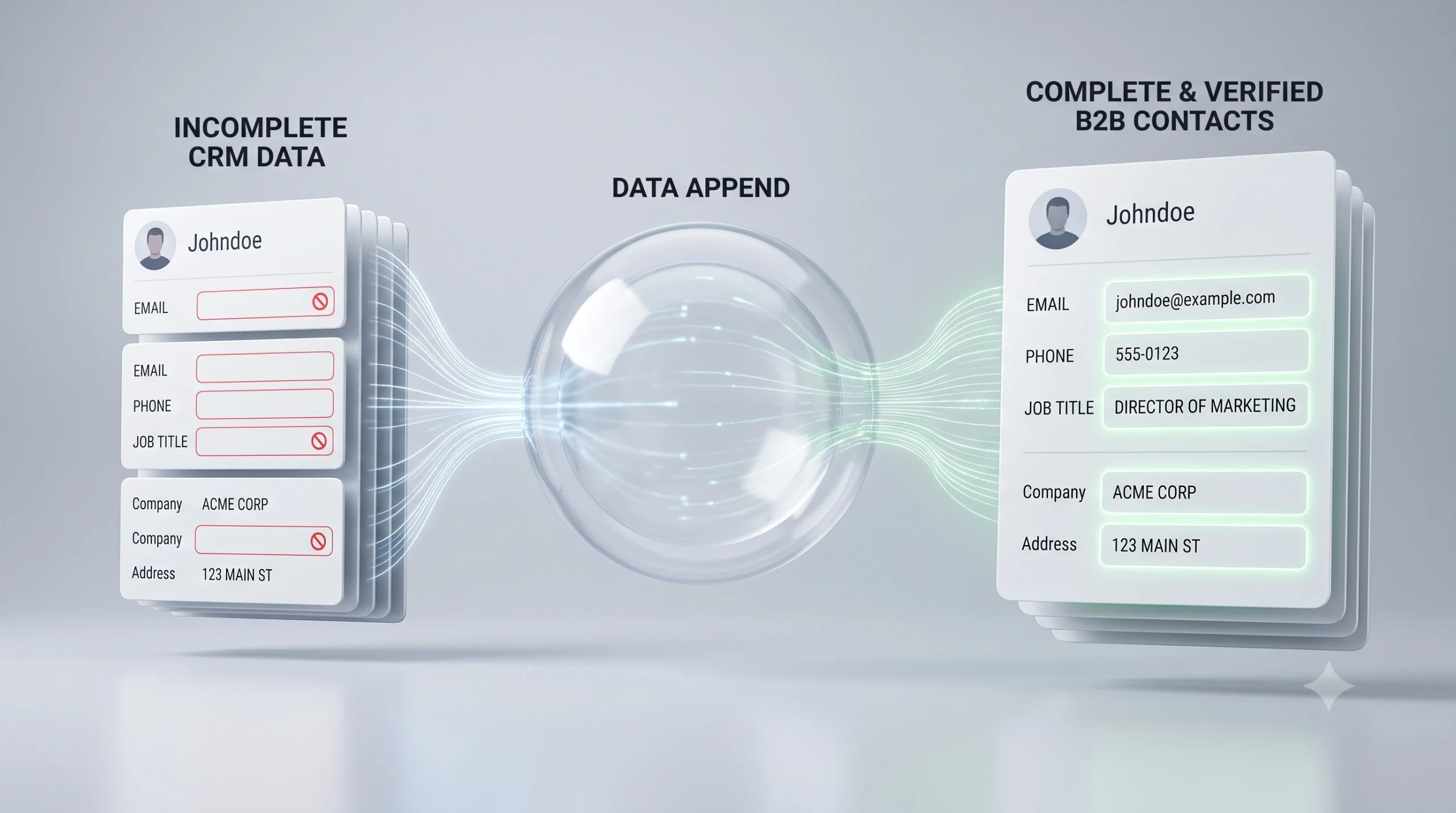
- Are all the key fields populated, or are there significant gaps in email addresses, phone numbers, or job titles?
- Do the company names and domains look realistic and consistent, or do you see obvious formatting errors, test records, or placeholder data?
- Are the email addresses formatted correctly and do the domains resolve?
- If you are buying by job title or function, do the titles in the sample reflect the seniority level you requested?
A broker who refuses to provide a sample without a good reason should be approached with caution. The standard industry practice is to provide a sample. Refusal often means the data quality would not survive scrutiny before purchase.
The Difference Between a Broker and a Data Vendor
One distinction worth understanding: a mailing list broker typically acts as an intermediary who sources data on your behalf from multiple list owners and compilers, represents your interests in the transaction, and has accountability to your campaign outcome. A data vendor is typically selling their own proprietary database directly. Our post comparing list brokers vs. data vendors covers this distinction in detail and helps you decide which model fits your campaign.
Both can produce good results, but the broker model tends to be more flexible for specific targeting needs, because the broker can access multiple sources and blend them to fit your requirements. The direct data vendor model is simpler and sometimes faster, but you are limited to what that one database contains.
Understanding which model you are dealing with helps you set expectations for coverage, customization, and support.
Learn how reputable brokers evaluate and validate third-party data in our post on how mailing list brokers evaluate, test, and validate third-party lists. New to the industry? Start with what a list broker does and how they work.