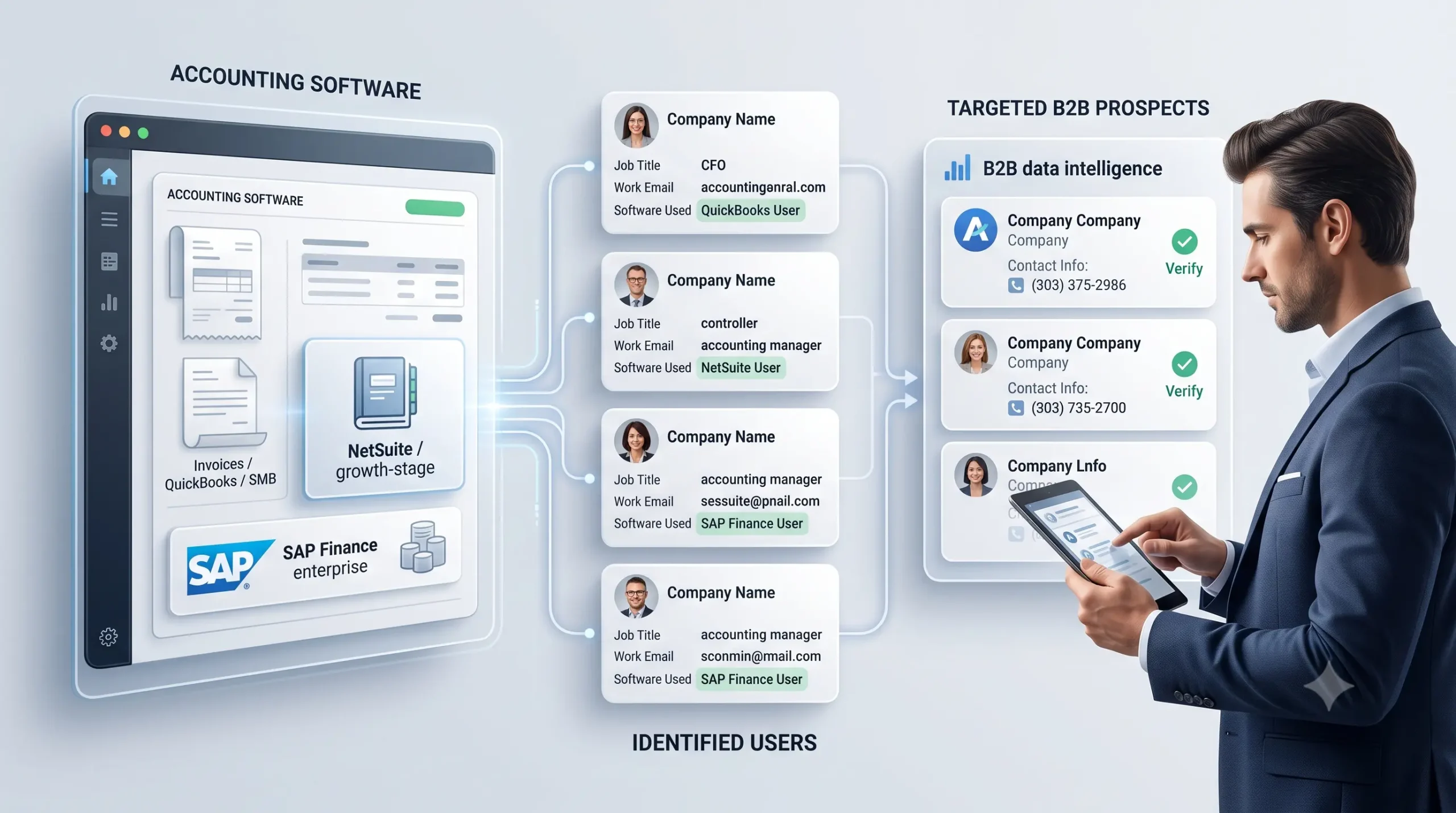
Buying a mailing list directly from an unknown vendor sounds simple. You find a source online, place your order, and receive contact data ready to use. What could go wrong?
Plenty. Mailing list brokers exist because buying lists without protection exposes you to serious risks that can destroy your campaign, damage your reputation, and waste your entire marketing budget. Understanding these risks helps you avoid expensive mistakes.
Let’s examine the real dangers of buying lists without broker protection and why most marketers need professional guidance.
Data Quality Risks Without Broker Vetting
Outdated Contact Information
The biggest problem with buying direct mailing lists from questionable vendors is receiving outdated data. Studies show that 20 to 40 percent of business contact data changes annually. People change jobs, companies move locations, phone numbers disconnect, and email addresses get abandoned.
Reputable data compilers update their databases monthly or quarterly through extensive verification processes. They run NCOA (National Change of Address) updates, verify phone numbers, and validate email addresses. Fly-by-night vendors skip these expensive update cycles and sell you data that might be years old.
When you mail to outdated addresses, you waste money on printing and postage for pieces that never reach anyone. A 5,000-piece mailing with 40 percent bad addresses throws away $800 to $1,200 in postage alone. That doesn’t count printing costs, design work, or the opportunity cost of missing your target audience.
Fake and Duplicate Records
Bad list vendors pad their counts with fake records and duplicates. They might list the same person five times with slight variations in name spelling or address format. Your 10,000-name order delivers only 6,000 unique contacts, but you paid for the full count.
Worse, some lists contain spam traps intentionally planted by email providers and anti-spam organizations. These fake addresses identify senders using questionable data sources. Hit a spam trap and your sender reputation crashes immediately. Your domain gets blacklisted and future emails land in spam folders even for legitimate contacts.
Mailing list brokers work only with sources that verify data and remove duplicates through merge-purge processes. They know which vendors maintain clean files because they track deliverability rates across thousands of campaigns.
Inaccurate Demographic Information
You order a consumer list targeting homeowners with $100,000 plus household income. The data arrives and you launch your campaign. Response rates tank.
Investigation reveals the demographic overlays are completely wrong. Half the supposed homeowners are renters. The income data comes from decade-old modeling that bears no relation to current reality. Your perfectly crafted message reached the wrong audience through no fault of your strategy.
Questionable vendors use cheap or outdated data sources for demographic appends. They might claim detailed targeting capabilities but deliver garbage data. Without access to performance tracking across many campaigns, you can’t know if the targeting actually works until you’ve already wasted your budget.
Working With Questionable Vendors
No Source Transparency
Ask a questionable list vendor where their data comes from and watch them dodge the question. They talk about “multiple proprietary sources” or “comprehensive data gathering” without naming specific sources or methodologies.
This lack of transparency hides major problems. The data might be scraped from websites without consent. It could be recycled from other vendors who already sold the same contacts to dozens of buyers. It might come from data breaches or questionable co-registration schemes where people unknowingly agreed to share information with unnamed third parties.
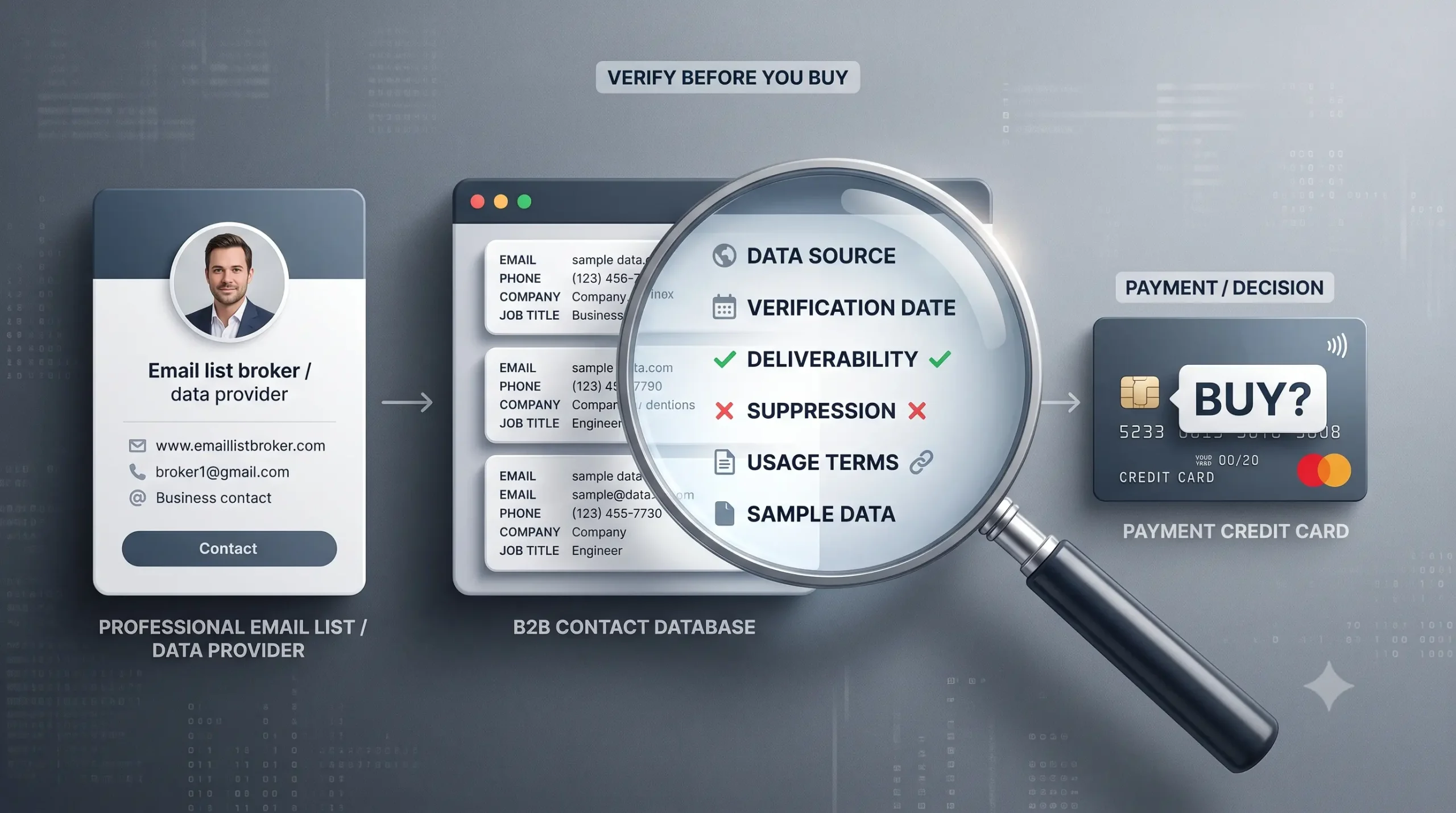
Mailing list brokers represent established data compilers who document their sources clearly. They work with companies like Experian, Equifax, and other major compilers with transparent data collection practices. When you work with brokers representing these sources, you know exactly where your data originates.
Unrealistic Promises and Red Flags
Certain red flags identify questionable vendors immediately. Claims of guaranteed response rates should trigger alarm bells. No legitimate vendor guarantees response because too many factors beyond the list affect campaign performance.
Suspiciously cheap pricing indicates old or low-quality data. Business lists from reputable sources cost a certain minimum based on the expense of compilation and maintenance. Vendors offering prices far below market rates cut corners somewhere, usually on data quality and update cycles.
Missing refund policies, unclear contact information, and vague terms of service all signal problems. Legitimate vendors stand behind their data with clear policies, accessible customer service, and transparent business practices.
Check reviews before buying from any vendor. Search sites like Trustpilot and Better Business Bureau. One or two bad reviews might be anomalies, but patterns of complaints about data quality or customer service indicate systematic problems.
Data Resellers Selling Old Information
Some questionable vendors buy data from reputable compilers then resell outdated versions at discount prices. They purchased a database two years ago and keep selling the same file without updates.
You think you’re saving money buying at a lower price. In reality, you’re paying for worthless information that legitimate compilers discarded months ago. The reseller pockets profit selling you data they know is outdated.
Mailing list brokers have direct relationships with data compilers and access current files. They can’t resell old data because they don’t own the data, they broker access to fresh files on your behalf.
Compliance and Legal Risks
Email Marketing Platform Violations
Major email platforms like Mailchimp, Constant Contact, and AWeber explicitly prohibit using purchased lists in their terms of service. Upload a purchased list and send campaigns, and the platform’s monitoring systems detect the suspicious activity.
High spam complaint rates and low engagement signal purchased data. The platform suspends or terminates your account without warning. You lose access to your entire email marketing infrastructure including templates, automation workflows, and most importantly, your legitimate subscriber lists.
Rebuilding with a new platform takes weeks or months. Your email marketing stops completely during that time. The damage to ongoing campaigns and customer relationships can’t be measured in dollars alone.
Legitimate opt-in email lists from brokers come from sources that maintain proper consent documentation. These lists comply with platform terms of service because recipients actually requested information from sources in related industries.
CAN-SPAM and GDPR Issues
Buying lists without verifying consent processes exposes you to legal liability under laws like CAN-SPAM in the United States and GDPR in Europe. These regulations require consent before sending marketing messages.
A questionable vendor might claim their lists are “opt-in” or “permission-based,” but they can’t provide documentation showing when and how people consented. The vendor’s claims don’t protect you legally. You’re responsible for the emails you send regardless of what the vendor promised.
GDPR violations carry fines up to 4 percent of global revenue. Even smaller CAN-SPAM penalties add up quickly when calculated per violation. The legal risk far exceeds any perceived savings from buying cheap lists without broker protection.
Deliverability Damage That Lasts
Spam Complaints Destroy Sender Reputation
When you send emails to people who never requested information from you, many mark your messages as spam. Email providers track complaint rates meticulously. Cross certain thresholds and they blacklist your domain.
Once blacklisted, your emails stop reaching inboxes even for legitimate contacts who want your messages. The damage spreads beyond the bad purchased list to affect all your email marketing. Future campaigns to your good house list land in spam folders.
Rebuilding sender reputation takes months or years of careful email practices. Some businesses never fully recover and must abandon domains permanently. The permanent damage from one bad purchased list can destroy years of marketing infrastructure.
High Bounce Rates Tank Your Metrics
Purchased lists contain high percentages of inactive or non-existent email addresses. Send to these addresses and your bounce rate spikes to 20, 30, or even 40 percent.
ISPs and email providers flag senders with high bounce rates as low-quality sources. They assume anyone sending to that many bad addresses either doesn’t maintain their lists properly or uses questionable sources. Either way, they deprioritize your mail.
The negative reputation from high bounces affects all future sends including campaigns to clean, verified contacts. Your telemarketing lists might be perfect, but if your email reputation is damaged, coordinated multi-channel campaigns fail because the email component gets blocked.
The Financial Impact of Bad Lists
Wasted Campaign Costs
Calculate what you actually lose when a purchased list fails. Start with the list cost itself, maybe $500 to $2,000. Add printing costs for direct mail at perhaps $300 to $800 per thousand pieces. Postage runs another $400 to $600 per thousand for standard mail.
A failed 10,000-piece campaign using bad data wastes $5,000 to $8,000 in hard costs alone. That doesn’t count design work, copywriting, project management time, and the opportunity cost of missing your market window.
Cheap lists amplify these losses. You save $200 buying from a questionable vendor instead of a broker-recommended source. That purchase destroys a $6,000 campaign. The math doesn’t work.
Hidden Costs Add Up Fast
Beyond direct campaign costs, bad lists create cascading expenses. If an email platform terminates your account, you need to rebuild your infrastructure with a new provider. Migration takes staff time and often requires hiring technical help.
Domain reputation damage might force you to purchase and warm up new sending domains. This process takes months and requires specialized knowledge most marketers don’t have. You might hire consultants to manage the reputation repair.
Retesting with new lists doubles your campaign expenses. You still need to find your audience, so you start over with better data sources. The testing budget gets spent twice when bad lists waste the first round.
Missing Strategy Guidance Hurts Performance
No Help Selecting the Right List Type
Should you use response lists or compiled lists for your offer? Which demographic selects actually improve targeting versus adding cost without value? How do you structure a test to get reliable results?
Vendors selling specialty lists want to make a sale. They don’t provide strategic guidance on whether their list fits your needs. They tell you everything works great and cash your check.
Mailing list brokers guide selection based on extensive campaign experience. They know response lists work better for certain offers while compiled data performs well for others. They prevent you from overpaying for unnecessary selects that don’t improve response.
This strategic guidance often saves more than the list cost itself. Steering you away from a $3,000 mistake costs the broker nothing because their commission comes from the source. They succeed when you succeed, so they recommend what actually works.
Poor Test Structure Wastes Money
Testing with samples too small to provide statistically significant results wastes your entire test budget. You might test 1,000 names per list when you need 3,000 to 5,000 for reliable conclusions. Your test results are meaningless but you don’t know it.
Testing multiple variables simultaneously prevents identifying what actually drove results. You test three different lists with three different offers across six different demographics. Dozens of variables changed and you can’t determine which ones mattered.
Brokers guide proper test structures based on direct marketing principles. They help you isolate variables, select appropriate sample sizes, and interpret results correctly. This guidance prevents wasted testing budgets and helps you find winners faster.
How Mailing List Brokers Protect You
Quality Vetting You Can’t Do Yourself
Mailing list brokers track performance across thousands of campaigns for hundreds of clients. They see which data sources consistently deliver accurate information and which vendors ship problematic files.
When a compiler’s deliverability rates drop, brokers notice immediately. They contact the source to address problems or stop recommending that data until issues get resolved. You benefit from this ongoing quality monitoring without doing the tracking yourself.
Individual marketers can’t accumulate this intelligence. You might run a few campaigns per year. Brokers see hundreds of campaigns monthly across diverse industries and markets. That volume provides insights no individual buyer can match.
Brokers also drop vendors who don’t maintain standards. They build reputations on the lists they recommend. Suggesting bad sources destroys their credibility, so they vet carefully and continuously monitor quality.
Compliance Documentation and Protection
Reputable brokers verify that data sources maintain proper consent documentation, run required NCOA updates, scrub against Do Not Call registries, and follow industry best practices. They can provide this documentation if questions arise.
When you work with multi-channel lists coordinating mail, phone, and email, compliance becomes complex. Different regulations govern different channels. Brokers ensure all components meet appropriate requirements.
This compliance protection carries real value. Legal defense costs dwarf list costs if consent issues lead to lawsuits or regulatory action. Broker-recommended sources with proper documentation dramatically reduce these risks.
Strategic Guidance Prevents Expensive Mistakes
Campaign strategy guidance from experienced brokers prevents targeting errors, testing mistakes, and poor list selection decisions. They’ve seen what works across industries and offers.
They know that certain list types work better for acquisition versus retention, that timing affects response rates significantly, and that creative message must align with list selection. This holistic guidance improves results beyond just supplying data.
The guidance costs you nothing extra because brokers earn commission from sources. But the value of preventing a failed campaign far exceeds the list cost itself.
Real Cost Comparison: Direct vs Broker
Compare actual costs between buying direct from questionable vendors and working with list brokers representing reputable sources.
Direct Purchase Scenario: List cost: $1,200 (cheap vendor) Campaign costs: $6,000 Result: 35% bad data, campaign fails Total loss: $7,200
Broker Purchase Scenario: List cost: $1,200 (same price, commission paid by source) Campaign costs: $6,000 Result: 95% deliverable, normal response rates Total cost: $7,200 ROI: Positive based on response
The list costs the same either way. But the direct purchase from an unvetted source wastes $7,200 while the broker-recommended source delivers results. You didn’t save money going direct because the commission isn’t charged to you.
Think of brokers as free insurance for your campaign investment. They protect the money you spend on printing, postage, and creative without charging you for that protection.
Protect Your Marketing Investment
The risks of buying lists without mailing list brokers are real and expensive. Data quality issues waste campaign budgets. Questionable vendors deliver outdated or fake information. Compliance violations create legal liability. Deliverability damage persists for years. Missing strategy guidance leads to poor decisions.
Most marketers can’t properly vet data sources. You don’t have access to performance data across thousands of campaigns. You can’t know which compilers maintain quality and which cut corners. You lack expertise to structure proper tests or select optimal list types.
Brokers provide this protection at no additional cost. The commission structure means you pay the same list price either way. But working with brokers dramatically reduces risks while improving campaign performance.
Don’t risk campaign failure to save zero dollars. The protection brokers provide is worth multiples of the list cost when it prevents wasted campaign budgets, compliance violations, and reputation damage.
Ready to work with mailing list brokers who vet sources, ensure compliance, and guide strategy for better results? Contact ProspectsInfluential to protect your marketing investment with access to over 70,000 verified popular lists from reputable sources. Get started with expert list brokers who’ve helped thousands of marketers avoid expensive mistakes and achieve successful campaigns across North America.