Pharmaceutical companies and medical device manufacturers have known for years that the traditional “target the physician only” playbook no longer reflects how care decisions are actually made. In most clinical settings, physician assistants (PAs) and nurse practitioners (NPs) are involved in prescribing, purchasing recommendations, and formulary decisions at a level that rivals attending physicians in many specialties.
But here is where many marketing teams get stuck: PA email lists and NP email lists are different files, from different sources, with different regulatory and compliance considerations. And when you add specialty-specific lists like gastroenterologists or arthritis specialists into the mix, the segmentation question becomes even more important.
This post breaks down who each list is best for, the clinical and prescribing authority differences that affect your outreach, and how to think about sequencing when you are working across multiple healthcare audiences. For a broader overview of what is available, our full medical and healthcare consumer lists section covers the range of specialty files.
Physician Assistants: Prescribing Authority Across All 50 States
Physician assistants hold prescribing authority in all 50 US states and the District of Columbia. As of 2023, the American Academy of Physician Associates adopted the updated title “physician associate,” though the PA designation remains widely used in medical marketing and licensing contexts.
PAs work across virtually every specialty and setting, from primary care to emergency medicine to orthopedic surgery. In hospital systems, they often serve as the daily point of contact for patients while the attending physician supervises a broader caseload. That positioning makes PAs particularly influential in the product decisions that happen at the clinical floor level, not in the boardroom.
For pharmaceutical companies selling in primary care, psychiatry, or urgent care settings, a physician assistants email list gives access to a segment that sees high patient volume and has real prescribing authority. For medical device and health IT companies, PAs often serve on the committees that evaluate new tools and equipment at the departmental level.
Nurse Practitioners: Full Practice Authority in More Than Half of US States
Nurse practitioners have full practice authority (the ability to prescribe and operate independently without physician oversight) in 27 states plus Washington DC as of 2026. The remaining states have reduced or restricted practice authority, meaning NPs operate under a collaborative agreement with a physician.
The distinction matters for marketing because NPs in full practice authority states are more likely to be making independent prescribing decisions. In those states, an NP is functionally equivalent to a primary care physician for most routine clinical decisions, including pharmaceutical choices.
Acute care nurse practitioners (ACNPs) are a specific and often overlooked subspecialty. ACNPs are trained to work in high-acuity environments: ICUs, cardiac step-down units, emergency departments, and trauma centers. If your product is relevant to critical care, cardiology, pulmonology, or acute illness management, an acute care nurse practitioners email list reaches a much more targeted segment than a general NP file.
How Pharma and MedTech Use These Lists Differently
Pharmaceutical companies typically use PA and NP lists for:
- Formulary awareness campaigns for new drug approvals
- Continuing education content offers, which are particularly effective because PAs and NPs have CE requirements
- Product detail emails that would otherwise be handled by a sales rep visit
The shift toward digital detailing, which accelerated after 2020 and has not reversed, means that email-based outreach to mid-level practitioners now occupies a role that field sales once held almost exclusively. For device companies specifically, our post on how medical device and health IT companies use hospital email lists to close more B2B dealscovers the full hospital-system targeting strategy.
Medical device and health IT companies typically use these lists for:
- Product demonstrations and webinar invitations
- Clinical trial recruitment, particularly for devices evaluated in outpatient or specialty settings
- Targeting committee members who influence purchasing decisions at department or system level
Where Specialty Lists Fit In: Gastroenterologists and Arthritis Specialists
When your product serves a specific specialty, a general healthcare practitioner list is the wrong tool. The audience is too broad and response rates suffer because the message is not clinically relevant to most recipients. Browse our full doctor and specialist mailing lists to see the full range of specialty files available.
A gastroenterologist email list is used by companies selling GI-specific therapeutics (drugs for IBD, IBS, GERD, hepatitis C), diagnostic equipment (endoscopy systems, capsule cameras), and health IT tools built for GI workflows. The GI specialty is a high-value target because gastroenterologists typically run independent or group practices with direct purchasing authority, and the GI therapeutic market is substantial and growing.
An arthritis specialists email list (which in practice means rheumatologists, the specialty most associated with inflammatory arthritis treatment) is used by companies selling biologics, JAK inhibitors, DMARD therapies, and joint health devices. Rheumatology is one of the most aggressively marketed specialties in pharmaceutical, because the biologics market in autoimmune disease runs into the tens of billions annually.
Which Audience to Target First
The sequencing question depends on your product and your sales motion:
If you are selling a product used across multiple specialties and settings (a general diagnostic tool, an EHR integration, a practice management platform), start with physician assistants. PAs are present across almost every care environment, have prescribing or recommendation authority, and are systematically underserved by pharma and device marketing that defaults to physician-only targeting. A physician assistants email list typically reaches an audience that has not been contacted by your competitors as heavily.
If you are selling a specialty-specific product (a biologic for rheumatoid arthritis, a GI device, an ICU monitoring system), start with the specialty list that directly matches your clinical indication. A gastroenterologist email list or an arthritis specialists email list gets your message to the people for whom it is clinically relevant, which is the single biggest driver of response rate in healthcare marketing.
If your product is used in high-acuity hospital settings, the acute care nurse practitioners email list is often the overlooked entry point into those environments, because ACNPs are the clinical staff most consistently present on the floor where treatment decisions happen in real time.
Data Quality Considerations Specific to Healthcare Lists
Healthcare practitioner data requires more rigorous verification than general business lists for a few reasons. Provider licenses are state-issued and can lapse or change. Hospital affiliations shift. Practitioners retire, relocate, or change specialties. A GI specialist who moved from private practice to hospital employment last year may be unreachable at their old contact details.
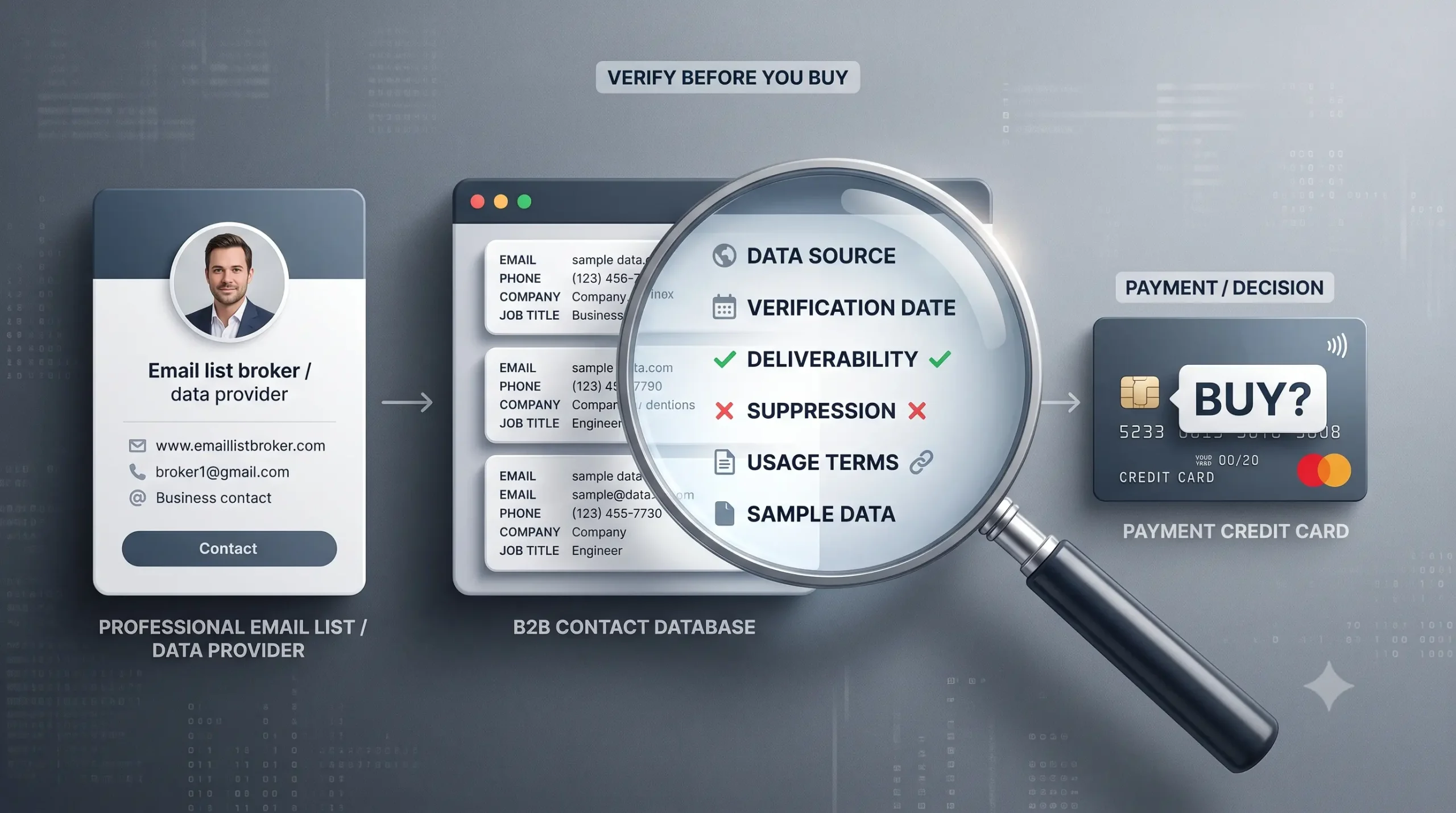
Before purchasing any specialty healthcare email list, ask the provider how recently the file was verified against state licensing databases and the National Provider Identifier (NPI) registry. The NPI is a public federal database that tracks every licensed healthcare provider in the US. Any quality healthcare list compiler cross-references their data against the NPI to confirm that practitioners are active and properly licensed.
Reach verified, NPI-matched physician assistants with our Physician Assistants Email List. For other specialty lists, explore our medical and healthcare lists or browse our full doctor and specialist mailing list options.