Quick answer: Email marketing to pet owners works best when every message is tied to the animal, not just the person. Segment by species, the pet’s life stage and the owner’s purchase cycle. Send a mix of welcome, replenishment, educational and seasonal emails, timed to the moments owners actually need help, such as flea season, holidays and a pet’s birthday. Grow the list through opt-in sign-ups, and use rented opt-in pet owner lists to reach new households.
Pet owners open email about their animals for the same reason they talk about them: they care. That makes the audience unusually responsive, and unusually quick to unsubscribe from generic promotions that treat a senior cat owner the same as a new puppy owner.
This guide is for pet brands, retailers, veterinary practices, groomers, pet insurers and animal welfare charities. It covers who to segment, what to send, when to send it and how to get the right pet owners on your list in the first place.
Who emails pet owners, and why it works
Pet owners buy on a repeat cycle, worry about their animal’s health and celebrate their pets openly. Email fits all three: it can remind, reassure and celebrate at the right moment.
| Sender | Main goal of the email program |
|---|---|
| Pet food and treat brands | Repeat purchase and subscription retention |
| Pet retailers and online stores | Basket size, seasonal sales, loyalty |
| Veterinary practices | Appointment reminders, preventive care, trust |
| Groomers, boarders and dog walkers | Rebooking and local awareness |
| Pet insurers | Quote requests and renewals |
| Animal welfare charities | Donations, adoption and volunteers |
Charities have a related but separate audience: people who give to animal causes. An animal welfare donors list reaches donors with a giving history, which usually outperforms a general pet owner list for fundraising.
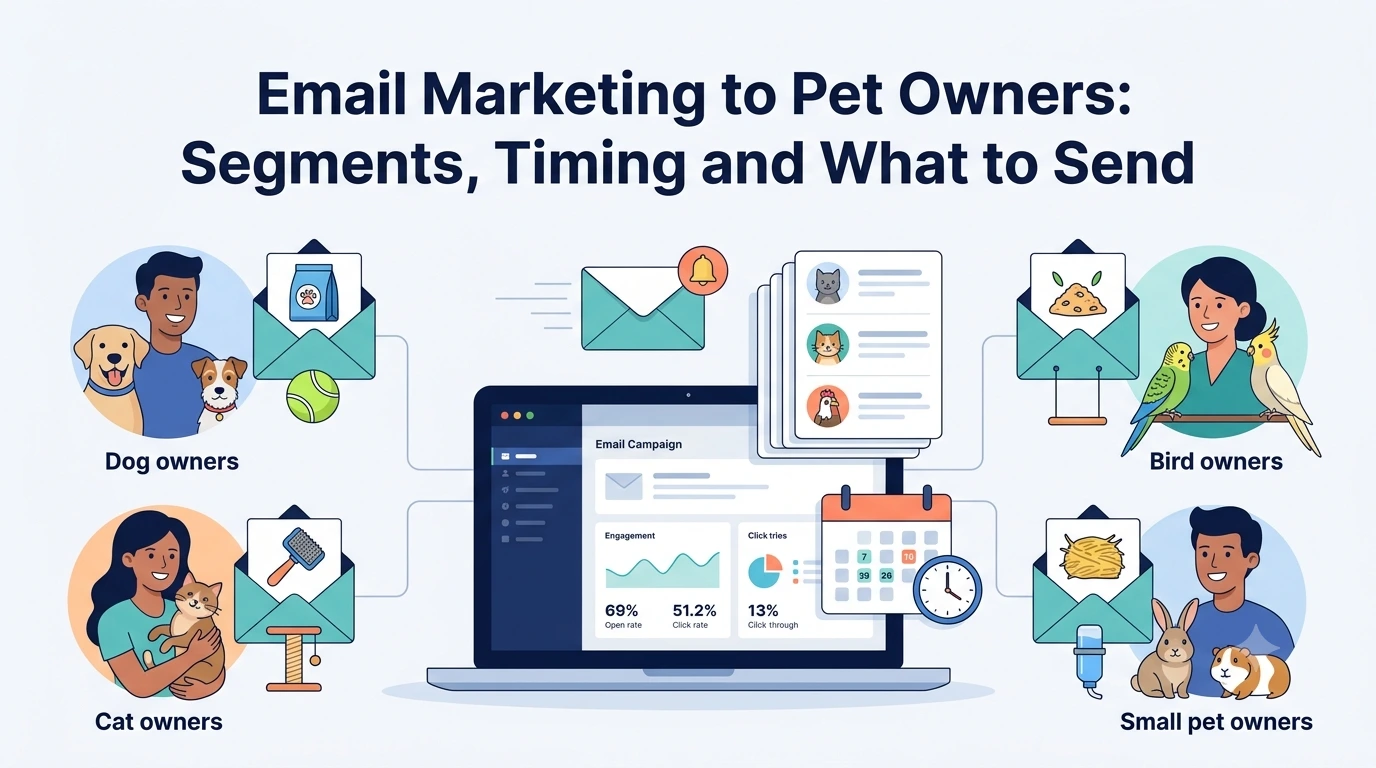
The segments that matter most
Five segments do most of the work. Collect the data for them at sign-up, with a short form or a preference center, and keep it updated.
Species and breed size
Dog, cat, bird, fish, reptile and small animal owners need different products and different advice. Within dogs, breed size changes food portions, toy durability and even the right flea treatment. A dog owner who gets a cat litter promotion learns to ignore you.
The pet’s life stage
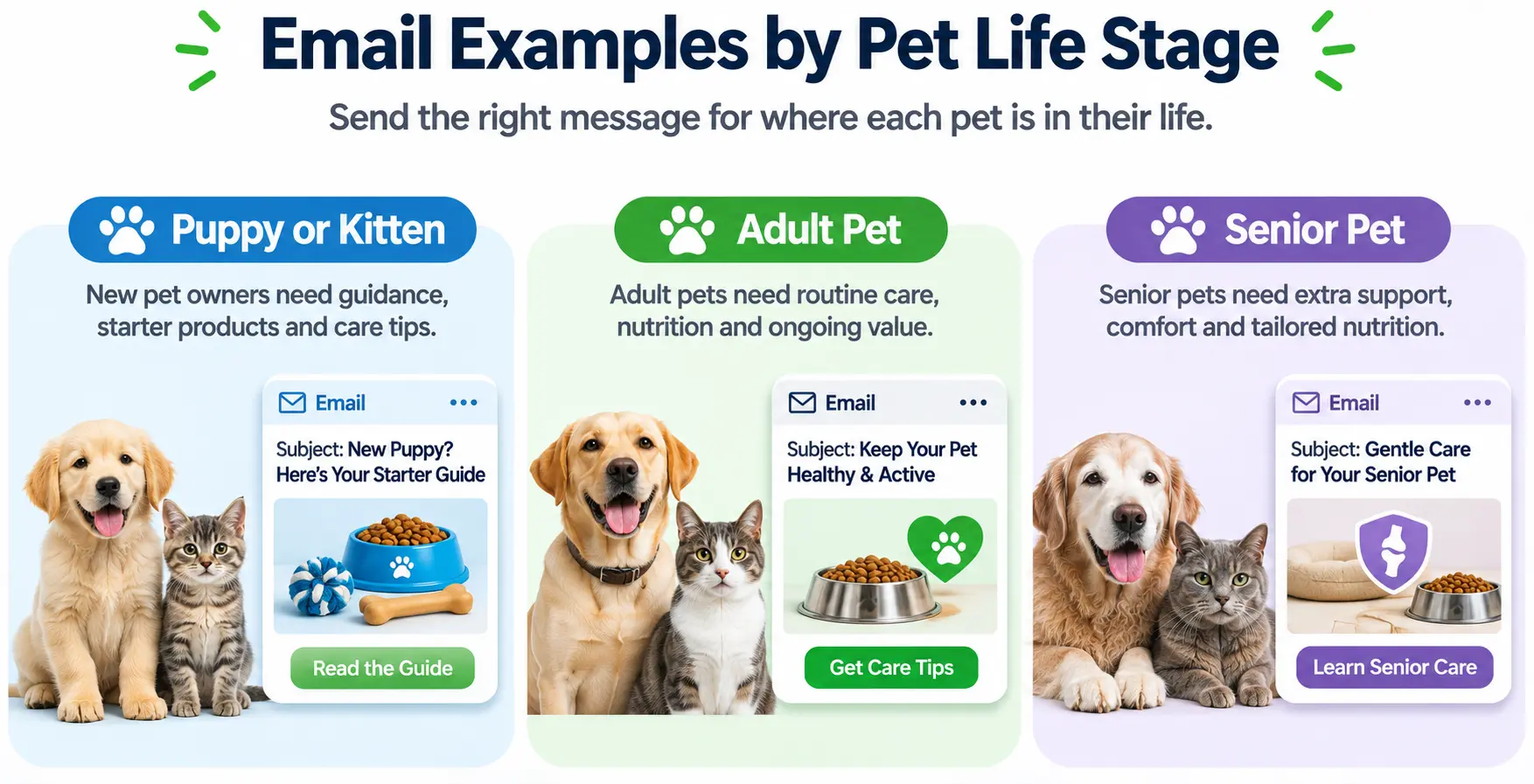
A puppy or kitten owner needs training, vaccination and starter supplies. An adult pet owner wants routine care and value. A senior pet owner looks for joint support, gentler food and comfort. Ask for the pet’s birth date or approximate age once, and your emails can age with the animal.
Purchase cycle
Food, litter and preventive medication run out on a predictable schedule. Track when each customer last bought and roughly how long a bag or pack lasts, then time the reminder to arrive a few days before they run out.
Number of pets
Multi-pet households buy more and value bundles and bulk options. They also respond well to content that recognizes the realities of managing several animals at once.
Location
Climate shapes the calendar: flea and tick season starts earlier in warm regions, and winter paw care matters most in cold ones. Local businesses such as vets and groomers also need location to keep emails within their service area. Lists can be filtered by state, city or ZIP code, or by province in Canada.
What to send: seven email types that work for pet owners
A healthy program mixes useful messages with promotional ones. If every email is a sale, owners stop opening them.
- Welcome series. Two or three emails after sign-up: who you are, a question about their pet, and a reason to come back. Ask for the pet’s name, species and age here.
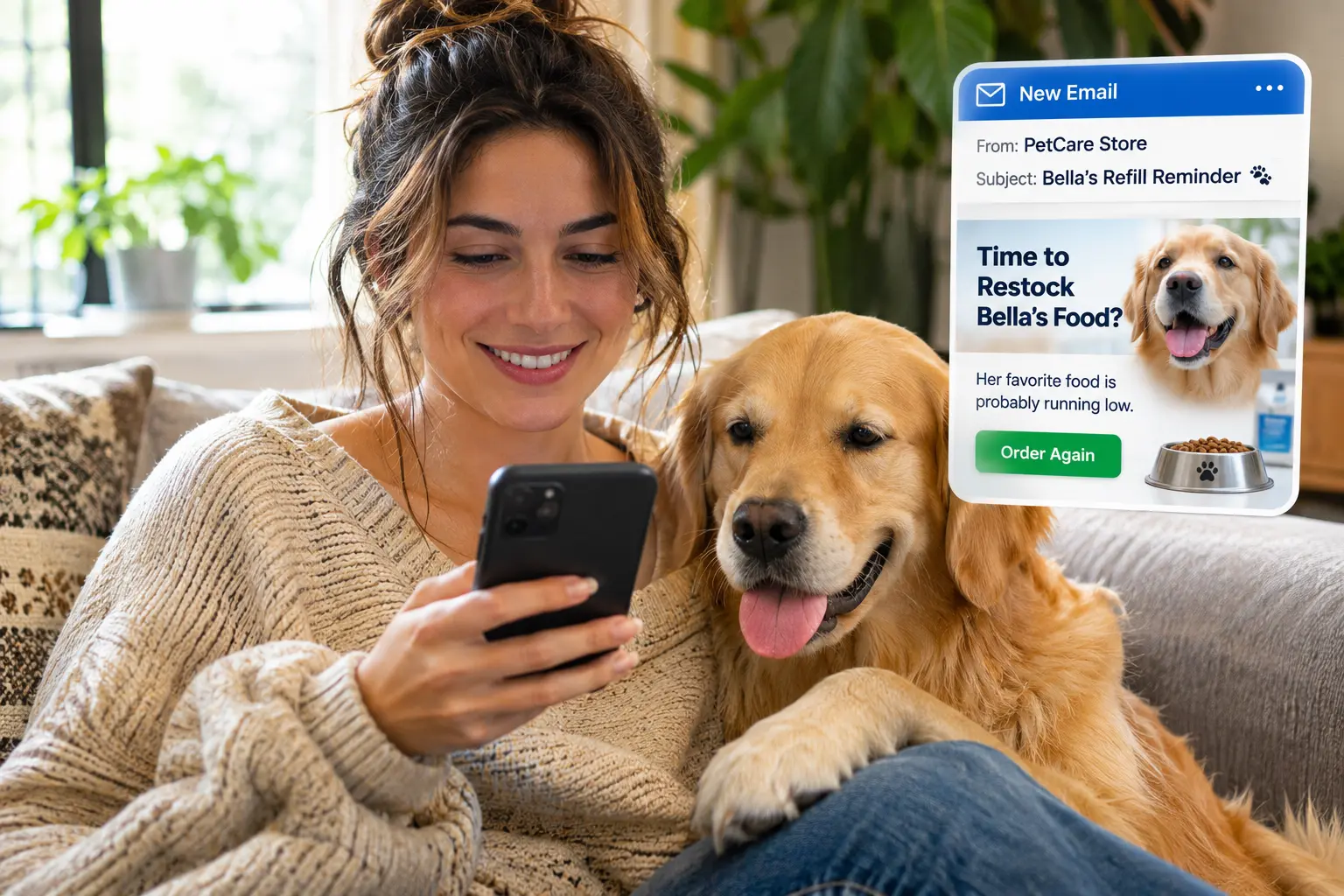
- Replenishment reminders. “Bella’s food is probably running low” is more useful than a generic discount. Time it to the purchase cycle.
- Educational content. Training tips, feeding guidance by life stage, signs a senior dog may need a vet check. This builds trust between sales. Avoid medical claims you cannot support, and point health questions to a veterinarian.
- Seasonal and safety emails. Flea and tick prevention, heat safety, holiday food hazards, fireworks anxiety. These arrive when owners are already worried, which is when help gets noticed.
- Pet birthday or adoption anniversary. A short, personal message with a small treat or offer. Owners notice when you remember.
- Reviews and photos. Ask for a review or a photo of the pet using the product. User photos make strong content for later emails.
- Win-back. For customers who have gone quiet, a check-in that asks whether anything changed, followed by a reason to return. Remove them after a final message if they still do not engage.
Use the pet’s name in subject lines and opening lines where you have it. Use the owner’s name sparingly; the pet is usually the bigger draw.
Timing: a seasonal calendar and send cadence
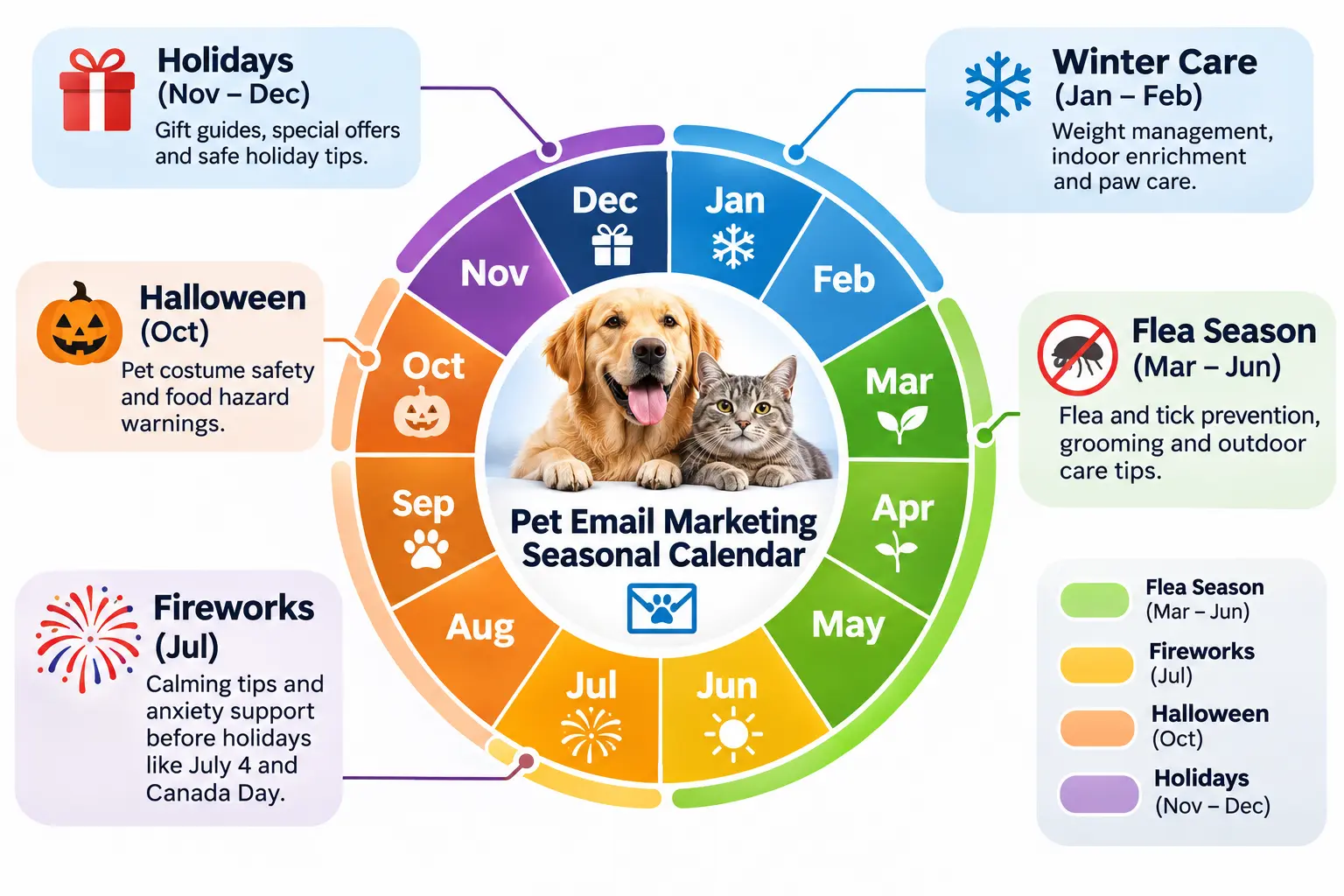
The best timing follows the pet owner’s year, not your sales calendar. Adjust the season dates for your region.
| Period | What owners are thinking about | Email ideas |
|---|---|---|
| January to February | New routines, weight, winter weather | Healthy weight tips, winter paw care, indoor enrichment |
| March to April | Spring cleaning, parasites returning | Flea and tick prevention reminders, grooming bookings |
| May to June | Outdoor time, travel planning | Hiking and travel gear, boarding and pet sitter bookings |
| July | Heat, fireworks | Heat safety, calming products before July 4 and Canada Day |
| August to September | Back to school, routine changes | Separation anxiety tips, dental care |
| October | Halloween hazards | Costume safety, chocolate and candy warnings |
| November to December | Holidays, gifting, visitors | Gift guides for pets and pet lovers, holiday food hazards, year-end giving for charities |
On top of the calendar, three personal triggers beat any seasonal send: the purchase-cycle reminder, the pet’s birthday and the anniversary of a first order or adoption.
How often to send
There is no single right frequency. A practical starting point for most pet businesses is one useful email a week, plus triggered messages such as reminders. Watch unsubscribe and complaint rates as you add sends. If they rise, cut back or segment more tightly rather than pushing harder.
Building or renting a pet owner email list
Your own list is the long-term asset. Rented lists are how you reach households who have never heard of you. Most pet businesses need both.
Growing your own list
- At checkout and booking: ask for email and the pet’s details in the same step.
- With a useful sign-up offer: a puppy starter guide, a senior pet checklist or a first-order discount.
- In store and at the clinic: a simple sign-up at the counter, with clear consent wording.
- At events: adoption days, pet expos and community fairs.
Renting an opt-in pet owner list
A rented opt-in email list reaches pet owners who agreed to receive offers from third parties. With many email lists, the list owner deploys your message on your behalf, so you never hold the addresses. Anyone who responds becomes your own subscriber, and that is the real goal of the rental.
When you brief a rental, specify species, pet age or life stage where the data supports it, household location, and any buying signals such as recent pet product purchases. Start with a test segment, measure responses, and then expand. Browse the pet owners mailing list or the wider range of consumer opt-in email lists.
Email is not the only option. Direct mail to pet owners, with a sample or coupon, often works well as a first touch because a physical piece is harder to ignore. A consumer multi-channel list lets you pair mail and email for the same household.
Compliance
- United States: CAN-SPAM requires an accurate sender, an honest subject line, a physical postal address and a working unsubscribe that you honor promptly.
- Canada: CASL requires consent before you send a commercial email to Canadian recipients. Read CASL in 2026 before including Canadian pet owners.
- Health claims: treat claims about pet health, supplements or treatments with care. Keep them accurate and supported, and send medical questions to a veterinarian.
This is general information, not legal advice.
Mistakes to avoid
- One message for every pet. Cat owners and dog owners rarely want the same email. If you only have one segment, start with species.
- Ignoring the pet’s age. Puppy offers sent to senior dog owners signal that you do not know them.
- Discount-only programs. Constant promotions train owners to wait for the next sale and erode margin.
- Forgetting loss. When an owner tells you a pet has died, stop all emails about that animal at once. A reminder about food for a pet that is gone can end the relationship.
- Letting rented-list responders go cold. Move new responders into your welcome series immediately, while their interest is fresh.
Metrics to track
| Metric | What it tells you |
|---|---|
| Open rate by segment | Whether subject lines and timing match each group (treat as directional, since privacy features inflate opens) |
| Click rate | Whether the content is useful enough to act on |
| Repeat purchase rate | Whether replenishment emails are timed right |
| Revenue or bookings per email | The real return from each send |
| Unsubscribe and complaint rate | Whether you are sending too often or to the wrong segment |
| Response rate on rented lists | Which list segments are worth reordering |
Frequently asked questions
How do you do email marketing for pet owners? Collect each pet’s species, name and age at sign-up, segment your list on those details, and send a mix of welcome, replenishment, educational, seasonal and personal emails. Time messages to the owner’s purchase cycle and the pet care calendar.
What should I email pet owners about? Useful topics include feeding and training by life stage, seasonal safety such as heat, fireworks and holiday foods, preventive care reminders, product restock reminders and personal touches such as the pet’s birthday.
How often should I email pet owners? Start with about one useful email a week plus triggered reminders, then adjust based on unsubscribe and complaint rates. Tighter segments can support more frequent sends.
Can I buy a pet owner email list? You can rent opt-in pet owner email lists, where people have agreed to receive third-party offers. The list owner typically sends your message for you, and responders join your own list.
Can I target dog owners or cat owners specifically? Yes. Many pet owner lists can be selected by species, and some by other details such as household location or pet product purchases. Ask what selections a list supports before you order.
Does email marketing work for veterinary clinics and groomers? Yes, especially for appointment reminders, preventive care and rebooking. Keep the list local and personal; a clinic’s own client list is usually its best asset.
Do I need consent to email pet owners in Canada? Yes. CASL requires consent before sending commercial email to Canadian recipients.
Reach pet owners who are ready to respond
Prospects Influential is an independent list broker with access to more than 70,000 lists, including pet owner lists selectable by species, location and buying behavior. We recommend the list that fits your campaign, not one we happen to own.
Explore the pet owners mailing list or request a quote for counts in your target area. With offices in West Vancouver, BC and Bellingham, WA, we cover pet owners across the US and Canada.