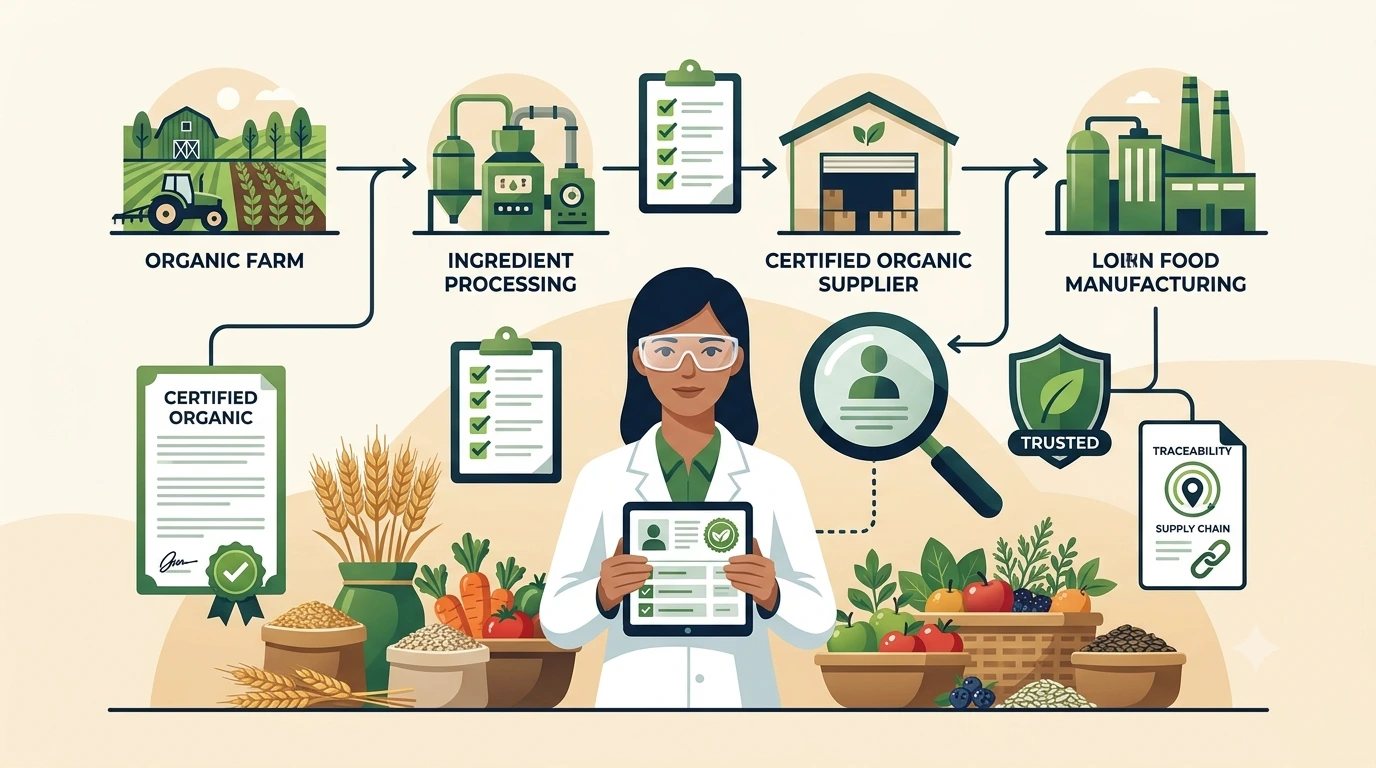
Quick answer: Food manufacturers find certified organic ingredient suppliers through the USDA Organic Integrity Database, specialist organic distributors and brokers, trade shows, industry directories and direct outreach to growers and processors. Before buying, verify that the supplier’s organic certificate is current and covers the exact product, check traceability back to the certified source, confirm food safety credentials, and request documents such as import certificates and certificates of analysis.
Organic sourcing is harder than conventional sourcing. Supply is tighter, prices move more, and the paperwork has to hold up all the way to the finished label. One supplier with a lapsed certificate can put an entire product line’s organic claim at risk.
This guide walks procurement and quality teams through the certification basics in the US and Canada, the main supplier types, where to find them and how to vet them. It closes with a short section for suppliers who want to reach food manufacturers.
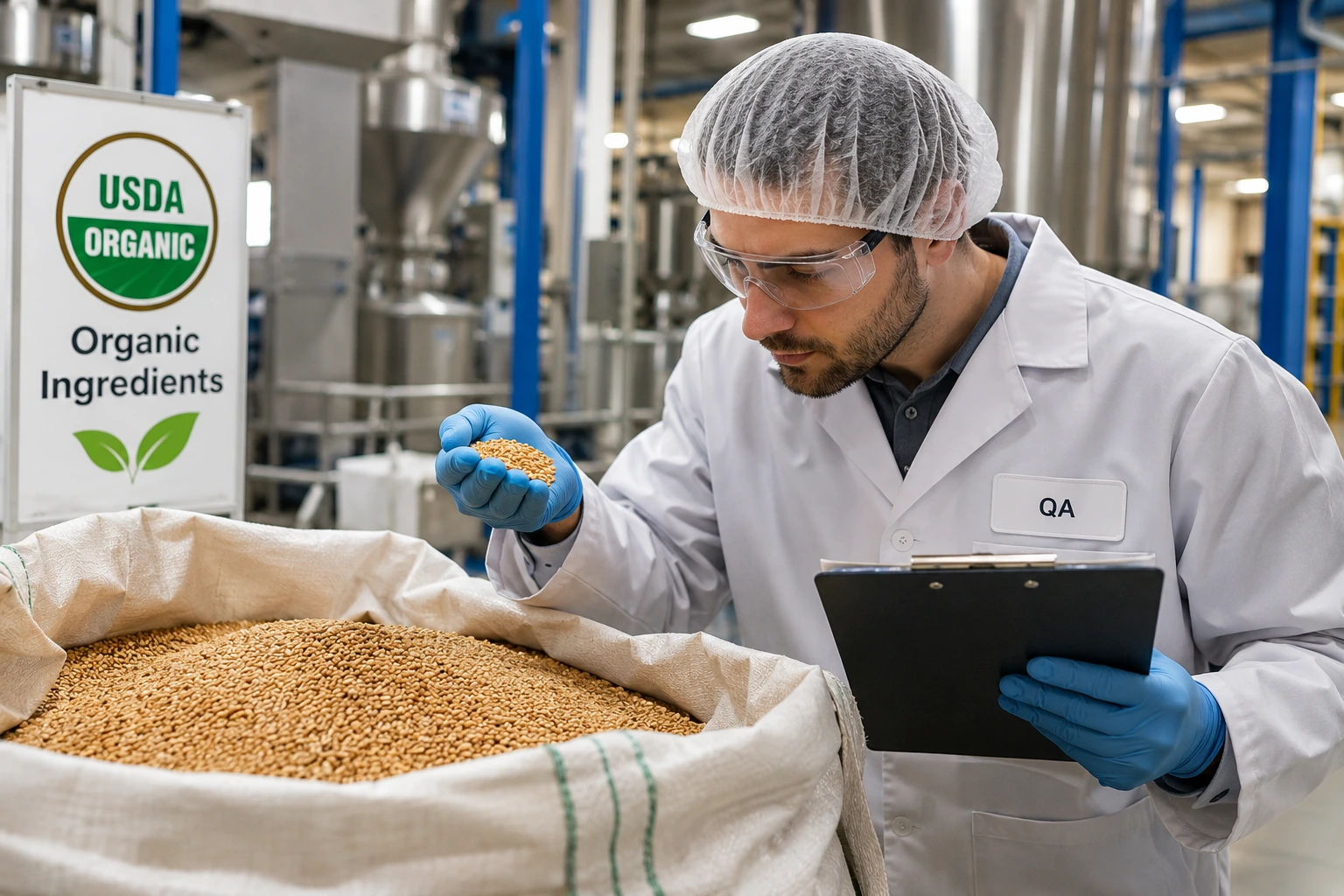
Organic certification basics in the US and Canada
You cannot vet a supplier without knowing what their certificate is supposed to prove.
United States
Organic products in the US fall under the USDA National Organic Program (NOP). Farms and handling operations are certified by USDA-accredited certifying agents, and each certified operation appears in the public USDA Organic Integrity Database.
The Strengthening Organic Enforcement rule, with a compliance date of March 2024, tightened the supply chain. Many brokers, traders and handlers that were previously exempt now need their own certification, organic imports need an NOP Import Certificate, and certified operations must keep fraud prevention plans. In practice, this means more of your supply chain should be certified than before, and more documents should travel with each shipment.
US labels follow three main tiers: “100% organic”, “organic” (at least 95% organic ingredients) and “made with organic” (at least 70%). The tier you plan to claim decides how strict your ingredient sourcing has to be.
Canada
In Canada, organic claims fall under the Canada Organic Regime, overseen by the Canadian Food Inspection Agency (CFIA) under the Safe Food for Canadians Regulations. Operations are certified by certification bodies accredited through CFIA-designated conformity verification bodies. A product must contain at least 95% organic content to carry an organic claim or the Canada Organic logo.
Cross-border sourcing
The US and Canada have an organic equivalency arrangement, so products certified under one system can generally be sold as organic in the other, subject to the arrangement’s terms. Check the current terms before relying on it for a specific ingredient.
Regulations change, so confirm current requirements with your certifier before making sourcing decisions.
Types of organic ingredient suppliers
Each supplier type trades price, flexibility and traceability differently. Most manufacturers use more than one.
| Supplier type | Strengths | Trade-offs | Best for |
|---|---|---|---|
| Growers and farm cooperatives | Direct traceability, relationship pricing, possible contract growing | Seasonal supply, limited processing, smaller volumes | Core ingredients you buy every year |
| Ingredient processors | Cleaned, milled, dried or concentrated ingredients ready for production | Fewer options for small orders | Flours, sweeteners, oils, purees, powders |
| Specialist organic distributors | Wide catalog, smaller minimums, consolidated shipping | Margin on top of source price; one more link in the chain | Many ingredients at moderate volume |
| Importers and traders | Access to ingredients not grown at scale domestically | Longer chains, import paperwork, currency risk | Spices, cocoa, coffee, tropical fruits, some grains |
| Foodservice organic suppliers | Pack sizes and delivery suited to kitchens | Not built for manufacturing volumes | Commissaries, catering, prepared foods |
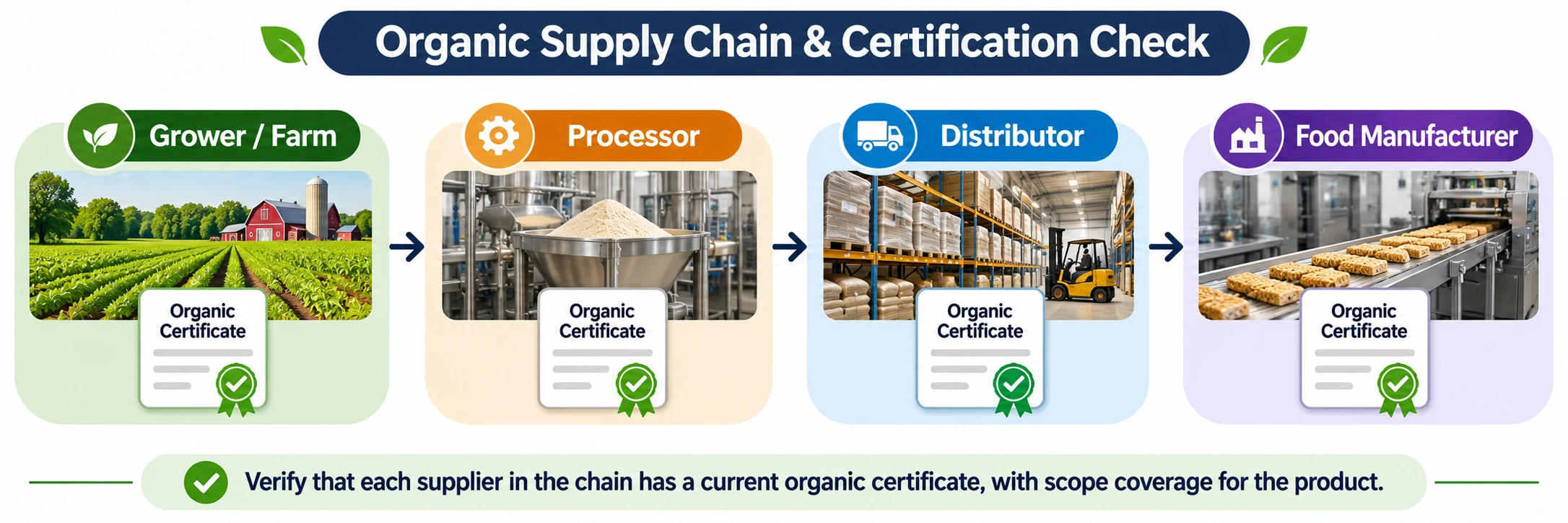
Whatever the type, the supplier you buy from should hold its own valid organic certificate, or fall under a clearly documented exemption that your certifier accepts. Under the current US rules, “we just trade it, we don’t need certification” is no longer a safe answer for most intermediaries.
Where to find certified organic suppliers
Use at least two of these routes. A single source tends to show you the same few suppliers everyone else already uses.
1. The USDA Organic Integrity Database
The database lists every operation certified under the NOP. You can search by product, certification scope, location and status. It is the best starting point for a long list, and the place to check every supplier you find through other routes.
2. Organic distributors and ingredient brokers
Specialist distributors and ingredient brokers already hold relationships with certified growers and processors. They are useful when you need several ingredients, smaller quantities or help finding a hard-to-source item.
3. Trade shows and industry events
Natural and organic products trade shows bring ingredient suppliers, processors and brands into one place. They are the fastest way to meet many suppliers in person and compare samples side by side.
4. Industry associations and certifier directories
Organic trade associations and some certifying agents publish member or client directories. These often surface smaller regional suppliers that do not advertise widely.
5. Direct outreach to growers and processors
For ingredients you buy in volume every year, approaching growers and processors directly can secure supply and better pricing, sometimes through contract growing. A targeted agriculture and farming businesses list or a farm mailing list helps procurement teams build an outreach list of producers in a specific region, which you then verify against the Organic Integrity Database.
6. Peer referrals
Other manufacturers, co-packers and your own certifier often know which suppliers deliver reliably. Ask, especially for ingredients where supply has been tight.
How to vet an organic ingredient supplier
Work through these checks before the first order, and record the results in your supplier approval file. Your certifier will expect to see them.
- Verify the certificate yourself. Get a copy of the organic certificate, then confirm it independently in the Organic Integrity Database (US) or with the issuing certification body (Canada). Check the status, the certifier and the expiry or anniversary date.
- Check the scope. The certificate must cover the exact product you are buying, in the form you are buying it. A certificate for organic wheat does not cover organic wheat flour unless the milling operation is certified too.
- Trace the chain. Ask where the ingredient was grown and who handled it in between. Every handler in that chain should be certified or properly exempt. Gaps in the chain are where organic fraud usually happens.
- Collect import documents. For imported organic ingredients entering the US, ask for the NOP Import Certificate for each shipment. US importers also need to consider their obligations under the FDA’s Foreign Supplier Verification Program.
- Confirm food safety credentials. Organic is not a food safety standard. Ask for a GFSI-benchmarked certification such as SQF, BRCGS or FSSC 22000, or for recent audit results.
- Request specifications and test results. Get the product specification, a certificate of analysis for a sample lot, allergen information and, where relevant, residue testing results.
- Test a sample in production. Run a trial batch before committing. Organic ingredients can vary more than conventional ones from lot to lot.
- Assess supply security. Ask about capacity, harvest risk, lead times and backup sources. Agree how shortages and price changes will be communicated.
Once approved, keep the supplier’s certificate on file and set a reminder to recheck it before it lapses.
Red flags to watch for
- The certificate cannot be found in the database, or the details differ from the copy you were sent.
- The certificate covers a different product or operation from the one supplying you.
- Prices well below the organic market rate. Organic premiums exist for real reasons; a deep discount can signal conventional product sold as organic.
- Vague answers about origin or reluctance to name the grower or processor.
- Missing import certificates for shipments from outside the country.
- Sudden unlimited availability of an ingredient that is short everywhere else.
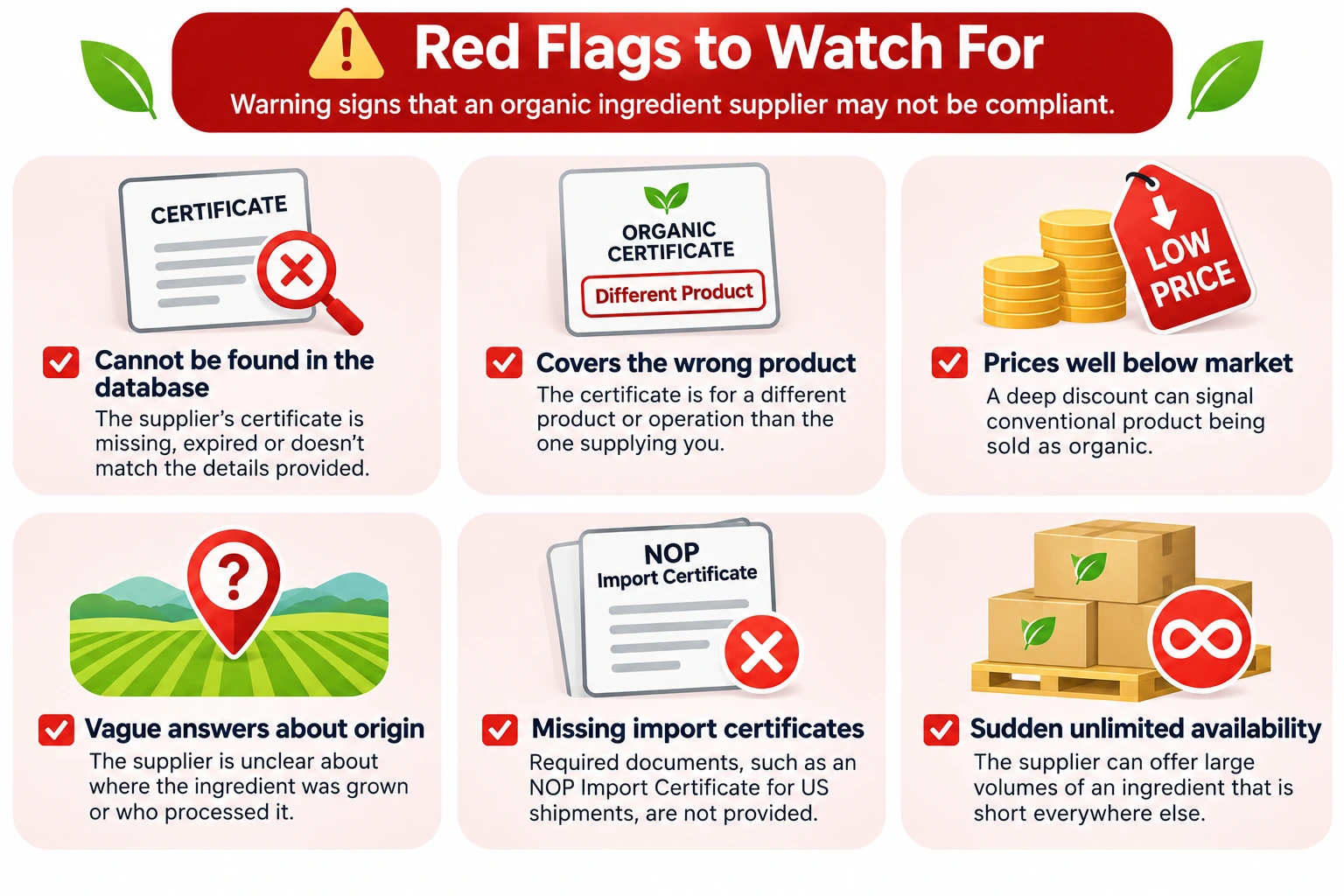
Any one of these is a reason to pause and ask your certifier before buying.
Managing suppliers after approval
Vetting is not a one-time task. A practical routine looks like this:
- Every shipment: check that documents match the order and the lot, and keep them with your receiving records.
- Every certificate cycle: reconfirm status in the database before the old certificate lapses.
- Every year: review each supplier’s performance on quality, delivery and documentation, and update your risk rating.
- Always: keep at least one approved backup supplier for critical ingredients.
Keep current names for quality, sales and logistics at each supplier so issues reach the right person quickly, and update them whenever a supplier tells you about staff changes.
For suppliers: how to reach food manufacturers
If you sell organic ingredients, everything above is a checklist of what buyers will ask you. Make it easy for them:
- Keep your listing in the Organic Integrity Database accurate, with every product and form you sell named in your certification scope.
- Prepare a supplier pack with your certificate, specifications, a sample certificate of analysis, food safety certification and origin details, ready to send on first contact.
- Target the right buyers. Organic and natural food brands are the most likely customers, and their procurement, R&D and operations teams make sourcing decisions.
An organic food brands list reaches companies already committed to organic ingredients. For wider food manufacturing, a manufacturing companies list filtered to food and beverage production, or a supply chain email list for procurement and sourcing roles, widens the pool. Read our guide to B2B marketing to organic food brands for outreach tactics, and see why distributors use an organic food brand contact list.
Frequently asked questions
How do I find certified organic ingredient suppliers? Start with the USDA Organic Integrity Database, then add organic distributors and ingredient brokers, trade shows, association directories, direct outreach to growers and processors, and referrals from other manufacturers.
How do I verify a supplier’s organic certificate? Look the operation up yourself in the USDA Organic Integrity Database, or contact the certification body for Canadian certificates. Confirm the status, the certifier and that the scope covers the exact product and form you are buying.
Does an organic ingredient distributor need to be certified? Under the US Strengthening Organic Enforcement rule, most handlers, brokers and traders of organic products now need certification, with limited exemptions. Ask your certifier whether a specific distributor is properly certified or exempt.
What documents should I get from an organic supplier? A copy of the organic certificate, NOP Import Certificates for imported shipments, product specifications, a certificate of analysis, allergen information and food safety certification or audit results.
Is organic the same as food safe? No. Organic certification covers how an ingredient is produced and handled. Food safety requires a separate program, such as a GFSI-benchmarked certification.
Can I use US-certified organic ingredients in Canada? Generally yes, under the US and Canada organic equivalency arrangement, subject to its terms. Confirm the current requirements with your certifier.
What percentage of organic ingredients does a product need to be labeled organic? In the US, “organic” requires at least 95% organic ingredients and “made with organic” at least 70%. In Canada, an organic claim requires at least 95% organic content.
Reach organic food buyers and producers
Prospects Influential is an independent list broker with access to more than 70,000 lists, including organic food brands, food manufacturers and agricultural producers across the US and Canada. Whether you are sourcing ingredients or selling them, we help you reach the right companies and roles.
Explore the organic food brands list or request a quote for counts built around your target market.
Notes for review
- Search intent: most searchers on these queries are procurement teams looking for suppliers, not lists. The post serves them first and earns its list links in the supplier section. Expect authority and topical relevance from this post more than direct leads.
- Regulatory facts: the certification section summarizes USDA NOP, the Strengthening Organic Enforcement rule and the Canada Organic Regime. Have someone check these against current USDA and CFIA pages before publishing.
- Older posts: both linked organic posts carry 2025 in the slug and title. Consider refreshing them to 2026.
- After publishing, link to this post from the organic food brands list page on the phrase “organic ingredient suppliers”.