Global trade is a $32 trillion industry connecting businesses across every continent. Behind every shipment of electronics from Asia, every container of coffee from South America, and every pallet of machinery heading to Europe, there’s an import or export company making it happen.
These international trade businesses need solutions. They need logistics software to track shipments. Customs brokerage services to navigate regulations. Trade finance to fund purchases. Insurance to protect cargo. Compliance tools to avoid penalties. Transportation to move goods. Warehousing to store inventory.
If you sell products or services to companies engaged in international trade, you’re targeting one of the most dynamic, fast-growing B2B sectors in the global economy. But here’s the challenge: import and export companies are fragmented, diverse, and constantly changing. They range from solo freight forwarders working from home offices to massive logistics conglomerates with operations on six continents.
Finding and reaching these businesses requires more than generic business lists. You need specialized targeting strategies that identify companies actively engaged in international trade, understand the different subsectors within the industry, and connect you with decision-makers who actually purchase your category.
Let’s break down exactly how to build targeted business lists of import and export companies that generate qualified B2B leads.
Understanding the Import/Export Business Landscape
Before building lists, understand who you’re targeting and what they do:
Import Companies bring foreign goods into domestic markets. They source products internationally, handle customs clearance, manage logistics, and distribute to retailers or end customers.
Export Companies send domestic products to foreign markets. They identify international buyers, handle export documentation, arrange transportation, and navigate destination country regulations.
Import/Export Hybrid Companies operate in both directions, leveraging relationships and infrastructure for two-way trade.
Supporting Service Providers include customs brokers, freight forwarders, logistics coordinators, trade consultants, and compliance specialists who facilitate international trade without owning the goods.
Each category has distinct characteristics, needs, and decision-making processes. Your targeting strategy must account for these differences.
Who Needs to Target Import/Export Companies?
If you’re in any of these industries, import and export businesses are your ideal customers:
Logistics and Transportation Software: TMS systems, shipment tracking, warehouse management, customs compliance software, trade documentation platforms.
Financial Services: Trade finance, letters of credit, foreign exchange services, cargo insurance, payment processing for international transactions.
Customs and Compliance: Customs brokerage, trade compliance consulting, tariff classification services, export licensing support, sanctioned party screening.
Freight and Shipping: Ocean freight, air cargo, trucking, intermodal transportation, last-mile delivery, expedited shipping.
Warehousing and Distribution: Bonded warehouses, fulfillment centers, cross-docking facilities, container storage, inventory management.
Technology and Communication: Translation services, international calling systems, VoIP for global teams, video conferencing, collaboration platforms.
Business Services: International market research, trade show coordination, B2B matchmaking, legal services, accounting for international operations.
Equipment and Supplies: Forklifts, pallet jacks, packaging materials, shipping containers, labeling systems, security equipment.
If your solution helps companies move goods across borders more efficiently, compliantly, or profitably, import/export businesses are your target market.
Key Targeting Criteria for Import/Export Business Lists
Building effective lists requires understanding what distinguishes import/export companies from other businesses:
By Import/Export Activity Type
Importers: Bringing goods into the country. Target based on:
- Product categories imported (electronics, textiles, food, machinery)
- Countries of origin (China, Vietnam, Germany, Mexico)
- Import volume and frequency
- Direct importers vs. distributors
Exporters: Sending goods to foreign markets. Target based on:
- Products exported (agricultural, manufactured goods, technology)
- Destination markets (Europe, Asia, Latin America, Middle East)
- Export volume and growth trajectory
- Direct manufacturers vs. export trading companies
Both Import and Export: Companies operating bidirectionally often have more sophisticated needs and larger budgets.
By Business Model
Direct Importers/Exporters: Companies that own the goods they trade. They have inventory risk, working capital needs, and warehousing requirements.
Freight Forwarders: Arrange transportation and documentation without owning goods. They need logistics software, communication tools, and tracking systems.
Customs Brokers: Specialize in customs clearance and compliance. They need regulatory databases, classification tools, and client management systems.
Trading Companies: Intermediaries connecting buyers and sellers internationally. They need market intelligence, relationship management tools, and trade finance.
E-commerce Cross-Border Sellers: Online retailers selling internationally. They need integrated shipping solutions, payment processing, and automated compliance tools.
By Company Size
Small Import/Export Businesses (1-20 employees): Owner-operators or small teams. Fast decision-making but limited budgets. Seeking affordable, simple solutions.
Mid-Size Trade Companies (20-100 employees): Established operations with specialized staff. Moderate budgets and formal purchasing processes. Need scalable solutions.
Large International Trade Firms (100+ employees): Multiple offices, diverse product lines, sophisticated operations. Enterprise budgets and complex requirements. Long sales cycles but high lifetime value.
Your solution’s price point and complexity should align with the appropriate size segment.
By Product Category
Different product categories have different trade characteristics:
Consumer Goods: High volume, frequent shipments, competitive markets, price sensitivity.
Industrial Equipment: Lower volume, higher value, technical specifications, longer sales cycles.
Perishables and Food: Time-sensitive, temperature-controlled, regulatory complexity, seasonal patterns.
Fashion and Textiles: Seasonal buying cycles, trend-driven, quality control challenges, complex supply chains.
Electronics and Technology: Rapid product cycles, intellectual property concerns, warranty and service needs.
Raw Materials and Commodities: Bulk shipments, commodity pricing volatility, quality specifications.
Understanding product category helps you identify specific pain points your solution addresses.
By Geographic Focus
Trade Lane Specialization: Many import/export companies focus on specific routes China to US, EU to Latin America, Southeast Asia to global markets.
Domestic Location: Where the company is based affects regulations, port access, time zones, and market proximity.
International Footprint: Companies with offices in multiple countries have different needs than single-location operations.
Border Proximity: Companies near borders (US-Mexico, US-Canada) often have distinct characteristics and needs.
By Certification and Compliance
C-TPAT Certified: US Customs-Trade Partnership Against Terrorism members demonstrate security commitment and compliance sophistication.
AEO Status: Authorized Economic Operator programs in various countries indicate trusted trader status.
ISO Certifications: Quality management (ISO 9001), environmental (ISO 14001), or customs compliance certifications.
Industry-Specific Licenses: FDA registration for food imports, FCC for electronics, specific product category licenses.
Certified companies often have larger operations, professional management, and budgets for compliance-supporting solutions.
How to Source Import/Export Company Data
Building accurate lists requires multiple data sources:
Government Import/Export Databases
US Import/Export Data:
- US Census Bureau trade data
- Customs and Border Protection records
- Bill of lading databases
- Manufacturer declarations
International Trade Data:
- Panjiva (S&P Global trade data)
- Import Genius
- Datamyne
- TradeMap (International Trade Centre)
These sources reveal actual import/export activity not just companies claiming to be in the business, but businesses with documented transactions.
Business Registration and Licensing
Customs Broker Licenses: List of licensed customs brokers from CBP.
Freight Forwarder Registrations: NVOCC (Non-Vessel Operating Common Carrier) registration with FMC.
Importer of Record Numbers: Companies registered as importers with customs authorities.
Export Trading Company Certificates: Companies registered under Export Trading Company Act.
State Business Registrations: Secretary of State databases with companies listing import/export activities.
Industry Associations and Directories
Trade Organizations:
- National Customs Brokers & Forwarders Association of America (NCBFAA)
- International Air Transport Association (IATA) cargo agents
- Federation of International Trade Associations (FITA)
- American Association of Exporters and Importers (AAEI)
- Regional trade associations
Industry Directories:
- Export.gov supplier directory
- NVOCC listings
- Freight forwarder directories
- Customs broker directories
Membership in professional associations indicates established businesses with commitment to industry standards.
Trade Show and Event Attendees
Major Trade Events:
- International Import/Export Trade Show
- NASSTRAC Shipper-Carrier Marketplace
- TMSA Transportation Marketing & Sales Association
- Regional freight and logistics conferences
Attendees are engaged professionals actively seeking solutions and networking.
Online Presence and Digital Footprints
LinkedIn Company Searches: Search for companies with “import,” “export,” “freight forwarding,” “customs brokerage,” or “international trade” in descriptions.
Google Business Profiles: Local import/export companies often have Google Business listings.
Industry Marketplaces: Platforms like Alibaba, TradeKey, or Made-in-China where importers and exporters connect.
Trade Publications: Subscribers to Journal of Commerce, American Shipper, Logistics Management, or Global Trade Magazine.
Compiled Business Databases
Professional business list providers compile data from multiple sources:
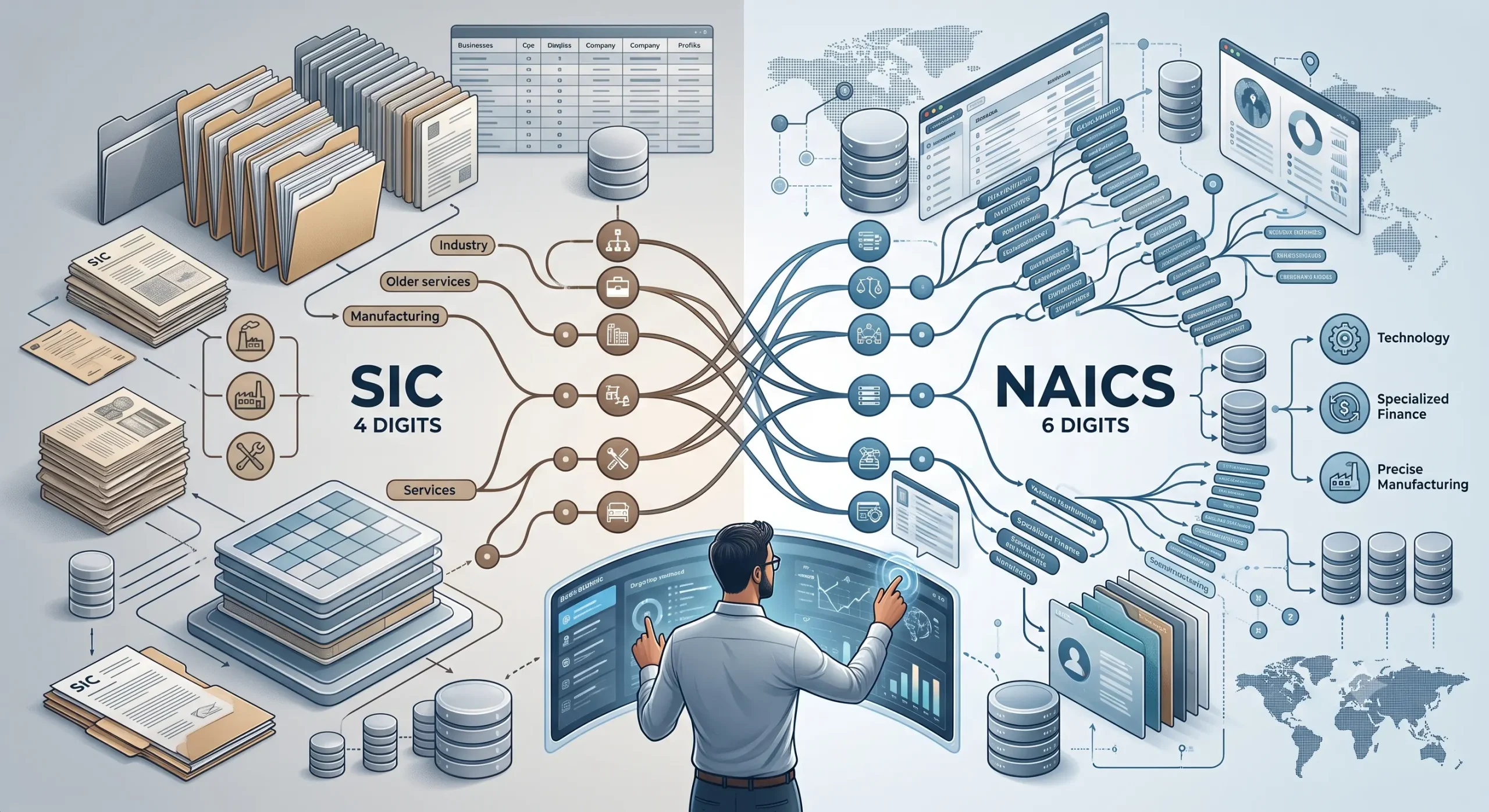
SIC/NAICS Code Targeting:
- 4731: Freight forwarding
- 488510: Freight transportation arrangement
- 493110: General warehousing and storage
- 541614: Process, physical distribution, and logistics consulting
Compiled Databases: D&B, InfoUSA, and specialized data providers compile import/export business information.
Working with experienced list brokers who understand international trade provides access to vetted sources and helps identify optimal targeting combinations.
Identifying Decision-Makers in Import/Export Companies
Reaching the right person matters as much as reaching the right company:
By Functional Role
Operations and Logistics:
- VP of Operations
- Logistics Manager
- Supply Chain Director
- Warehouse Manager
- Import/Export Coordinator
These roles handle day-to-day trade operations and often evaluate operational solutions.
Compliance and Regulatory:
- Compliance Manager
- Customs Manager
- Trade Compliance Director
- Regulatory Affairs Specialist
These roles need solutions addressing regulations, documentation, and risk management.
Finance and Administration:
- CFO or Controller
- Finance Manager
- Credit Manager
These roles evaluate trade finance, insurance, and financial management solutions.
Technology and Systems:
- IT Director
- Systems Administrator
- Technology Manager
These roles evaluate software, automation, and digital solutions.
Sales and Business Development:
- VP of Sales
- Business Development Manager
- Account Executives
These roles need market intelligence, CRM systems, and communication tools.
Executive Leadership:
- CEO or President
- Owner (for small businesses)
- Managing Director
Executives make strategic decisions and major purchase approvals.
Your solution type determines which roles to prioritize. Logistics software targets operations roles. Trade finance targets CFOs. Compliance tools target compliance managers.
Best Practices for Import/Export Company Outreach
Once you’ve built your list, effective outreach requires understanding this industry’s unique characteristics:
Emphasize Time and Efficiency
Import/export companies operate on tight timelines. Delayed shipments cost money. Customs holds create urgency. Your messaging should emphasize:
- Time savings
- Reduced delays
- Faster processing
- Efficiency improvements
- Automated workflows
Lead with Compliance and Risk Reduction
International trade involves complex regulations, potential penalties, and significant risk. Messages emphasizing:
- Regulatory compliance
- Risk mitigation
- Avoiding penalties and fines
- Audit preparation
- Documentation accuracy
These resonate strongly with trade professionals.
Understand Seasonal Patterns
Import/export businesses have busy and slow periods:
- Pre-holiday import surges (August-October)
- Post-Chinese New Year ramp-ups (February-March)
- Fiscal year-end equipment purchases
- Budget planning periods (Q3-Q4)
Time your outreach to align with buying cycles and avoid peak shipping seasons when prospects are too busy to engage.
Speak the Language
Use industry terminology correctly:
- HS codes, not “product codes”
- Bill of lading, not “shipping receipt”
- Incoterms, not “delivery terms”
- Drayage, not “short-distance trucking”
Incorrect terminology signals you don’t understand the industry and damages credibility.
Provide International Perspective
Import/export professionals think globally. Reference:
- International markets and trade lanes
- Cross-border challenges
- Multi-country operations
- Foreign regulations and requirements
Generic domestic-focused messaging misses the mark.
Multi-Channel Strategies for Import/Export Targeting
Effective campaigns combine multiple touchpoints:
Direct Mail for High-Value Prospects
Business direct mail works well for established import/export companies:
What works:
- Industry-specific case studies
- ROI calculators for trade operations
- Compliance guides and regulatory updates
- Trade show invitations
- Dimensional mailers with product samples
Email for Ongoing Engagement
Business email lists enable regular communication:
Effective content:
- Regulatory change alerts
- Industry trend reports
- Webinars on trade topics
- Customer success stories
- Free tools (HS code lookup, landed cost calculators)
Telemarketing for Direct Conversations
Business telemarketing creates personal connections:
Calling approach:
- Lead with industry knowledge
- Ask about current challenges
- Offer immediate value (free assessment, consultation)
- Respect time constraints
- Follow up with emailed resources
Integrated Multi-Channel Campaigns
Multi-channel approaches deliver best results:
Sample sequence:
- Personalized direct mail with industry report
- Email referencing mailer with webinar invitation
- LinkedIn connection with custom note
- Phone call discussing specific challenges
- Follow-up email with relevant case study
- Continued nurture sequence
Multiple touchpoints build familiarity and credibility in this relationship-driven industry.
Common Mistakes When Targeting Import/Export Companies
Avoid these pitfalls:
Mistake 1: Treating All Trade Companies the Same
An e-commerce cross-border seller has completely different needs than a freight forwarder. Segment and customize messaging.
Mistake 2: Ignoring Product Category Specialization
Companies importing electronics face different challenges than those importing textiles. Generic messaging misses specific pain points.
Mistake 3: Overlooking Small Players
Small import/export businesses collectively represent massive opportunity. Don’t focus exclusively on large logistics companies.
Mistake 4: Missing Geographic Nuances
Companies near major ports (Los Angeles, New York/New Jersey, Houston) have different characteristics than inland operations.
Mistake 5: No International Understanding
If you can’t discuss trade lanes, Incoterms, or HS codes, you signal unfamiliarity with the industry.
Mistake 6: Poor Timing
Calling during peak shipping season (November-December for consumer goods) means prospects are too busy to engage.
Measuring Success with Import/Export Lists
Track these metrics to evaluate list quality and campaign effectiveness:
List Quality Metrics:
- Percentage actually engaged in import/export (many claim it but don’t actively trade)
- Decision-maker accuracy
- Phone and email deliverability
- Company size and revenue accuracy
Campaign Performance:
- Response rate by subsector (importers vs. exporters vs. service providers)
- Conversion rate by company size
- Deal size and lifetime value
- Sales cycle length
Segmentation Performance:
- Product category targeting effectiveness
- Geographic concentration results
- Certification holder conversion rates
Use these insights to continuously refine targeting and messaging.
Working with List Brokers for Import/Export Targeting
Given the specialized nature of this market, experienced list brokers provide significant advantages:
Industry Expertise: Brokers familiar with international trade understand subsector differences and targeting nuances.
Multi-Source Access: They can pull data from import/export databases, industry associations, and compiled sources for comprehensive coverage.
Custom Segmentation: They help layer multiple criteria product category, trade lanes, company size, certification status for precision targeting.
Quality Vetting: They know which sources maintain accurate data on this dynamic, fast-changing industry.
Ongoing Optimization: They analyze results and refine targeting based on which segments perform best for your specific offering.
For businesses serious about the import/export market, broker partnerships ensure you’re reaching the right companies with verified contact information.
The Growing Opportunity in International Trade
Several trends make import/export companies increasingly valuable targets:
E-commerce Globalization: Online retailers selling internationally need logistics, compliance, and payment solutions.
Supply Chain Diversification: Companies reducing China dependence are exploring new sourcing countries, creating advisory and logistics opportunities.
Regulatory Complexity: Increasing customs scrutiny and compliance requirements drive demand for supporting solutions.
Trade Agreement Changes: New trade deals and changing tariffs create needs for analysis, planning, and optimization tools.
Technology Adoption: Digital transformation in logistics creates opportunities for software, automation, and integration solutions.
Sustainability Focus: Green logistics and carbon footprint tracking create new service categories.
Businesses that successfully reach import/export companies with targeted, relevant solutions capture a piece of this growing, essential industry.
Final Thoughts: Precision Targeting Creates Opportunity
Import and export companies represent a massive, diverse market that keeps the global economy moving. They face complex challenges, operate under tight deadlines, and constantly seek solutions improving efficiency, ensuring compliance, and reducing costs.
But reaching them effectively requires more than generic business lists. It requires understanding subsector differences, identifying active traders versus companies that merely claim trade involvement, connecting with appropriate decision-makers, and messaging that demonstrates industry knowledge.
Whether you need to target importers in specific product categories, freight forwarders in particular regions, customs brokers needing technology solutions, or trading companies seeking market intelligence, precision list-building separates successful campaigns from wasted effort.
The import/export market is vast and lucrative. The question isn’t whether these businesses need your solution it’s whether you’re reaching the right ones at the right time with the right message.
Build your lists strategically. Target precisely. Message authentically. And watch your pipeline fill with opportunities in international trade.
Ready to build targeted business lists of import and export companies for your B2B lead generation? Work with experienced list brokers who specialize in business lists and specialty market targeting to ensure your outreach reaches qualified international trade businesses.