You’re comparing two B2B telemarketing lists. Both claim 5,000 contacts in your target industry. Both include names, titles, phone numbers, and companies.
List A costs $500. “Complete database, updated regularly, satisfaction guaranteed!”
List B costs $2,500. Similar description. Same contact count. Five times the price.
Most buyers choose List A. Why pay 5x more for the same thing?
Then they start calling. List A delivers 12% connect rates, reaches wrong people constantly, encounters disconnected numbers every third call, and converts at 0.8%. Total waste of sales team time.
List B delivers 73% connect rates, reaches actual decision-makers, has current information, and converts at 6.2%. The campaign ROI justifies 10x the list cost.
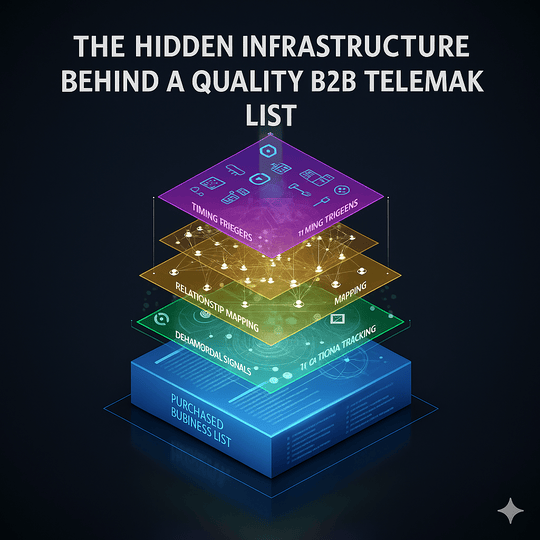
What’s the difference? It’s not the data fields both lists have the same columns. It’s the invisible infrastructure behind the data.
Quality business telemarketing lists require sophisticated infrastructure most buyers never see: multi-source verification systems, human review processes, continuous update mechanisms, compliance frameworks, phone validation technology, decision-maker verification, and quality control at every stage.
Cheap lists skip most of this infrastructure, scrape data from questionable sources, never verify accuracy, update rarely, and hope buyers don’t notice until after purchase.
Let’s reveal exactly what infrastructure exists behind quality B2B telemarketing lists and why understanding this matters for anyone buying data.
Why Most B2B Lists Fail: Missing Infrastructure
Before revealing what quality requires, understand why most lists disappoint:
Surface-Level Problem: Bad phone numbers, wrong contacts, outdated information, poor targeting.
Root Cause: Missing infrastructure. No verification systems. No update processes. No quality control. No compliance frameworks.
The Illusion: Cheap lists look identical to quality lists in spreadsheet format. Same columns. Same data fields. Indistinguishable until you start calling.
The Reality: What you don’t see determines list performance. Infrastructure separates lists that work from lists that waste money.
Infrastructure Layer #1: Multi-Source Data Compilation
Quality lists don’t rely on single sources. They compile from multiple verified sources and cross-reference for accuracy:
Primary Data Sources
Business Registration Records:
- Secretary of State databases (legal entity verification)
- Federal EIN registrations
- Business license databases
- Professional licensing boards (for regulated industries)
Why it matters: Confirms companies actually exist legally, aren’t shell corporations, and operate legitimately.
Industry Directories:
- Trade association membership lists
- Professional certification registries
- Industry-specific directories
- Chamber of Commerce databases
Why it matters: Validates industry classification and professional standing.
Public Filings:
- SEC filings (for public companies)
- D&B business information
- Government contractor databases
- Patent and trademark filings
Why it matters: Provides firmographic data, financial indicators, and operational intelligence.
Direct Research:
- Proprietary surveys and research
- Outbound verification calls
- Email confirmation campaigns
- In-house data collection teams
Why it matters: Generates first-party data that’s current, accurate, and consented.
The Cross-Reference Process
Quality list providers don’t just aggregate they cross-reference:
Example workflow:
- Company appears in business registration (verified existence)
- Confirmed in trade association directory (industry validated)
- Cross-checked against D&B (size and revenue verified)
- Phone number validated through telecom databases
- Contact researched via LinkedIn (title and role confirmed)
- Email verified through validation service
- Human review for inconsistencies
Result: High-confidence record where multiple sources confirm accuracy.
Cheap list approach: Scrape business directory, no cross-reference, no verification.
Result: Unverified data that looks complete but performs poorly.
Why This Infrastructure Costs Money
- Access to premium data sources (D&B, InfoUSA, paid directories)
- Licensing fees for multiple databases
- Technology for automated cross-referencing
- Staff time for research and verification
- Legal compliance for data usage
- Storage and processing infrastructure
Quality providers invest heavily here. Cheap providers skip it entirely.
Infrastructure Layer #2: Phone Number Verification Systems
The most critical element of telemarketing lists: do the phone numbers actually work?
Multi-Stage Phone Verification
Stage 1: Format Validation
- Correct digit count (10 digits US)
- Valid area codes
- Valid exchange codes
- No obviously fake patterns (555-1234)
Stage 2: Line Type Identification
- Landline vs. mobile (TCPA compliance)
- Working line vs. disconnected
- Business line vs. residential
- VoIP identification
Technology used:
- CNAM (Caller ID Name) databases
- Line type detection services
- Telecom carrier databases
- Phone validation APIs
Stage 3: Active Status Confirmation
- Call completion verification
- Disconnection detection
- Recent call history
- Answer rate patterns
Technology used:
- Test calling systems
- Telecom data feeds
- Call center data partnerships
- Historical performance tracking
Stage 4: Direct Dial vs. Switchboard
Critical for B2B: Generic company numbers (switchboards) force callers through receptionists. Direct dials reach decision-makers directly.
Quality lists distinguish:
- Corporate switchboard numbers
- Department main lines
- Direct dial desk phones
- Mobile numbers
Infrastructure required:
- Phone pattern analysis (detecting extensions)
- Directory parsing (company directories)
- Reverse phone lookup verification
- Manual verification calling
Continuous Phone Verification
Numbers decay constantly. People change jobs, companies switch carriers, phone systems change.
Quality lists re-verify quarterly:
- Re-run validation algorithms
- Re-check disconnect status
- Update line type classifications
- Re-confirm direct dial accuracy
Cheap lists verify once (if ever) and never update.
Why This Infrastructure Costs Money
- Phone validation API fees (per number checked)
- Telecom data access licenses
- Test calling infrastructure and costs
- Staff time for manual verification
- Storage for historical verification data
- Technology for continuous monitoring
Infrastructure Layer #3: Contact-Level Verification
Beyond phone numbers working, do they reach the right people?
Decision-Maker Identification
The Challenge: Job titles vary wildly across companies. “Manager” at one company equals “Director” at another. Generic lists provide titles without understanding actual authority.
Quality list approach:
Role Research:
- LinkedIn profile verification
- Company org chart analysis
- Title standardization (mapping variants)
- Authority level assessment
- Budget responsibility indicators
Interview-Based Verification:
- Outbound calling to verify roles
- “Can you help me reach the person handling [function]?”
- Confirmation of decision-making authority
- Identification of buying committees
Behavioral Validation:
- Email engagement tracking (who responds to relevant content?)
- Website visitor identification (who researches solutions?)
- Event attendance (who attends industry events?)
- Content consumption (who downloads buyer guides?)
Contact Currency
People change jobs constantly. Quality lists track these changes:
Change Detection Systems:
- LinkedIn job change monitoring
- Email bounce pattern analysis (role-based emails bouncing suggests departure)
- Phone number transfer detection
- Company website monitoring (leadership page changes)
- News and press release tracking
Update Frequency:
- Monthly for high-turnover roles (sales, marketing)
- Quarterly for moderate-turnover roles (operations)
- Semi-annually for stable roles (senior executives)
Replacement Process: When contacts leave, quality providers research replacements:
- Detect departure through signals
- Research successor
- Verify new contact details
- Update record with current information
Cheap lists never track changes. Once compiled, they’re static until obsolete.
Why This Infrastructure Costs Money
- LinkedIn Sales Navigator licenses
- Change detection technology
- Research staff for successor identification
- Ongoing monitoring systems
- Behavioral tracking platforms
- Data integration technology
Infrastructure Layer #4: Compliance and Legal Frameworks
Telemarketing faces heavy regulation. Quality lists ensure compliance:
Do Not Call (DNC) Scrubbing
Legal Requirement: Telemarketers cannot call numbers on DNC registries.
Quality list infrastructure:
- Monthly DNC registry downloads (federal and state)
- Automated scrubbing before delivery
- Suppression file management
- State-specific DNC compliance (additional state registries)
- Industry-specific DNC lists (healthcare, real estate)
Cheap lists: Skip DNC scrubbing or claim “buyer’s responsibility.”
Your risk: FTC fines up to $43,792 per violation. One campaign can generate hundreds of violations.
TCPA Compliance (Telephone Consumer Protection Act)
Critical for mobile numbers: Calling cell phones without consent violates TCPA.
Quality list infrastructure:
- Cell phone identification (line type detection)
- Prior express written consent documentation
- Consent date and method tracking
- Opt-out management
- Litigation list scrubbing (serial plaintiffs)
Cheap lists: Don’t distinguish landlines from cells, provide no consent documentation.
Your risk: $500-$1,500 per violation (treble if willful). Class action lawsuits common.
GDPR and International Regulations
For international contacts: EU GDPR, Canada CASL, and other privacy laws apply.
Quality list infrastructure:
- Geographic segmentation
- Consent documentation by jurisdiction
- Right-to-be-forgotten fulfillment
- Data processing agreements
- Privacy policy compliance
Industry-Specific Regulations
Healthcare (HIPAA): Patient information restrictions
Financial Services: GLBA privacy requirements, calling hour restrictions
Education: FERPA student information protections
Quality lists understand industry-specific rules and ensure compliance.
Why This Infrastructure Costs Money
- Legal counsel for compliance frameworks
- DNC registry access fees
- Compliance technology platforms
- Documentation storage systems
- Consent tracking databases
- Regular compliance audits
Infrastructure Layer #5: Data Enrichment and Enhancement
Basic lists provide names and numbers. Quality lists add intelligence:
Firmographic Enrichment
Standard data:
- Company name, address, phone
- Industry, employee count, revenue
Quality enrichment:
- Technology stack (systems used)
- Recent funding or acquisitions
- Growth indicators (hiring patterns)
- Decision-making structure
- Buying cycle timing signals
- Competitive intelligence
Data sources:
- Technographic databases (BuiltWith, Datanyze)
- Funding databases (Crunchbase, PitchBook)
- Growth signals (LinkedIn, job boards)
- News and press release monitoring
Contact Enrichment
Standard data:
- Name, title, phone
Quality enrichment:
- Direct email address
- LinkedIn profile URL
- Previous employers (relationship history)
- Educational background
- Professional certifications
- Social media presence
- Content engagement history
Data sources:
- Email validation services
- LinkedIn data
- Social media APIs
- Professional association databases
- Behavioral tracking platforms
Why This Infrastructure Costs Money
- Data enrichment platform licenses
- API access fees for multiple services
- Data integration technology
- Staff for manual enrichment
- Storage for enhanced data
- Regular re-enrichment processes
Infrastructure Layer #6: Quality Control and Human Review
Technology automates much verification, but human intelligence catches what algorithms miss:
Manual Record Review
Quality list processes:
- Random sampling (10-20% of records)
- Manual verification calls
- LinkedIn profile confirmation
- Company website cross-checks
- Logic and consistency reviews
What humans catch:
- Company closed but still in databases
- Titles that don’t match actual responsibilities
- Organizational changes (mergers, acquisitions)
- Cultural naming issues (international contacts)
- Obvious errors algorithms miss
Customer Feedback Integration
Quality providers actively collect feedback:
- Post-campaign surveys
- Bad record replacements
- Continuous improvement loops
- Pattern identification (systematic issues)
Infrastructure required:
- Feedback collection systems
- Issue tracking databases
- Root cause analysis processes
- Corrective action workflows
- Communication with data sources
Quality Metrics and Monitoring
What quality providers track:
- Connect rate (percentage reaching people)
- Right party contact (percentage reaching correct person)
- Decision-maker accuracy (percentage with buying authority)
- Data accuracy (information correctness)
- Deliverability (percentage valid vs. invalid)
Continuous monitoring identifies:
- Data source quality degradation
- Verification process failures
- Systematic errors requiring correction
- Emerging compliance issues
Why This Infrastructure Costs Money
- Quality assurance staff
- Review process systems
- Feedback collection platforms
- Analysis and reporting technology
- Corrective action implementation
- Communication infrastructure
Infrastructure Layer #7: Update and Refresh Systems
Data decays daily. Quality requires continuous refresh:
Automated Update Processes
Daily updates:
- DNC registry additions
- Phone number disconnect detection
- Email bounce processing
- Opt-out request fulfillment
Weekly updates:
- New business additions
- Job change detection
- Company acquisition tracking
- Major organizational changes
Monthly updates:
- Comprehensive phone re-verification
- Contact role re-validation
- Firmographic data refresh
- Technographic updates
Quarterly updates:
- Complete record review
- Multi-source re-compilation
- Quality control sampling
- Systematic issue correction
Change Detection Technology
Infrastructure monitoring:
- Web scraping for website changes
- API integrations with data sources
- News and press release monitoring
- Social media change tracking
- Email and phone monitoring
Triggering updates:
- Automated workflows when changes detected
- Research tasks for verification
- Record updates and audit trails
- Historical data preservation
Why This Infrastructure Costs Money
- Continuous monitoring technology
- Data source API access (ongoing fees)
- Update processing infrastructure
- Research staff for validation
- Version control systems
- Communication of updates to customers
The True Cost of Quality: Infrastructure Investment Breakdown
Understanding why quality costs more:
Data Acquisition (20-25% of costs):
- Multi-source licensing fees
- Premium database access
- API usage costs
- Research services
Verification Technology (25-30%):
- Phone validation platforms
- Email verification services
- Identity verification systems
- Cross-reference technology
Human Labor (20-25%):
- Research and verification staff
- Quality control teams
- Customer service
- Data analysts
Compliance Infrastructure (10-15%):
- Legal counsel
- Compliance monitoring
- Suppression file management
- Documentation systems
Technology Infrastructure (15-20%):
- Servers and storage
- Processing power
- CRM and database platforms
- Integration systems
- Security and backup
Total annual investment for quality list providers: Millions of dollars in infrastructure supporting data accuracy, currency, and compliance.
Cheap list providers: Minimal investment. Web scraping. No verification. No updates. No compliance. No quality control.
How to Evaluate List Provider Infrastructure
When comparing list providers, ask about infrastructure:
Data Sourcing:
- What are your primary data sources?
- How many sources do you cross-reference?
- Do you conduct proprietary research?
- How do you validate source accuracy?
Verification Processes:
- How do you verify phone numbers?
- What percentage are direct dials vs. switchboards?
- How do you confirm decision-maker accuracy?
- What’s your reverification frequency?
Update Mechanisms:
- How often do you update records?
- How do you detect job changes?
- What triggers record updates?
- How quickly are changes reflected?
Compliance:
- How do you ensure DNC compliance?
- Do you identify cell phones for TCPA?
- How do you document consent?
- What compliance certifications do you maintain?
Quality Control:
- What’s your quality assurance process?
- What accuracy guarantees do you provide?
- How do you handle bad records?
- Can you provide quality metrics?
Technology:
- What verification technology do you use?
- What’s your data storage and security?
- How do you integrate with CRM systems?
- What reporting do you provide?
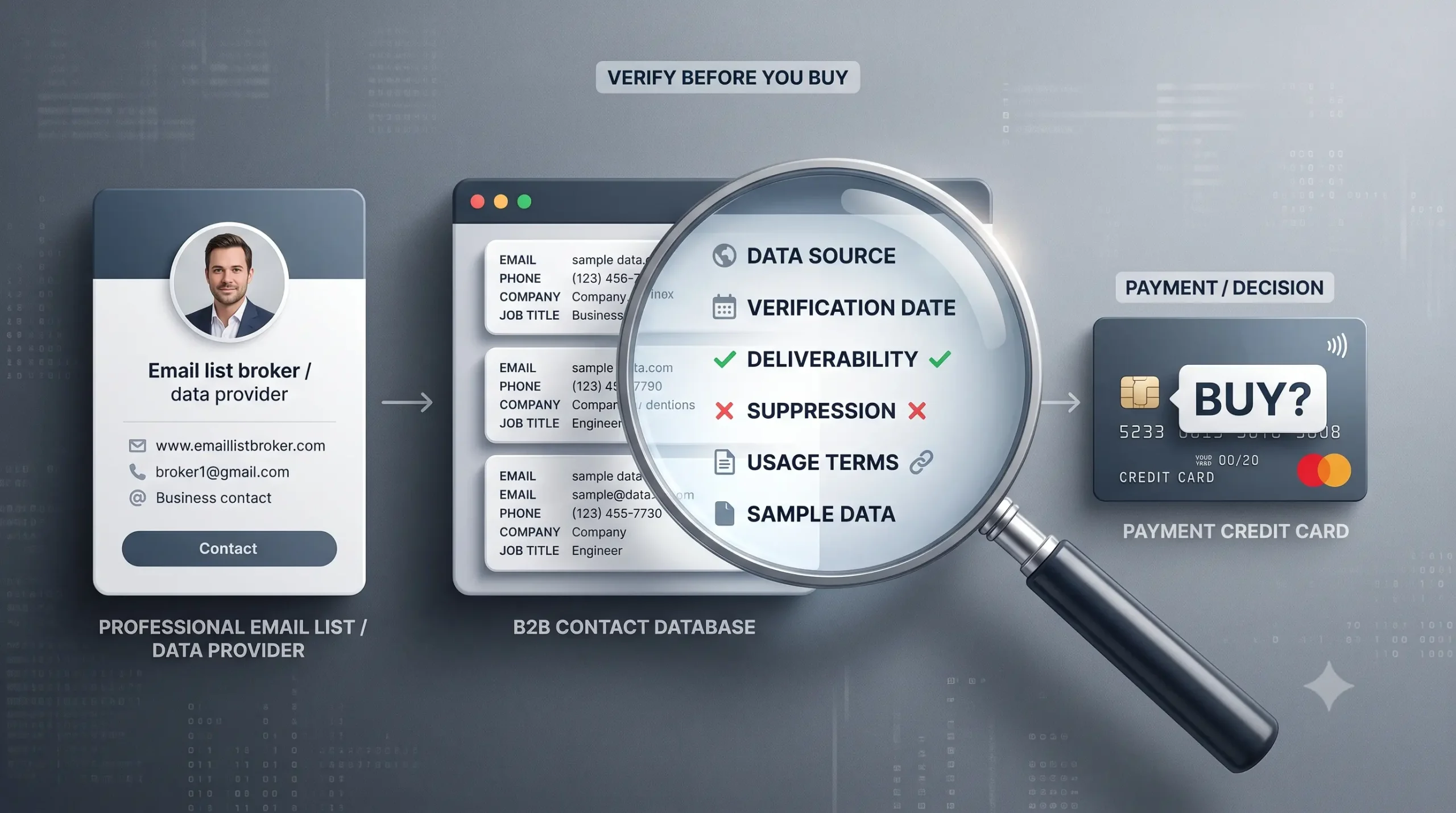
Quality providers answer confidently with specifics. Cheap providers give vague answers or deflect.
Working with List Brokers Who Understand Infrastructure
Given infrastructure complexity, experienced list brokers provide critical advantages:
Provider Vetting: They know which providers actually have infrastructure versus making empty claims.
Quality Standards: They maintain relationships only with providers meeting quality thresholds.
Performance Tracking: They monitor campaign results revealing which providers deliver accurate data.
Issue Resolution: When problems occur, they leverage relationships for rapid remediation.
Best Practice Guidance: They understand what infrastructure different campaign types require.
Cost-Benefit Analysis: They help determine when premium quality justifies costs versus when adequate quality suffices.
For businesses serious about B2B telemarketing success, broker partnerships ensure access to properly-infrastructured lists rather than cheap data that wastes sales team time.
ROI Reality: Why Quality Infrastructure Pays
Scenario: 5,000-contact B2B calling campaign
Cheap List ($500):
- Connect rate: 12% = 600 conversations
- Decision-maker rate: 30% = 180 qualified contacts
- Conversion rate: 0.8% = 4 customers
- Sales team time wasted on bad data: 65%
- Compliance violations: High risk
- Cost per customer: $4,125 (list + wasted labor)
Quality List ($2,500):
- Connect rate: 73% = 3,650 conversations
- Decision-maker rate: 85% = 3,103 qualified contacts
- Conversion rate: 6.2% = 192 customers
- Sales team time wasted: 8%
- Compliance violations: Minimal risk
- Cost per customer: $513 (list + efficient labor)
Quality list delivers:
- 48x more customers (192 vs. 4)
- 8x lower cost per customer ($513 vs. $4,125)
- 90% reduction in wasted labor
- Dramatic reduction in legal risk
The infrastructure behind quality lists isn’t expense, it’s investment with exponential returns.
Final Thoughts: Infrastructure You Don’t See Determines Results You Do
When you look at a B2B telemarketing list, you see rows in a spreadsheet. Names. Titles. Phone numbers. Companies.
What you don’t see: verification systems validating every number, multi-source cross-referencing confirming accuracy, human reviewers catching errors, update mechanisms maintaining currency, compliance frameworks protecting from violations.
This invisible infrastructure separates lists that work from lists that waste money.
Cheap lists cost less because they skip infrastructure. They look identical in CSV format. The difference emerges only after your team has burned days calling disconnected numbers and wrong contacts.
Quality lists cost more because infrastructure costs money. Multi-source compilation, continuous verification, human review, compliance management, and regular updates require significant investment.
But that investment pays exponential returns in connect rates, decision-maker accuracy, conversion performance, and eliminated wasted labor.
Whether you’re running B2B campaigns with business telemarketing lists, coordinating multi-channel outreach, or building comprehensive business databases, infrastructure determines success.
Stop buying lists based on price per thousand contacts. Start evaluating based on infrastructure supporting accuracy, currency, and compliance.
Your competitors will keep buying cheap data and wondering why their campaigns fail. You’ll invest in quality infrastructure and watch your conversion rates prove the difference.
Ready to access B2B telemarketing lists backed by comprehensive verification infrastructure? Work with experienced list brokers who partner with quality providers maintaining the infrastructure that separates high-performing business lists from cheap data that wastes resources.