What Is an FSA Code?
FSA stands for Forward Sortation Area. It’s the first three characters of a Canadian postal code, the part before the space.
A Canadian postal code looks like this: M5V 3A8
The first three characters, M5V, are the FSA. The last three, 3A8, are the Local Delivery Unit (LDU), which pinpoints a specific block or building. Together they form a six-character code. But for marketing purposes, the FSA is where most of the targeting power lives.
Canada Post uses FSAs as the primary unit for sorting and routing mail across the country. For marketers, they serve a different purpose: they’re a practical way to define where your campaign reaches.
How FSA Codes Map to Canada
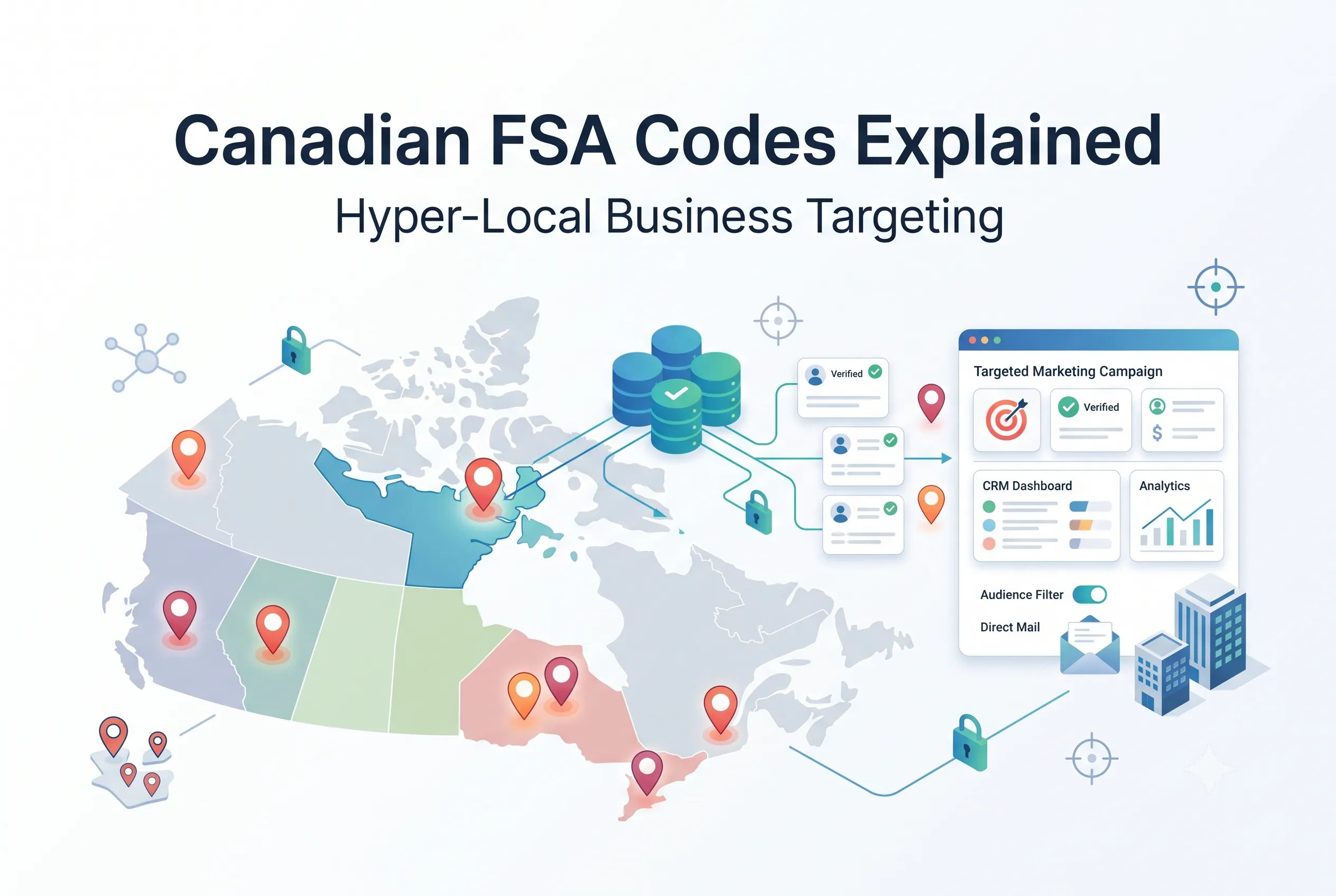
Canada has approximately 1,675 FSAs covering the entire country, from dense urban centres to remote rural communities. Each one covers a distinct geographic area, and the size of that area varies dramatically depending on population density.
In cities, a single FSA might cover just a few city blocks. A Toronto FSA like M5V represents the Entertainment District and surrounding area, a compact, walkable zone with a specific demographic and business character.
In rural areas, one FSA can stretch across hundreds of square kilometres. An FSA in northern Saskatchewan or rural Newfoundland might encompass several towns and a vast surrounding area.
The first character of any FSA tells you the province or major region:
- M: Metropolitan Toronto
- V: British Columbia
- T: Alberta
- H: Metropolitan Montreal
- K: Eastern Ontario
- G: Eastern Quebec
- E: New Brunswick
- B: Nova Scotia
- X: Northwest Territories and Nunavut
For Ontario and Quebec specifically, the first character narrows further by sub-region, which is useful when you need to distinguish between, say, Greater Toronto and eastern Ontario, or Metropolitan Montreal and the rest of Quebec.
Why FSA Codes Matter for Marketers
Most marketing campaigns waste a significant portion of their budget reaching people who are simply in the wrong place. A plumbing company in Mississauga doesn’t need to mail Winnipeg. A specialty food distributor targeting independent grocers in Quebec doesn’t need a national list.
FSA codes solve this by letting you define your campaign geography with precision. Here’s why that matters:
Reduced waste, better ROI
When your list is geographically targeted, every contact on it is a plausible prospect. You’re not paying to reach people in regions you don’t serve, and you’re not diluting your response rate with irrelevant records. In 2026, with direct mail costs and postage continuing to rise, geographic precision isn’t optional; it’s how you protect your margins.
Demographic alignment
FSA-level data correlates strongly with demographic and economic characteristics. Urban FSAs in high-income neighbourhoods have very different household profiles from suburban FSAs with young families, or industrial FSAs dominated by commercial addresses. When you know which FSAs align with your ideal customer profile, you can build a list that reflects that alignment without guessing.
Business density
For B2B campaigns, FSA codes are particularly powerful because business concentration is highly geographic. Manufacturing clusters, financial district offices, medical and healthcare facilities, technology corridors. These don’t spread evenly across a country. They cluster. Knowing which FSAs contain your target industry gives you a much tighter starting point than a provincial or national filter alone.
Compliance and do-not-contact management
For telemarketing campaigns, geographic targeting using FSA codes helps you manage your lists in relation to regional regulations and do-not-call requirements more cleanly. Rather than applying blanket national rules to a blanket national list, you work with defined geographic segments.
Practical Uses for FSA Codes in Canadian Marketing Campaigns
Direct Mail
This is where FSA codes have the longest history. Canada Post uses FSA routing to deliver neighbourhood mail, and marketers have long used FSA selection to define delivery zones. In 2026, with direct mail response rates running significantly higher than email across most categories, the ability to target specific FSAs matched to your customer profile is a real competitive edge.
Example: A regional real estate brokerage expanding into two new neighbourhoods selects the FSAs corresponding to those areas, builds a homeowner mailing list from those FSAs, and runs a campaign solely within that footprint. Every piece of mail stays within the service area. Nothing is wasted.
Telemarketing Lists
For outbound calling campaigns, FSA-targeted lists help businesses stay within their service geography and reach prospects in areas where they can actually follow up and convert. For consumer telemarketing, provincial do-not-call rules vary, and FSA-based segmentation makes it easier to apply the right rules to the right records.
B2B Prospecting
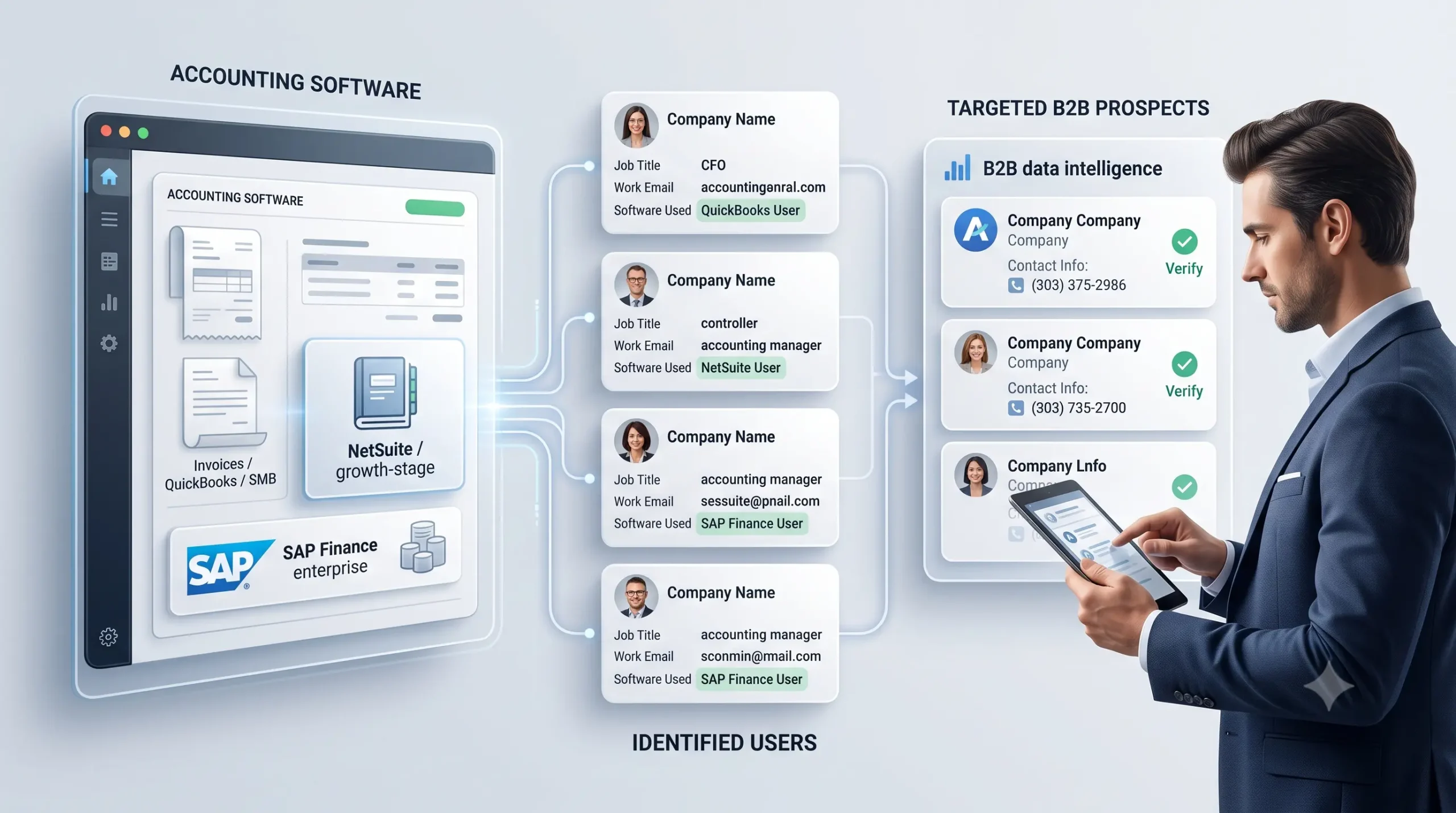
If you’re targeting businesses in a specific city, industrial area, or business district, FSA codes give you a way to define that geography cleanly, even when your prospect criteria include multiple filters like industry, company size, and job title. The FSA layer ensures the geographic piece is locked before anything else is applied.
Franchise and Territory-Based Campaigns
Businesses with defined territories (franchises, distributors, service providers with coverage areas) can use FSA codes to mirror their territory boundaries almost exactly. Rather than approximating with city names (which can bleed across actual service zones), FSA selection lets you match your marketing footprint to your operational footprint.
How to Identify the Right FSA Codes for Your Campaign
If you haven’t worked with FSA codes before, the process is simpler than it sounds. A few starting points:
Start with your existing customers. Look at the postal codes of your best current customers and identify their FSAs. Those areas likely share characteristics with other areas you haven’t yet targeted. FSA clustering often reveals patterns you wouldn’t find from city-level data alone.
Use Statistics Canada data. StatsCan publishes demographic and economic data at the FSA level, which lets you identify areas with the income levels, age profiles, household sizes, or business concentrations that match your target.
Use a reference directory. A comprehensive FSA code directory organised by city and province lets you browse and identify the FSAs relevant to your campaign quickly, without needing specialist mapping software. If you’re targeting Calgary’s northeast industrial zone, or the west-end suburbs of Ottawa, or the commercial corridors of downtown Vancouver, a well-organised directory gets you to the right codes fast.
Our Canadian FSA Code Directory lists every FSA by city and province and is a useful reference point when planning a geographically targeted campaign.
Working FSA Codes Into Your List Brief
When you work with a list provider to build a targeted marketing list, the FSA codes you specify become one of the primary filters applied to your list. The more clearly you’ve defined your target geography, the more precisely the resulting list reflects it.
A well-structured list brief for a Canadian campaign might look like this:
- FSAs: M5A, M5B, M5C, M5E (downtown Toronto east core)
- Business type: Professional services firms with 10-100 employees
- Contact title: Owner, Managing Director, VP Operations
- Delivery format: Email and phone
With that brief, the list that comes back reflects a very specific slice of the Canadian market: the right geography, the right business type, the right contact level. That’s a fundamentally different starting point than pulling a generic “Ontario business list” and hoping it lands in the right areas.
The process of preparing a list built to this kind of specification typically takes one to two business days. Once you receive it, the list is yours, with no restrictions on how many times you use it across your campaigns.
The Bottom Line
FSA codes are one of the most underused tools in Canadian marketing. Most businesses know their postal code. Fewer think strategically about how postal geography can sharpen their list selection, reduce wasted spend, and improve campaign response.
In a market where every dollar of marketing budget is under scrutiny, geographic precision is one of the simplest ways to improve the ratio of qualified contacts to total contacts on any list.
If you’re planning a direct mail, telemarketing, or email campaign in Canada and want to build a list targeted to specific FSAs, get in touch with us. Tell us your target geography, your audience criteria, and what you’re trying to accomplish, and we’ll prepare a list built around your exact requirements.
Looking for FSA codes by city and province? Browse our Complete Canadian FSA Code Directory, the most comprehensive reference available, organised for quick lookup by location.