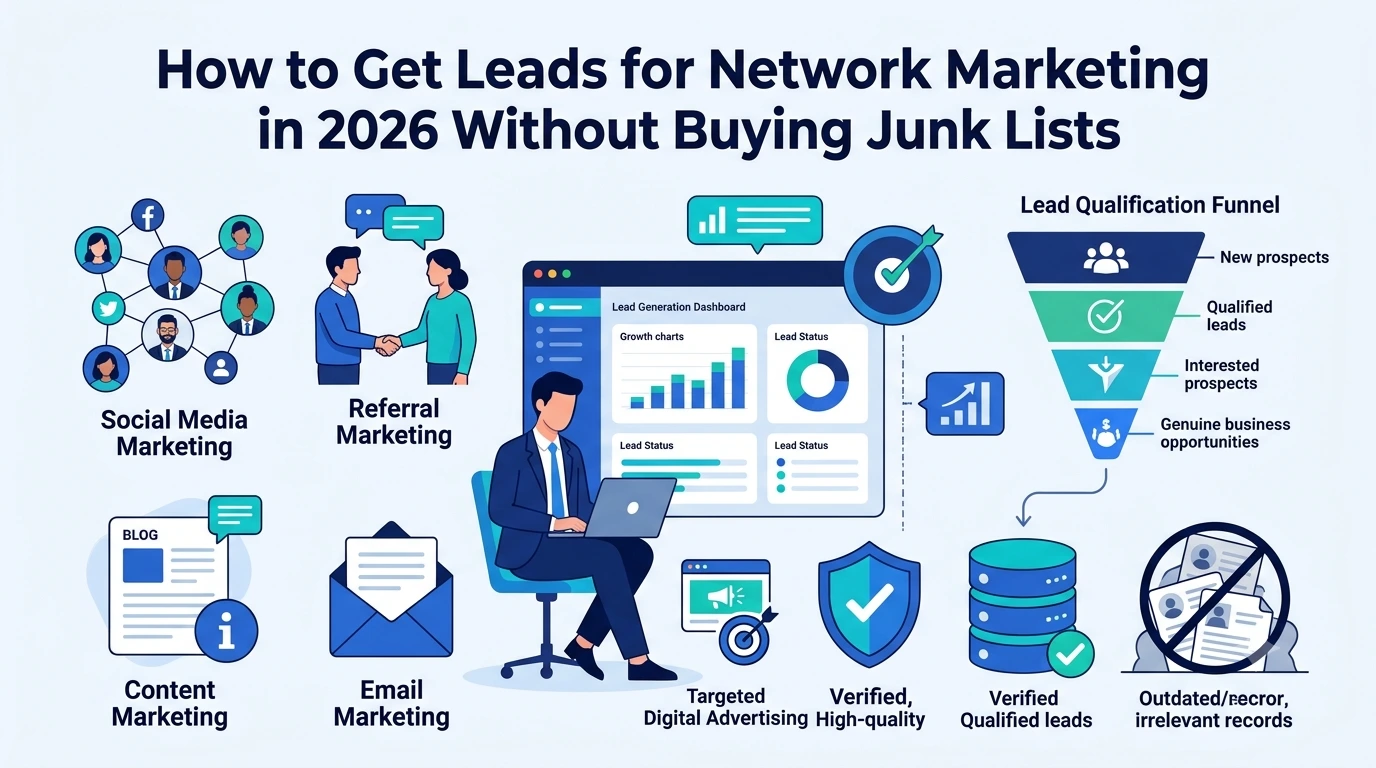
Quick answer: The best network marketing leads come from people who have already shown interest in a business opportunity or in the products you sell, reached through channels you are legally allowed to use. Build them three ways: your own content and referrals, opt-in lead capture, and verified data from a reputable list source. Avoid “free” or “exclusive” lead packs that cannot tell you where the names came from or when they were last verified.
Network marketing lives or dies on the conversation count. The trouble is that the fastest way to raise that count, buying leads, is also where most distributors lose money. Recycled names, numbers on do-not-call registries and people who never asked to hear about an opportunity turn a lead budget into wasted evenings and, sometimes, legal exposure.
This guide covers where workable leads actually come from, how to tell a real source from a junk one, and how to contact the people on a list without breaking the rules that apply to network marketers.
Why most network marketing leads fail
Most purchased MLM leads fail for one of four reasons, and none of them is the distributor’s pitch.
- They are recycled. Cheap lead packs are often sold to many buyers at once. By the time you call, the prospect has heard from a dozen other reps that week.
- They are stale. A form someone filled in two years ago is not interest today. Phone numbers change, emails bounce and circumstances move on.
- They were never interested. Some packs are just scraped names labeled as “opportunity seekers”. Nothing connects those people to a business opportunity offer.
- They cannot be contacted legally. Numbers on the National Do Not Call Registry, mobile numbers with no recorded consent, or Canadian emails with no consent under CASL can all create liability for the person making the contact.
The common thread is source. A lead is only as good as the record of where it came from, when it was collected and what the person agreed to. Ask for that record before you pay for anything.
The main types of network marketing leads
Not every lead is a recruiting lead. Decide whether you want people who might join your team, people who might buy your products, or both, because each comes from a different source.
| Lead type | Who they are | Best for | Watch out for |
|---|---|---|---|
| Opportunity seekers | People who responded to a work-from-home or business opportunity offer | Recruiting | How recent the response was, and which offer they answered |
| Home-based business owners | People already running a business from home | Recruiting, cross-selling | They already have a business; lead with fit, not hype |
| Product-interest consumers | Buyers in categories such as wellness, fitness or beauty | Product sales, customer base | Pitching the opportunity before the product |
| Opt-in leads you generate | People who signed up through your own form or content | Both | Volume is slower; quality is highest |
| Warm market and referrals | Friends, past customers and their introductions | Both | Small pool; protect the relationship |
For recruiting, start with MLM leads or a home-based businesses list. For product sales, consumer interest lists such as wellness and self-care enthusiasts or fitness enthusiasts match the people who already buy in your category.
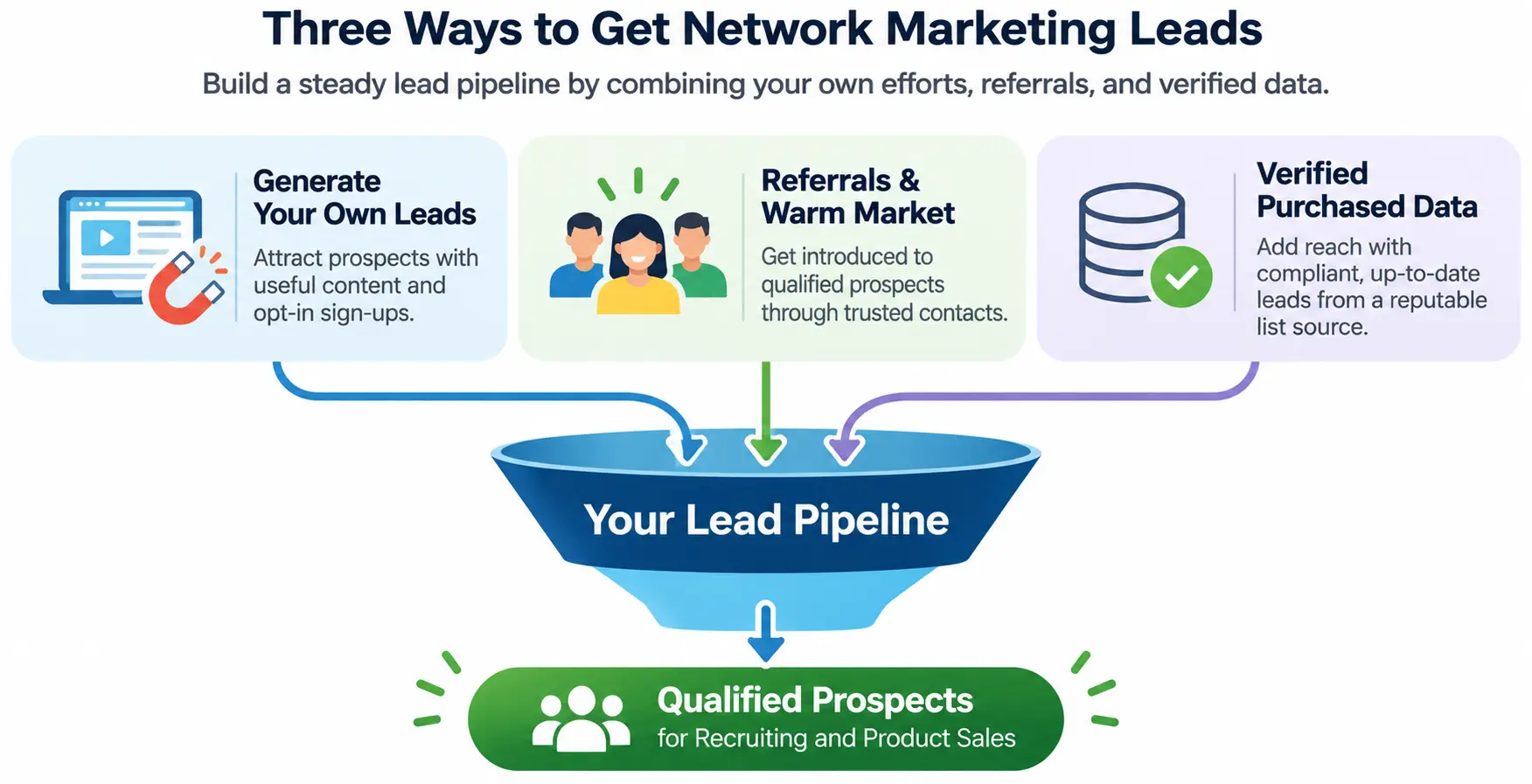
Three ways to get network marketing leads
The strongest pipelines combine all three. Each one covers a weakness in the others.
1. Leads you generate yourself
Your own content and lead capture produce the most willing prospects, because they came to you.
- Useful content: short videos, posts or articles that answer questions your prospects already ask, such as how to fit a side business around a full-time job.
- A simple opt-in: a free guide, product sample request or webinar sign-up in exchange for an email address, with clear consent wording.
- Local presence: markets, community events and small business groups, where conversations start face to face.
The downside is speed. Organic lead generation takes months to build momentum.
2. Referrals and your warm market
Happy customers and team members introduce people who already trust the person who referred them. Ask for introductions after a good product experience, not before. Track who referred whom so you can thank them properly.
The downside is size. Most warm markets run out quickly.
3. Verified purchased data
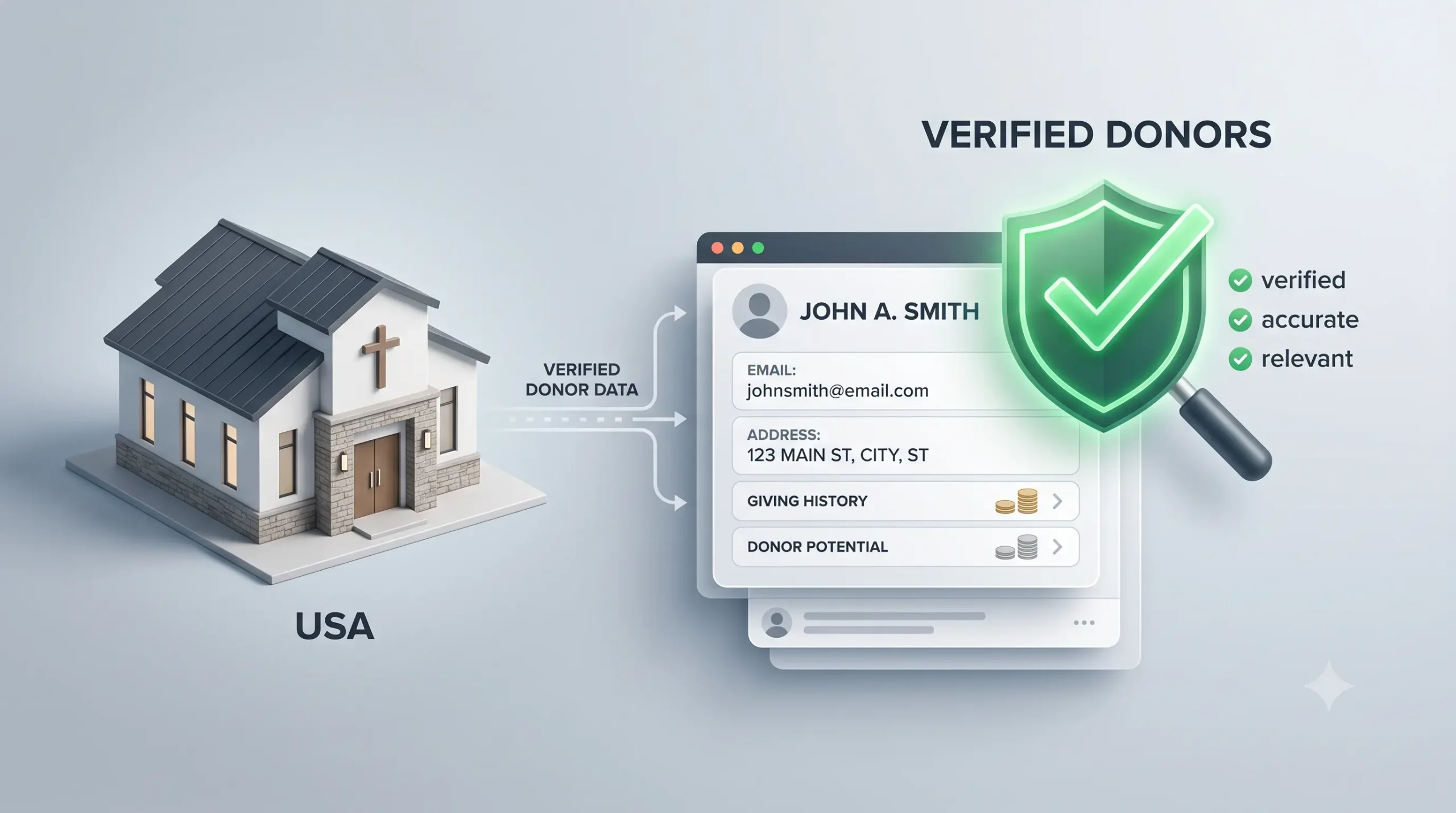
A reputable list source adds reach that your own channels cannot supply on day one. Done well, you choose people by response history, interest and location, and you receive data that has been screened for the channel you plan to use.
The downside is risk, if you buy from the wrong place. The next section shows how to tell the difference. A list brokerwho compares several data owners, rather than selling one in-house file, is usually the safest route.
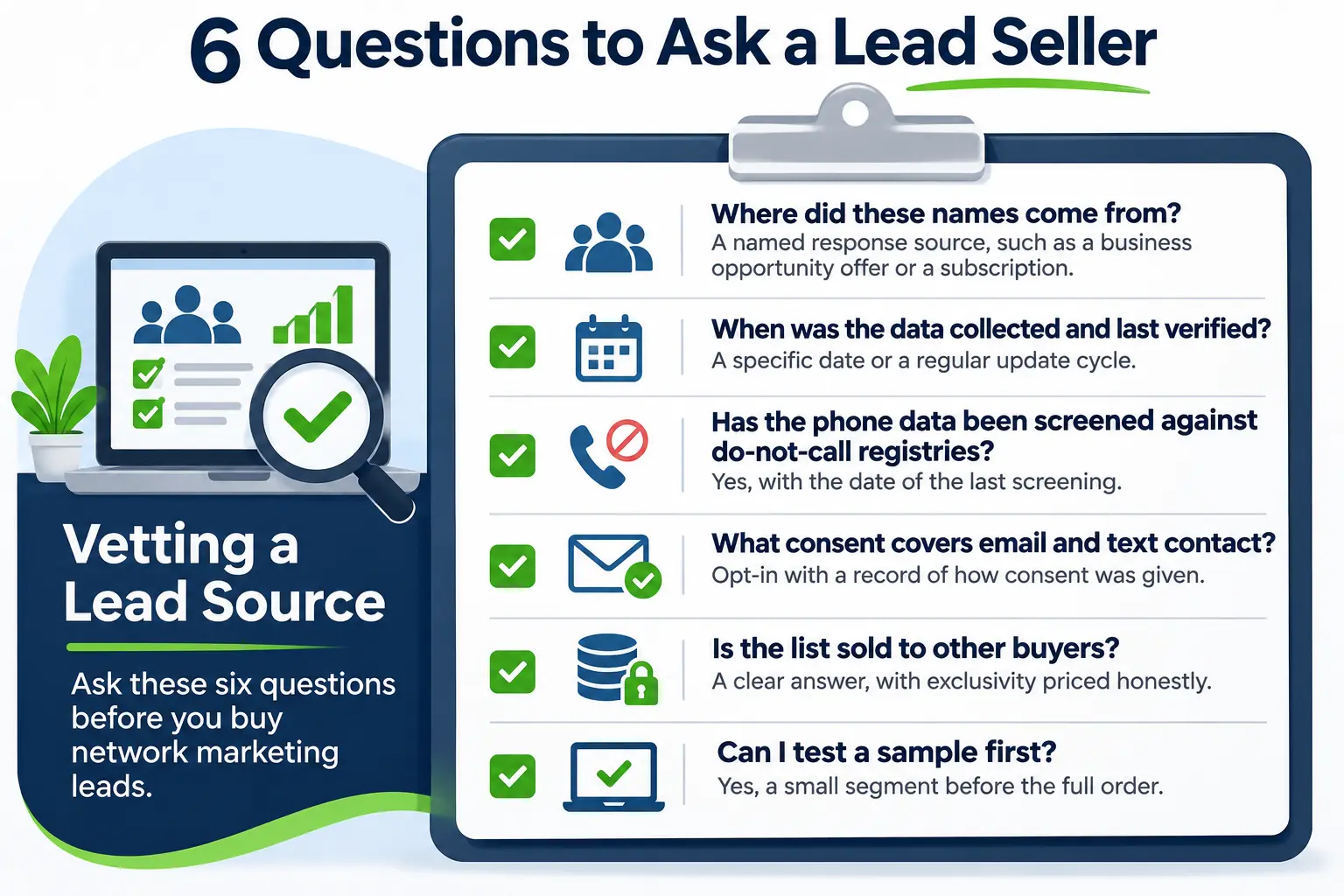
How to tell a good lead source from a junk one
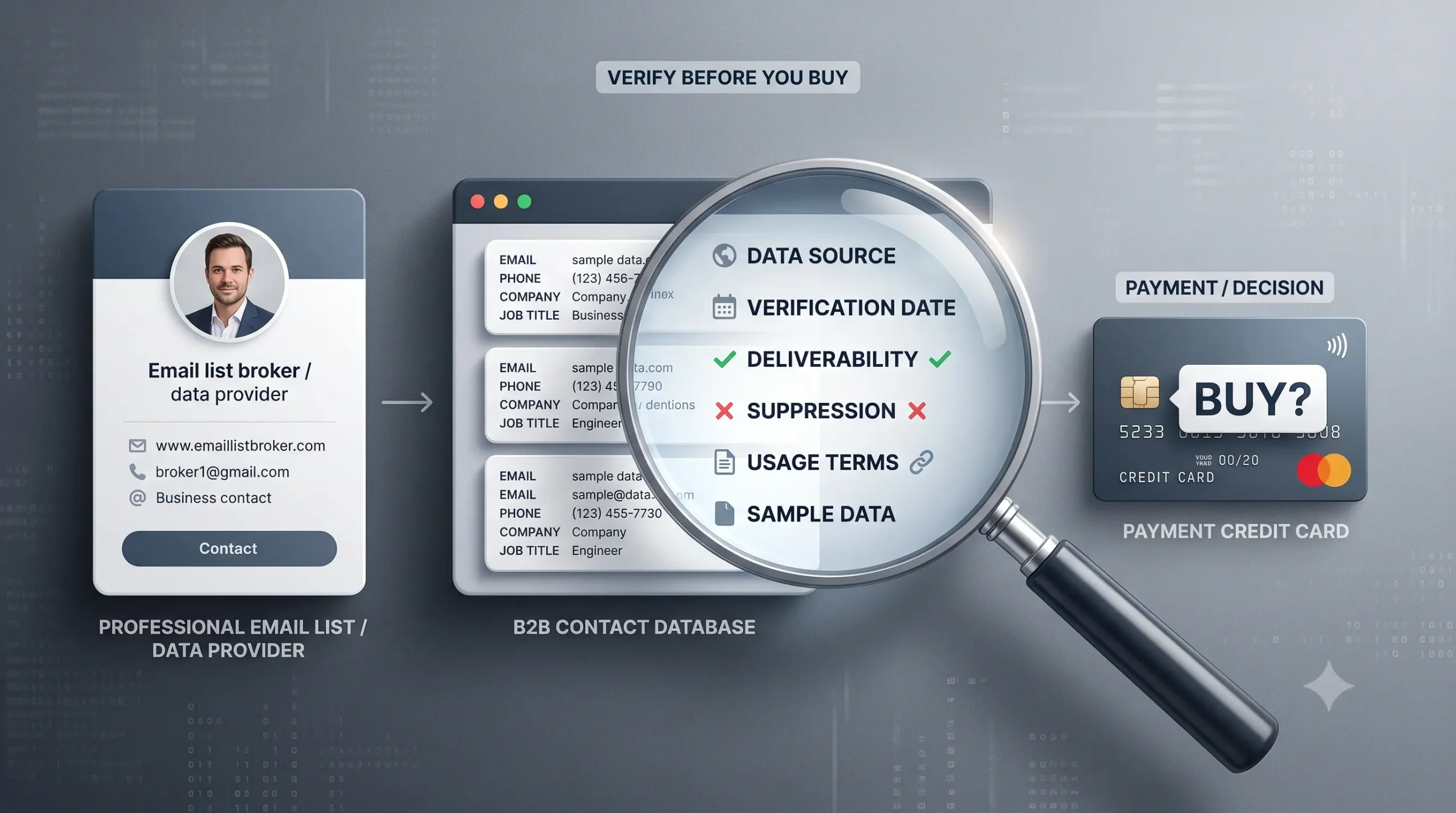
A trustworthy source answers these questions without hesitation. A junk source dodges them or answers with adjectives.
| Ask this | Good answer | Red flag |
|---|---|---|
| Where did these names come from? | A named response source, such as a business opportunity offer or a subscription | “Proprietary sources” with no detail |
| When was the data collected and last verified? | A specific date or a regular update cycle | No date, or “constantly updated” |
| Has the phone data been screened against do-not-call registries? | Yes, with the date of the last screening | “That’s your responsibility” and nothing more |
| What consent covers email and text contact? | Opt-in with a record of how consent was given | Silence, or “everyone opted in somewhere” |
| Is the list sold to other buyers? | A clear answer, with exclusivity priced honestly | “Exclusive” leads at bulk-pack prices |
| Can I test a sample first? | Yes, a small segment before the full order | Full order only |
About “free” and “exclusive” MLM leads
Free lead packs are almost always recycled data, shared with every person who downloaded them. “Exclusive” leads can be real, but genuine exclusivity costs more, because the seller gives up the right to resell. If a price looks too low for exclusive data, it probably is not exclusive.
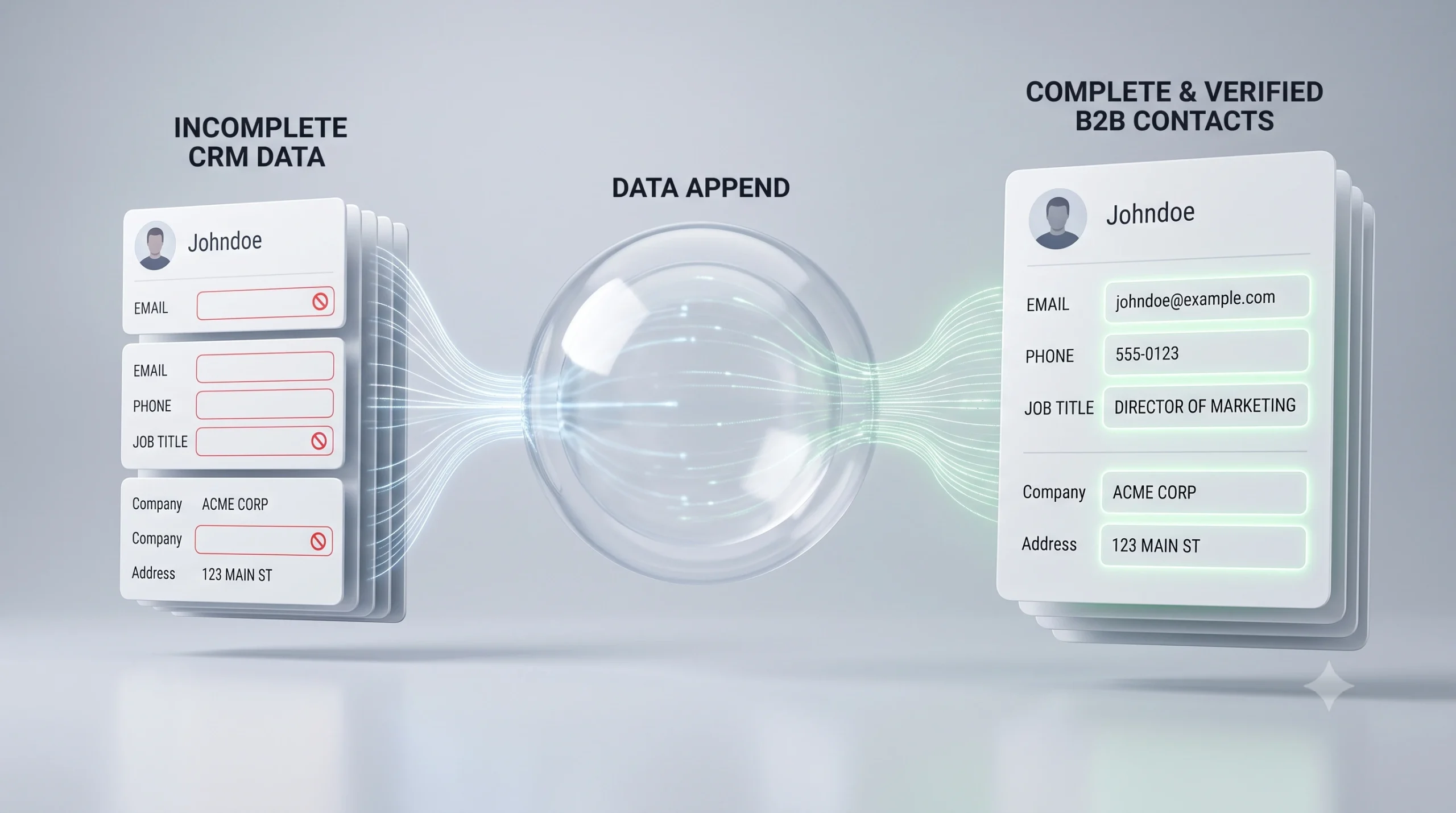
If you already hold a list of past contacts with gaps in it, data append services can fill missing emails or phone numbers on records you already own, which is often a better first spend than a new pack.
The compliance rules network marketers cannot skip
Network marketers contact consumers, so they fall under the strictest consumer contact rules. The person who makes the call or sends the message is usually the one exposed, not the company that sold the list.
- Phone calls in the US: the Telephone Consumer Protection Act (TCPA) restricts telemarketing calls, and the National Do Not Call Registry applies to consumer numbers. Calls and texts to mobile numbers using automated systems need prior express written consent. Read how to use telemarketing lists without violating TCPA or do-not-call rules and the US DNC overview.
- Text messages: treat texts like calls. Do not text a purchased number without documented consent for texting.
- Email in the US: CAN-SPAM requires an accurate sender, an honest subject line, a physical address and a working unsubscribe.
- Canada: CASL requires consent before a commercial email, and Canada runs its own do-not-call list. See CASL in 2026 and Canada’s National DNC list.
- Income and product claims: the FTC has repeatedly warned MLM participants against typical-earnings claims and unsupported health claims. Describe the opportunity honestly and leave income promises out of every message.
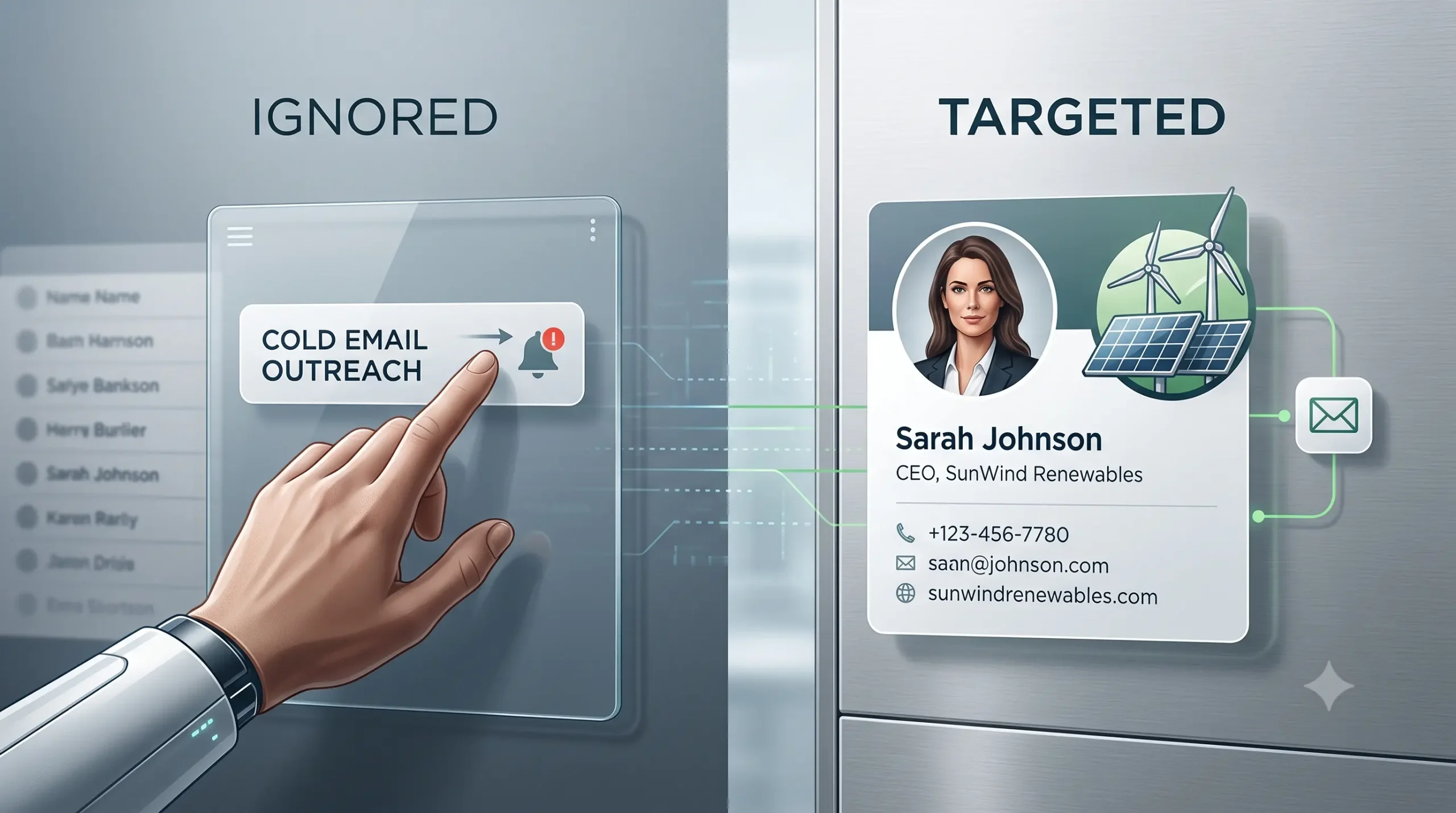
Direct mail carries the fewest consent restrictions of any channel, which is one reason it suits cold opportunity outreach. A consumer direct mailing list lets you reach new prospects first, then move responders to phone or email with their permission.
This is general information, not legal advice. Check your company’s policies and local law before you start.
A simple outreach plan for purchased leads
Treat a purchased list as the start of a conversation, not a call sheet to burn through in one night.
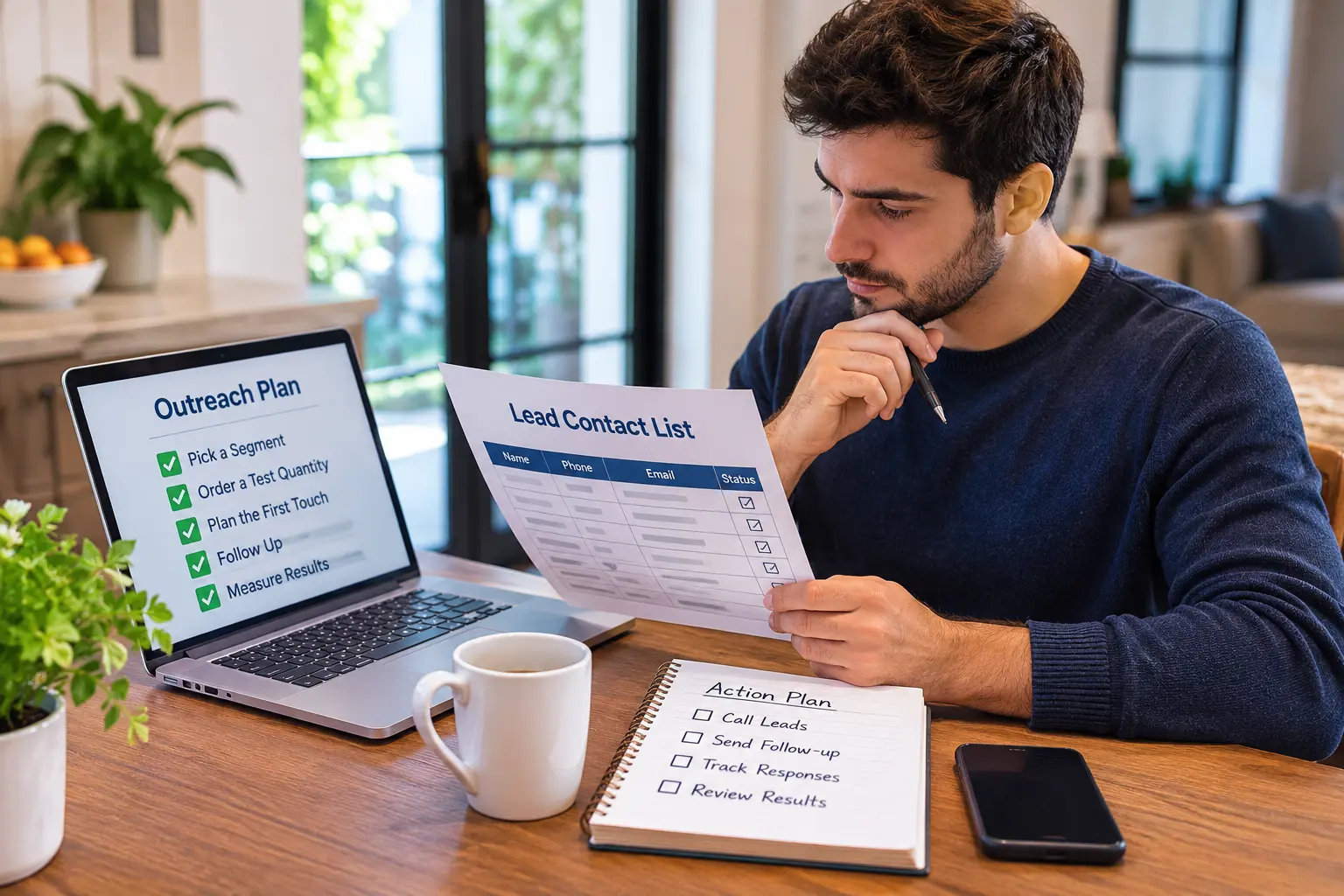
- Pick one segment. Choose one lead type and one area, for example opportunity seekers in your own state. A tight segment makes your message specific.
- Order a test quantity. Start small enough that you can contact every name properly within two weeks. Old leads are worth less every week they sit.
- Open with the channel the data supports. Use mail or a compliant first touch based on the consent the source can document. A ZIP code targeted mailing list works well for local recruiting.
- Lead with value, not the comp plan. Offer the product sample, the guide or the short info session. Interest in the opportunity follows trust.
- Follow up on a schedule. Two or three spaced, polite touches beat a dozen rushed ones. Stop when someone says no, and record it.
- Measure and decide. Track responses, conversations and sign-ups per hundred names. Reorder the segment that worked; drop the one that did not.
If you plan to combine mail, phone and email, a consumer multi-channel list keeps all three contact points on one record.
Frequently asked questions
How do I get leads for network marketing? Combine three sources: content and opt-in forms that bring people to you, referrals from customers and team members, and verified data from a reputable list source for extra reach. Contact each lead only through channels the data’s consent allows.
Is it legal to buy MLM leads? Buying the data is generally legal. How you use it is what the law controls. Calls must respect the TCPA and do-not-call registries, texts and automated calls to mobiles need written consent, and email must follow CAN-SPAM in the US and CASL in Canada.
Are free MLM leads worth using? Rarely. Free lead packs are usually old, shared with many other distributors and missing any record of consent. They cost time instead of money.
What is an opportunity seeker? An opportunity seeker is someone who has responded to an offer about working from home or starting a business. Their response history makes them more likely to consider a network marketing opportunity than a random consumer.
What is the difference between MLM leads and home-based business leads? MLM leads are people who responded to network marketing or business opportunity offers. Home-based business leads are people already running a business from home. The first group is looking; the second already has something, so the pitch needs to show fit.
How many leads should I buy at first? Only as many as you can contact properly within about two weeks. Test a small segment, measure the response, then scale what works.
Can I target leads by location? Yes. Lists can be filtered by state, city, ZIP code or Canadian postal area, which helps if you recruit locally or run in-person events.
Find network marketing leads you can actually use
Prospects Influential is an independent list broker with access to more than 70,000 lists and no allegiance to any single data owner. We will tell you where each list comes from, when it was last updated and which channels it supports, before you spend anything.
See our MLM leads options or request a quote for a count built around your segment. With offices in West Vancouver, BC and Bellingham, WA, we cover the US, Canada or both.