Religious mailing lists serve as powerful tools connecting faith-based organizations with communities, supporters, and prospects who share their values. From local churches expanding congregations to national ministries raising funds for humanitarian work, these targeted databases enable meaningful engagement that generic marketing cannot deliver.
Understanding specific applications of religious mailing lists helps organizations make strategic decisions about when, how, and why to use them. Whether your goal is raising money, spreading awareness, or mobilizing communities, religious mailing lists provide the foundation for campaigns that resonate with faith-driven audiences.
Religious Mailing Lists for Fundraising Campaigns
Fundraising represents the most common application of religious mailing lists. Faith-based nonprofits, ministries, and churches depend on charitable giving to fund their missions.
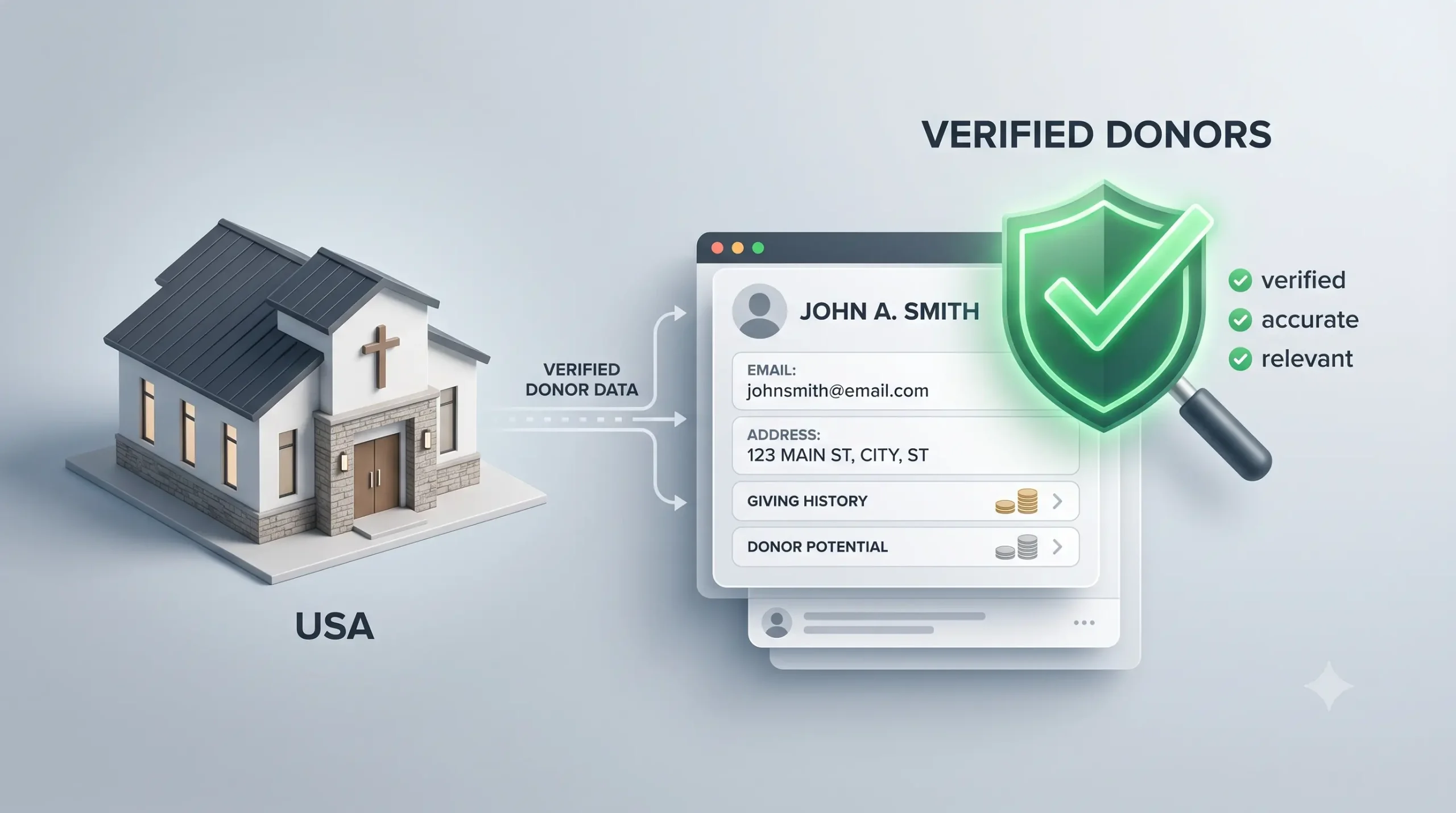
Annual giving campaigns form the backbone of nonprofit fundraising. Organizations mail appeals to donor lists of people with proven giving histories to similar causes. A Christian humanitarian organization might target donors who’ve previously given to international relief or missionary work. The appeal explains impact, shares beneficiary stories, and asks for financial support.
Religious mailing lists enable this targeting by identifying donors based on past giving behavior, religious affiliation, and values alignment. Rather than mailing broadly, organizations reach people already demonstrating both capacity and inclination to give.
Major donor acquisition campaigns use religious mailing lists to identify prospects with capacity for larger gifts. These campaigns filter for affluent households within specific faith traditions who’ve given substantial amounts to religious causes. A Catholic university launching a capital campaign might target Catholic households in certain income brackets who’ve donated to educational institutions.
The precision targeting available through consumer lists allows segmentation by both religious affiliation and wealth indicators. This ensures major gift solicitations reach qualified prospects.
Building fund campaigns for churches leverage geographic targeting combined with denominational filters. A Baptist church raising money for a new facility targets Baptist households within driving distance who’ve demonstrated regular church attendance and charitable giving. Local targeting matters because people give to institutions serving their communities.
Mission trip sponsorship requests reach supporters through targeted appeals to those who’ve previously supported missions work. Organizations use lists of evangelical Christians who’ve given to international missions or sponsored children through relief organizations.
Emergency relief fundraising requires rapid response. When disasters occur, faith-based relief organizations use religious mailing lists to quickly reach donors who respond to urgent needs. These time-sensitive campaigns identify donors with histories of giving to disaster relief within faith communities.
Planned giving programs identify older donors for estate planning conversations. Religious organizations use lists filtered for age 65 and above within their faith tradition who’ve demonstrated consistent giving over years.
Religious Mailing Lists for Awareness and Education Campaigns
Beyond direct fundraising, religious organizations use mailing lists to build awareness, educate constituencies, and shape public opinion on issues important to faith communities.
Issue advocacy campaigns mobilize religious constituencies around legislation or social issues. A pro-life organization uses lists of Catholic and evangelical Protestant households to build awareness about legislation affecting abortion policy. The mailings explain the issue, frame it within religious values, and provide action steps.
These awareness campaigns don’t necessarily ask for money immediately. Instead, they educate supporters, build name recognition, and establish the organization as a trusted voice. Future fundraising campaigns benefit from this established credibility.
Religious publication subscriptions drive awareness campaigns for magazines and devotional materials. Christian publishers use specialty lists of religious consumers who’ve subscribed to similar publications or purchased religious books. The mailings showcase content samples and offer subscription discounts.
Documentary and film promotion reaches religious audiences through targeted awareness campaigns. When faith-based films release, studios use religious mailing lists to drive awareness and encourage theater attendance. They target Christian households by denomination, age, and geography.
Educational program awareness helps seminaries and religious universities reach prospective students. These institutions target Christian families with college-age children, often filtering by denomination to match institutional affiliation. The mailings showcase programs and spiritual formation emphasis.
Ministry awareness campaigns introduce new organizations or expand existing ones into new markets. A prison ministry expanding to new states uses religious mailing lists to build awareness among evangelical Christians in those regions. The mailings explain the ministry’s work and share transformation stories.
These soft-touch awareness campaigns lay groundwork for future fundraising by establishing credibility and demonstrating impact before making direct asks for financial support.
Religious Mailing Lists for Community Outreach and Engagement
The third major application involves recruiting members, volunteers, and participants for faith-based activities and community engagement.
Church growth campaigns targeting new members represent the most common community outreach use. Churches use direct mailing lists to invite families to services, events, and programs. A nondenominational church might mail to Christian households within five miles who aren’t currently attending church regularly.
Geographic targeting matters critically for church growth. People won’t drive long distances to services, so radius targeting around the church location ensures mailings reach prospects who could realistically become regular attenders.
Vacation Bible School recruitment uses targeted mailings to reach families with elementary-age children. Churches mail to households within their service area during spring months, inviting children to summer VBS programs.
Religious event promotion drives attendance through targeted outreach. A Christian conference organizer uses lists of evangelical Christians interested in specific topics like leadership development or spiritual growth. The mailings provide event details and registration offers.
Volunteer recruitment campaigns identify people willing to serve. Nonprofits use religious mailing lists to recruit volunteers for community service projects, mission trips, or disaster relief efforts. They target people with histories of volunteer service or those in demographics likely to have time available.
Small group and Bible study recruitment uses targeted mailings to build participation. Churches launching new small groups mail to members and regular attenders, inviting them to join groups focused on specific topics or demographics.
Community service program participation relies on outreach to recruit participants. A church running financial literacy classes or job training programs uses targeted mailings to reach people who could benefit from these services.
Political mobilization in faith communities uses religious mailing lists to drive voter registration and engagement. Faith-based advocacy organizations target religious voters with information about candidates and ballot measures.
Multi-Channel Integration: Combining Lists Across Platforms
The most effective campaigns combine religious mailing lists across multiple channels rather than relying solely on direct mail.
Multi-channel campaigns coordinate direct mail, email marketing, and telemarketing for maximum impact. A ministry might send a direct mail piece introducing their work, follow up with email providing additional information, then call high-value prospects personally.
This integrated approach creates multiple touchpoints that reinforce messaging and accommodate different communication preferences. Some donors prefer mail, others respond better to email, and high-value prospects appreciate personal phone outreach.
Social media retargeting extends reach beyond physical and email addresses. Organizations use email addresses from mailing lists to create custom audiences on Facebook and Instagram. They serve ads to people who received direct mail, reinforcing messages and driving website traffic.
Measuring Success Across Different Applications
Success metrics vary depending on whether lists are used for fundraising, awareness, or outreach.
Fundraising campaigns measure response rates, average gift amounts, cost per acquisition, and return on investment. Successful fundraising campaigns to cold prospects typically generate 1 to 3 percent response rates with average gifts ranging from $50 to $150 depending on the ask amount and audience.
Awareness campaigns measure softer metrics like website visits, information requests, and social media engagement. An organization building awareness tracks how many recipients visit their website or request additional information.
Outreach campaigns measure participation rates, attendance, and engagement. A church mailing invitations tracks how many households respond by attending. A nonprofit recruiting volunteers measures how many mailed prospects sign up to serve.
Successful outreach campaigns to cold prospects often generate 0.5 to 2 percent participation rates depending on the ask complexity.
Best Practices Across All Applications
Regardless of whether you’re using religious mailing lists for fundraising, awareness, or outreach, certain best practices apply universally.
Targeting precision matters more than volume. Mailing 5,000 highly qualified prospects delivers better results than mailing 20,000 poorly targeted names.
Message alignment with audience values ensures resonance. Frame appeals, awareness messages, and invitations within the religious values and language of your target audience.
Timing matters significantly in religious marketing. Major giving seasons like Christmas and Easter see elevated response rates. Avoid mailing during holiday weeks when families travel.
Testing improves every campaign type. Test different list segments, messaging approaches, and creative elements. Measure what works and scale successful approaches.
List quality determines deliverability. Work with providers offering 90 to 95 percent deliverability guarantees and regular NCOA updates.
Follow-up increases results dramatically. Plan multi-touch sequences that mail to the same prospects multiple times, send email follow-ups, and call engaged prospects.
Working With List Brokers for Strategic Campaigns
Working with experienced list brokers offers significant advantages.
Brokers help define optimal targeting for your specific application. They understand which list segments work best for fundraising versus awareness versus outreach campaigns.
Access to multiple list sources gives brokers flexibility to recommend the best options for your needs.
Campaign consultation extends beyond just list rental. Experienced brokers advise on messaging, timing, multi-channel integration, and testing strategies based on what works in religious marketing.
Ongoing optimization ensures continuous improvement. Brokers analyze campaign results with you and help refine approaches based on actual performance data.
Religious mailing lists power fundraising, awareness, and outreach campaigns that connect faith-based organizations with communities sharing their values. From acquiring new donors to building brand awareness to recruiting volunteers, these targeted databases enable precise outreach that generic marketing cannot deliver.
Success comes from matching the right lists to your specific goals, crafting messages aligned with audience values, and executing campaigns with attention to data quality, timing, and follow-up. Organizations investing strategically in religious mailing lists see stronger response, better engagement, and improved mission outcomes.
Ready to use religious mailing lists for your fundraising, awareness, or outreach campaigns? Work with experienced list brokers who understand faith-based marketing and can recommend optimal targeting through consumer lists, specialty donor lists, and multi-channel campaigns.