Choosing the wrong mailing list costs you more than money. It wastes staff time, damages donor relationships, and makes your organization question whether direct marketing works. But when you select the right religious mailing lists for your fundraising and outreach campaigns, response rates climb, donations increase, and supporters become advocates.
The challenge? Not all religious mailing lists are created equal. Some contain outdated contacts. Others segment so broadly you’re connecting with no one. And in 2026, with donor acquisition costs higher than ever, precision matters more than volume.
Whether you’re a faith-based nonprofit seeking donors, a church expanding your congregation, or a ministry reaching new supporters, this guide shows you exactly how to choose religious mailing lists that deliver results.
Understanding Your Campaign Goals Before Selecting Lists
You cannot choose the right list until you know what success looks like.
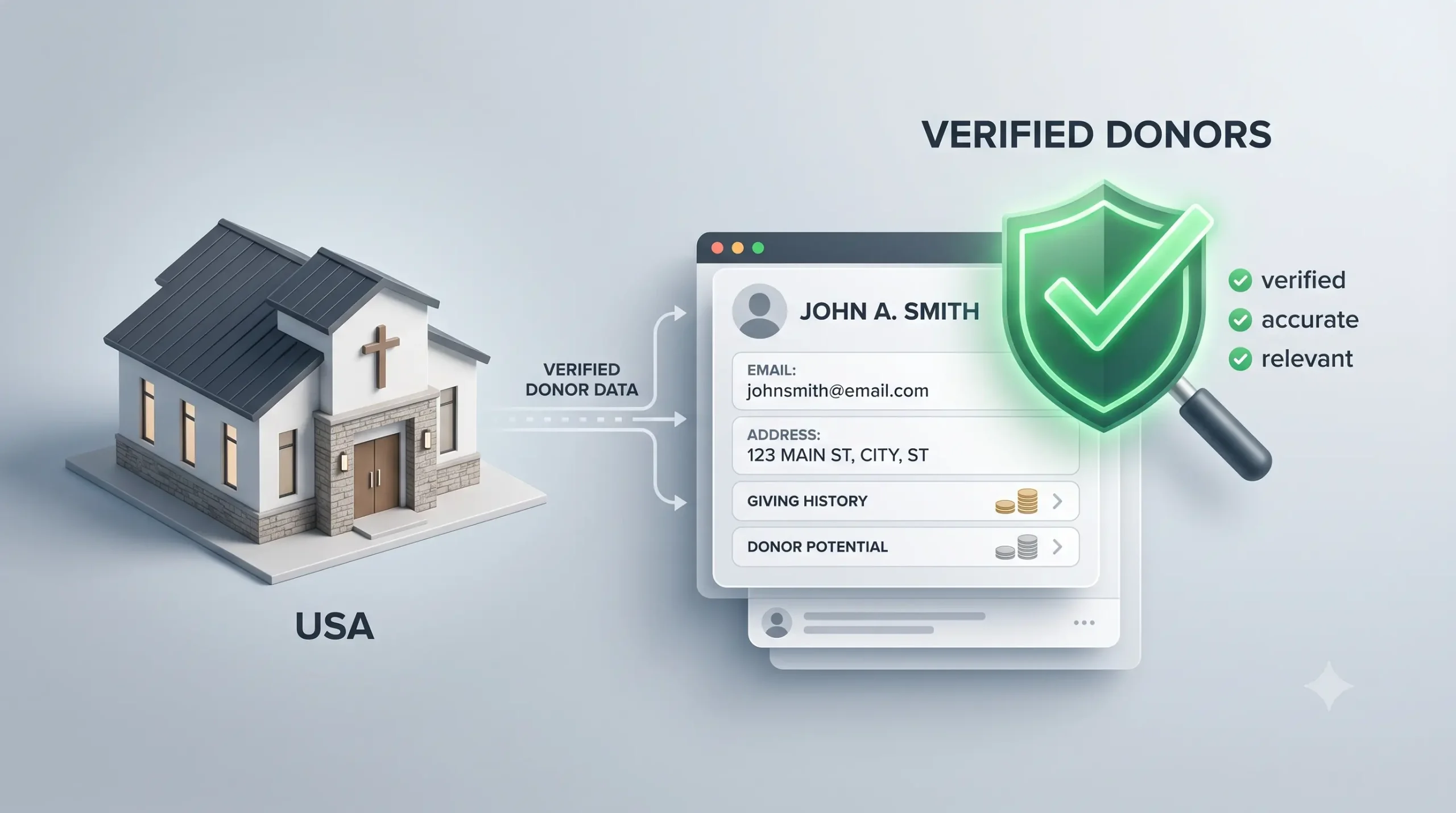
Fundraising campaigns require donor lists of people with proven giving histories to similar causes. Look for recent donations to faith-based organizations, gift amounts matching your ask range, and frequency showing regular giving patterns.
Membership growth campaigns for churches need geographic precision combined with denominational alignment. You’re targeting families within reasonable distance who share your theological tradition and worship style.
Event promotion campaigns work best with highly engaged religious consumers who attend conferences and gatherings. Past event attendance, subscription to religious publications, and purchase of faith-based products indicate likely responders.
Product or service marketing requires matching your offering to specific faith communities. A Catholic devotional publisher needs Catholic households, not generic Christian lists.
Advocacy campaigns seeking petition signatures or volunteer recruitment need lists of people who take action, not just give money. Look for civic engagement indicators and organizational membership.
Evaluating List Quality and Data Accuracy
List quality determines campaign success more than creative, offer, or timing combined.
Data freshness matters immensely. Ask when the list was last updated. Quarterly updates are minimum acceptable. Monthly or continuous updates deliver highest deliverability.
NCOA processing should be standard. The National Change of Address database captures people who’ve moved. Without NCOA updates, you’ll mail thousands of undeliverable addresses.
Deliverability guarantees separate professional providers from amateurs. Reputable list companies guarantee 90 to 95 percent deliverability and provide replacement records for undeliverable addresses.
Source transparency reveals how the list was compiled. Self-reported religious affiliation provides most accurate targeting. Compiled data from publication subscriptions and donation records offers strong behavioral indicators. Multi-source compilation typically delivers better accuracy than single-source lists.
Matching List Segments to Your Target Audience
Generic religious lists waste money. Precision targeting delivers results.
Denominational specificity matters far more than organizations realize. Within Christianity alone, traditions vary dramatically. Baptist congregations differ from Methodist, Catholic, and Pentecostal. Marketing materials that resonate with one tradition may alienate another. Consumer lists allowing denominational filtering enable this precision.
Engagement level separates committed believers from nominal identifiers. Weekly worship attenders demonstrate higher religious commitment. Regular donors, media subscribers, and product purchasers indicate active engagement. Filter for these behaviors when you need responsive audiences.
Geographic targeting remains essential. Churches need prospects within driving distance. Event promotions require targeting where events occur. Targeted mailing lists by ZIP code enable this precision.
Demographic overlays refine targeting further. Age cohorts respond differently. Homeowners in certain property value ranges indicate giving capacity. Layer demographic filters onto religious selection for maximum precision.
Giving history provides the strongest predictor of future giving. People who’ve donated to faith-based causes before will donate again. Recency matters greatly. Donors who gave in the past 12 months are far more likely to give again. Frequency indicates reliability. Gift amount reveals capacity and commitment.
Testing List Segments Before Full Deployment
Never commit your entire budget to an untested list.
Start with test quantities of 3,000 to 5,000 names per segment. This provides statistically significant results without excessive risk. Test different segments simultaneously if budget allows.
Code each test segment distinctly so you can track response. Use different reply codes, phone numbers, or URLs for each segment.
Measure response rates, conversion rates, average gift amounts, and cost per acquisition for each segment. The list with highest response rate might not deliver best ROI if average gifts are small.
Roll out winning segments at larger quantities once testing proves success. Retest periodically even with proven lists. Performance changes over time as lists age and market conditions shift.
Budget Allocation and Cost Management
Balancing list investment with overall campaign budget requires strategic thinking.
List rental costs vary based on targeting specificity and data quality. Basic religious affiliation lists might cost $80 to $150 per thousand names. Highly targeted lists with multiple criteria range from $150 to $300 per thousand. Direct mailing lists with premium data cost more but typically deliver higher response rates.
Cost per acquisition matters more than cost per name. A cheaper list delivering 1 percent response costs more per acquired donor than a premium list delivering 4 percent response. Calculate backwards from your acceptable cost per acquisition.
Multi-channel campaigns require budgeting for multiple formats. If you’re running coordinated direct mail, email, and telemarketing campaigns, you’ll need all contact methods. Some providers offer multi-channel lists with everything included.
Compliance and Ethical Marketing Standards
Marketing to religious audiences requires attention to regulations and ethics.
Donor privacy regulations protect charitable giving information. The Telephone Consumer Protection Act restricts telemarketing calls. The CAN-SPAM Act governs email marketing. Understand which direct marketing regulations apply to your campaigns.
Opt-in requirements for email lists are legally mandated. Never use compiled email lists from questionable sources. Opt-in email lists where recipients explicitly consented deliver better results and keep you legally compliant.
Ethical considerations beyond legal requirements matter when marketing to faith communities. Never misrepresent your organization’s religious affiliation. Respect the sanctity of religious identity. Be transparent about how you obtained contact information.
Working With List Brokers for Religious Campaigns
Working with experienced list brokers who understand faith-based marketing delivers significant advantages.
Brokers provide access to multiple list sources rather than limiting you to one provider. They can compare options from dozens of compilers, identify best segments for your campaign, and negotiate pricing. Business lists and consumer lists from multiple providers give you more options.
Expertise in religious marketing means brokers understand nuances that general marketing professionals miss. They know which denominations respond best to different causes, optimal timing for religious fundraising campaigns, and compliance requirements specific to faith-based marketing.
Testing strategy development benefits from broker experience across hundreds of campaigns. They can recommend test quantities, suggest segments worth comparing, and predict likely response ranges.
Ongoing campaign optimization continues after initial list selection. Brokers analyze your results, identify opportunities for improvement, and help refine your approach based on actual performance data.
Multi-Channel Integration for Maximum Impact
The most successful fundraising campaigns use multi-channel approaches rather than single-channel outreach.
Direct mail remains the foundation of religious fundraising. Physical mail creates tangible connections. Recipients can hold it, read it carefully, and share it with spouses.
Email follow-up enhances direct mail performance. Send an email 5 to 7 days after your direct mail piece should arrive. Reference the mailed piece, reinforce your message, and provide a convenient online response option.
Phone outreach to engaged prospects boosts conversion. After someone visits your website but doesn’t donate, a respectful follow-up call can answer questions and secure the gift.
Social media retargeting extends your reach. Use email addresses from your mailing list to create custom audiences on Facebook and Instagram.
Measuring Success and Optimizing Future Campaigns
Data from your current campaigns informs smarter decisions about future list selection.
Track response rates by list segment, not just overall campaign response. If one segment delivered 5.5 percent while another delivered 1 percent, you have critical intelligence about where to invest next time.
Calculate cost per acquisition for each segment. This reveals true ROI by segment, not just response rates.
Measure average gift amounts by segment. Higher response rates don’t always mean better results. A segment delivering 2 percent response with $150 average gifts generates more revenue than 4 percent response with $50 average gifts.
Monitor long-term donor value, not just initial acquisition. Track 12-month, 24-month, and 36-month retention rates by acquisition source.
Document what you learn in a campaign results database. Record which lists performed well, which segments to avoid, and messaging approaches that resonated.
Common Mistakes When Choosing Religious Mailing Lists
Learning from others’ errors saves you from expensive mistakes.
Targeting too broadly wastes money on unqualified prospects. Narrow your targeting even if it means smaller quantities.
Choosing based solely on low price guarantees poor results. Cheap lists contain outdated addresses and minimal segmentation.
Neglecting list testing before scaling loses the opportunity to identify best performers. Always test when possible.
Ignoring data age sends mail to people who moved years ago. Lists that haven’t been updated in 12 months contain unacceptably high percentages of undeliverable addresses.
Failing to suppress previous donors wastes money mailing to people already in your database. Always provide your house file to list providers so they can remove duplicates.
Expecting unrealistic response rates leads to disappointment. Cold prospecting typically generates 1 to 3 percent response rates for faith-based nonprofits.
Seasonal Timing and Religious Calendar Considerations
When you mail matters as much as who you mail to.
Major giving seasons deliver elevated response rates. Year-end giving from Thanksgiving through December 31 generates 30 to 40 percent of annual nonprofit revenue. Lent and Easter represent another strong giving period for Christian causes.
Religious holidays specific to each faith tradition create natural outreach opportunities. Ramadan for Muslim communities, Passover for Jewish communities, and denomination-specific observances represent times when faith is more present.
Avoid mailing during holiday weeks when families travel. The week between Christmas and New Year’s, Spring Break weeks, and summer vacation periods see depressed response rates.
Quarterly campaigns maintain consistent presence without overwhelming supporters. Many organizations successfully run major appeals in March, June, September, and December.
The fundamentals of effective religious list selection remain constant even as technology evolves. Understand your audience, target precisely, test rigorously, measure carefully, and optimize continuously.
Religious mailing lists represent powerful tools for reaching faith communities with fundraising appeals and outreach campaigns. When chosen strategically, they connect you with people predisposed to support your mission. When chosen carelessly, they waste money and damage your confidence in direct marketing.
The difference between success and failure isn’t luck. It’s making informed decisions about targeting, segmentation, data quality, testing, and optimization. Invest time in selecting the right lists for your specific goals, and your campaigns will reward that effort with stronger response, higher revenue, and growing communities of engaged supporters.
Ready to choose the right religious mailing lists for your fundraising and outreach campaigns? Work with experienced list brokers who can help you identify precisely targeted segments and optimize campaigns through consumer direct mail, email marketing, and multi-channel outreach.