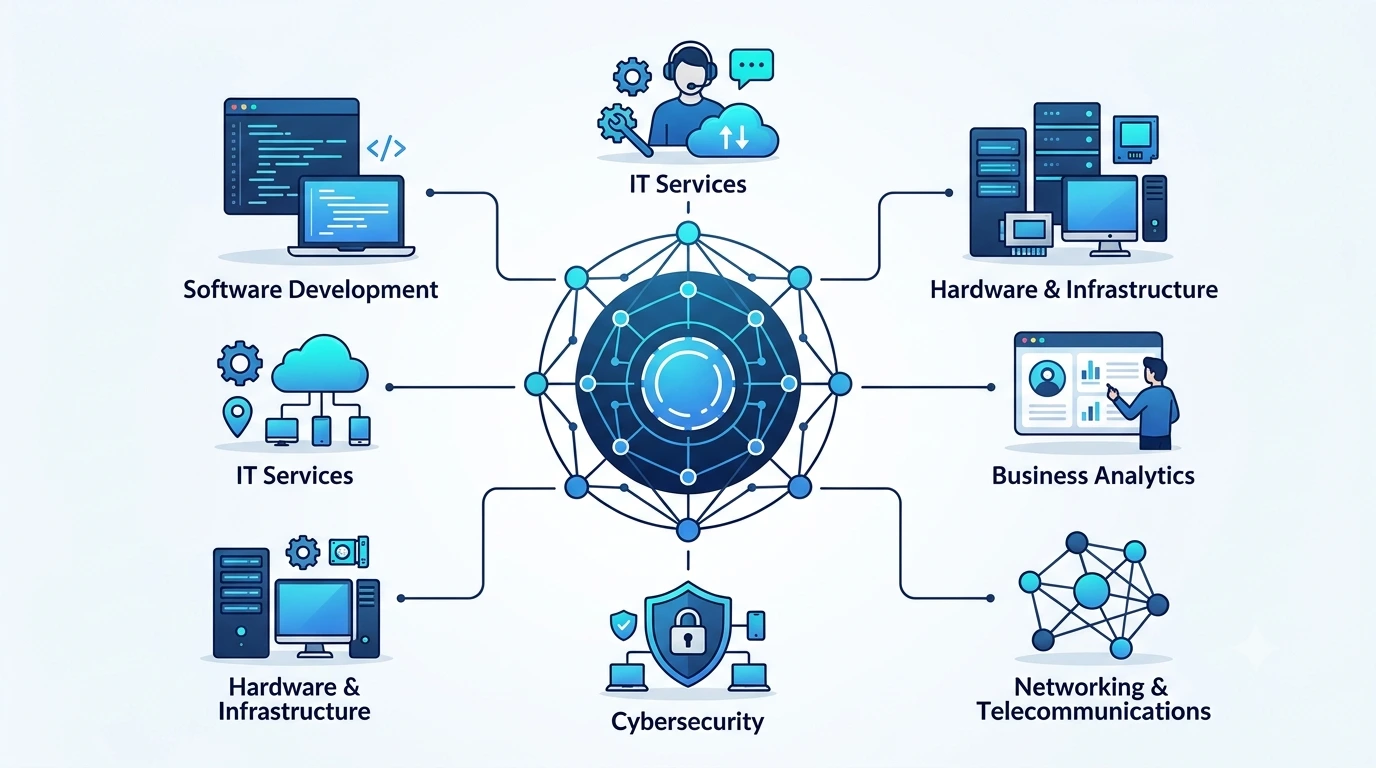
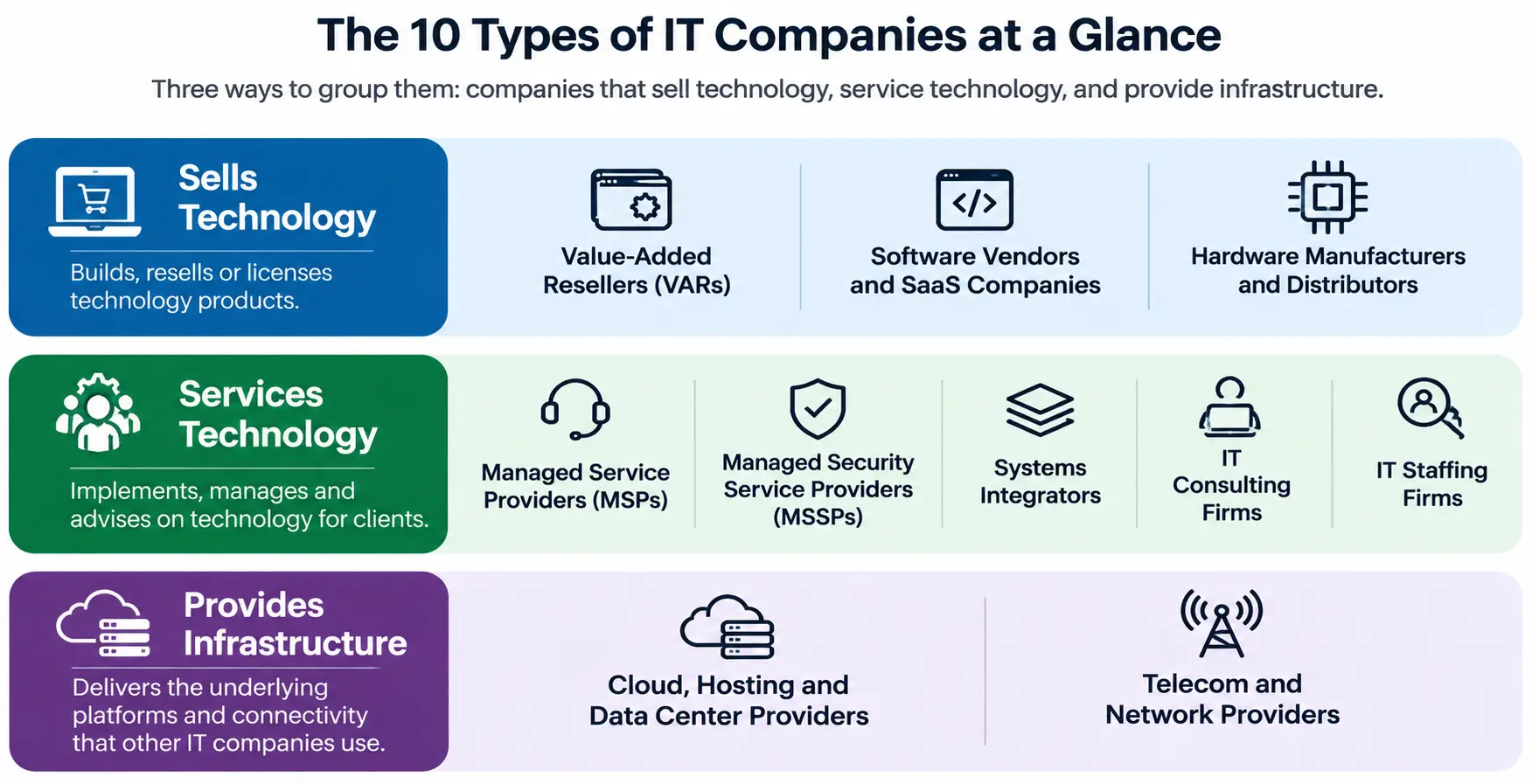
Quick answer: IT companies fall into roughly ten types: managed service providers (MSPs), managed security service providers (MSSPs), value-added resellers (VARs), systems integrators, IT consulting firms, software vendors and SaaS companies, cloud, hosting and data center providers, hardware manufacturers and distributors, IT staffing firms, and telecom and network providers. Each type sells something different, buys something different, and has a different person signing the purchase order. A list built for one type will waste money on the others.
“IT company” is one of the most common phrases on a list order, and one of the least useful. It covers a two-person computer repair shop and a global systems integrator with thousands of engineers. Both carry an IT label in most business databases. Only one of them is likely to buy what you sell.
This guide breaks the tech sector into the types B2B marketers actually need to separate, shows the industry codes that sit behind each one, and explains the extra filters that turn a broad tech list into a campaign-ready one.
Why “IT company” is too broad a target
An untargeted IT list mixes companies that sell technology, companies that service it, and companies that only use it heavily. Your offer usually fits one of those groups, not all three.
Three problems show up when a campaign treats the sector as one audience:
- The message misses. A cybersecurity tool pitched to an MSP is a resale opportunity. The same pitch to a SaaS company is an internal security purchase. Same product, different buyer, different reason to care.
- The wrong person gets the message. At a 15-person MSP the owner buys almost everything. At a large systems integrator, purchases run through practice leads, procurement and a CIO or CTO.
- The budget leaks. Every record outside your real segment costs the same as one inside it, whether you pay per name for mail, per dial for telemarketing, or per send for email.
The fix is simple to describe and easy to skip: define the type of IT company first, then layer size, geography, technology stack and job role on top. A good list broker will push you to do this before quoting a count.
The 10 main types of IT companies
Each type below is defined by how it makes money, because that decides what it buys and why.
1. Managed service providers (MSPs)
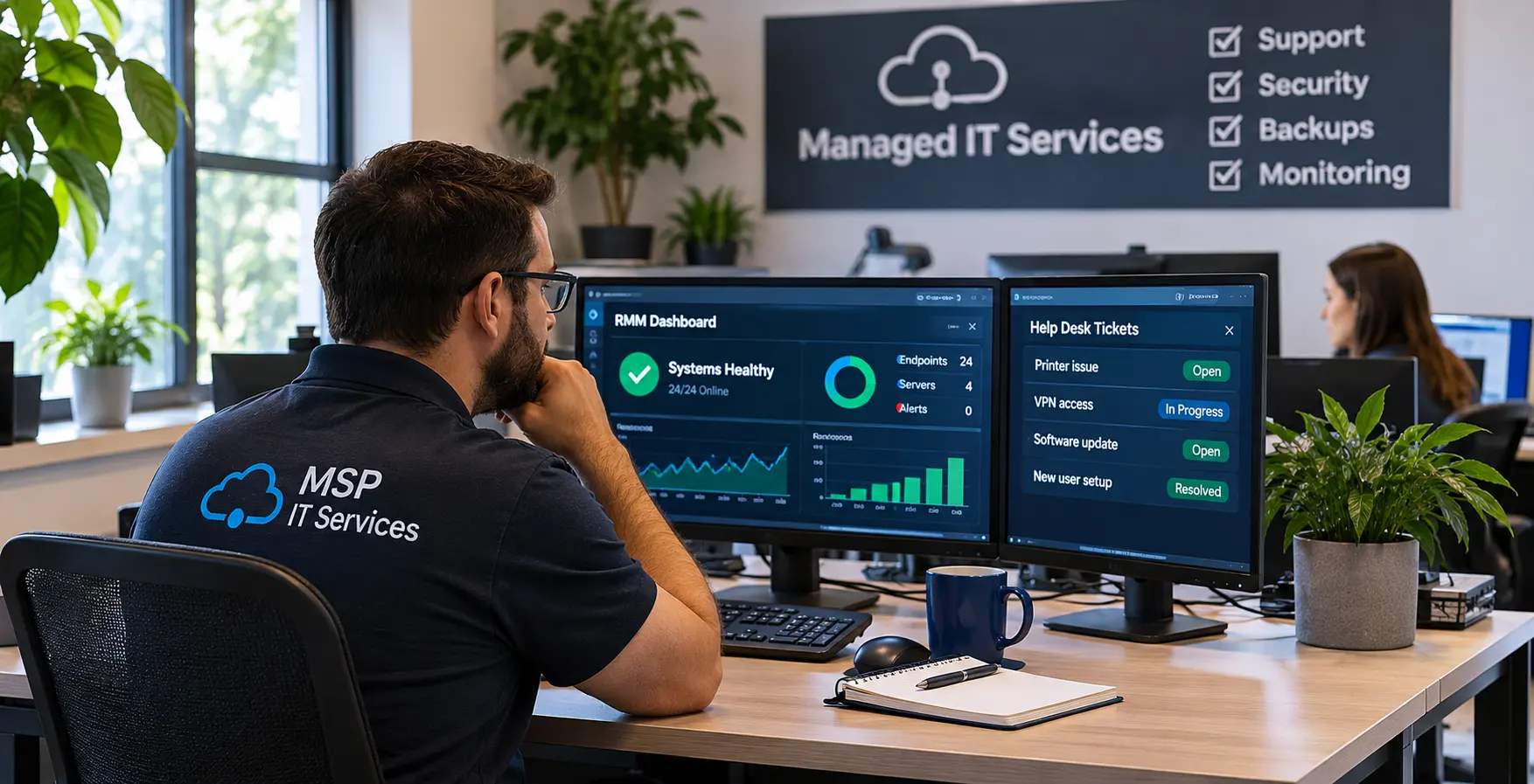
MSPs run IT for other businesses on a monthly contract: help desk, device management, backups, patching and network monitoring. Most are small to mid-sized and serve local or regional clients.
What they buy: remote monitoring and management tools, backup and security software they can resell, PSA and billing platforms, hardware through distribution, and marketing help to win new clients.
Who decides: usually the owner or founder at smaller shops; a service manager or operations lead at larger ones.
2. Managed security service providers (MSSPs)
MSSPs specialize in security operations: threat monitoring, managed detection and response, firewall management and compliance support. Many started as MSPs and added a security practice.
What they buy: security platforms with multi-tenant licensing, threat intelligence feeds, SOC tooling and certified talent.
Who decides: the CISO, security practice lead or technical founder.
3. Value-added resellers (VARs)
VARs resell hardware and software from major vendors and add services on top: configuration, installation, licensing management and support. Their revenue depends on vendor partnerships and margins.
What they buy: inventory and licenses through distribution, partner program tiers, sales enablement and lead generation for their own pipeline.
Who decides: sales and partner managers, plus the owner for strategic vendor choices.
4. Systems integrators
Systems integrators design and connect large technology environments, often across several vendors. Projects include ERP rollouts, data center builds and enterprise platform migrations.
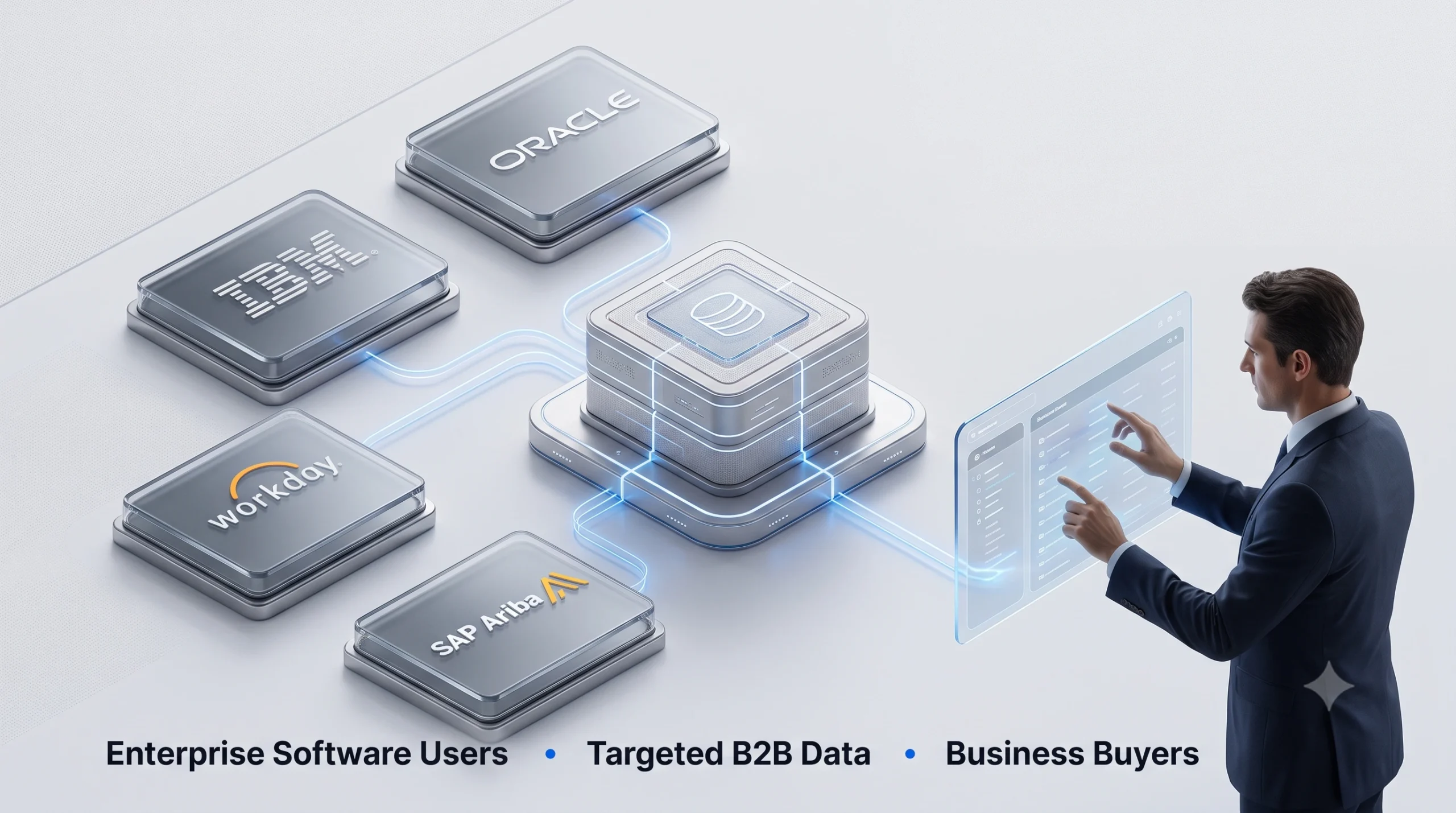
What they buy: specialist subcontractors, software licenses for client projects, development tools and partnerships with platforms such as Oracle, Workday or Microsoft Azure.
Who decides: practice leads, delivery directors and alliance managers.
5. IT consulting firms
Consulting firms sell expertise rather than ongoing operations: technology strategy, architecture reviews, digital transformation planning and vendor selection. Many sit between the client and the vendors the client eventually buys from.
What they buy: research subscriptions, collaboration tools and partner relationships that give them product access and referral fees.
Who decides: partners and principals.
6. Software vendors and SaaS companies
These companies build and sell their own software, either as installed products or as subscriptions. They range from two-founder startups to public companies, and include vertical specialists such as fintech companies.
What they buy: cloud infrastructure, developer tools, security and compliance tooling, sales and marketing technology, and data for their own outbound programs.
Who decides: the CTO or VP Engineering for technical tools; the CMO, VP Sales or RevOps lead for go-to-market tools.
7. Cloud, hosting and data center providers
This group rents computing capacity: public and private cloud, web hosting, colocation and managed hosting. Margins depend on infrastructure efficiency.
What they buy: servers, storage, networking gear, power and cooling equipment, and facility services.
Who decides: infrastructure and facilities leaders, plus procurement at larger operators.
8. Hardware manufacturers and distributors
Manufacturers design and build computers, components, peripherals and networking equipment. Distributors move that product to resellers and MSPs at scale.
What they buy: components, logistics, channel marketing and partner recruitment.
Who decides: procurement, supply chain and channel leaders.
9. IT staffing and recruitment firms
Staffing firms place developers, engineers and IT support staff on contract or permanent terms. Some also offer project-based delivery teams.
What they buy: job boards, applicant tracking systems, background screening and candidate data.
Who decides: the owner, managing director or head of recruitment.
10. Telecom and network service providers
Carriers, ISPs and network service companies provide connectivity, voice and network infrastructure. They often overlap with MSPs on unified communications and SD-WAN. See the telecom marketing list for this segment.
What they buy: network equipment, OSS and BSS software, field service tools and customer acquisition data.
Who decides: network operations, engineering and commercial leaders.
IT company types at a glance: codes and buyers
Industry codes are how most business databases tag a company, so they are the first filter on any IT list. The catch: several types share one code, which is why codes alone never produce a clean segment.
| Type | Closest 2022 NAICS codes | Typical buyer | Size range |
|---|---|---|---|
| MSP | 541512, 541513 | Owner, service manager | Mostly small to mid-sized |
| MSSP | 541512, 541519 | CISO, security lead | Small to large |
| VAR | 423430, 541512 | Sales or partner manager | Small to large |
| Systems integrator | 541512 | Practice lead, delivery director | Mid-sized to enterprise |
| IT consulting firm | 541512, 541690 | Partner, principal | Solo to enterprise |
| Software vendor or SaaS | 513210, 541511 | CTO, CMO, VP Sales | Startup to enterprise |
| Cloud, hosting, data center | 518210 | Infrastructure, facilities lead | Mid-sized to enterprise |
| Hardware manufacturer | 334111, 334118 | Procurement, supply chain | Mid-sized to enterprise |
| IT staffing firm | 561311, 561320 | Owner, head of recruitment | Small to large |
| Telecom and network provider | 517111, 517112, 517810 | Network ops, commercial lead | Small to enterprise |
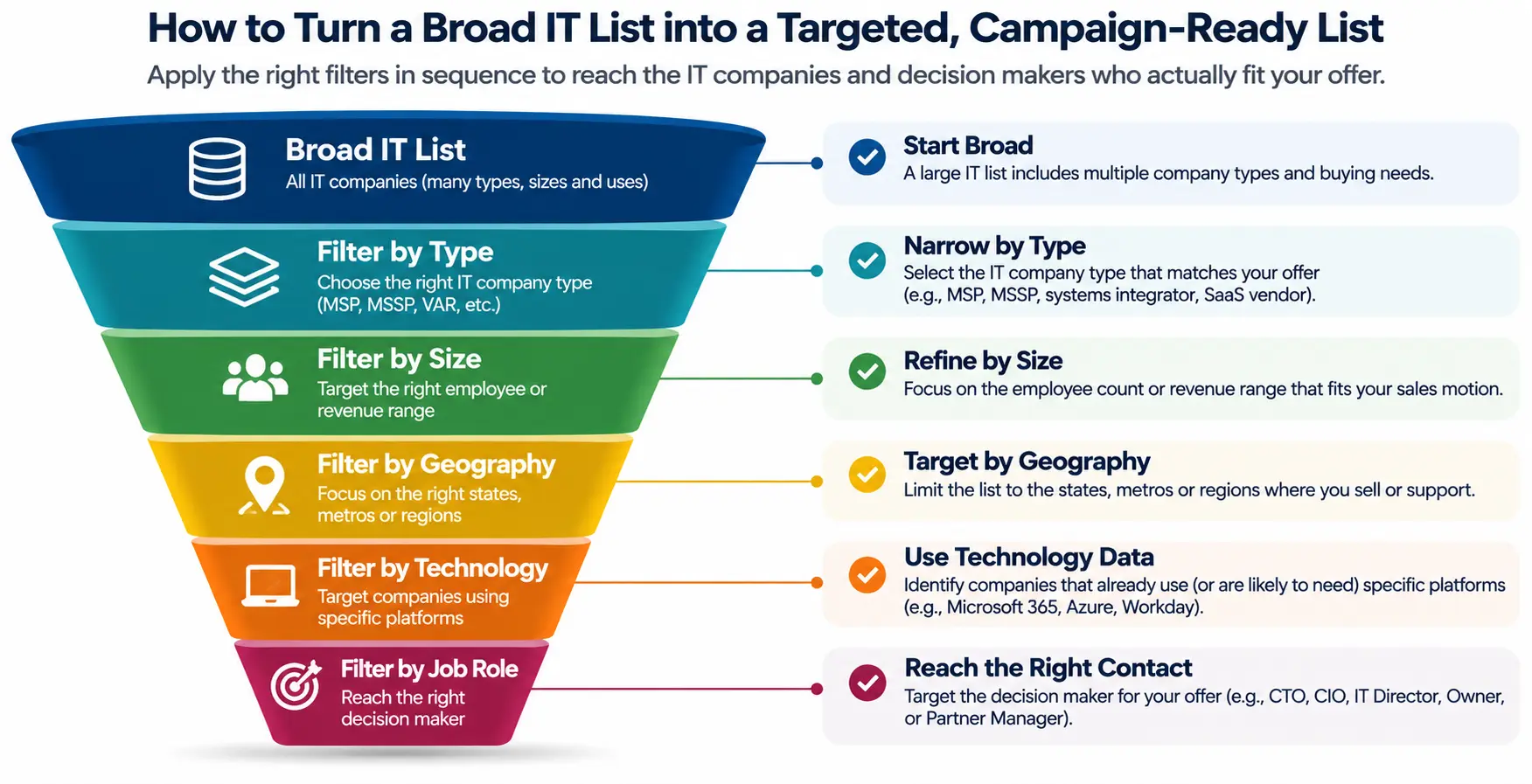
Two things to notice. NAICS 541512 (Computer Systems Design Services) covers MSPs, VARs, integrators and consultants at once. Staffing codes 561311 and 561320 cover every kind of recruiter, not only IT. In both cases you need a second filter, such as keywords in the business description, technology used, or job titles on staff, to separate the type you want.
You can look up any code with the NAICS code search, and our plain-English guide to NAICS codes explains how they are structured. Older lists may still use SIC codes such as 7371 to 7379; the SIC code search covers those.
Four filters to layer on top of company type
Company type tells you who might buy. These four filters tell you who is ready to buy and who to contact.
Company size
Employee count and revenue band change the buying process more than anything else. A 10-person MSP can say yes on a single call. A 2,000-person integrator runs a vendor review. Split your list by size and write a different offer for each band, or pick one band and go deep. For the smallest firms, a small business list filtered to IT services is often a better starting point than a general tech list.
Geography
Most MSPs and VARs sell locally, so geography doubles as a proxy for competition and partner territory. Filter by state, metro or ZIP code in the US, and by province or FSA code in Canada. Cross-border campaigns need the same care on compliance as on targeting, covered below.
Technology stack (technographics)
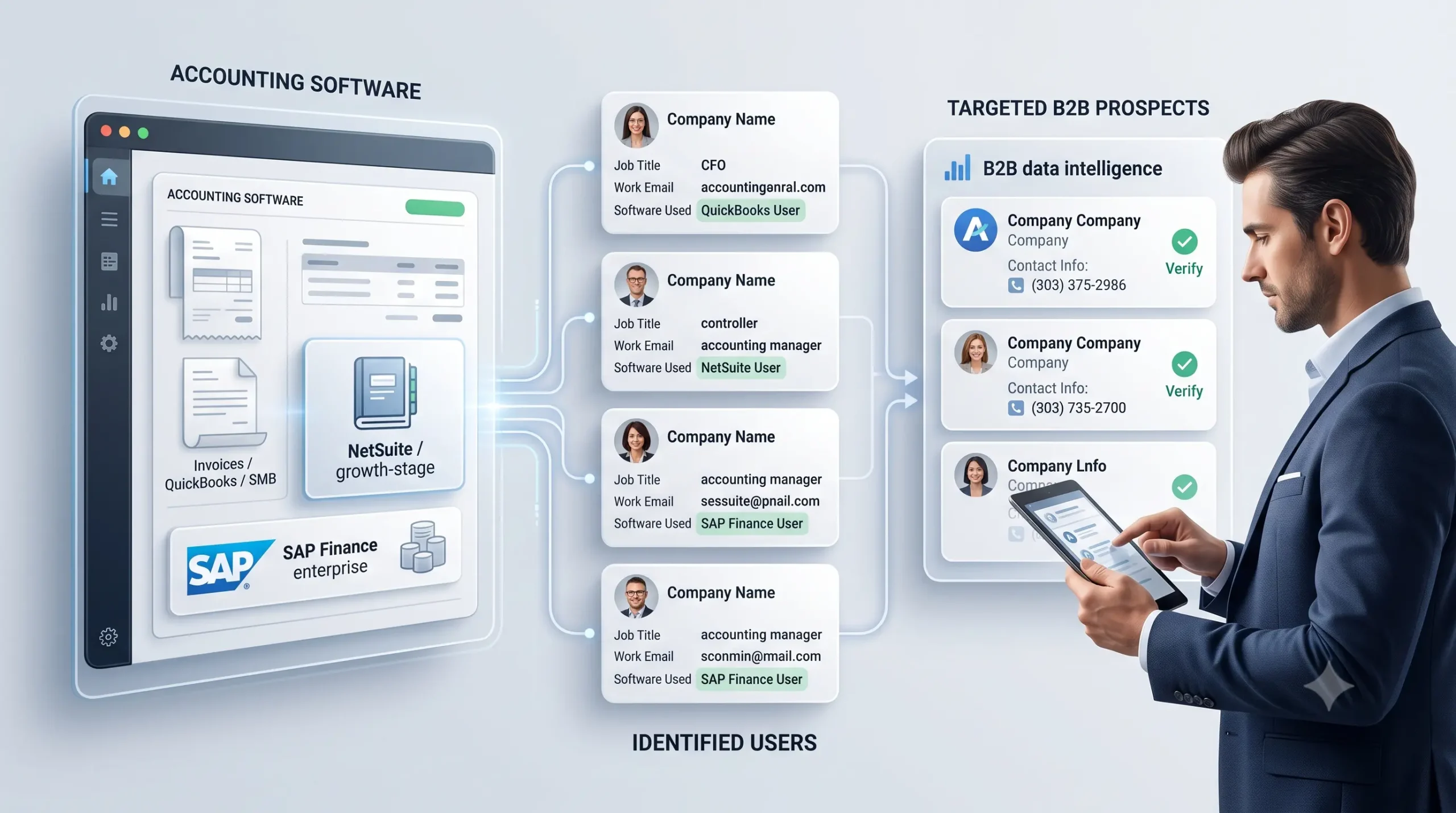
Technographic data shows which platforms a company already runs. This is often the sharpest filter in the tech sector, because it tells you whether your product complements or replaces what is there. A backup vendor, for example, might target MSPs that already manage Microsoft 365 tenants. Read how technographic data works before you rely on it, since install data ages faster than firmographics.
Job role and seniority
The right company with the wrong contact is still a wasted record. Match the title to the decision you are asking for:
- Technical evaluation: CTO, VP Engineering, IT director, IT decision makers
- Strategic or budget approval: CEO, CIO, owner, high-tech executives
- Partnership and channel deals: partner manager, alliance manager, VP Sales
- Security purchases: CISO, security practice lead
At companies under about 50 staff, target the owner first. Titles further down rarely carry purchasing authority at that size.
Matching each segment to the right channel
IT buyers are heavy email users and fast at ignoring it. The channel should follow the segment, not habit.
| Segment | Strongest first channel | Why |
|---|---|---|
| Small MSPs and VARs | Phone, then email | Owners answer their own lines and decide on the call |
| MSSPs | Email with a technical asset | Security buyers want proof before a conversation |
| Systems integrators and consultancies | Direct mail to named leaders, then email | A physical piece reaches senior people that inboxes filter out |
| SaaS and software vendors | Email, then phone | Large inbound volume; short, specific emails get through |
| Hosting, data center, hardware | Phone and direct mail | Longer cycles and procurement-led buying |
Most tech campaigns perform best as a sequence rather than a single touch. A multi-channel list carries postal, phone and email fields for the same contact, so the sequence reaches one person consistently instead of three partial records. For email-first programs, start from an opt-in business email list.
Compliance by market
The rules depend on where the recipient is, not where you are.
- United States: commercial email must follow CAN-SPAM, and the CCPA business-contact exemption has expired, which changes how California contact data must be handled. Read what the CCPA B2B exemption ending means for list buyers.
- Canada: CASL requires consent before you send a commercial electronic message. See CASL in 2026 before emailing Canadian IT firms.
- Phone campaigns: screen against do-not-call rules for each country. The direct marketing regulations hub covers both markets.
This is general information, not legal advice. Check with counsel for your specific campaign.
Common mistakes when buying an IT company list
- Ordering by code alone. As the table above shows, one NAICS code can hold four very different business models. Add a description keyword or technographic filter.
- Treating every IT company as a buyer. Resellers and MSPs are often partners or channels, not end users. Decide whether you want customers or partners before you build the list.
- Ignoring company size. The same offer rarely works for a 10-person shop and a 1,000-person integrator.
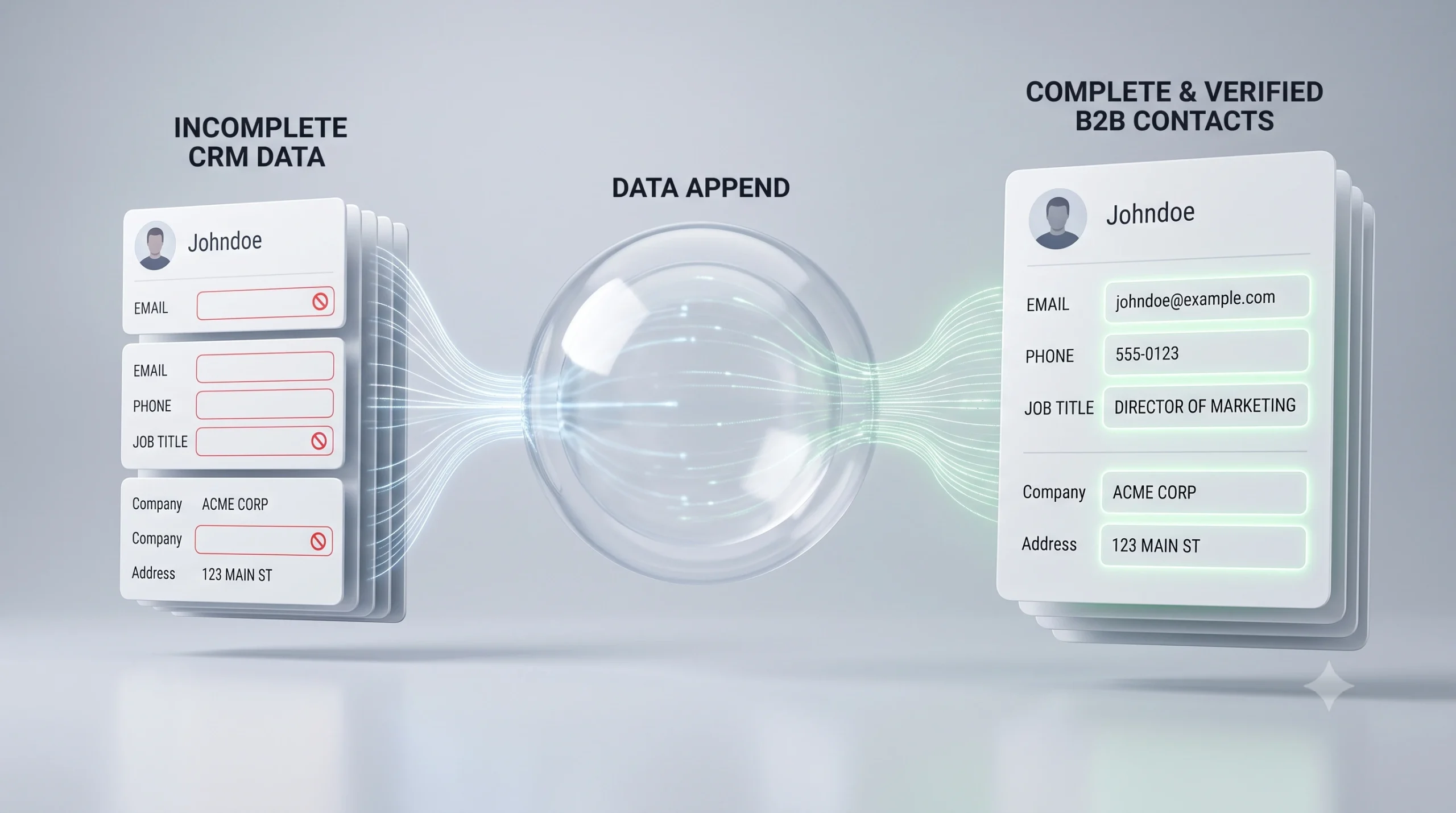
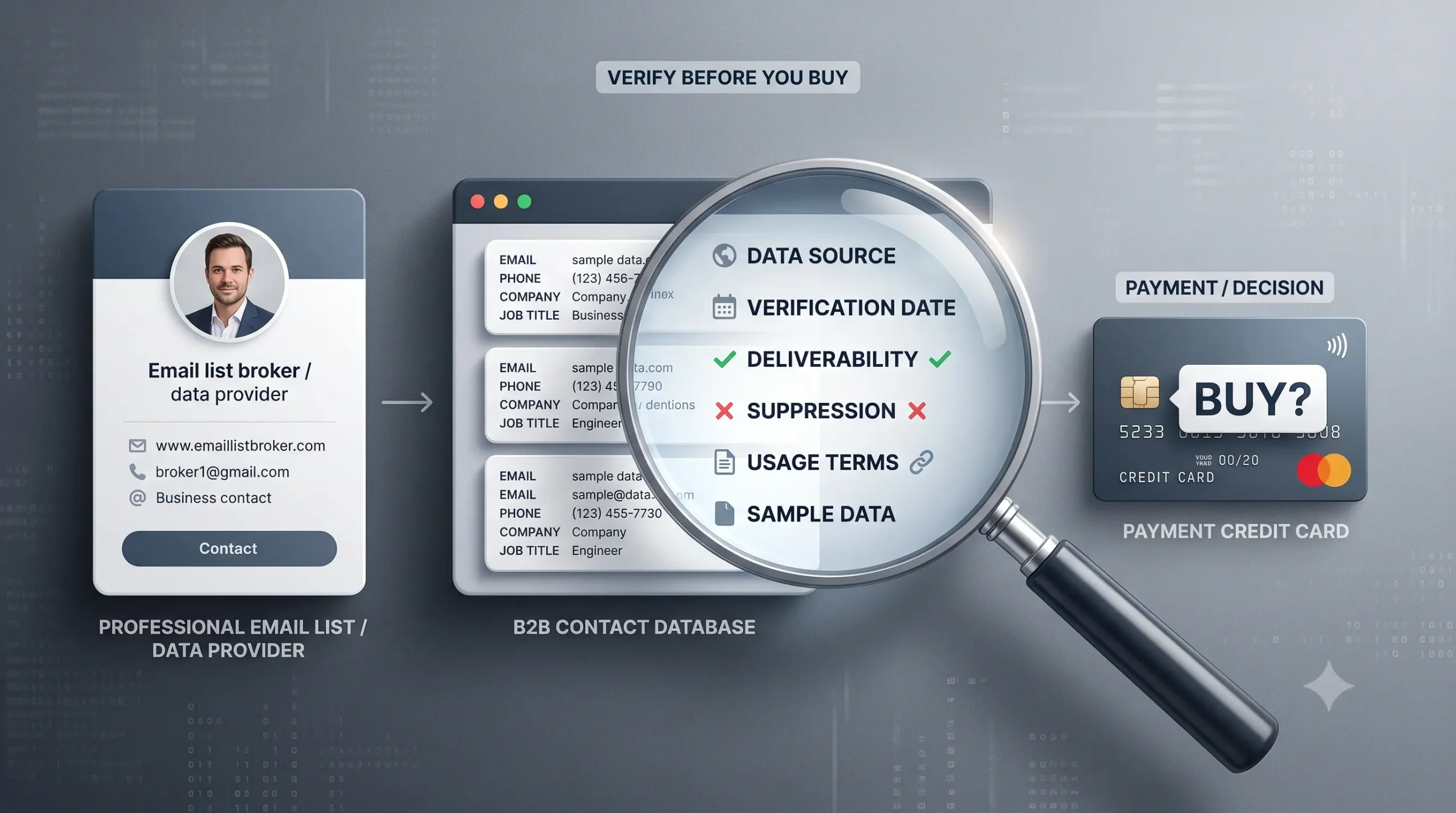
- Using an old list. Tech companies are acquired, rebranded and restructured often, and people change roles quickly. Ask when the data was last verified. If your own CRM records are incomplete, data append services can fill missing emails and phone numbers.
- Skipping the test. Send to a sample segment first, measure response, then roll out. A broker can usually split a list into test cells for you.
Checklist before you request a count
- Which of the 10 IT company types are you targeting, and are they customers or partners?
- What employee or revenue range fits your offer?
- Which states, provinces or metro areas?
- Do you need a technology filter, such as a specific platform already installed?
- Which job titles hold the decision you are asking for?
- Which channels: email, phone, direct mail, or a sequence?
- Are any recipients in Canada, so CASL applies?
- Do you need rental for one campaign, or purchase for ongoing use?
Frequently asked questions
What are the main types of IT companies? The main types are managed service providers, managed security service providers, value-added resellers, systems integrators, IT consulting firms, software and SaaS vendors, cloud and hosting providers, hardware manufacturers and distributors, IT staffing firms, and telecom and network providers.
What is the difference between an MSP and a VAR? An MSP earns recurring revenue by running IT for clients on a monthly contract. A VAR earns most of its revenue reselling vendor hardware and software, with setup and support services added on. Many companies do both, so check the business description rather than relying on the label.
What is an example of an IT services company? A regional MSP that manages laptops, backups and security for local law firms and clinics is a typical IT services company. A large systems integrator running an ERP migration for a manufacturer is another.
Which NAICS code covers IT companies? No single code does. NAICS 541512 covers computer systems design services, 541511 covers custom programming, 513210 covers software publishers and 518210 covers hosting and data processing. Most IT lists combine several codes plus a keyword or technology filter.
Who should I contact at an IT company? It depends on size and the decision. At small firms, contact the owner. At larger firms, technical tools go to the CTO or IT director, budget decisions to the CIO or CEO, and partnership offers to channel or alliance managers.
Can I target IT companies in both the US and Canada? Yes. Lists can cover either country or both, filtered by state, province, metro, ZIP or FSA code. Canadian email campaigns must follow CASL consent rules.
How current should an IT company list be? As current as possible, because the sector changes quickly through acquisitions and job moves. Ask your provider how often records are verified before you buy.
Build an IT company list that fits your campaign
Prospects Influential is an independent list broker with access to more than 70,000 lists and no allegiance to any single data provider. We will help you choose the right IT company types, filters and channels, then recommend the list that fits rather than the one we happen to own.
Start with our IT companies contact list, or request a quote and a broker will come back with counts built around your segment. With offices in West Vancouver, BC and Bellingham, WA, we serve campaigns across the US, Canada or both.