You need a mailing list for your next campaign. Should you buy directly from a data compiler or work with a broker? This question confuses many marketers, especially those new to direct marketing.
The decision between using mailing list brokers or buying directly affects your campaign results, your budget, and how much time you spend on list research. Understanding when each approach makes sense helps you make smarter choices that improve response rates and save money.
Let’s break down exactly when working with brokers delivers better results and when buying direct makes more sense.
The Cost Question: Brokers Don’t Cost You Extra
How Broker Commissions Actually Work
Many marketers assume working with list brokers adds an extra fee to their list cost. This misconception keeps them from getting expert help that could improve their campaigns.
Here’s how broker commissions really work. Brokers earn a standard 20 percent commission from the list source, not from you as the buyer. The list price stays exactly the same whether you order through a broker or call the compiler directly.
You don’t save money by cutting out the broker. The commission gets paid either way because it’s built into the standard industry pricing structure.
In fact, experienced brokers often secure better pricing than you could negotiate yourself. Their volume relationships with compilers and list owners give them negotiating power that individual buyers don’t have. Working with list brokers can actually cost you less while providing expert guidance at no additional charge.
When Mailing List Brokers Make the Most Sense
You Don’t Know Which Lists Will Work
First-time direct marketers face thousands of list options without any testing history to guide their choices. Picking the wrong list wastes your entire campaign budget on unresponsive contacts.
Mailing list brokers prevent these expensive mistakes by recommending lists that have worked for similar offers. They know which compilers maintain the best accuracy for different market segments. They understand which business lists perform well for B2B campaigns and which consumer files work for retail offers.
When you’re testing new markets or launching new products, brokers guide you toward proven performers. You avoid wasting money on lists that look good on paper but deliver poor response rates in practice.
Even experienced marketers entering unfamiliar industries benefit from broker expertise. Your knowledge about healthcare lists doesn’t translate to financial services lists or retail consumer targeting.
You Need Complex Targeting
Simple targeting like all businesses in a zip code works fine buying direct. But most successful campaigns require layering multiple criteria to find the ideal prospects.
Combining industry codes with revenue ranges, employee counts, and job titles requires knowing which data sources offer the most complete overlays. Not all compilers provide the same depth of information even when they claim to offer similar selections.
Mailing list brokers know which sources excel at different targeting requirements. They understand when response lists outperform compiled data and when compiled files work just as well at lower cost. They help you decide between specialty lists with premium pricing and basic lists with smart selections.
Complex targeting also involves decisions most marketers haven’t considered. Should you target magazine subscribers or compiled data with similar demographics? Do you need purchasers or just inquirers? These strategic choices affect both cost and response.
You Want to Compare Multiple Sources
Testing lists from different compilers helps you identify your best performers. But researching multiple sources, requesting counts, comparing pricing, and coordinating deliveries takes enormous time.
Brokers handle all the comparison work. They know that Compiler A maintains better small business data while Compiler B excels at large enterprise contacts. They understand which consumer lists offer the freshest data and which sources lag in their update cycles.
You get recommendations based on actual performance data from thousands of campaigns. Brokers see what works across their entire client base and share that intelligence when recommending lists for your specific needs.
This comparative advantage becomes crucial when testing. Instead of testing three different selections from one compiler, you might test three different compilers with the same criteria. Brokers coordinate these multi-source tests easily.
You Value Expert Strategy Advice
List selection represents just one component of campaign success. How you structure your test, which variables you isolate, and how you interpret results all affect whether you find your winning formula.
Mailing list brokers provide strategic guidance beyond just supplying data. They help you design proper test structures with adequate sample sizes. They explain what response rates to expect for your offer and how to calculate breakeven points.
Multi-channel campaigns benefit especially from broker coordination. When you want to combine multi-channel lists with mail, phone, and email data from different sources, brokers handle the complex coordination. They match records across channels and manage the various approval processes.
Response analysis guidance helps you understand what your results mean. A 2 percent response might be excellent for one offer type but disappointing for another. Brokers provide context based on industry benchmarks.
You Want to Save 20 to 40 Hours of Research
Researching list options thoroughly takes massive time investment. You need to identify potential sources, request information, compare capabilities, verify update frequencies, check minimum order quantities, and negotiate pricing.
Most marketers underestimate this time commitment. Comparing just five data sources requires contacting each one, explaining your requirements multiple times, waiting for responses, and evaluating different pricing structures.
Mailing list brokers compress this research into a single conversation. You explain your requirements once. The broker researches options across dozens of sources and presents you with the best three to five recommendations complete with counts and pricing.
This time savings matters especially for smaller campaigns where spending 30 hours on list research makes no economic sense. The opportunity cost of that research time often exceeds any perceived savings from buying direct.
When Buying Directly Makes More Sense
You Know Exactly What You Need
Once you’ve tested extensively and identified your winning lists, reordering directly from those proven sources can streamline your process. You know the contact person, you know the list codes, and you know the pricing.
Established campaigns with proven list sources don’t require broker guidance for every reorder. If you’re running the same campaign quarterly using the same three lists, direct reorders work fine.
The key word here is “proven.” Don’t assume you know what you need until you’ve actually tested and verified performance. Too many marketers think they know their best lists based on assumptions rather than data.
Even with proven lists, occasional broker consultations help you stay current on new sources and changing market conditions. List performance changes over time as databases age or competitor activity affects response rates.
You Have Simple Geographic Targeting
Saturating every household in specific zip codes requires no strategic guidance. These geographic direct mailing lists work well buying direct because the selection criteria are straightforward.
Local businesses advertising to nearby residents often use simple radius or carrier route targeting. These basic selections don’t benefit much from broker advice because there’s little strategy involved in the list choice itself.
However, even simple geographic campaigns sometimes benefit from broker knowledge about which compiler provides the most complete coverage in specific areas. Rural coverage varies significantly between sources.
You Have In-House List Expertise
Larger organizations with dedicated list managers who work with data full-time develop their own expertise. These professionals know the industry, maintain direct relationships with compilers, and handle volume that justifies their specialized knowledge.
In-house list experts function essentially as internal brokers. They research sources, negotiate pricing, and guide campaign strategy using their accumulated knowledge. These organizations can buy direct effectively because they’ve invested in building that expertise internally.
Most businesses don’t have this level of list sophistication on staff. Your marketing manager who handles lists along with twenty other responsibilities doesn’t match the focused expertise of professionals who work only with list data.
The Hidden Advantages of Using Mailing List Brokers
Quality Vetting You Don’t See
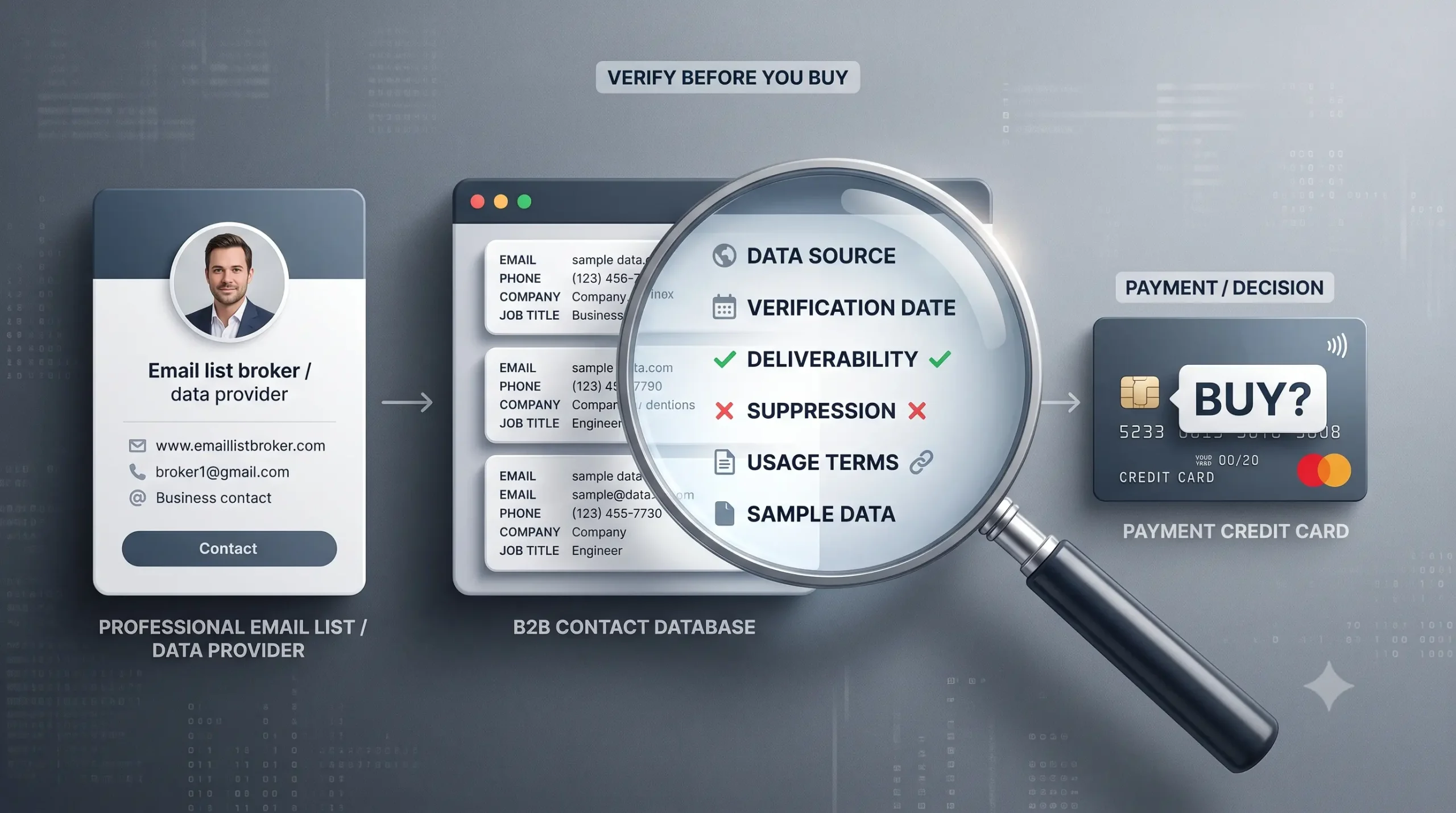
Mailing list brokers protect you from poor quality sources you don’t even know exist. The direct marketing list industry includes both excellent providers and questionable operators selling outdated or poorly maintained data.
Brokers vet their sources carefully because their reputation depends on the lists they recommend. They track deliverability rates, monitor client feedback, and cut ties with sources that don’t maintain standards.
This quality control saves you from expensive failures. Ordering a cheap list that delivers 40 percent undeliverable mail costs far more than paying market rates for verified data. You lose money on wasted postage, printing, and the opportunity cost of contacts you should have reached.
Brokers also know which sources specialize in different markets. The best compiler for opt-in email lists targeting consumers might not be the best source for B2B email data. This specialized knowledge prevents mismatches.
Negotiating Power Through Volume
Individual marketers ordering 5,000 to 10,000 names have limited leverage negotiating with major data compilers. Brokers placing hundreds of thousands or millions of names annually command better attention and pricing.
Volume relationships translate to reduced minimums, better per-thousand pricing, and faster turnaround times. Compilers prioritize high-volume broker orders because maintaining those relationships matters to their business.
This negotiating advantage applies even to small orders. The 5,000-name order you place through a broker gets the broker’s volume pricing, not pricing for a one-time small buyer.
Strategic Testing Guidance
Proper testing requires understanding statistical significance, sample sizes, and control groups. Most marketers wing it, testing with samples too small to provide reliable data or changing multiple variables simultaneously.
Mailing list brokers guide you through proper test structures. They explain why you need at least 3,000 to 5,000 names per test cell for reliable results. They help you isolate variables so you know what actually drove performance differences.
Testing strategy prevents wasted money on inconclusive tests. Spending money on a test that can’t provide reliable answers wastes your budget twice—once on the failed test and again when you have to retest properly.
Common Scenarios: Broker vs Direct
Scenario 1: New Business Launch
You’re launching a new product and need to identify your target market. You have no testing history and limited budget for mistakes.
Decision: Use a mailing list broker
Why it makes sense: Brokers help you avoid expensive mistakes by recommending lists that have worked for similar offers. Their guidance on proper test structure maximizes what you learn from limited budget. You can’t afford to waste money discovering through trial and error what brokers already know.
Scenario 2: Proven Campaign Rollout
You’ve tested extensively for six months and identified three lists that consistently deliver profitable response. You’re ready to roll out larger volumes using these proven sources.
Decision: You can buy direct
Why it makes sense: You know exactly which lists work and which compilers to order from. Reordering the same proven lists doesn’t require strategic guidance. Direct relationships streamline the reorder process.
Scenario 3: Expanding to New Market
Your successful regional campaign is expanding to national coverage. You need to find list sources for territories you haven’t tested.
Decision: Use a mailing list broker
Why it makes sense: Geographic expansion often reveals that different regions respond to different list sources. Urban markets might perform well with one compiler while rural markets work better with another. Brokers know these regional variations and help you avoid assuming your proven sources work everywhere. They also handle coordination for telemarketing lists if you’re adding phone to your campaign mix.
Scenario 4: Budget-Limited Small Campaign
You have a tight budget and can’t afford to waste money on the wrong list choice. This campaign needs to work because you can’t afford multiple testing rounds.
Decision: Use a mailing list broker
Why it makes sense: Limited budgets require getting it right the first time. Broker expertise helps you select the most likely winners and avoid wasting your limited resources. The guidance costs you nothing extra but significantly improves your odds of success.
The Time Factor: Why Speed Matters
Mailing list brokers deliver recommendations in hours, not days or weeks. You explain your requirements in one conversation. The broker researches options and gets back to you with counts and pricing typically the same day.
Researching lists yourself takes 20 to 40 hours minimum. Contacting multiple compilers, waiting for responses, comparing options, and making informed decisions consumes time you could spend on other aspects of campaign preparation.
This speed advantage matters especially for seasonal campaigns. Missing your mail date because you spent three weeks researching lists costs you the entire opportunity. Brokers compress the research timeline so you hit your windows.
Making Your Decision
Choose mailing list brokers when you need expert guidance, want to compare multiple sources, lack testing history, or value your time at more than the hours required for thorough research. The guidance costs you nothing extra but improves your results significantly.
Buy direct only when you have proven list sources, need simple geographic targeting with no strategic decisions, or employ in-house list expertise that matches broker knowledge.
For most marketers most of the time, working with experienced brokers delivers better results. The combination of unbiased recommendations, volume pricing, quality vetting, and strategic guidance outweighs any perceived advantage of buying direct.
Consider getting quotes from both brokers and direct sources for major campaigns. This comparison helps you verify you’re getting competitive pricing and best recommendations. The time investment for one comparison teaches you plenty about the market.
Ready to work with list brokers who provide unbiased recommendations from access to over 70,000 popular lists? Contact ProspectsInfluential to discuss your campaign requirements and discover which approach delivers the best results for your specific situation. Get started with expert list brokers who’ve helped thousands of marketers make smarter list decisions across North America.