If you’ve ever tried to buy a mailing list for a marketing campaign, you’ve probably discovered it’s not as simple as Googling “buy email list” and clicking the first result. (Spoiler alert: that’s usually a terrible idea anyway.)
The direct marketing list industry is vast, complex, and honestly, a bit overwhelming. There are over 70,000 different list options out there. Different providers. Different pricing models. Different data sources. Different quality levels. And if you pick the wrong list, you’re not just wasting money you’re potentially damaging your brand reputation and violating compliance regulations.
Enter the list broker
Think of a list broker as your guide through the wilderness of direct marketing data. They’re the matchmaker between businesses that need to reach specific audiences and the thousands of list providers who have that data. But they’re so much more than just middlemen connecting buyers and sellers.
Let’s break down what list brokers actually do, how they work, and why smart marketers wouldn’t dream of running a campaign without one.
What Exactly Is a List Broker?
A list broker is a professional intermediary who helps businesses find, evaluate, and acquire the right mailing lists for their marketing campaigns. They don’t own the lists themselves instead, they have relationships with thousands of list owners and managers, giving them access to a massive inventory of business lists, consumer lists, and specialty lists.
Here’s what makes them different from list owners or managers:
List Owners: These are companies that compile and maintain their own proprietary databases. They have a vested interest in selling you THEIR specific list, whether it’s the best fit for your needs or not.
List Managers: They represent list owners and manage the rental of specific lists. Again, they’re incentivized to push the lists they manage.
List Brokers: They work for YOU, the client. They’re not tied to any single list provider, which means they can offer unbiased recommendations based purely on what will work best for your campaign. They have access to lists from hundreds or thousands of different sources and can compare options objectively.
It’s the difference between walking into a Toyota dealership (where they’ll only show you Toyotas) versus working with an independent car advisor who has access to every make and model and can recommend the best vehicle for your specific needs and budget.
How Do List Brokers Actually Work?
The list broker process is more consultative than transactional. It’s not just “here’s a list, good luck.” Here’s what working with a professional list broker actually looks like:
Step 1: The Discovery Consultation
The best list brokers start with questions, not quotes. They need to understand:
- Who are you trying to reach? (Demographics, firmographics, psychographics)
- What are you promoting? (Product, service, cause, event)
- What’s your marketing goal? (Lead generation, direct sales, brand awareness, donor acquisition)
- What’s your budget? (This determines volume and targeting depth)
- What channels are you using? (Direct mail, telemarketing, email, or multi-channel)
- When do you need the list? (Timeline affects which lists are available)
- What geography are you targeting? (US, Canada, specific regions, international)
For direct mail campaigns, they’ll ask about your mail piece design and offer. For telemarketing lists, they’ll discuss script strategies and calling capacity. For opt-in email lists, they’ll cover subject line best practices and deployment options.
This isn’t just small talk these details determine which lists will perform best for your specific situation.
Step 2: List Research and Recommendation
Once they understand your needs, the broker digs into their network of list sources. They’re evaluating options based on:
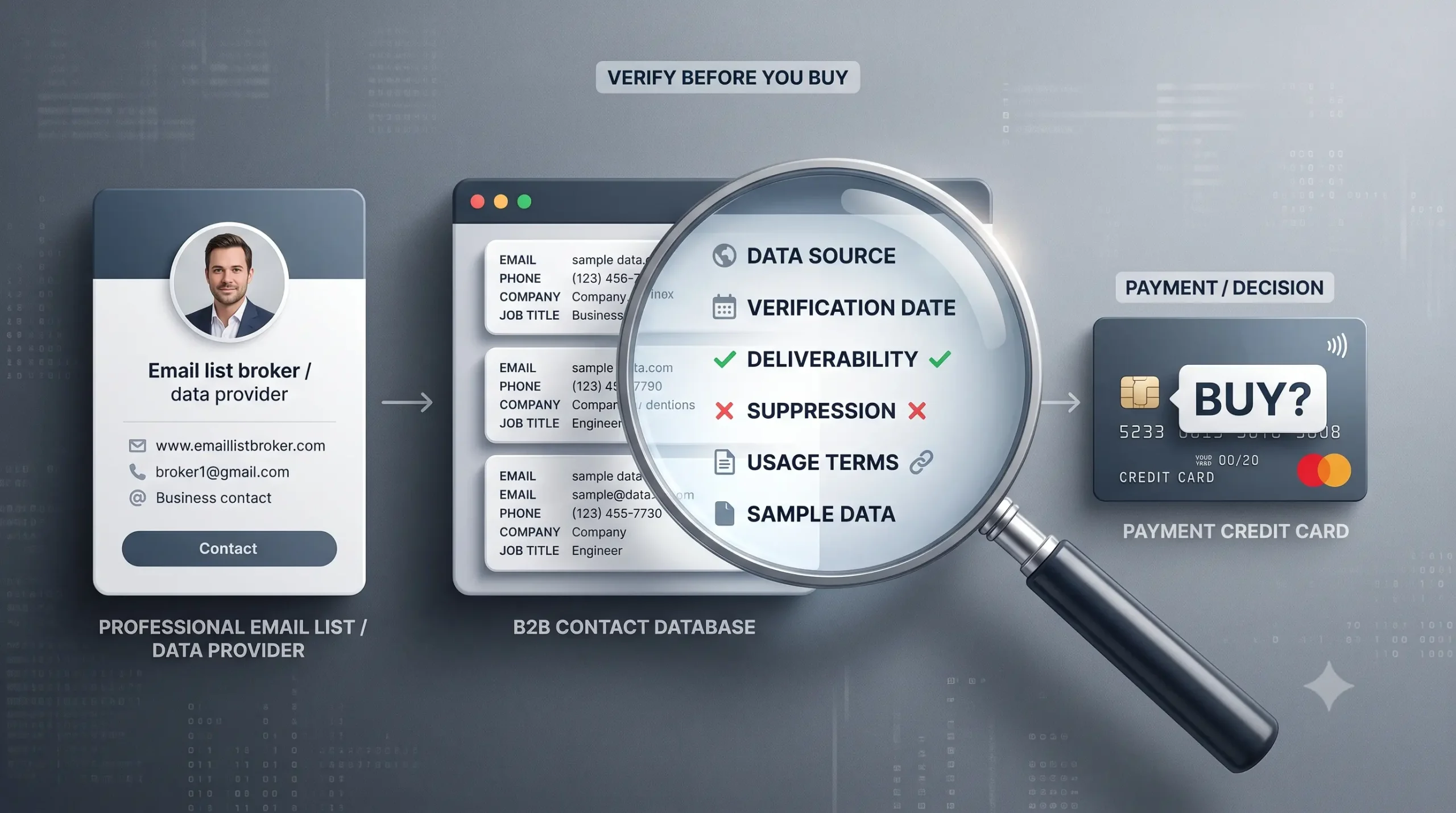
Data Quality: When was the list last updated? What’s the source? How often is it cleaned? What’s the deliverability rate?
Targeting Precision: Can they narrow down the audience using selects like age, income, job title, company size, purchase behavior, or interests?
Pricing: What’s the cost per thousand (CPM)? Are there minimum order quantities? What’s included in the base price versus add-on selects?
Availability: Is the list available for your timeline? Are there any restrictions on how it can be used?
Performance History: Does the broker have experience with this list? How has it performed for similar campaigns?
They’ll typically present you with 2-3 options, explaining the pros and cons of each, so you can make an informed decision.
Step 3: Asking the Questions You Don’t Know to Ask
This is where brokers really earn their keep. They ask list providers the technical questions that most marketers wouldn’t even think of:
- “What’s your match rate for this suppression file?”
- “Are these addresses CASS-certified?”
- “What’s your deliverability guarantee?”
- “How do you handle NCOA (National Change of Address) updates?”
- “Are these phone numbers scrubbed against the Do Not Call registry?”
- “Is this email list CANSPAM and CASL compliant?”
- “What’s the source of this data compiled, surveyed, or transactional?”
These aren’t just bureaucratic details. They’re the difference between a successful campaign and a failed one.
Step 4: Negotiation and Order Placement
List brokers have established relationships with list providers, which often means they can negotiate better pricing or waive minimum order requirements that you’d face if you went direct. They handle all the paperwork, coordinate delivery, and ensure the list arrives in the format you need (CSV, Excel, fixed-width file, whatever your mail house or CRM requires).
If you’re running a multi-channel campaign that combines direct mail, email, and phone outreach, they’ll coordinate all the components to ensure you’re reaching the same prospects across all channels.
Step 5: Post-Campaign Analysis
Good brokers don’t disappear after delivery. They follow up to see how the list performed. If response rates were lower than expected, they’ll work with you to troubleshoot and recommend adjustments for the next campaign. Maybe the targeting needs to be tightened. Maybe the timing was off. Maybe a different list source would work better.
This feedback loop is how experienced brokers develop expertise over time they learn which lists work for which industries, offers, and creative approaches.
Why Use a List Broker Instead of Going Direct?
You might be wondering: “Why add a middleman? Can’t I just buy lists directly from list owners?”
You can. But here’s why most successful marketers don’t:
Access to Thousands of Lists You Can’t Find on Your Own
Most list owners don’t advertise publicly. They work exclusively through brokers. Going direct means you’re only seeing a tiny fraction of what’s available. Brokers have relationships with providers across every industry and niche imaginable automotive, healthcare, hospitality, real estate, nonprofit donors, you name it.
Unbiased Recommendations
When you go directly to a list owner, they’re going to recommend their list. Obviously. They’re not going to say, “Actually, our competitor has a better list for what you’re trying to do.” A broker can compare options objectively and recommend the best fit, even if it means steering you away from more expensive options toward a more cost-effective solution.
Quality Assurance
Brokers know which list providers are reputable and which ones are selling garbage data. They’ve seen performance across hundreds of campaigns. They know which lists are regularly updated and which ones are recycled junk that hasn’t been cleaned in years. This insider knowledge protects you from costly mistakes.
Time Savings
Researching lists, vetting providers, negotiating terms, and coordinating delivery is time-consuming. A broker handles all of that, freeing you up to focus on campaign strategy, creative development, and follow-up.
Better Pricing
Because brokers bring volume across multiple clients, they often have negotiated pricing that’s better than what you’d get going direct. They can also bundle services or waive minimums that would normally apply.
Ongoing Expertise
The direct marketing landscape is constantly evolving. New data sources emerge. Regulations change. Best practices shift. Brokers stay on top of these changes so you don’t have to. They bring 30+ years of industry knowledge to every recommendation.
What Types of Lists Do Brokers Provide?
List brokers have access to virtually any type of mailing list you can imagine. Here are the major categories:
Consumer Lists
Consumer lists target individual households and include rich demographic and behavioral data. Whether you need to reach new parents, pet owners, luxury shoppers, or travel enthusiasts, brokers can find lists segmented by interests, income, age, homeownership, credit behavior, and hundreds of other variables.
Business Lists
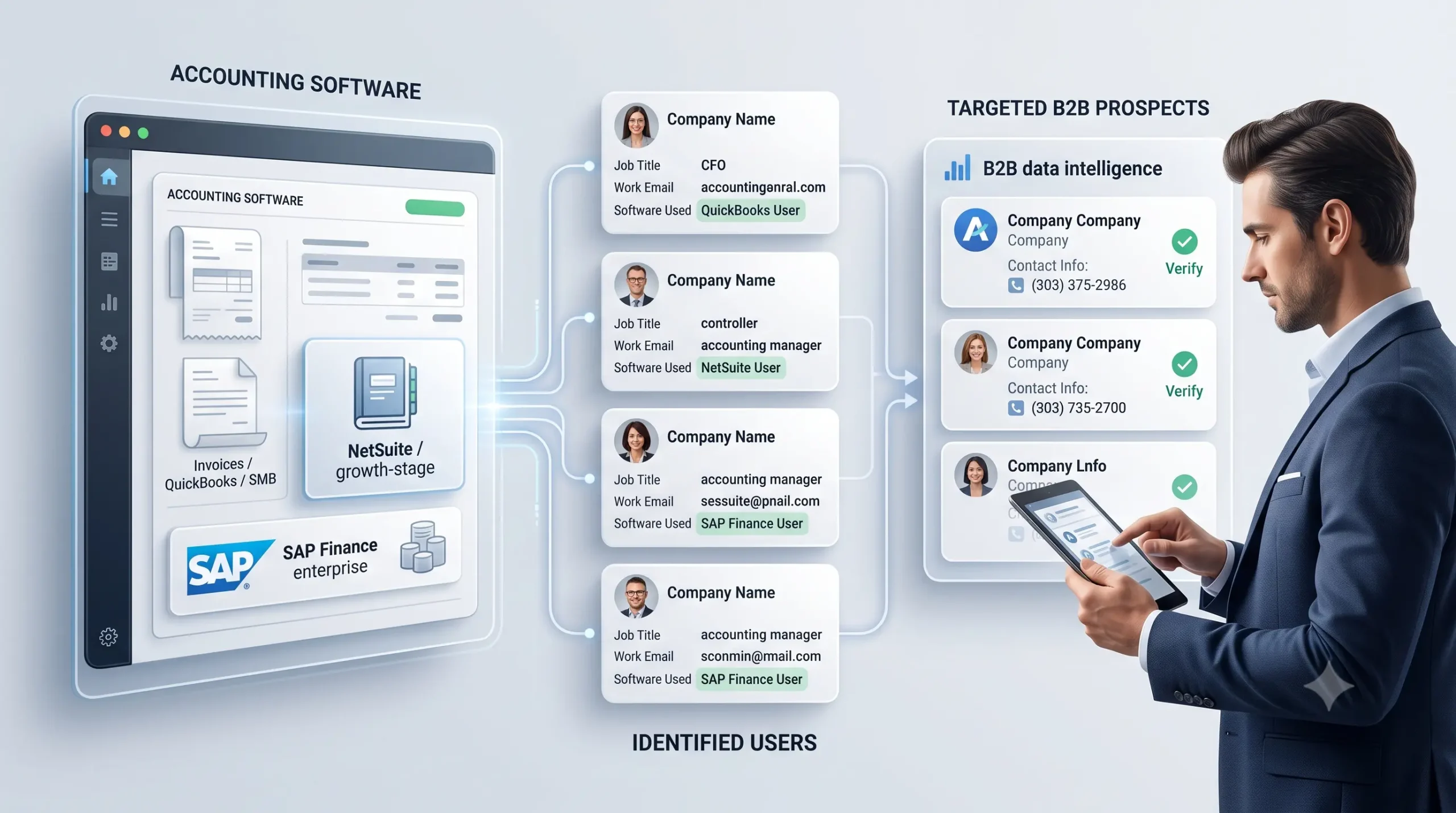
Business lists help B2B marketers reach decision-makers at companies. These can be segmented by industry (SIC/NAICS codes), company size, revenue, job titles, geographic location, and more. Need to reach CFOs at manufacturing companies with 100-500 employees? There’s a list for that.
Specialty Lists
When you need hyper-targeted data, specialty lists deliver. These are highly customized lists built for niche markets small businesses, new businesses, women-owned businesses, specific consumer life stages, or industry verticals. They cost more than basic lists but deliver significantly higher response rates because of their precision.
Donor Lists
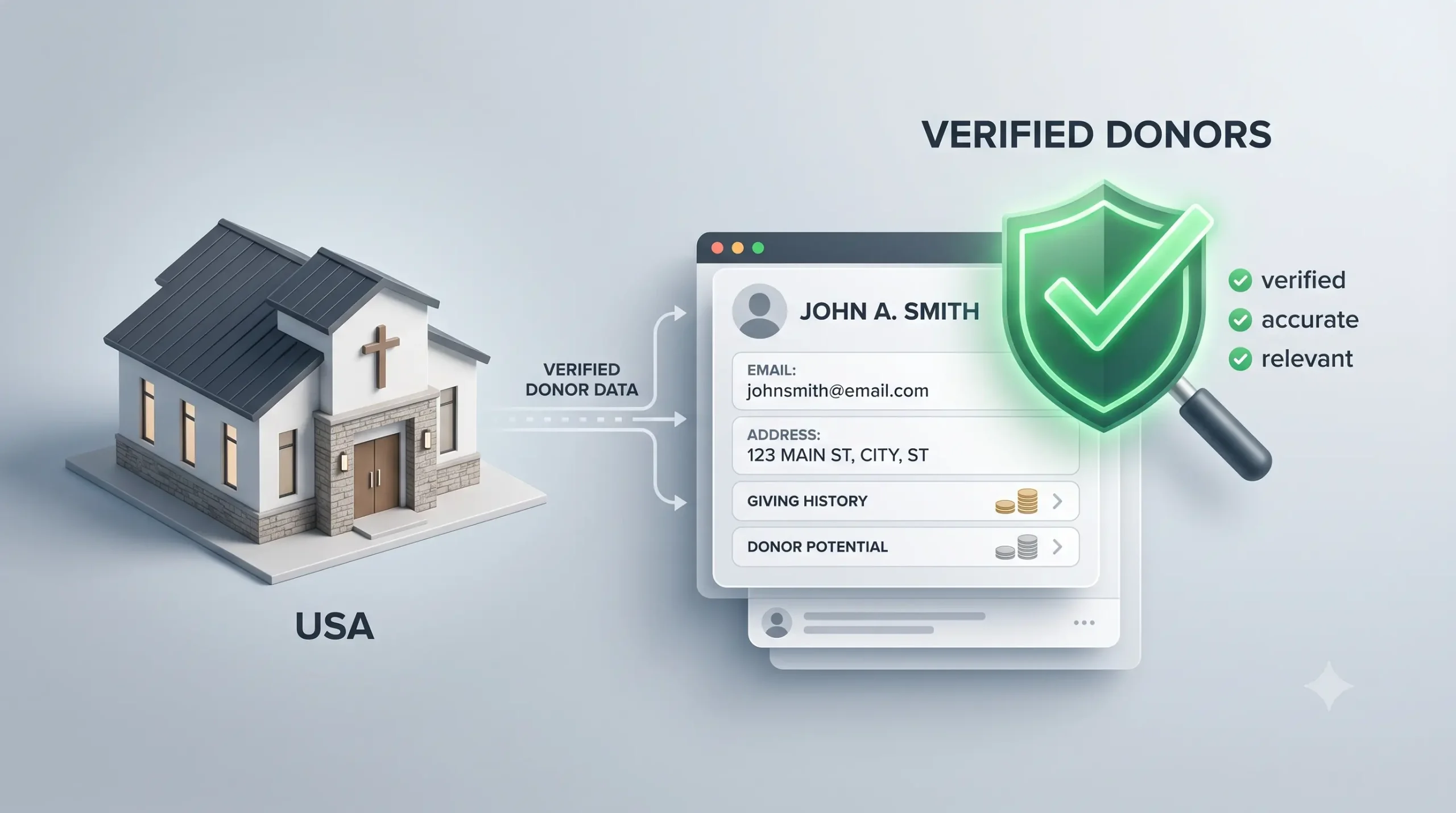
Nonprofits and charities need donor lists that target individuals with proven giving histories. These lists can be filtered by cause affinity, donation frequency, gift size, and wealth indicators. Brokers who specialize in nonprofit marketing understand the unique considerations around donor acquisition and retention.
Multi-Channel Lists
The most sophisticated campaigns use multi-channel lists that allow you to reach the same prospects via direct mail, email, and phone. This coordinated approach creates multiple touchpoints and dramatically improves response rates.
How Do List Brokers Get Paid?
Here’s something most people don’t realize: in many cases, using a list broker doesn’t cost you any extra money.
List brokers typically earn a commission from the list owner when a rental is made. The price you pay as the client is the same whether you go through a broker or directly to the list owner. The difference is that with a broker, you’re getting expert guidance, access to more options, and quality assurance all without paying more.
Some brokers charge consulting fees for complex projects or extensive research, but the standard model is commission-based, which means their incentive is aligned with yours: they want your campaign to succeed so you’ll come back and rent more lists.
What Makes a Great List Broker?
Not all list brokers are created equal. Here’s what separates the best from the rest:
Experience and Industry Knowledge
How long have they been in the business? Do they specialize in your industry or campaign type? Have they worked with businesses similar to yours? Experienced brokers who’ve been in the game for 30+ years have seen what works and what doesn’t across thousands of campaigns.
Consultative Approach
Do they ask thoughtful questions before making recommendations? Or do they just push whatever list is most convenient? The best brokers take time to understand your business, your offer, and your goals.
Transparency
Are they upfront about pricing, data sources, and list limitations? Or are they vague and evasive? Trust your gut if something feels off, it probably is.
Ongoing Support
Do they disappear after the list is delivered? Or do they follow up to see how the campaign performed and offer guidance for future efforts? Great brokers build long-term relationships, not one-off transactions.
Compliance Knowledge
Are they well-versed in CANSPAM, CASL, TCPA, GDPR, and other data privacy regulations? Compliance violations can be costly you need a broker who keeps you on the right side of the law.
Common Myths About List Brokers
Let’s bust some misconceptions:
Myth #1: “List brokers just mark up prices.” Not true. In most cases, you pay the same price whether you use a broker or go direct. The broker’s commission comes from the list owner, not from an upcharge to you.
Myth #2: “I can find better lists on my own.” Maybe, but probably not. Brokers have access to thousands of lists that aren’t publicly advertised. They also know which lists are high quality and which ones are junk.
Myth #3: “Brokers only care about making a sale.” Good brokers care about your campaign’s success because they want your repeat business. If they sell you a bad list, you won’t come back. Their reputation depends on results.
Myth #4: “Using a broker means less control.” Actually, it’s the opposite. Brokers give you more options and better information, which means you can make more informed decisions about your campaign.
Myth #5: “List brokers are unnecessary in the digital age.” Direct marketing whether via mail, phone, or email is thriving. And the complexity of data regulations and privacy laws makes expert guidance more valuable than ever.
Questions to Ask When Choosing a List Broker
If you’re in the market for a list broker, here are the questions you should ask:
How long have you been in business? Experience matters. You want someone who’s navigated multiple market cycles and regulatory changes.
What industries do you specialize in? Some brokers are generalists. Others specialize in specific verticals like healthcare, automotive, education, or nonprofit fundraising.
How many list sources do you have access to? The more options, the better. Top brokers work with thousands of list providers.
Can you provide references or case studies? Ask for examples of similar campaigns they’ve managed and what results were achieved.
What’s your process for vetting list quality? How do they ensure lists are accurate, updated, and compliant?
What happens if the list underperforms? Do they offer any guarantees or support for troubleshooting?
How do you stay current on compliance regulations? Data privacy laws are constantly evolving. Your broker should be on top of these changes.
When Should You Use a List Broker?
Honestly? Almost always. But here are scenarios where a broker is especially valuable:
You’re new to direct marketing. If you’ve never bought a list before, you need expert guidance to avoid expensive mistakes.
You’re targeting a niche audience. The more specific your criteria, the harder it is to find the right list. Brokers excel at locating hard-to-reach audiences.
You’re running a large campaign. When you’re investing significant budget, you can’t afford to guess. A broker’s expertise protects that investment.
You’re expanding to new markets. Whether it’s a new geographic region, demographic segment, or product line, brokers can help you navigate unfamiliar territory.
You need multi-channel coordination. If you’re combining direct mail, email, and telemarketing, a broker can ensure all the pieces work together seamlessly.
You want better ROI. Even experienced marketers benefit from a broker’s insights on list selection and campaign optimization.
The Bottom Line: List Brokers Are Strategic Partners, Not Vendors
Here’s what it comes down to: in direct marketing, your list is your foundation. Everything else your creative, your offer, your timing is built on top of it. If the foundation is weak, the whole campaign crumbles.
List brokers aren’t just order-takers who process requests. They’re strategic advisors who bring decades of expertise, industry connections, and market intelligence to every campaign. They save you time, protect you from costly mistakes, and often deliver better results at lower costs than you’d achieve on your own.
Whether you’re launching your first direct mail campaign, building a telemarketing program, or expanding into multi-channel marketing, working with an experienced list broker is one of the smartest investments you can make.
After all, you wouldn’t navigate unfamiliar territory without a guide. Why navigate the complex world of direct marketing data without one?
Ready to find the perfect list for your next campaign? Work with experienced list brokers who have 30+ years of expertise, access to 70,000+ databases worldwide, and a commitment to your campaign’s success.