If you’ve ever tried to sell something to manufacturers, you know the challenge: finding the right contacts at the right companies feels like searching for needles in a very large, industrial haystack.
Manufacturing is a massive sector contributing over $2.3 trillion to the US economy annually yet it’s incredibly fragmented. You’ve got everything from small machine shops with 10 employees to multinational corporations with facilities across multiple continents. They make everything from aerospace components to zippers. Some are desperate for your solution; others have zero need for what you’re selling.
How do you identify which manufacturers actually need your product or service? How do you reach the decision-makers who control purchasing budgets? And how do you do all this efficiently, without wasting time and money chasing dead ends?
That’s where manufacturer databases come in and when used strategically, they transform lead generation from a guessing game into a targeted, repeatable system.
What Is a Manufacturer Database?
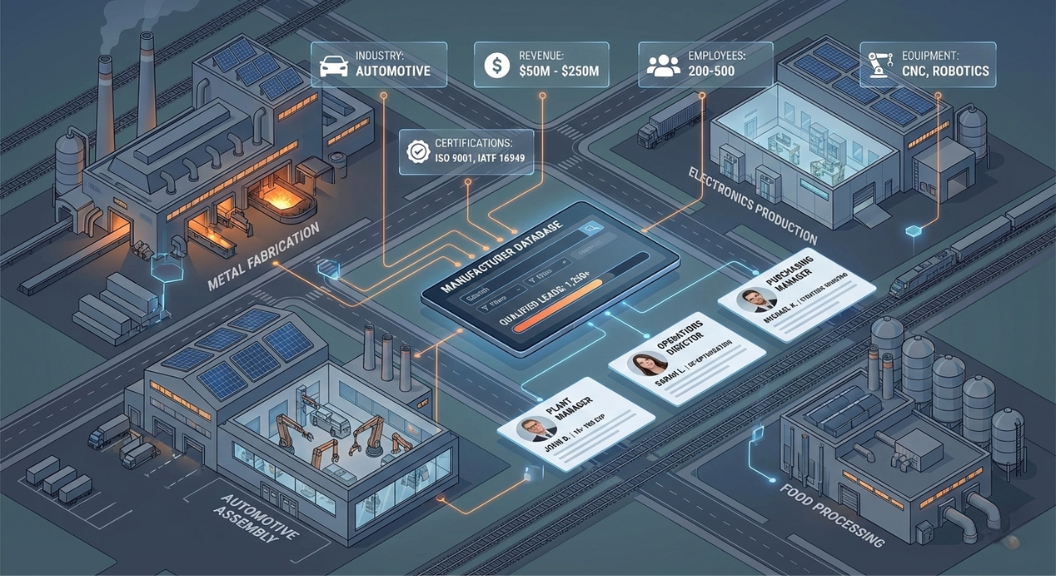
A manufacturer database (also called a manufacturing company list or industrial database) is a specialized collection of contact information and business intelligence on companies involved in producing goods. These aren’t generic business lists they’re focused specifically on manufacturing operations, compiled with details that matter to B2B sellers targeting this sector.
A comprehensive manufacturer database typically includes:
Basic Company Information:
- Company name and legal entity
- Physical address and facility locations
- Primary phone numbers
- Website and email addresses
- Year established and ownership structure
Industry Classification:
- SIC codes (Standard Industrial Classification)
- NAICS codes (North American Industry Classification System)
- Product categories and specializations
- Manufacturing processes (injection molding, CNC machining, assembly, etc.)
Company Size Metrics:
- Number of employees
- Annual sales revenue
- Number of facilities
- Square footage of production space
Decision-Maker Contacts:
- Names and titles (Plant Managers, Operations Directors, Purchasing Managers, CEOs)
- Direct phone lines
- Email addresses (for opt-in lists)
Additional Intelligence:
- Certifications (ISO, AS9100, FDA, etc.)
- Equipment and technology in use
- Import/export activity
- Recent expansions or investments
- Parent company relationships
The difference between a generic business list and a quality manufacturer database is depth and accuracy. You’re not just getting addresses you’re getting actionable intelligence that helps you identify your ideal prospects and understand how to reach them.
Why Manufacturers Are a Unique Target Market
Before we dive into how to use manufacturer databases, it’s worth understanding why manufacturing requires a specialized approach:
Long Sales Cycles: Manufacturers don’t make impulsive purchases. Equipment, software, services, and supplies often require months of evaluation, multiple stakeholders, and capital budget approvals.
Complex Decision-Making: Purchases typically involve multiple people: engineers evaluate technical specs, operations managers assess workflow impact, purchasing agents negotiate pricing, and executives approve budgets.
Relationship-Driven: Manufacturers value reliability and consistency. They’re looking for long-term partners, not one-time vendors. Building trust takes time.
Highly Specific Needs: A medical device manufacturer has completely different requirements than an automotive parts stamper. Generic pitches don’t work you need to demonstrate industry-specific expertise.
Substantial Contract Values: When manufacturers do buy, the deals are often significant. A single client can generate substantial recurring revenue through ongoing supply contracts, maintenance agreements, or multi-year service relationships.
This combination long cycles, complex decisions, relationship focus, specific needs, and high values means you can’t just blast out generic marketing and hope for results. You need precisely targeted outreach to the right manufacturers with personalized value propositions.
Who Uses Manufacturer Databases for Lead Generation?
Manufacturer databases serve a wide range of B2B companies:
Industrial Equipment Suppliers: Companies selling machinery, tools, automation systems, robotics, or production equipment use manufacturer databases to identify facilities that might need upgrades or replacements.
Raw Material and Component Suppliers: Distributors of metals, plastics, chemicals, electronic components, or fasteners target manufacturers based on what they produce and what materials they need.
Business Services Providers: Accounting firms, HR services, legal specialists, insurance brokers, and logistics companies use manufacturer lists to reach decision-makers who need their specialized services.
Technology Vendors: Companies selling ERP systems, manufacturing execution software (MES), quality management systems, or IoT solutions target manufacturers undergoing digital transformation.
Maintenance and Repair Services: Industrial HVAC, equipment maintenance, facility management, and safety inspection companies need to reach plant managers and facilities directors.
Consulting Firms: Lean manufacturing consultants, process improvement specialists, and operational efficiency experts target manufacturers looking to optimize production.
Financial Services: Commercial lenders, equipment financing companies, and working capital providers seek growing manufacturers with expansion plans or capital needs.
Staffing Agencies: Industrial recruiters and temp agencies use manufacturer databases to connect with HR managers and operations directors facing hiring needs.
If your business depends on reaching manufacturing companies, a quality database is your foundation for efficient, scalable lead generation.
Types of Manufacturer Databases: Finding Your Target Segment
Not all manufacturers are the same. The right database depends on which segment you’re targeting:
By Industry Vertical
Manufacturing companies lists can be segmented by what they produce:
Automotive Manufacturing: Original equipment manufacturers (OEMs), tier 1-3 suppliers, aftermarket parts producers. The automotive industry represents one of the largest manufacturing segments with specialized needs.
Aerospace and Defense: Companies producing aircraft components, defense systems, or space technology highly regulated with strict quality requirements.
Medical Device Manufacturing: Producers of surgical instruments, diagnostic equipment, implantable devices, or disposable medical supplies FDA-regulated with rigorous standards.
Electronics Manufacturing: Circuit board assembly, consumer electronics, semiconductor manufacturing, or electronic component production.
Food and Beverage Manufacturing: From large-scale food processing to craft breweries, with unique sanitation and safety requirements.
Plastics and Packaging: Injection molding, blow molding, thermoforming, or flexible packaging production.
Metal Fabrication: Sheet metal fabrication, machining, welding, stamping, or casting operations.
Chemical Manufacturing: Pharmaceutical production, industrial chemicals, specialty chemicals, or consumer product formulation.
Textiles and Apparel: Fabric production, garment manufacturing, or technical textiles.
Each vertical has distinct characteristics, purchasing patterns, and pain points. Your targeting should reflect these differences.
By Company Size
Size dramatically affects how manufacturers buy and who makes decisions:
Small Manufacturers (1-50 employees): Often family-owned, decisions made quickly by owners, smaller budgets but more flexible, easier to reach but lower contract values.
Mid-Size Manufacturers (50-250 employees): Growing companies with professional management, larger budgets, more formal purchasing processes, sweet spot for many B2B vendors.
Large Manufacturers (250-500 employees): Established companies with multiple facilities, significant purchasing power, complex approval processes, longer sales cycles.
Enterprise Manufacturers (500+ employees): Major corporations with multiple divisions, corporate purchasing departments, RFP processes, high contract values but highly competitive.
Small business lists within manufacturing often provide the best ROI for companies with limited sales resources.
By Revenue
Revenue-based targeting helps qualify financial capacity:
- Under $1M: Micro-manufacturers, startups, or niche producers
- $1M-$10M: Established small manufacturers
- $10M-$50M: Growing mid-market companies
- $50M-$500M: Substantial manufacturers with multiple facilities
- $500M+: Major industrial corporations
Your pricing and solution complexity should align with the target revenue range.
By Geographic Location
Manufacturing concentration varies significantly by region:
Rust Belt States: Michigan, Ohio, Pennsylvania, Indiana high concentration of automotive, steel, and heavy machinery manufacturing.
Southeast: Growing manufacturing hub with automotive transplants, aerospace, and textile production.
Texas and Southwest: Energy-related manufacturing, petrochemicals, electronics, and aerospace.
California: Electronics, aerospace, food processing, and specialized manufacturing.
Border States: Manufacturing operations taking advantage of proximity to Mexico for cross-border supply chains.
For service-based businesses, geographic targeting is essential. You can’t provide on-site equipment maintenance to a manufacturer 2,000 miles away.
By Specific Characteristics
Advanced specialty lists can target manufacturers based on:
Certifications: ISO 9001, AS9100, ISO 13485, IATF 16949 indicating quality systems and industry focus.
Equipment: CNC machines, 3D printers, robotic welding, automated assembly revealing technology adoption and potential needs.
Export Activity: Manufacturers engaged in international trade may need logistics, compliance, or financing services.
Recent Events: New facility openings, expansions, equipment purchases, or ownership changes signal buying windows.
Technology Stack: Companies using specific ERP systems (SAP, Oracle, Microsoft Dynamics) may need complementary solutions or migration services.
How to Use Manufacturer Databases for Effective Lead Generation
Having a database is step one. Converting that data into qualified leads and customers requires strategy:
Define Your Ideal Customer Profile
Before you select any database, get crystal clear on who you’re targeting:
- What industries do you serve best?
- What size companies get the most value from your solution?
- What geographic areas can you serve effectively?
- What pain points does your solution address?
- Who are the decision-makers and influencers in the buying process?
The tighter your targeting, the higher your conversion rates and the more efficient your sales process.
Segment and Prioritize
Don’t treat every manufacturer the same. Create tiers:
Tier 1: Perfect fit :-industry match, right size, ideal geography, clear need. These get personalized, multi-touch outreach.
Tier 2: Good potential :- mostly aligned but missing one ideal characteristic. These get solid outreach with slight modifications.
Tier 3: Possible fit :- less aligned but still worth reaching. These get more automated, volume-based campaigns.
This segmentation ensures you’re investing the most effort where it’s most likely to pay off.
Multi-Channel Outreach Strategy
Single-channel campaigns underperform. The most effective manufacturer outreach combines multiple touchpoints:
Direct Mail: Physical direct mail still works exceptionally well in manufacturing. A well-designed postcard, dimensional mailer, or printed case study stands out in a world of digital noise.
Email Marketing: Business opt-in email lists allow you to deliver valuable content, case studies, and offers directly to decision-makers’ inboxes.
Telemarketing: For high-value prospects, strategic business telemarketing cuts through digital clutter and enables real conversations.
LinkedIn Outreach: Social selling complements traditional channels, allowing you to research prospects, share insights, and build relationships.
Trade Shows and Events: Industry events where manufacturers gather provide face-to-face opportunities to convert database contacts into warm relationships.
The key is coordination your multi-channel lists should enable you to reach the same prospects across multiple touchpoints with consistent messaging.
Personalize Based on Industry Knowledge
Generic pitches fail in manufacturing. Demonstrate industry expertise:
- Reference specific manufacturing processes they likely use
- Mention regulatory challenges they face (FDA, EPA, OSHA)
- Cite case studies from similar manufacturers
- Use industry-specific terminology correctly
- Address common pain points (labor shortages, supply chain disruptions, quality control)
This level of personalization is only possible when you have detailed database information about what each manufacturer actually does.
Focus on Education, Not Just Selling
Manufacturers are skeptical of hard sells. Lead with value:
- Share industry reports and benchmarking data
- Offer free assessments or audits
- Provide educational webinars on relevant topics
- Publish case studies showing measurable results
- Create calculators showing potential ROI
Position yourself as a knowledgeable partner, not just another vendor trying to make a sale.
Time Your Outreach Strategically
Manufacturing has predictable cycles:
Budget Planning Season: Q3-Q4 for most companies planning next year’s capital expenditures.
Fiscal Year-End: Companies with remaining budget often make purchases to use allocated funds.
Summer Slowdowns: Some manufacturers slow production in summer, creating windows for facility improvements or training.
Post-Peak Seasons: After busy production periods, manufacturers evaluate processes and consider improvements.
Timing your campaigns to align with these cycles increases relevance and response rates.
Measuring ROI from Manufacturer Database Campaigns
How do you know if your database investment is paying off? Track these metrics:
List Quality Metrics:
- Deliverability rate (mail returned, emails bounced)
- Contact accuracy (right person, right title, right company)
- Company qualification (actually manufacturers, right size/industry)
Target 95%+ deliverability for quality databases.
Engagement Metrics:
- Email open rates (15-25% is typical for B2B manufacturing)
- Email click-through rates (2-5% is solid)
- Phone connection rates (varies widely but 20-30% is reasonable)
- Website visits from campaign (track with UTM codes)
These indicate whether your targeting and messaging resonate.
Lead Generation Metrics:
- Response rate (1-5% for cold outreach is typical)
- Qualified lead rate (leads that meet your criteria)
- Meeting/demo booked rate
- Proposal requested rate
These show progression through your sales funnel.
Revenue Metrics:
- Conversion rate (leads to customers)
- Average deal size
- Time to close
- Customer lifetime value
- Cost per acquisition
These determine actual ROI. If your database costs $2,000 and generates three customers worth $50,000 each in lifetime value, that’s a no-brainer investment.
Pipeline Metrics:
- Total pipeline value from database-sourced leads
- Pipeline progression velocity
- Win rate compared to other lead sources
Even if immediate conversions are low, manufacturer databases often build substantial future pipeline.
Common Mistakes When Using Manufacturer Databases
Avoid these pitfalls that derail campaigns:
Mistake 1: Buying Cheap, Low-Quality Data
That “10,000 manufacturer contacts for $99” deal? It’s worthless. Outdated information, wrong contacts, defunct companies, and poor segmentation waste more money than they save. Work with reputable list brokers who vet their sources and guarantee data quality.
Mistake 2: Targeting Too Broadly
Blasting your message to every manufacturer in the country is inefficient and expensive. Narrow your focus to segments where you have proven success, relevant case studies, and clear value propositions.
Mistake 3: Generic, One-Size-Fits-All Messaging
A medical device manufacturer doesn’t care about your automotive industry success story. Customize your messaging for each industry vertical, company size, and use case.
Mistake 4: Single-Touch Campaigns
One email or one phone call won’t cut it. Manufacturers need multiple exposures over time before they’re ready to engage. Plan for 6-12 touchpoints over 3-6 months.
Mistake 5: Selling Instead of Consulting
Manufacturers don’t want to be “sold to” they want partners who understand their challenges and can help solve them. Lead with questions and insights, not product pitches.
Mistake 6: Ignoring the Buying Committee
Rarely does one person make purchasing decisions. Your database should include multiple contacts per company purchasing, operations, engineering, finance so you can engage the entire buying committee.
Mistake 7: No Follow-Up System
Most leads don’t convert immediately. Without a systematic follow-up process (CRM, email sequences, scheduled callbacks), potential customers fall through the cracks.
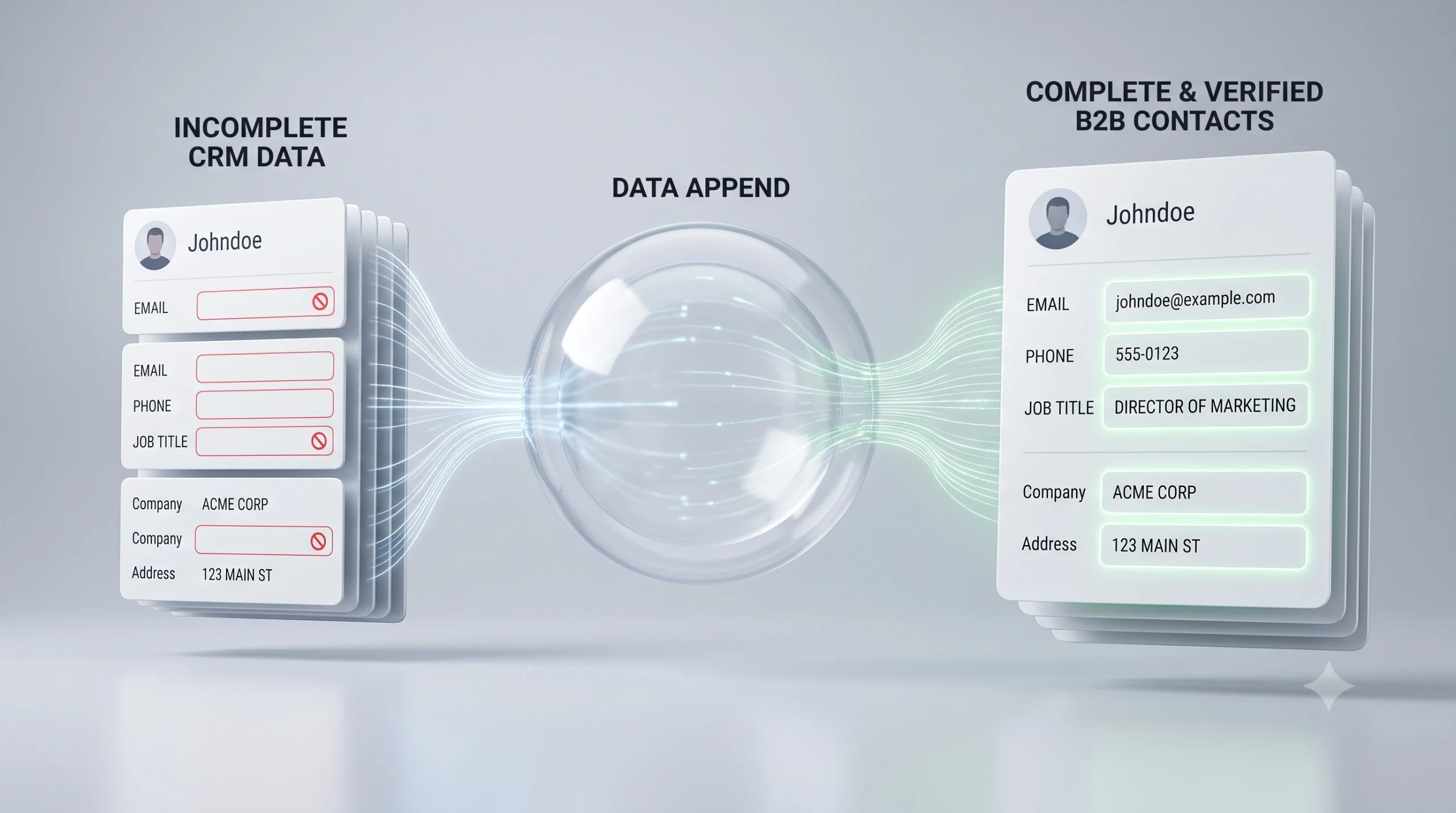
Enhancing Manufacturer Databases with Additional Data
Basic contact information is just the starting point. Layer on additional intelligence for better targeting:
Technographic Data: What software, equipment, and technology do they currently use? This reveals compatibility, replacement opportunities, or integration needs.
Intent Data: Are they actively researching solutions like yours? Intent signals (website visits, content downloads, search behavior) identify companies in buying mode.
Financial Data: Credit scores, payment histories, and financial health indicators help qualify prospects and prevent bad debt.
News and Trigger Events: Company expansions, new contracts, leadership changes, or regulatory actions signal opportune moments for outreach.
Social Media Activity: LinkedIn posts, company news, and executive engagement reveal priorities and initiatives.
Combining your manufacturer database with these enrichment layers creates a powerful targeting engine.
Industries That Depend on Manufacturer Databases
Beyond the obvious suppliers and service providers, these industries rely heavily on manufacturer targeting:
Commercial Real Estate: Industrial brokers and developers seeking manufacturing tenants for warehouse and production facilities.
Utilities and Energy: Providers targeting high-energy consumers for rate programs or efficiency initiatives.
Waste Management: Industrial waste disposal, recycling services, and environmental compliance companies.
Transportation and Logistics: Freight companies, third-party logistics providers, and supply chain consultants.
Training and Development: Safety training, technical skills development, and workforce training providers.
Marketing Agencies: Agencies specializing in industrial marketing who need manufacturer contact lists for client campaigns.
Market Research Firms: Companies conducting industry studies, competitive analysis, or benchmarking research.
The applications are vast because manufacturing touches so many aspects of the economy.
Building vs. Buying Manufacturer Databases
Should you build your own database or buy one? Consider these factors:
Building Your Own:
Pros:
- Exactly the data you want
- Ownership of the database
- No ongoing rental fees
- Can be updated continuously
Cons:
- Extremely time-consuming
- Expensive to maintain
- Requires specialized research tools
- Data decays quickly (20-30% annually)
- Compliance complexities
Buying from Providers:
Pros:
- Instant access to thousands of contacts
- Regularly updated by professionals
- No maintenance burden
- Can test different segments easily
- Access to hard-to-find information
Cons:
- Rental model (can’t reuse without paying)
- Less control over data quality
- May include competitors’ contacts too
- Minimum order quantities
For most businesses, buying databases makes more sense. The time and cost to build comparable data internally far exceeds rental fees, especially when you factor in ongoing maintenance.
However, the best approach is hybrid: rent databases for initial outreach, then build your own internal database of engaged prospects, qualified leads, and customers that becomes your owned asset.
Working with List Brokers for Manufacturer Databases
Given the complexity of manufacturing segmentation and the importance of data quality, working with experienced list brokers offers significant advantages:
Deep Market Knowledge: Brokers who specialize in B2B and industrial markets understand manufacturing nuances that general-purpose data providers miss.
Access to Multiple Sources: Rather than being limited to one database, brokers can compare options from multiple providers to find the best match for your needs.
Customization Expertise: They know how to layer selection criteria to create precisely targeted lists for example, “ISO 9001-certified metal fabricators in the Midwest with 50-200 employees and $10M-$50M revenue.”
Quality Assurance: Reputable brokers vet their sources, guarantee deliverability, and stand behind data accuracy.
Cost Efficiency: Brokers often negotiate better pricing than you’d get going direct, and they prevent costly mistakes from buying the wrong list.
Campaign Strategy: Beyond just providing data, experienced brokers offer insights on targeting, messaging, and campaign structure based on thousands of previous manufacturing campaigns.
Compliance Guidance: They ensure your lists comply with TCPA, CANSPAM, and other regulations, protecting you from legal risk.
For companies serious about manufacturer lead generation, the broker relationship is an investment, not an expense.
The Future of Manufacturer Databases
The manufacturer database industry is evolving rapidly:
Real-Time Updates: Databases are moving from quarterly updates to continuous, real-time refreshes using automated web scraping and public record monitoring.
Predictive Analytics: AI algorithms analyze patterns to predict which manufacturers are most likely to be in-market for specific solutions, enabling proactive targeting.
Deeper Technographic Data: Information about manufacturers’ technology stacks, IoT adoption, automation levels, and digital maturity is becoming standard.
Sustainability Metrics: As environmental concerns grow, databases increasingly include data on manufacturers’ sustainability initiatives, carbon footprints, and green certifications.
Global Expansion: While US manufacturer databases are mature, international databases are growing rapidly as global supply chains create opportunities for cross-border B2B marketing.
Integration with Marketing Automation: Databases are increasingly API-connected to CRM and marketing automation platforms, enabling seamless data flows and triggered campaigns.
The companies winning with manufacturer databases are those that combine quality data with sophisticated segmentation, personalized multi-channel outreach, and systematic follow-up processes.
Final Thoughts: Manufacturer Databases as Strategic Assets
Here’s the reality: manufacturer databases are not magic. They won’t automatically generate leads or close deals.
But what they do provide is something equally valuable clarity and efficiency.
Instead of wasting time cold-calling random companies or chasing unqualified leads, you can focus your sales and marketing efforts on manufacturers who actually need what you’re selling, can afford it, and are in your service area.
That focus is what transforms struggling sales teams into predictable revenue engines. It’s what allows small businesses to compete with larger competitors. It’s what turns expensive marketing campaigns into profitable investments.
Whether you’re targeting manufacturing companies across all sectors, specific industries like automotive, or small manufacturers in your local area, the right database paired with the right strategy creates a sustainable competitive advantage.
The manufacturers you need to reach are out there. They have real challenges your solution can solve. They have budgets allocated for solutions like yours.
The question isn’t whether manufacturer databases work it’s whether you’re ready to use them strategically.
Ready to build a high-performing lead generation system targeting manufacturers? Work with experienced list brokers who specialize in business lists and can help you identify and reach the right manufacturing companies with proven targeting strategies.