You’ve just spent $2,000 on a manufacturer list. Your sales team is pumped. They start calling. And immediately hit a wall.
Learn how accurate manufacturer lists can boost lead generation and facilitate market expansion by improving targeting, optimizing outreach, and driving business growth.
The first number? Disconnected. The second? Wrong company they closed three years ago. The third connects, but the contact listed retired in 2019. The fourth is a residential number. By the tenth call, your team’s enthusiasm has evaporated, replaced by frustration and skepticism about “this list thing.”
This scenario plays out thousands of times daily in B2B sales and marketing. Companies invest in manufacturer lists expecting qualified leads, only to discover they’ve paid for outdated, inaccurate data that wastes time, demoralizes teams, and delivers zero results.
But here’s what’s worse: that bad experience makes them hesitant to try again, leaving them to rely on inefficient prospecting methods while competitors with accurate lists capture market share.
The difference between a successful manufacturer marketing campaign and a failed one often comes down to one critical factor: data accuracy.
Not just “mostly accurate” or “pretty good for the price” genuinely accurate, verified, current manufacturer contact information that connects your sales team with real decision-makers at real companies that actually need what you’re selling.
Let’s break down exactly how accurate manufacturer lists transform lead generation and market expansion, what accuracy really means, and why it’s worth paying for quality data.
What Does “Accurate” Actually Mean for Manufacturer Lists?
Before we discuss impact, let’s define what accuracy means in the context of manufacturer databases:
Company Verification: The manufacturer is confirmed to be currently operating (not closed, bankrupt, or acquired) at the listed location.
Contact Accuracy: Names, titles, phone numbers, and email addresses belong to real people currently employed in their listed roles.
Industry Classification: SIC/NAICS codes and industry descriptions correctly reflect what the company actually manufactures.
Firmographic Precision: Employee count, revenue figures, facility size, and other company metrics are current and verified, not outdated estimates.
Geographic Correctness: Physical addresses are accurate and current, reflecting any facility relocations or expansions.
Decision-Maker Identification: Contacts listed are actual decision-makers or influencers for your product/service category, not random employees.
Recent Verification: All data points have been validated within the last 30-90 days, not pulled from databases untouched for years.
Deliverability Confirmation: Phone numbers connect, emails don’t bounce, and mail reaches intended recipients.
True accuracy means every field in every record is current, correct, and complete not just some records in some fields.
The Hidden Cost of Inaccurate Manufacturer Lists
Let’s talk about what inaccurate lists actually cost your business:
Wasted Labor Costs
Your sales team spends 60-70% of their time on unproductive activities when working with bad data:
- Dialing disconnected numbers
- Reaching wrong contacts and asking to be transferred
- Leaving voicemails that never get returned because the person no longer works there
- Researching companies to find current contact information
- Updating records in your CRM with correct information
If your average sales rep costs $75,000 annually (salary plus benefits), and they waste 60% of their time on bad data, that’s $45,000 per rep in wasted labor. For a five-person sales team, that’s $225,000 annually in productivity losses.
Opportunity Cost
Every minute spent chasing bad leads is a minute not spent talking to qualified prospects. If your reps could make 50% more quality connections with accurate data, how many more deals would they close? Even modest improvements in connection rates compound into significant revenue gains over time.
Damaged Sender Reputation
High email bounce rates and disconnected phone numbers hurt your sender reputation and caller ID rating. Once you’re flagged as spam, future campaigns even with good lists suffer lower deliverability and answer rates.
Demoralized Sales Teams
Nothing kills motivation faster than endless dead ends. Top performers leave for companies with better lead quality. Remaining team members become cynical about marketing-provided leads. Morale impacts performance across the board.
Longer Sales Cycles
When your team spends weeks researching and finding the right contacts instead of selling, every deal takes longer to close. Extended sales cycles mean slower cash flow and lower annual revenue.
Inaccurate Market Analysis
Bad data leads to bad decisions. If your list says 500 manufacturers in your target market exist, but 200 of them closed or moved, your market sizing and revenue projections are fundamentally flawed. Strategic decisions based on inaccurate intelligence lead to misallocated resources.
Damaged Brand Reputation
Calling the wrong people repeatedly, sending mail to defunct companies, or contacting people who’ve opted out damages your brand. First impressions matter, and “who’s this company that doesn’t even know we closed?” isn’t the impression you want to make.
Add it all up, and that “$2,000 cheap list” actually costs tens of thousands potentially hundreds of thousands in wasted resources and missed opportunities.
How Accurate Manufacturer Lists Transform Lead Generation
Now let’s flip the script. What happens when you invest in genuinely accurate manufacturer data?
Dramatically Higher Connect Rates
With verified phone numbers and current contacts, your team actually reaches people. Instead of 20% connect rates with cheap lists, quality data delivers 70-90% connectivity.
Impact: If your team makes 100 calls daily, accurate lists mean 70-90 conversations instead of 20. That’s 50-70 additional opportunities daily 250-350 per week per rep.
Reaching Actual Decision-Makers
Accurate lists don’t just give you “a contact” they identify purchasing managers, plant managers, operations directors, or executives who actually make buying decisions for your category.
Impact: Instead of getting transferred three times or leaving messages that disappear into the void, you’re talking directly to people with budget authority and purchasing power.
Reduced Sales Cycle Length
When you’re contacting the right people at the right companies from day one, deals progress faster. No time wasted tracking down correct contacts or starting over with new people after dead ends.
Impact: If accurate data cuts your average sales cycle from 120 days to 90 days, you’re closing 33% more deals annually with the same team.
Higher Conversion Rates
Accurate targeting means you’re reaching manufacturers that actually fit your ideal customer profile right industry, right size, right location, right needs.
Impact: Conversion rates from lead to customer typically double or triple with accurate, well-targeted lists compared to generic or outdated data.
Predictable Pipeline Building
With accurate data, you can reliably predict outcomes. If 100 conversations typically yield 10 qualified leads and 2 customers, you can work backward to determine exactly how many manufacturers you need to contact to hit revenue goals.
Impact: Forecasting becomes accurate, resource allocation becomes efficient, and you can commit confidently to growth targets.
Better CRM Data Quality
Starting with accurate data means your CRM stays clean. No garbage-in, garbage-out problem. Better data enables better analytics, more precise segmentation, and smarter marketing automation.
Impact: Your marketing and sales technology stack actually delivers on its promises because it’s working with quality data.
Sales Team Confidence and Morale
When reps consistently reach real prospects who might actually buy, they stay motivated. Top performers stick around. Everyone performs better.
Impact: Lower turnover, higher productivity, better results. Happy sales teams sell more.
How Accurate Manufacturer Lists Enable Market Expansion
Beyond improving existing lead generation, accurate data unlocks growth strategies:
Geographic Expansion
Want to enter new states or regions? Accurate lists show you exactly how many manufacturers exist in your target areas, who they are, and how to reach them.
Strategy: Identify manufacturers by ZIP code, city, or radius. Target expansion markets systematically rather than guessing where opportunities exist.
Industry Vertical Expansion
Thinking about targeting a new manufacturing vertical? Accurate lists reveal market size, typical company profiles, and key decision-makers in unfamiliar industries.
Strategy: Test new verticals with small, highly targeted campaigns before committing major resources. Let data guide expansion decisions.
Company Size Targeting
Ready to move upmarket to larger manufacturers or downmarket to smaller operations? Accurate firmographic data lets you segment by employee count, revenue, facility size, or other metrics.
Strategy: Match your solution’s price point and complexity to manufacturer segments that can afford it and benefit from it.
Account-Based Marketing (ABM)
For high-value prospects, ABM requires deep intelligence on specific manufacturers. Accurate lists provide the foundation for personalized, multi-touch campaigns targeting named accounts.
Strategy: Build comprehensive profiles of your top 50-100 target manufacturers. Execute coordinated campaigns across multiple decision-makers and touchpoints.
Competitive Displacement
Accurate lists identify manufacturers currently using competitors’ solutions. Combined with trigger event data (new leadership, facility expansions, recent problems), you can time outreach for maximum effectiveness.
Strategy: Target competitor customers experiencing change moments when they’re most open to alternatives.
New Product Launch
Introducing a new product or service? Accurate manufacturer lists let you identify and reach the precise segment most likely to adopt early.
Strategy: Segment lists by characteristics predicting early adoption. Target innovators and early adopters first to build proof points.
Partnership and Channel Development
Looking for distributors, resellers, or integration partners? Accurate manufacturer lists help identify potential partners based on their customer base, geographic coverage, and complementary offerings.
Strategy: Target manufacturers serving your ideal customer profile as potential channel partners.
Key Accuracy Indicators to Evaluate Manufacturer Lists
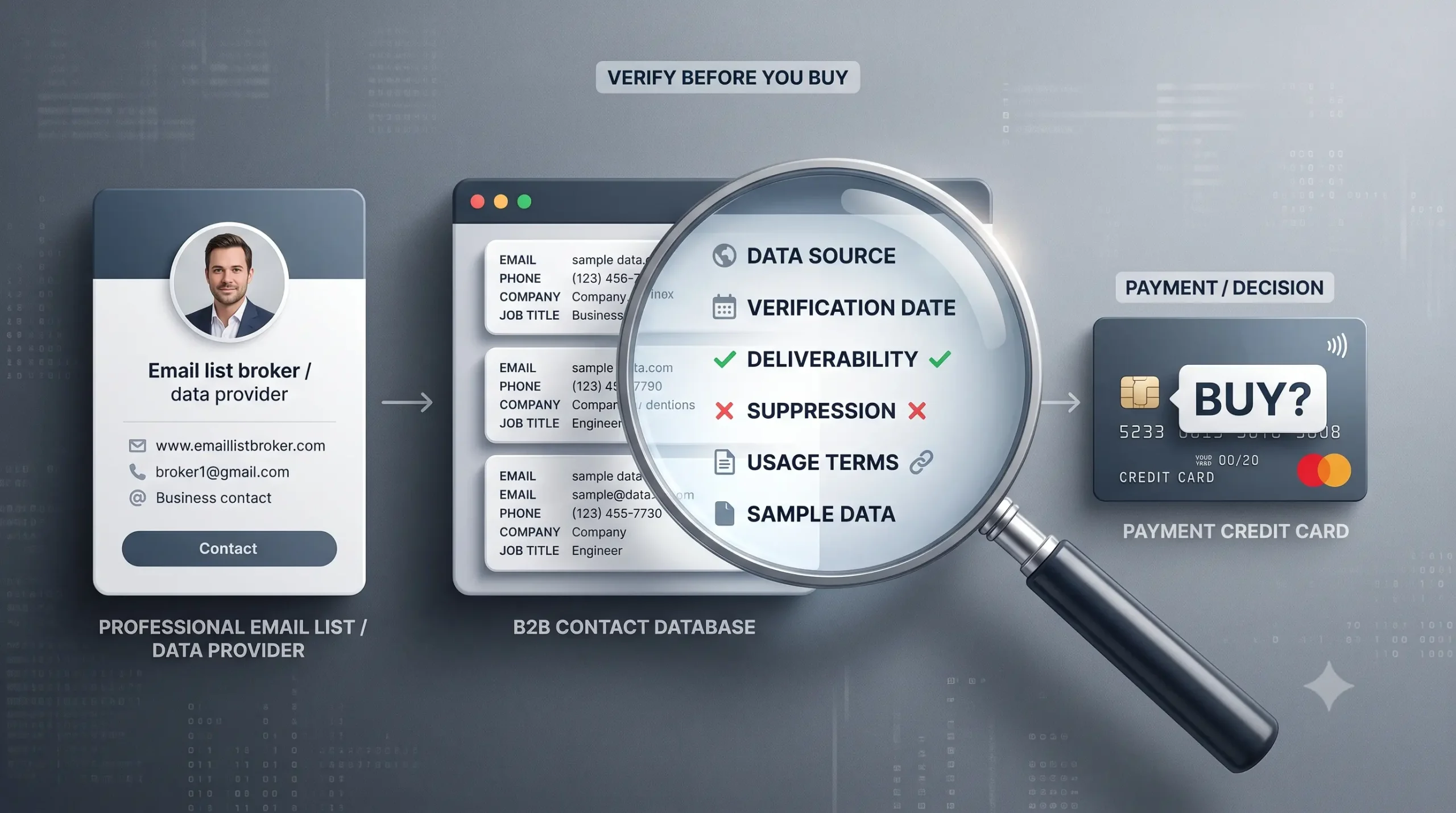
How do you assess list accuracy before buying? Look for these signals:
Update Frequency
What to ask: When was this list last updated? How often is it refreshed?
Quality standard: Monthly or quarterly updates. Annual refreshes are insufficient given how quickly manufacturer data changes.
Red flag: Providers who can’t or won’t specify last update date, or who update annually or less frequently.
Verification Methods
What to ask: How do you verify data accuracy? What technologies or processes do you use?
Quality standard: Multi-step verification including phone validation, email verification, NCOA processing, business license verification, and human review for high-value contacts.
Red flag: Reliance solely on web scraping or public records without verification, or vague answers about verification processes.
Deliverability Guarantees
What to ask: What percentage of contacts do you guarantee will be accurate? What’s your policy on replacements?
Quality standard: 95%+ accuracy guarantee with clear replacement policy for bad records.
Red flag: No guarantee, guarantees below 90%, or no replacement policy.
Data Source Transparency
What to ask: Where does your manufacturer data come from? How is it compiled?
Quality standard: Clear explanation of multiple reputable sources business registrations, industry directories, proprietary research, verified submissions, and continuous monitoring.
Red flag: Vague answers about sourcing, refusal to explain methodology, or obvious reliance on questionable data sources.
Dead Business Removal
What to ask: How do you identify and remove manufacturers that have closed or been acquired?
Quality standard: Regular cross-referencing against business closure databases, bankruptcy filings, merger and acquisition data, and returned mail/disconnected numbers.
Red flag: No process for removing defunct businesses, or minimal attention to this critical issue.
Contact-Level Accuracy
What to ask: How do you verify that named contacts are still employed in their listed roles?
Quality standard: Regular LinkedIn verification, phone confirmation, email engagement tracking, and systematic updating when contacts change roles.
Red flag: Only company-level data without named contacts, or named contacts without verification processes.
Firmographic Verification
What to ask: How do you ensure employee counts, revenue figures, and other metrics are current?
Quality standard: Annual verification through D&B reports, direct company confirmation, or other authoritative sources. Clear data about when figures were last verified.
Red flag: Estimates based on outdated information, no visibility into data age, or unrealistic claims of real-time accuracy for metrics that don’t update in real-time.
The Role of List Brokers in Ensuring Manufacturer Data Accuracy
Given the complexity of maintaining accurate manufacturer data, working with experienced list brokers provides significant advantages:
Quality Vetting: Brokers evaluate multiple list providers and recommend those with proven track records of accuracy. They know which sources maintain their data rigorously and which cut corners.
Multi-Source Comparison: Rather than trusting one provider, brokers can cross-reference data from multiple sources to identify discrepancies and ensure accuracy.
Verification Expertise: Experienced brokers know what questions to ask about data verification, update frequency, and quality guarantees. They ensure providers stand behind their data.
Accuracy Standards: Reputable brokers refuse to work with providers who consistently deliver poor data. They maintain quality standards that protect clients.
Testing and Validation: Brokers help design test campaigns to validate list accuracy before you commit to large purchases.
Replacement Coordination: When bad data slips through, brokers handle the hassle of getting replacements from providers, saving you time and frustration.
Continuous Improvement: They analyze campaign results, identify data quality issues, and recommend adjustments to improve accuracy over time.
Industry Specialization: Brokers specializing in manufacturing companies lists understand the nuances of different manufacturing verticals and can guide more precise targeting.
For businesses serious about manufacturer lead generation, the broker relationship ensures you’re working with the best available data.
How to Maintain Accuracy in Your Manufacturer Database
Even if you start with accurate data, ongoing maintenance is essential:
Regular Data Enrichment
Update your database quarterly at minimum:
- Refresh contact information
- Verify employment status of key contacts
- Update firmographic data (employee counts, revenue)
- Add new manufacturers entering the market
- Remove manufacturers that have closed
Track Engagement Signals
Monitor which contacts engage with your outreach:
- Email opens and clicks
- Phone conversations
- Website visits
- Content downloads
- Form submissions
Engaged contacts are verified active contacts.
Document Every Interaction
Use your CRM to record:
- Every call attempt and outcome
- Email responses and bounces
- Direct mail deliverability
- Contact changes discovered during outreach
- New decision-makers identified
This crowdsourced verification improves data quality over time.
Implement Data Hygiene Processes
Establish systematic cleaning:
- Remove hard-bounced email addresses immediately
- Suppress disconnected phone numbers
- Update addresses for returned mail
- Flag contacts who request removal
- Archive contacts at closed businesses
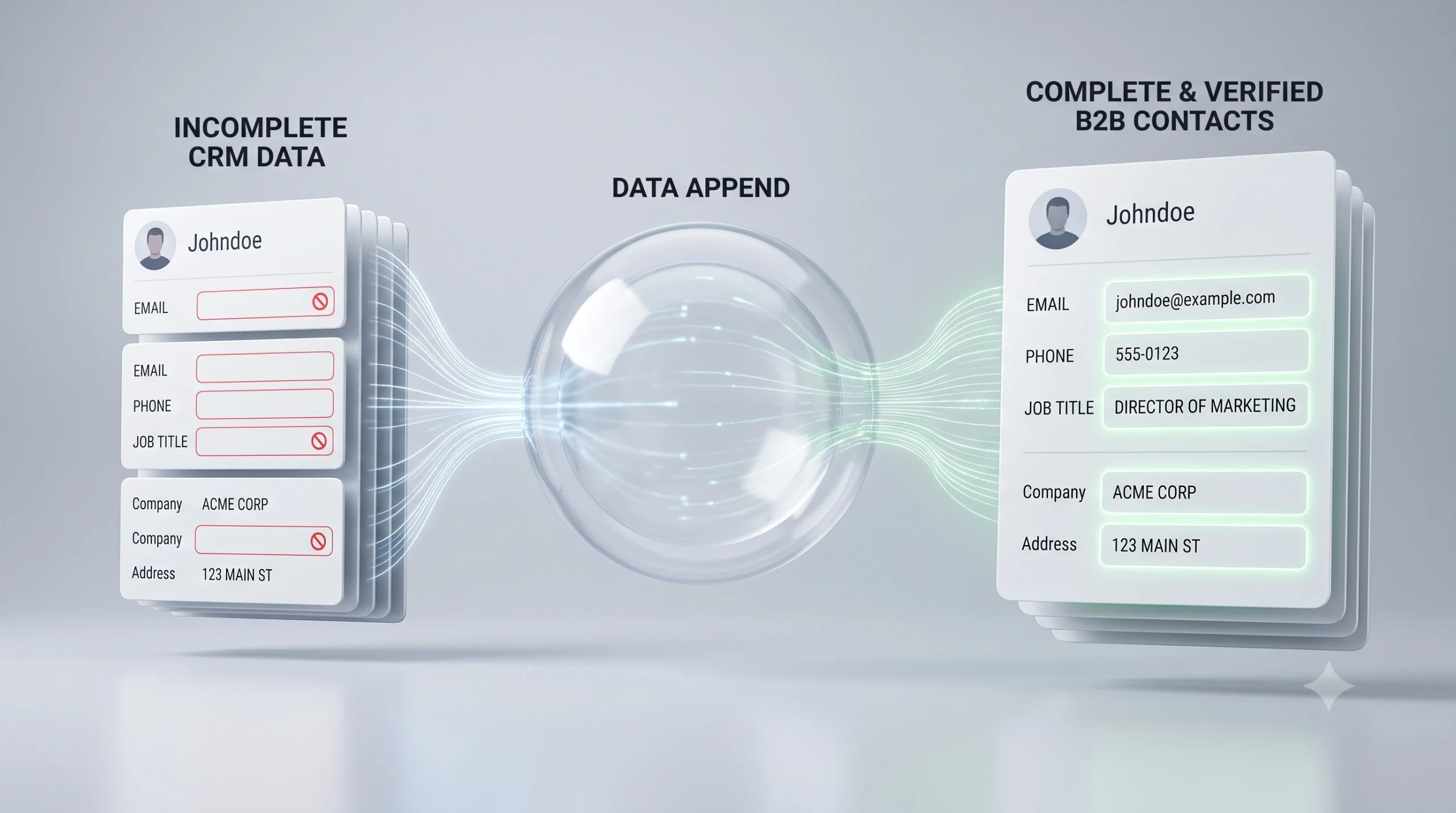
Append Missing Information
Use data enrichment services to fill gaps:
- Add email addresses to records with only phone numbers
- Add direct dials to records with only main company numbers
- Append LinkedIn profiles for easier social selling
- Add missing firmographic data
Segment by Data Confidence
Not all records have equal verification levels. Segment your database:
- Tier 1: Recently verified through engagement or conversation
- Tier 2: Passed deliverability checks within last 90 days
- Tier 3: Older data needing re-verification
Prioritize outreach to higher-confidence tiers.
Strategic Approaches to Manufacturer Targeting
Accurate lists enable sophisticated targeting strategies:
Industry Vertical Precision
Instead of generic “manufacturers,” target specific verticals:
- Food and Beverage Manufacturing: Different compliance needs, equipment requirements, automation opportunities
- Metal Fabrication: CNC equipment, raw materials, precision tools, quality control systems
- Plastics and Injection Molding: Resin suppliers, mold making, process optimization
- Electronics Assembly: Component suppliers, testing equipment, ESD protection, automation
- Medical Device Manufacturing: Cleanroom equipment, regulatory compliance, quality systems, specialized materials
- Automotive parts manufacturing: Tier suppliers, OEM relationships, just-in-time systems
Each vertical has distinct needs, buying cycles, and decision processes. Accurate lists let you segment accordingly.
Company Size Stratification
Different size manufacturers buy differently:
Small Manufacturers (1-50 employees):
- Owner/principal makes most decisions
- Shorter sales cycles
- Price-sensitive but relationship-driven
- Less formal procurement processes
Mid-Size Manufacturers (50-250 employees):
- Department managers make functional decisions
- Moderate sales cycles with some complexity
- Value-focused with established budgets
- More formal vendor evaluation
Large Manufacturers (250-500 employees):
- Multiple stakeholders in buying decisions
- Longer sales cycles with RFP processes
- Corporate purchasing departments
- Established vendor relationships requiring displacement strategies
Enterprise Manufacturers (500+ employees):
- Complex, multi-location buying processes
- Very long sales cycles
- Corporate contracts and negotiated terms
- Highest lifetime value but most competitive
Accurate firmographic data enables appropriate targeting by size.
Geographic Concentration
Manufacturing clusters in specific regions:
- Automotive Belt: Michigan, Ohio, Indiana
- Aerospace Corridor: Washington, California, Connecticut, Texas
- Food Processing: California, Wisconsin, Minnesota, Iowa
- Electronics: California, Texas, Oregon, New York
- Textiles: North Carolina, South Carolina, Georgia
- Chemical Manufacturing: Texas, Louisiana, Ohio
Accurate geographic data helps you focus on regions with the highest concentration of your target manufacturers.
Technology and Equipment Targeting
Advanced lists identify manufacturers based on equipment or technology:
- Specific CNC machine brands
- ERP systems installed (SAP, Oracle, Microsoft Dynamics)
- Automation levels (manual, semi-automated, fully automated)
- Certifications (ISO 9001, AS9100, ISO 13485, IATF 16949)
This intelligence enables highly relevant outreach: “I see you’re using [system X]. We integrate seamlessly and solve [common problem].”
Trigger Event Targeting
Combine accurate lists with trigger event data:
- Facility Expansions: New buildings or renovations signal investment in growth
- New Equipment Purchases: Permits for new machinery indicate capacity expansion
- Leadership Changes: New plant managers or operations directors may welcome fresh vendor conversations
- Regulatory Changes: New compliance requirements create needs for equipment or services
- Funding Events: Manufacturers receiving loans or private equity have capital to invest
Timing outreach around these events dramatically improves response rates.
Multi-Channel Strategies with Accurate Manufacturer Lists
Accurate data enables sophisticated multi-channel campaigns:
Direct Mail Foundation
Business direct mail works exceptionally well for manufacturers:
High-Impact Mailings:
- Dimensional packages with product samples
- Technical white papers or case studies
- Industry-specific ROI calculators
- Trade show invitations with VIP access
Manufacturers still check mail, especially technical documentation.
Email Nurturing
Business email lists enable ongoing engagement:
Effective Email Content:
- Technical how-to guides
- Industry trend reports
- Efficiency benchmarking data
- Customer success stories
- Webinar invitations
Segment email campaigns by industry vertical, company size, and engagement level.
Telemarketing Follow-Up
Business telemarketing to verified contacts converts interest to action:
Calling Strategy:
- Follow up on direct mail recipients within 7-10 days
- Call email openers and clickers
- Reach non-responders with different messaging
- Schedule qualified prospects for demos or facility visits
With accurate lists, you’re calling real decision-makers, not reception desks.
LinkedIn Social Selling
Combine list data with LinkedIn:
- Find contacts on LinkedIn
- Share relevant industry content
- Engage with their posts
- Request connections with personalized notes
- Use LinkedIn InMail for hard-to-reach executives
Coordinated Campaign Example
Week 1: Send personalized direct mail package with case study Week 2: Email referencing the mailer with link to full ROI calculator Week 3: LinkedIn connection request mentioning shared industry Week 4: Phone call discussing challenges mentioned in case study Week 5-8: Email nurture sequence with additional resources Week 9: Second phone call offering free assessment
Multiple touchpoints across multiple channels dramatically increase engagement and conversion rates.
Measuring ROI: Accurate Lists vs. Cheap Lists
Let’s put numbers to the accuracy premium:
Scenario: 5,000 Manufacturer List
Cheap List ($500):
- 60% accuracy = 3,000 usable contacts
- $0.17 per usable contact
- Connect rate: 20%
- 600 conversations
- Lead conversion: 2%
- 12 customers
- Cost per customer: $42
Accurate List ($2,000):
- 95% accuracy = 4,750 usable contacts
- $0.42 per usable contact
- Connect rate: 75%
- 3,562 conversations
- Lead conversion: 5%
- 178 customers
- Cost per customer: $11
The “expensive” list delivers:
- 14x more customers (178 vs. 12)
- 74% lower cost per customer ($11 vs. $42)
- Dramatically better ROI
Even ignoring the wasted labor costs, damaged reputation, and opportunity costs, the math favors accurate data overwhelmingly.
Common Questions About Manufacturer List Accuracy
Q: How can I test list accuracy before committing to a large purchase?
A: Order a small test sample (250-500 records) matching your targeting criteria. Track deliverability, contact accuracy, and company relevance. Scale only after validating quality.
Q: What’s a reasonable accuracy guarantee?
A: Quality providers guarantee 95%+ accuracy with clear replacement policies for bad records. Anything below 90% suggests poor data hygiene.
Q: How often should manufacturer lists be updated?
A: Quarterly updates are minimum for active campaigns. Monthly is better for fast-moving industries or high-volume outreach. Annual updates are insufficient data decays too quickly.
Q: Can I build my own manufacturer database instead of buying lists?
A: You can, but it’s extremely time-consuming and expensive. Most businesses are better served buying quality data and focusing internal resources on selling, not data compilation.
Q: How do I know if my current manufacturer list is accurate enough?
A: Track these metrics: deliverability rate (should be 95%+), connect rate (should be 70%+), and relevance rate (prospects actually fit your ICP). If you’re falling short, data quality is likely the culprit.
Q: Do more expensive lists always mean better accuracy?
A: Not always, but usually. Quality data costs money to compile and maintain. Suspiciously cheap lists are cheap for a reason. Work with reputable list brokers who vet providers rather than choosing based solely on price.
Final Thoughts: Accuracy Is Your Competitive Advantage
Here’s the reality: your competitors are targeting the same manufacturers you are. The ones with accurate lists are having productive conversations while you’re chasing dead ends. They’re building relationships while you’re leaving voicemails that never get returned. They’re closing deals while you’re updating contact records.
Data accuracy isn’t a nice-to-have it’s a fundamental competitive advantage that determines whether your lead generation efforts succeed or fail.
You can spend less on cheap lists and more on wasted labor, frustrated teams, and missed opportunities. Or you can invest in accurate manufacturer lists that actually connect you with real decision-makers at real companies.
Whether you’re targeting manufacturers across all sectors, specific industries like automotive, or small manufacturing businesses in your region, accurate data is the foundation of everything else.
The market opportunity is real. The manufacturers you need to reach exist. They have budgets for solutions like yours.
The question isn’t whether manufacturer lists work it’s whether you’re willing to invest in accurate data that actually performs.
Stop wasting resources on bad data. Start building predictable pipelines with quality intelligence.
Your sales team will thank you. Your CFO will thank you. And your revenue growth will prove you made the right choice.
Ready to improve your manufacturer lead generation with accurate, verified business lists? Work with experienced list brokers who specialize in manufacturing companies lists and specialty B2B data to ensure your outreach reaches the right manufacturers with verified contact information.