Introduction: The Aftermarket Advantage
While new car dealerships capture headlines with flashy launches and record-breaking EV sales, there’s a quieter yet far more lucrative segment generating nearly $922 billion globally: the automotive aftermarket.
This massive ecosystem encompasses everything that happens after a vehicle leaves the dealership lot: repairs, maintenance, parts replacement, customization, and performance upgrades. For B2B marketers selling products or services to automotive businesses, the aftermarket represents an unparalleled opportunity but only if you know how to navigate its complex landscape.
Unlike the straightforward world of OEM dealerships, the aftermarket is fragmented across thousands of independent repair shops, parts distributors, specialty service centers, and niche businesses. Generic business lists fall short in this environment. Success requires precision targeting and specialized data that captures the nuances of this diverse industry.
What is the Automotive Aftermarket?
The automotive aftermarket refers to the secondary market concerned with manufacturing, distribution, retailing, and installation of vehicle parts, chemicals, equipment, and accessories after the original sale by the manufacturer (OEM).
Primary Market (OEM):
- New vehicle sales through franchised dealerships
- Factory-authorized parts and warranty work
Aftermarket:
- Independent repair and service facilities
- Third-party parts manufacturers and distributors
- Specialty shops and customization centers
The aftermarket thrives because vehicles require ongoing maintenance throughout their lifecycle often 10-15 years or more. As vehicles age out of warranty, owners increasingly turn to independent service providers.
Market Size and Growth
Global Market Statistics:
- Global Aftermarket Value: $922 billion (2023)
- U.S. Aftermarket Value: $534 billion projected (2024)
- Average Vehicle Age: 12.5 years (U.S.)
- Growth Rate: 3-4% CAGR through 2030
Market Drivers: Modern vehicles contain increasingly sophisticated technology from ADAS to complex infotainment systems requiring specialized diagnostic equipment and training. The electric vehicle transition is creating new opportunities in charging infrastructure, battery service, and EV-specific parts.
The Automotive Aftermarket Ecosystem: Six Key Segments
Segment 1: Independent Auto Repair Shops
Independent repair facilities form the backbone of the automotive aftermarket.
Market Profile:
- Over 160,000 independent facilities in the U.S.
- Average annual revenue: $500,000 – $2 million per location
- Employ 70%+ of all automotive technicians
Key Decision-Makers:
- Shop Owners: Major purchasing decisions for equipment and supplier relationships
- Service Managers: Day-to-day operations and scheduling
- Lead Technicians: Influence parts and diagnostic tool purchases
What They Buy: Diagnostic equipment, shop management software, parts and fluids, training and certifications, and marketing services.
Marketing Considerations: Independent shops value relationships and personal service. Many are family-owned where the owner wears multiple hats. Direct mail, phone outreach, and in-person sales visits perform exceptionally well. Shops experience seasonal fluctuations busy during spring (maintenance) and fall (winter prep).
Learn more: How to Target Independent Auto Repair Shops: A B2B Marketer’s Guide →
Independent shops represent the most accessible entry point for B2B companies entering the automotive aftermarket. With targeting data segmented by shop size, service specializations, and location, you can identify facilities most likely to need your products or services.
Segment 2: Parts Distributors and Retail Parts Stores
The parts distribution network moves millions of parts from manufacturers to repair facilities daily.
Market Profile:
- Multi-tier system: manufacturers → warehouse distributors → jobbers → end users
- Major players: AutoZone, O’Reilly, NAPA, Advance Auto Parts
- Combined sales exceed $200 billion annually in North America
Distribution Types:
- Warehouse Distributors: Buy directly from manufacturers, supply jobber shops
- Jobber Shops: Serve professional repair facilities with multiple daily deliveries
- Retail Parts Stores: Serve both DIY consumers and professional facilities
Key Decision-Makers:
- Parts Directors/Buyers: Inventory selection and vendor relationships
- Store Managers: Local operations and staffing
- Commercial Sales Managers: B2B relationships with repair facilities
What They Buy: Inventory management systems, delivery vehicles and logistics solutions, parts cataloging software, and marketing services.
Learn more: Parts Distributors vs. Retail Parts Stores: Who to Target and When →
The parts distribution segment offers high-volume, recurring-revenue opportunities. Parts businesses make frequent purchases of software, equipment, and services to maintain competitive operations.
Segment 3: Collision Repair Centers and Body Shops
Body shops represent a specialized segment with unique characteristics differentiating them from mechanical repair facilities.
Market Profile:
- Approximately 35,000 collision repair facilities in the U.S.
- Average revenue: $1.5 – $3 million annually
- Insurance Direct Repair Program (DRP) relationships drive significant volume
Key Decision-Makers:
- Shop Owners/Managers: Major equipment purchases
- Estimators: Write repair estimates, influence parts ordering
- Paint Managers: Paint materials purchasing and color-matching
What They Buy: Frame straightening systems, paint booths, welding equipment, estimating software (CCC ONE, Mitchell), paint and materials, and ADAS calibration equipment.
Critical Trends: Modern vehicles use aluminum and high-strength steel requiring specialized equipment. Post-repair ADAS calibration has become mandatory, driving demand for calibration equipment and training.
Learn more: Targeting Collision Repair Centers and Body Shops: A Specialized Aftermarket Strategy →
Body shops must continuously invest in new technology and certifications to remain competitive and insurance-approved. Proper targeting identifies shops by DRP affiliations and equipment capabilities.
Segment 4: Fleet Service Providers
Fleet service represents one of the highest-value segments, characterized by large purchase volumes and recurring revenue.
Market Profile:
- Commercial fleets in the U.S.: 5+ million vehicles
- Fleet types: delivery/logistics, utility, transportation, government
- Maintenance can be in-house, outsourced, or hybrid
Key Decision-Makers:
- Fleet Managers: Oversee operations, budgets, vendor relationships
- Maintenance Directors: Manage schedules and technician teams
- Procurement Managers: Handle purchasing decisions
What They Buy: Fleet management software and telematics, preventive maintenance programs, bulk parts purchasing, diagnostic equipment, tire programs, and driver training.
Purchasing Characteristics: Fleet buyers focus on total cost of ownership (TCO), not just upfront price. They analyze cost-per-mile metrics, downtime impact, and long-term reliability.
Segmentation Opportunities:
- By fleet size: 10-25 vehicles, 25-100, 100-500, 500+
- By vehicle type: Light-duty, medium-duty, heavy-duty trucking
- By industry: Delivery, construction, utilities, government
Learn more: Fleet Service Providers: How to Reach Commercial Vehicle Maintenance Decision-Makers →
A single fleet account can represent more revenue than dozens of individual customers. Specialized fleet data segmented by size, vehicle type, and industry helps identify decision-makers controlling substantial budgets.
Segment 5: Tire Dealerships and Service Centers
The tire business represents a massive standalone segment valued at approximately $41 billion in the U.S.
Market Profile:
- National chains: Discount Tire, Tire Rack, Les Schwab
- Manufacturer-owned stores: Goodyear, Firestone, Bridgestone
- Thousands of independent tire dealers
Key Decision-Makers:
- Tire Dealers/Owners: Major equipment and vendor decisions
- Store Managers: Day-to-day operations and local purchasing
- Commercial Sales Managers: Fleet and business accounts
What They Buy: Tire changers and wheel balancers, alignment equipment, TPMS tools, point-of-sale systems, nitrogen inflation systems, and marketing services.
Seasonal Opportunities:
- Fall/Winter: Peak season for winter tire sales
- Spring: Second peak for tire changeovers and alignment services
- Summer: Strong for commercial fleet work
Technology Trends: Modern alignment equipment requires ADAS calibration capability. Mobile tire service is growing for commercial fleets. E-commerce integration helps dealers compete with online retailers.
Learn more: Tire Dealerships and Service Centers: Tapping Into a $41 Billion Niche Market →
Tire shops make frequent, predictable purchases of equipment and services. With accurate targeting by dealer type and brand affiliations, you can reach decision-makers when they’re evaluating new solutions.
Segment 6: Automotive Specialty Shops
A thriving ecosystem of specialty shops serves enthusiast markets, classic vehicles, and niche segments.
Market Profile:
- Performance tuning and modification shops
- Classic car restoration businesses
- Custom fabrication and hot rod builders
- Off-road and 4×4 specialists
- Import tuning specialists (JDM, European)
Key Decision-Makers:
- Shop Owners: Typically enthusiasts with deep technical knowledge
- Master Technicians/Fabricators: Influence tool and equipment decisions
What They Buy: Specialized diagnostic and tuning equipment (dyno, ECU programming), fabrication equipment, performance parts, paint and coating systems, and marketing services targeting enthusiast audiences.
Market Segments:
- Performance Tuning: Engine modifications, forced induction, ECU tuning
- Classic Car Restoration: Full or partial restoration with projects spanning months or years
- Off-Road Specialists: Suspension lifts, armor, tire packages for trucks/SUVs
- Import Performance: Shops focusing on specific makes (Subaru, BMW, Porsche)
Marketing Considerations: Specialty shops are deeply embedded in enthusiast communities. These businesses value suppliers who understand their technical needs and share their passion. Relationship-based selling works exceptionally well.
Learn more: Automotive Specialty Shops: Marketing to Performance, Classic Car, and Niche Aftermarket Businesses →
While specialty shops may not offer volume potential of mainstream facilities, they invest heavily in specialized equipment, maintain strong margins, and develop long-term vendor relationships.
Understanding Aftermarket Decision-Makers
Automotive aftermarket businesses function with multiple decision-makers, each controlling different purchasing aspects:
Strategic Buyers (Owners, GMs): Make major capital purchases ($10,000+), establish vendor relationships, and approve annual budgets.
Operational Buyers (Service Managers): Handle day-to-day purchases, select diagnostic tools, and manage workflow.
Technical Influencers (Lead Technicians): Recommend specific tools and equipment, influence parts preferences, and serve as gatekeepers for new product adoption.
Financial Decision-Makers (CFOs – larger organizations): Approve financing, evaluate ROI, and manage vendor terms.
Tailoring Your Approach
- Strategic Buyers: Emphasize long-term ROI and competitive advantages
- Operational Buyers: Focus on efficiency gains and productivity improvements
- Technical Influencers: Lead with technical specifications and hands-on demonstrations
- Financial Decision-Makers: Present detailed cost-benefit analysis and TCO comparisons
Why Generic Business Lists Fail
Generic lists produce disappointing results because they lack:
Adequate Segmentation: Cannot differentiate between mechanical repair, body shops, tire service, or specialty operations.
Decision-Maker Data: Provide generic contacts instead of specific decision-makers relevant to your offering.
Data Freshness: Updated quarterly or annually, missing constant industry changes (ownership, relocations, closures).
Firmographic Detail: Lack information on service bays, technician count, revenue, equipment in use, and certifications.
The Power of Specialized Automotive Lists
Specialized list brokers provide:
Precision Segmentation:
- By business type (repair, body, tire, fleet, specialty)
- By size metrics (bays, technicians, revenue)
- By service capabilities (certifications, equipment)
- By technology adoption (software platforms, equipment brands)
Accurate Contact Data:
- Direct decision-maker contacts with roles and titles
- Multiple contact methods (phone, mobile, email, mailing address)
- Regular verification and bounce management
Fresh, Maintained Data:
- Monthly or more frequent updates
- Business change tracking (ownership, location, status)
- Prompt removal of closed businesses
How to Choose and Use Aftermarket Lists
Step 1: Define Your Ideal Customer
- What do they buy from you?
- What size business fits best?
- What specializations matter?
- Who makes buying decisions?
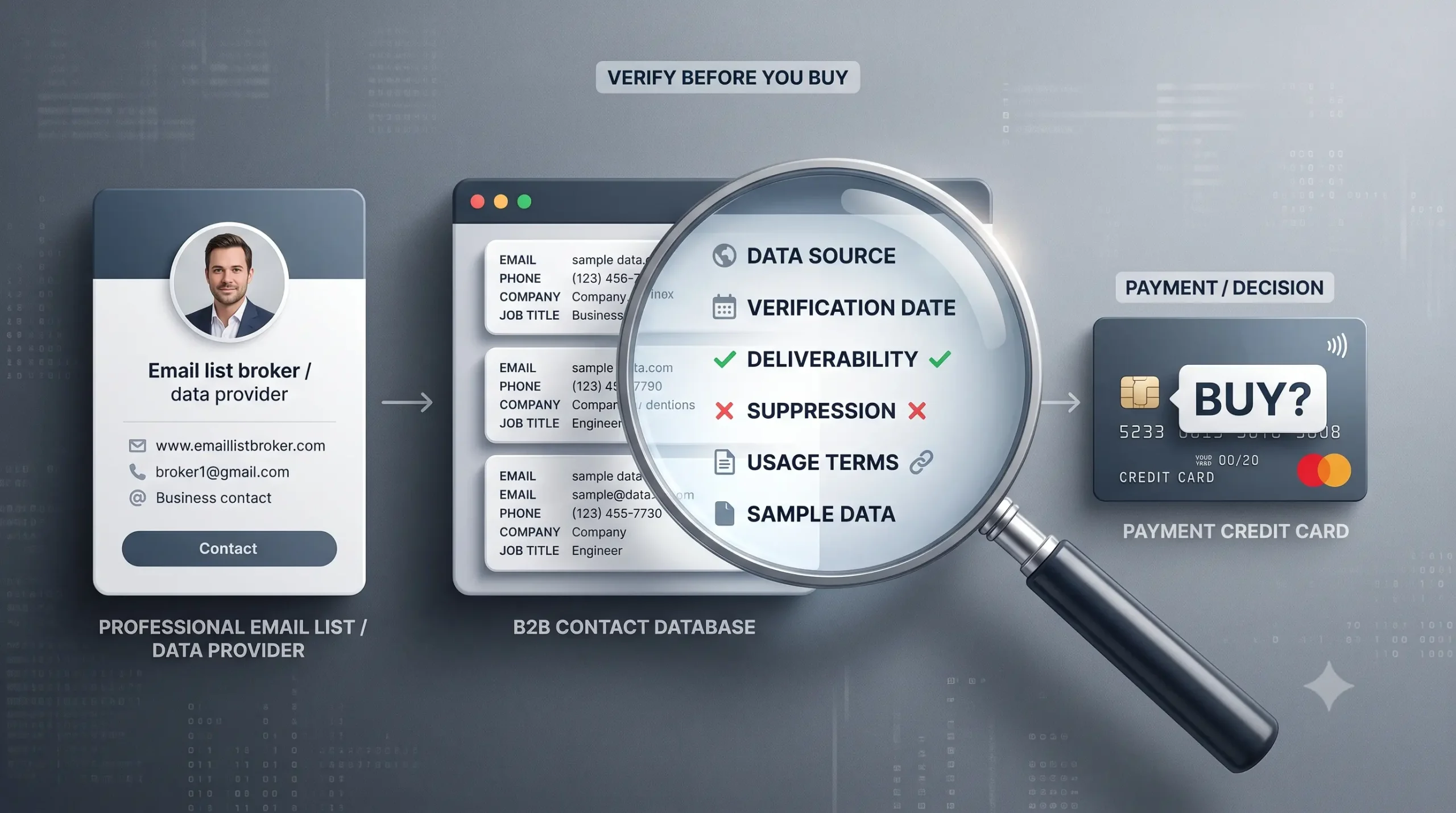
Step 2: Work with Specialized Brokers Look for automotive industry expertise, multiple data sources, automotive-specific segmentation, and regular updates. Ask about update frequency, segmentation options, decision-maker data, and accuracy guarantees.
Step 3: Test and Refine Start with 500-1,000 contacts, run pilot campaigns, measure results, and scale what works.
Step 4: Multi-Channel Approach
- Direct Mail: Highly effective for aftermarket; postcards, dimensional mail, catalogs
- Phone Outreach: Relationship building, follow-ups, appointment setting
- Email Marketing: Newsletters, product announcements, educational content
- Digital Advertising: LinkedIn, Facebook, Google Search, retargeting
Measuring Success
Key Performance Indicators:
- Response Rates: Direct mail 1-3% typical; Email 15-25% opens
- Cost Per Lead: $20-$200 depending on product/service
- Sales Cycle: 2-8 weeks (small purchases) to 6-12 months (large contracts)
- Customer Lifetime Value: Long-term relationships with repeat purchases
Track all touchpoints using multi-touch attribution to understand which channels contribute to conversions.
Conclusion: Your Roadmap to Aftermarket Success
The $922 billion automotive aftermarket represents extraordinary opportunity for B2B marketers. Success requires moving beyond generic business lists to specialized data that captures the complexity of this diverse industry.
By understanding the six key segments independent shops, parts distributors, body shops, fleet services, tire dealers, and specialty shops and targeting the right decision-makers with precision data, you can dramatically improve response rates and conversion outcomes.
Partner with specialized automotive list brokers who provide the segmentation depth, contact accuracy, and data freshness this dynamic market demands. Start with focused testing, refine based on results, and scale your successful approaches across broader markets.
The aftermarket is waiting. The question is: will you reach them with generic spray-and-pray tactics, or with the precision targeting that drives real results?
Ready to accelerate your automotive aftermarket marketing? Contact our specialists today to explore how precisely segmented automotive lists can transform your B2B prospecting results.