Christian mailing lists traditionally power direct mail campaigns reaching believers through physical mailboxes. However, many organizations wonder whether these same databases can support email marketing or telemarketing campaigns to Christian audiences. The answer is yes, but with critical qualifications around data availability, legal compliance, and channel-specific best practices.
Understanding how to use a christian mailing list across multiple channels helps organizations maximize campaign reach while respecting regulatory requirements and recipient preferences. The wrong approach risks legal violations, damaged reputation, and poor response rates. The right approach enables coordinated multi-channel campaigns that dramatically outperform single-channel efforts.
Email Addresses on Christian Mailing Lists: Availability and Quality
Not all Christian mailing lists include email addresses. Understanding what’s available helps set realistic expectations.
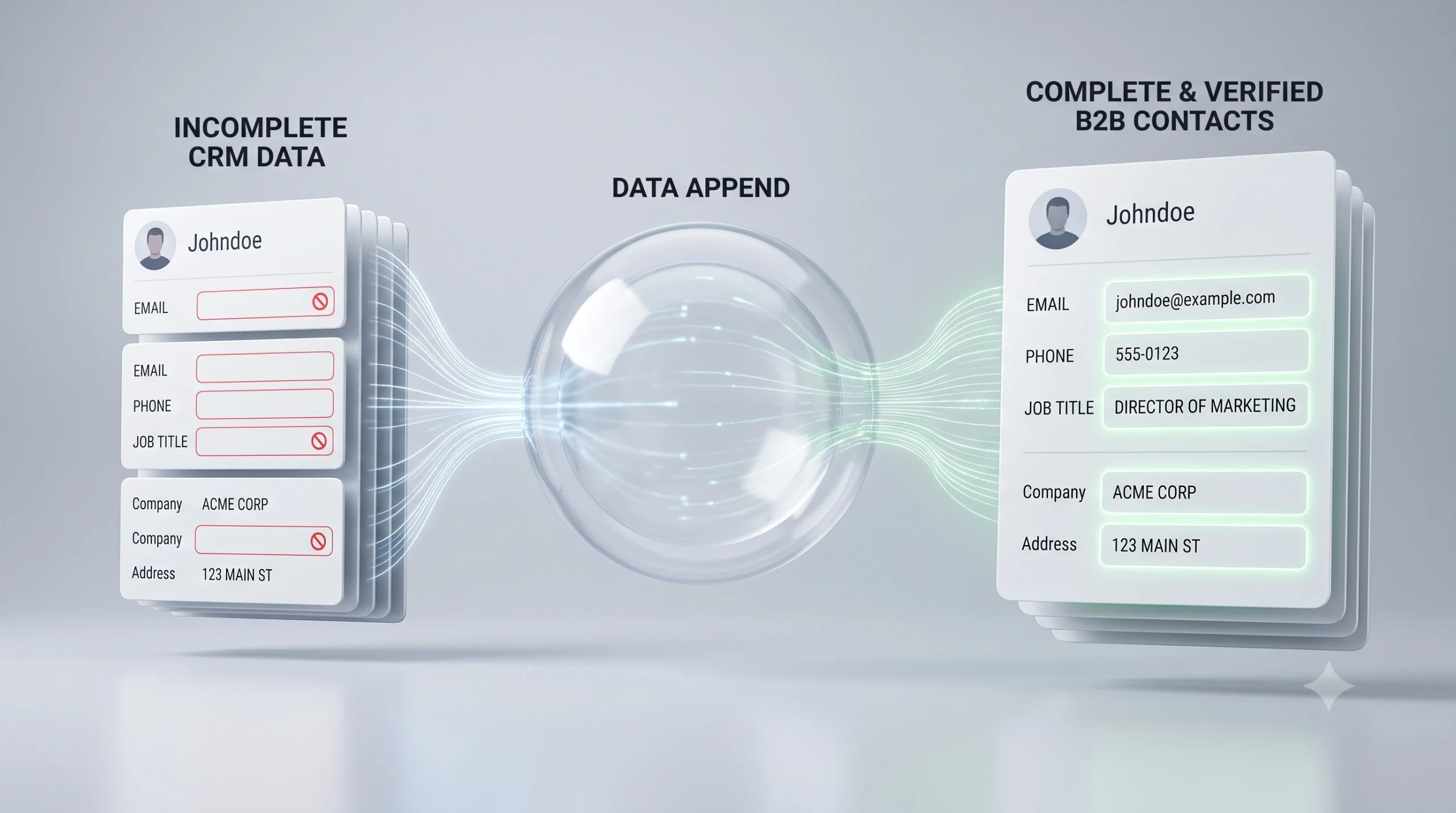
Append services can add email addresses to mailing lists originally compiled for direct mail. Providers match physical addresses against email databases to append verified email addresses where available. Match rates typically range from 30 to 50 percent depending on list demographics and quality.
Dedicated opt-in email lists of Christians contain individuals who’ve specifically consented to receive commercial email. These permission-based lists deliver better deliverability and response than appended emails. They cost more, typically $150 to $400 per thousand email addresses, but avoid many compliance issues.
Email quality varies significantly across sources. Permission-based emails from Christians who’ve opted in through surveys or website registrations deliver better engagement than compiled emails. Appended emails may have higher bounce rates and lower engagement.
Response-based email lists contain Christians who’ve responded to previous email campaigns, demonstrating active email engagement. These outperform lists of Christians who may have email addresses but rarely check or respond to marketing emails.
Age demographics affect email availability. Younger Christians ages 25 to 50 have higher email match rates and engagement than seniors ages 65-plus. Tailoring email expectations to age demographics prevents disappointment.
Phone Numbers on Christian Lists: Types and Acquisition
Christian mailing lists can include phone numbers, but the type dramatically affects what you can legally do with it.
Landline phone numbers appear on many Christian consumer lists because older Christians maintain traditional phone service. Match rates for landline numbers often reach 60 to 70 percent. These numbers support traditional telemarketing with appropriate Do Not Call Registry scrubbing.
Mobile phone numbers require different treatment under TCPA regulations. Christians who provided mobile numbers with express written consent for telemarketing can be called. However, most compiled lists lack this consent documentation. Calling mobile phones without consent violates TCPA and risks fines of $500 to $1,500 per call.
Phone append services can add phone numbers to mailing lists. Providers should clearly distinguish between landline and mobile numbers and document any consent associated with mobile calling.
Legal Requirements for Email Marketing to Christian Lists
Using Christian mailing lists for email marketing requires strict compliance with federal law.
The CAN-SPAM Act governs all commercial email in the United States. Key requirements include accurate header information, clear subject lines, identification that the message is an advertisement, valid physical postal address, and working unsubscribe mechanism honored within 10 business days.
Opt-in requirements separate permission-based from compiled lists. While CAN-SPAM doesn’t require opt-in for commercial emails, using lists where recipients explicitly opted in dramatically improves deliverability and reduces spam complaints.
Unsubscribe compliance represents non-negotiable requirement. Every email must include clear unsubscribe instructions. Organizations must process requests within 10 business days. Failure to honor unsubscribes triggers penalties up to $51,744 per violation.
Third-party list rental creates specific obligations. When using rented Christian email lists, organizations remain responsible for CAN-SPAM compliance. You cannot blame list providers for sending to people who didn’t consent.
State laws sometimes impose stricter requirements than federal CAN-SPAM. Working with experienced list brokers who understand these variations helps maintain compliance.
Legal Requirements for Telemarketing to Christian Lists
Telemarketing regulations are even more complex than email requirements, with severe penalties for violations.
The Telephone Consumer Protection Act restricts calling mobile phones. You need prior express written consent to call mobile phones using automated dialing systems or to deliver prerecorded messages. Most Christian mailing lists lack this documentation for mobile numbers.
The National Do Not Call Registry must be scrubbed against all calling lists. Organizations must download the registry at least every 31 days and remove listed numbers before calling. Calling someone on the Do Not Call Registry without established business relationship triggers fines up to $46,517 per call.
Safe harbor exemptions exist for established business relationships and prior express consent. If someone has donated to your ministry within 18 months, you can call even if they’re on Do Not Call Registry.
State-level telemarketing laws vary significantly. Some states require telemarketing registration before calling their residents. Multi-state campaigns need coordination across varying state requirements.
Caller ID requirements mandate accurate information. Your organization name must display correctly. Spoofing caller ID to show fake numbers violates federal law.
Multi-Channel Campaigns: Coordinating Mail, Email, and Phone
The most effective approach uses Christian mailing lists as foundation for coordinated multi-channel campaigns rather than choosing just one channel.
Direct mail establishes initial contact and builds credibility. A quality mailing to a christian mailing list introduces your organization and creates foundation for digital and phone follow-up.
Email follow-up works better after direct mail introduction. An email referencing “the information we recently mailed you” gains attention where cold emails get deleted. Christians who received your mailing appreciate email reminders with links to online response options.
Telemarketing to engaged prospects closes high-value opportunities. When Christians visit your website after receiving mail or click links in emails, they’ve demonstrated interest. Phone calls can answer questions and secure commitments.
Timing matters in multi-channel sequences. Email typically follows mail by 3 to 5 days. Phone calls work best 7 to 10 days after initial mail drop, allowing time for delivery and consideration.
Response tracking across channels shows total campaign effectiveness. Use unique URLs, phone numbers, and reply codes for each list segment and channel combination.
Best Practices for Email Marketing to Christian Audiences
When using Christian email lists, certain practices maximize response while respecting recipient preferences.
Subject lines should be clear and authentic rather than manipulative. Christians respond better to straightforward subjects than clickbait tactics. Honesty builds trust that drives long-term engagement.
Message content should reflect genuine Christian values. Recipients quickly detect insincere attempts to use religious language for purely commercial purposes.
Personalization beyond just name insertion builds relevance. Reference specific interests, past giving to similar causes, or denominational affiliation when data allows.
Mobile optimization matters even for older Christian audiences increasingly using smartphones. Emails must display properly on all devices with readable fonts and properly sized images.
Testing different segments identifies highest-performing Christian audiences. Test evangelical versus mainline Protestant. Test different age ranges. Test donors versus general Christian subscribers.
Frequency management prevents fatigue and unsubscribes. Christians generally prefer weekly or bi-weekly emails rather than daily messages.
Best Practices for Telemarketing to Christian Donors and Prospects
Phone outreach to Christians requires cultural sensitivity beyond just legal compliance.
Script development should sound natural and conversational rather than robotic. Christians appreciate authentic conversation. Train callers to listen, respond to questions, and adjust approach based on individual recipient needs.
Timing considerations respect Christian lifestyle patterns. Avoid calling during typical church service times on Sunday mornings and Wednesday evenings. Respect dinner hours.
Caller training on Christian culture helps representatives connect authentically. Understanding denominational differences, biblical terminology, and ministry contexts enables more effective conversations.
Objection handling respects Christian decision-making patterns. Many Christians pray about giving decisions or consult with spouses. Rather than high-pressure tactics, acknowledge these patterns and offer to follow up.
Data Quality Considerations Across Channels
Email and phone data require different quality assessments than mailing addresses.
Email verification services reduce bounce rates and improve deliverability. Before launching campaigns, verify email addresses are valid, not known spam traps, and actively receiving mail.
Phone number validation confirms numbers are active, identifies mobile versus landline, and checks against Do Not Call Registry. Quality validation prevents wasting time calling disconnected numbers and reduces compliance risks.
Suppression file maintenance across channels prevents poor recipient experience. If someone unsubscribes from email, they shouldn’t receive phone calls. Cross-channel suppression demonstrates respect for preferences.
Update frequency affects all channels. Email addresses change when people switch providers. Phone numbers change when people move. Regular updates ensure lists stay current.
Working With List Brokers for Multi-Channel Christian Campaigns
Successfully using Christian mailing lists across multiple channels benefits from experienced broker guidance.
Brokers help you understand what contact information is available on different Christian list sources. They can explain match rates for email append, phone append, and dedicated email or phone lists versus mail-only options.
Compliance consulting ensures your campaigns meet CAN-SPAM, TCPA, and state regulations. Brokers familiar with telemarketing and email marketing to religious audiences help navigate complex requirements.
Channel recommendation based on campaign goals guides optimal approaches. Brokers can advise whether email, phone, or integrated multi-channel campaigns make sense for your specific offer and budget.
Testing strategies across channels help identify most effective combinations. Structured testing reveals actual performance rather than guessing.
Cost Considerations for Multi-Channel Christian Campaigns
Understanding costs across channels helps budget allocation decisions.
Email lists of Christians typically cost $150 to $400 per thousand email addresses for permission-based lists. Email append to mailing lists costs $20 to $50 per thousand names with match rates of 30 to 50 percent.
Phone lists with landline numbers cost $80 to $200 per thousand. Phone append services charge $15 to $40 per thousand names. Mobile phone lists with documented consent cost substantially more when available.
Execution costs beyond list rental must be budgeted. Email service providers charge for sending. Telemarketing vendors charge per hour or per completed call. Direct mailing lists require creative, printing, and postage.
ROI calculations should account for channel-specific response rates and costs per acquisition. Email might have lower cost per contact but also lower response rates than phone. Calculate cost per donor across channels for fair comparison.
Christian mailing lists can absolutely be used for email and telemarketing, but success requires understanding data availability, strict legal compliance, and channel-specific best practices. Organizations that coordinate multi-channel campaigns see dramatically better results than those limiting themselves to single channels.
The key is starting with quality data from reputable sources, maintaining rigorous compliance with CAN-SPAM and TCPA regulations, respecting Christian communication preferences, and testing systematically to identify highest-performing channel combinations.
Ready to use Christian mailing lists across multiple channels? Work with experienced list brokers who can guide you through consumer lists, specialty lists, and multi-channel campaigns.