When planning your next fundraising or outreach campaign, one of the first decisions you’ll face is whether to use pre-built religious mailing lists or invest in custom list development. Both deliver contact data for faith-based marketing, but they serve different needs and produce dramatically different results.
Pre-built lists offer speed and convenience. Custom lists require more time and investment but deliver precision targeting tailored exactly to your specifications.
The wrong choice wastes money and produces disappointing results. The right choice connects you with qualified prospects who respond to your message and become long-term advocates.
What Are Pre-Built Religious Mailing Lists?
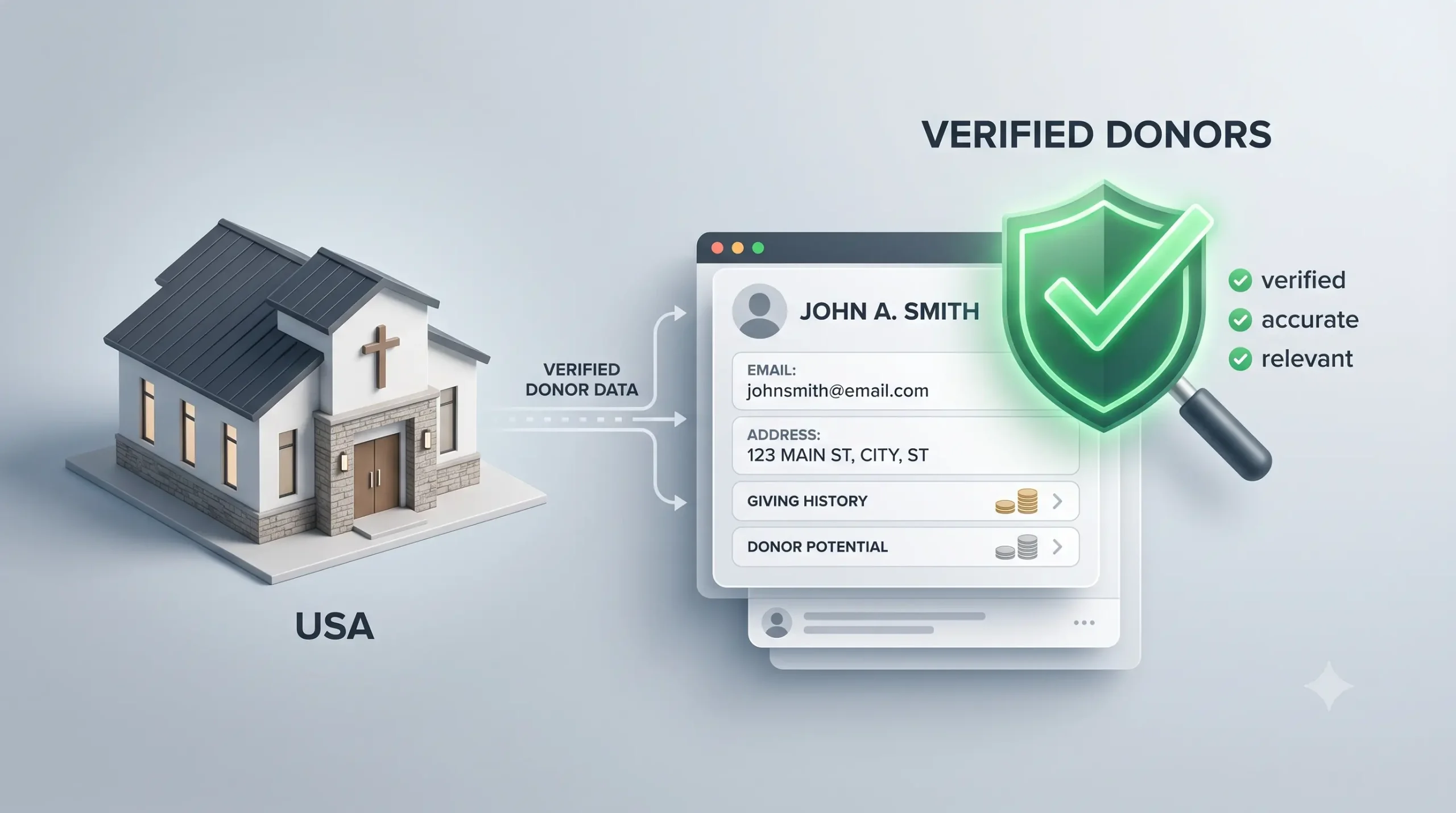
Pre-built lists are compiled databases of religious consumers that already exist before you place your order. List providers maintain these databases by continuously collecting data from surveys, subscriptions, purchases, donations, and public records.
When you order a pre-built list, you’re accessing a segment of this existing database based on available selection criteria. You might choose Catholic households in specific ZIP codes or Protestant churches with certain congregation sizes. But your targeting options are limited to whatever selects the provider built into their database.
Pre-built consumer lists typically offer standard demographic and behavioral filters. You can usually select by religious affiliation, denomination, geography, age, income, and sometimes giving history. The provider determines which criteria are available.
Delivery happens quickly because the data already exists. Many providers deliver pre-built lists within hours. This speed makes pre-built lists attractive for tight deadlines.
Pricing for pre-built lists falls into predictable ranges. Basic religious affiliation lists cost $80 to $150 per thousand names. More targeted segments with multiple criteria range from $150 to $300 per thousand.
What Are Custom Religious Mailing Lists?
Custom lists are built specifically for your campaign based on your exact targeting specifications. Rather than selecting from predetermined criteria, you work with list brokers to define precisely who you want to reach.
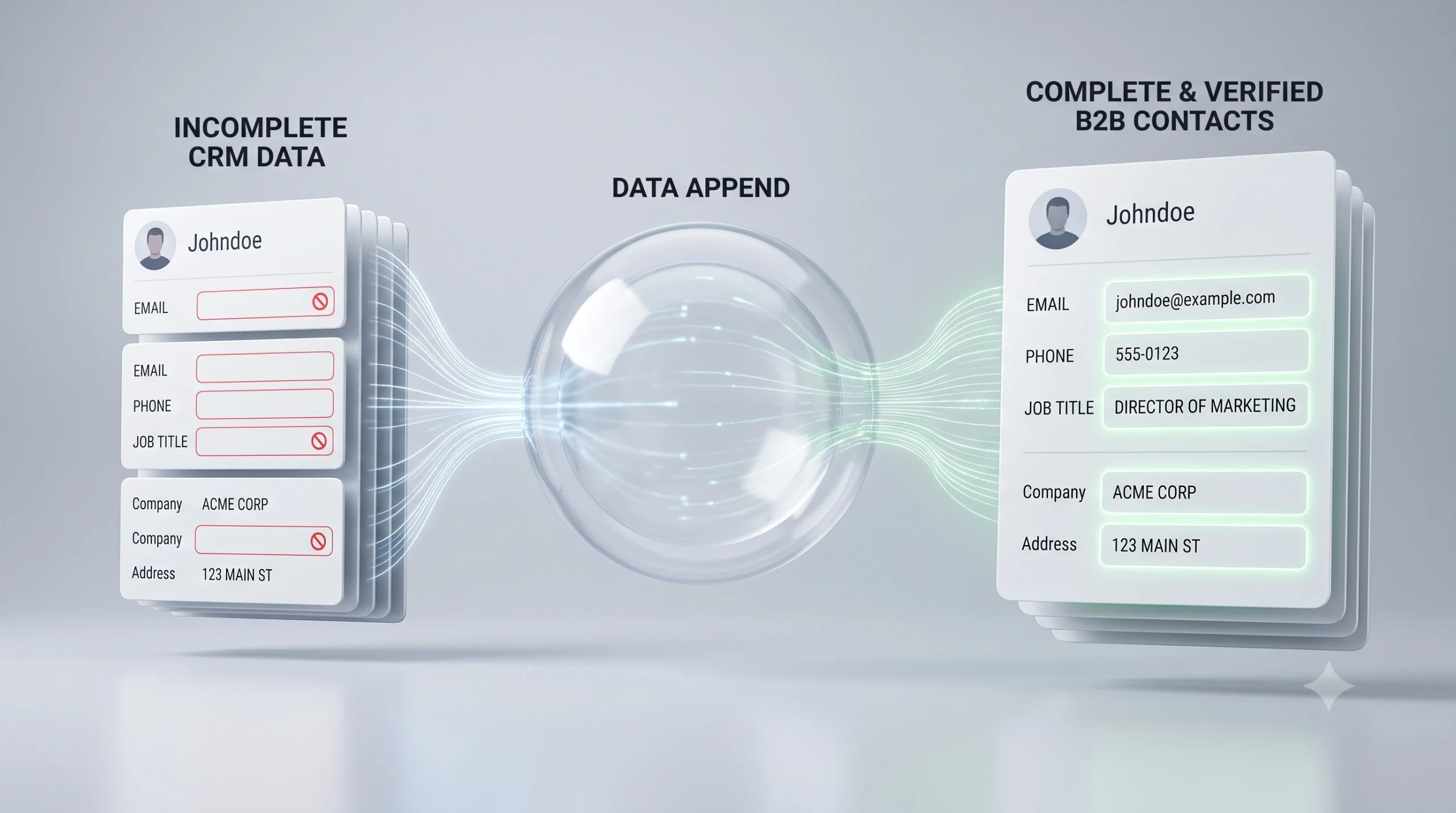
Custom list development starts with detailed consultation. You describe your ideal prospect, campaign objectives, and target market. The list specialist recommends data sources and targeting strategies. They might combine religious affiliation data with giving histories from multiple providers, demographic overlays, lifestyle indicators, and behavioral triggers.
The compilation process takes longer. Custom lists typically require several days to several weeks depending on complexity. The provider needs time to identify data sources, perform matching and de-duplication across multiple files, append requested elements, and verify accuracy.
Custom lists enable targeting impossible with pre-built options. You might request Catholic households in specific income ranges who’ve donated to particular causes within certain geographic areas, with verified email addresses and phone numbers. Or Protestant families with children who’ve purchased specific products, filtered for homeowners in certain property value ranges.
Pricing for custom lists reflects the additional work involved. Expect to pay premium rates, typically 20 to 50 percent more than comparable pre-built lists. The investment buys precision targeting that pre-built options can’t deliver.
When Pre-Built Lists Make Sense
Pre-built religious mailing lists work well in specific scenarios.
Broad targeting needs match pre-built list capabilities. If you’re a national ministry seeking evangelical Christian donors nationwide without complex demographic restrictions, pre-built lists provide adequate targeting at efficient costs.
Budget constraints favor pre-built lists when acquisition costs must stay low. Smaller nonprofits with limited budgets often cannot afford custom list development.
Time sensitivity makes pre-built lists practical when campaigns must launch quickly. If you need to mail within days, pre-built lists deliver immediately. Year-end giving campaigns with tight deadlines often rely on pre-built lists.
Testing multiple segments benefits from pre-built lists’ speed and cost efficiency. When testing Catholic versus Protestant donors or different geographic markets, ordering multiple small pre-built segments costs less.
Proven list segments with documented performance justify repeated use. If a specific pre-built list segment consistently delivers acceptable results, continuing with that proven segment makes sense.
Simple offers with broad appeal don’t require precision custom targeting. A Christian concert, faith-based film, or general religious publication might succeed with broad denominational targeting that pre-built lists handle well.
When Custom Lists Deliver Better Results
Custom religious mailing lists justify their higher costs in scenarios where precision targeting drives significantly better performance.
Niche targeting requirements exceed pre-built list capabilities. If you need religious consumers meeting multiple specific criteria not available in standard segments, custom development becomes necessary. Specialty lists with multiple overlapping criteria require custom compilation.
High-value campaigns justify custom investment through stronger ROI. Major donor acquisition campaigns, capital campaigns, or large-scale membership recruitment generate enough revenue per acquisition to justify premium list costs.
Unique value propositions require precisely matched prospects. If your organization offers something specific appealing to a narrow audience, generic pre-built lists waste money mailing to unqualified prospects.
Competitive markets demand differentiation through precision targeting. In crowded fundraising environments, reaching exactly the right people creates competitive advantage.
Multi-touch campaigns benefit from custom list investment across multiple channels. When executing coordinated multi-channel campaigns combining direct mail, email, and phone outreach, custom lists provide complete contact information across all channels.
Cost-Benefit Analysis: Real Numbers
Understanding the economics helps make informed decisions.
Pre-built list scenario shows lower upfront investment. A faith-based nonprofit orders 5,000 names from a pre-built evangelical donor list at $125 per thousand, totaling $625. With 2.5 percent response, they acquire 125 new donors. List cost per acquisition is $5.
Custom list scenario requires higher initial investment but delivers better targeting. The same nonprofit invests in a custom list at $200 per thousand, totaling $1,000. Precision targeting delivers 4 percent response, acquiring 200 new donors. List cost per acquisition drops to $5 per donor.
The custom list costs $375 more upfront but acquires 75 additional donors. If average first-year giving is $150 per donor, those 75 additional donors generate $11,250 in revenue. The extra $375 list investment produces $10,875 in net benefit.
Long-term value multiplies custom list advantages. Over three years at $150 annually, the 75 additional donors generate $33,750 in total revenue, far exceeding the modest additional list investment.
Hybrid Approaches: Combining Both Strategies
Many sophisticated marketers don’t choose between custom and pre-built lists but strategically use both.
Test with pre-built, scale with custom represents a common hybrid approach. Organizations test campaign concepts using affordable pre-built lists to validate offers and targeting. Once they identify what works, they invest in custom lists for larger rollouts.
Use pre-built for volume, custom for quality segments the market by value. Campaigns mail pre-built lists to mid-level prospects where volume matters more than precision, while investing in custom lists for high-value prospect segments.
Geographic testing with pre-built leads to custom expansion in winners. National campaigns test multiple markets with pre-built lists to identify highest-performing regions, then develop custom lists in winning markets.
Seasonal strategy alternates between approaches. Organizations might use pre-built lists for time-sensitive holiday campaigns when speed matters, but develop custom lists for major spring or fall campaigns when longer lead times allow custom development.
Data Quality Considerations
List quality matters more than whether lists are pre-built or custom. Both approaches can deliver excellent or terrible data depending on provider quality.
Pre-built list quality depends on maintenance frequency. The best providers update databases monthly or continuously with NCOA processing and ongoing data refreshes.
Custom list quality depends on source selection and compilation methodology. Superior custom lists combine high-quality sources with rigorous matching algorithms and verification processes.
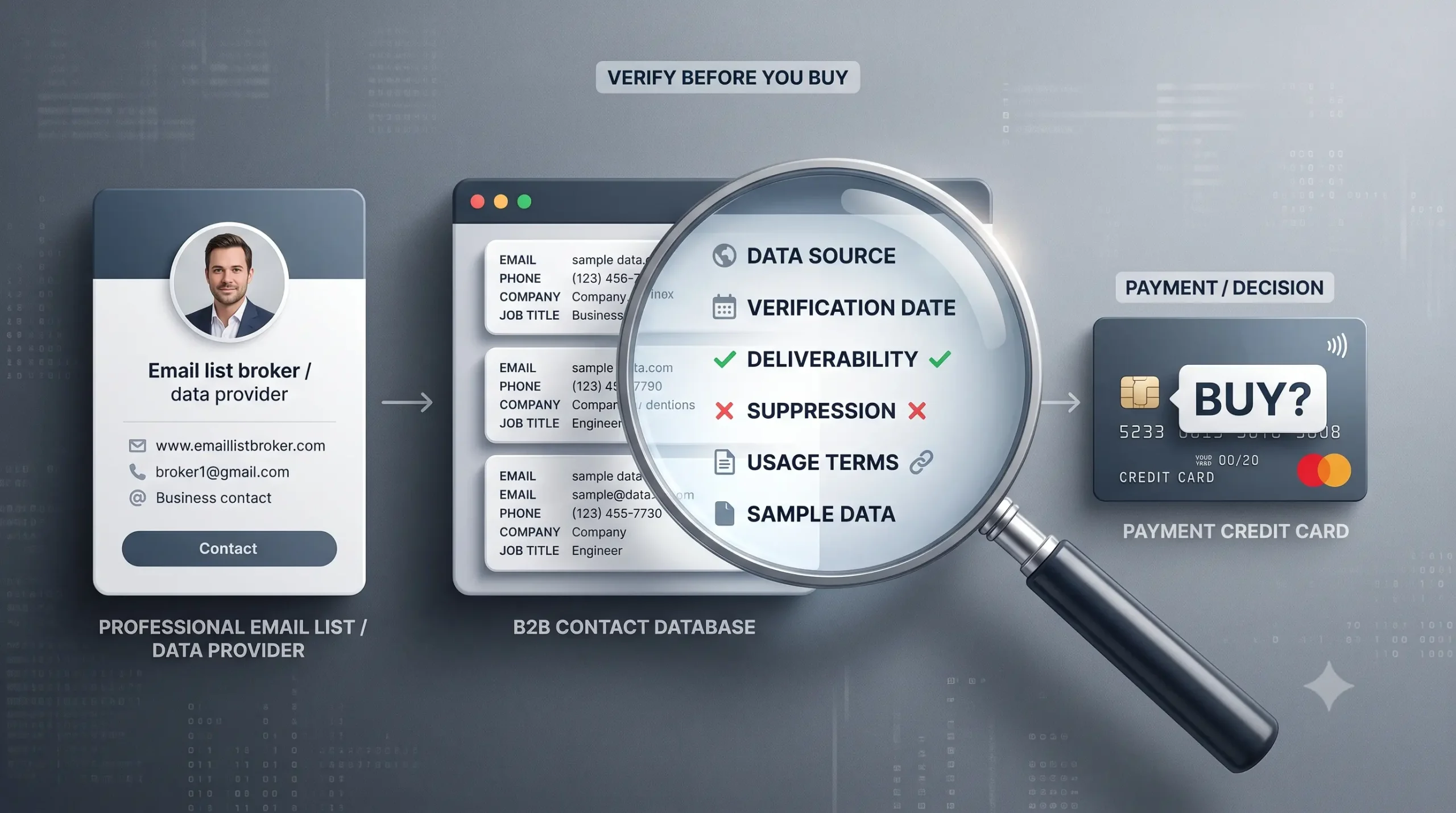
Deliverability guarantees separate quality providers from marginal ones regardless of list type. Reputable providers guarantee 90 to 95 percent deliverability and replace undeliverable names.
Source transparency reveals data quality. Whether ordering pre-built or custom lists, ask explicitly where data originates. Self-reported religious affiliation and verified giving histories produce more accurate targeting than modeled predictions.
Making Your Decision: A Framework
Choose between pre-built and custom religious mailing lists by evaluating several key factors.
Campaign objectives drive the decision. Are you seeking broad awareness or precise targeting? Do you need volume or quality? Is the campaign transactional or relationship-building?
Target audience complexity determines feasibility. Can you adequately describe your ideal prospect using standard selection criteria available in pre-built lists? Or does reaching your audience require multiple layered criteria that only custom compilation can deliver?
Budget realities matter but shouldn’t be the only consideration. Custom lists cost more upfront but if they deliver significantly better results, the cost per acquisition and long-term ROI favor custom investment.
Timeline constraints affect feasibility. If you must launch within days, pre-built lists represent your only option. If you have weeks or months of lead time, custom development becomes practical.
Practical Recommendations for 2026
Based on current market conditions and emerging trends, here’s practical guidance.
Start with pre-built for proof of concept. If you’re new to direct mail fundraising or launching untested campaigns, begin with affordable pre-built lists to validate your offer before investing in custom development.
Graduate to custom as you scale. Once you’ve proven campaign viability with pre-built tests, invest in custom lists for larger deployments.
Use custom for your best segments. Even if budget constraints limit custom list development to a portion of your campaign, apply custom targeting to your highest-value prospect segments.
Combine approaches strategically. Don’t view pre-built versus custom as either-or. Use both approaches where each serves specific campaign objectives most cost-effectively.
Prioritize quality over type. Whether you choose pre-built or custom lists, invest in quality data from reputable providers with strong deliverability guarantees and proven track records.
Test continuously to optimize. Market conditions change. Regular testing of both pre-built and custom approaches ensures your list strategy stays current and cost-effective.
The choice between custom and pre-built religious mailing lists isn’t about finding the universally “right” option. It’s about matching list strategy to your specific campaign goals, budget realities, timeline constraints, and organizational objectives.
Pre-built lists serve important purposes for organizations needing speed, affordability, or broad targeting. Custom lists deliver superior results when precision targeting, complex audience profiles, or high-value campaigns justify premium investment.
Most successful organizations use both approaches strategically, applying each where it delivers optimal results. They test with pre-built lists, scale with custom development, use pre-built for volume segments, and invest custom development in high-value prospects.
The fundamental question isn’t which type of list to use. It’s which approach delivers the best results for your specific situation. Answer that question honestly, and your list selection strategy will drive stronger campaign performance, better donor acquisition, and improved organizational growth.
Ready to determine whether pre-built or custom religious mailing lists fit your campaign goals? Work with experienced list brokers who can evaluate your needs objectively and recommend optimal approaches through targeted consumer lists, specialty targeting, and multi-channel campaigns.