The top-performing sales team in your industry isn’t crushing quotas because they found some magical list vendor you don’t know about. They’re not succeeding because they bought more data than you did.
They’re winning because they stopped treating purchased lists as complete solutions and started treating them as strategic foundations.
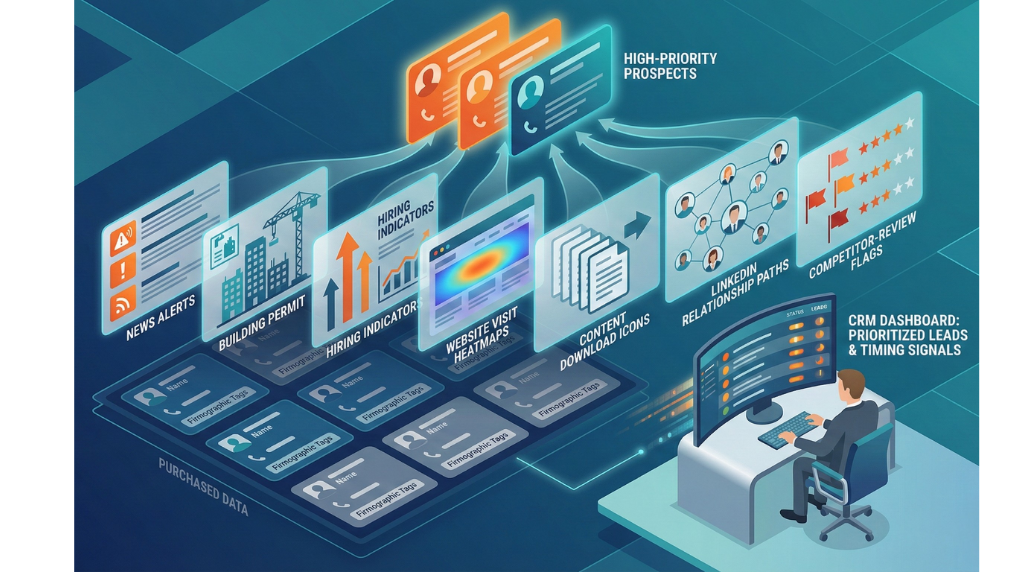
Here’s what separates elite sales organizations from struggling ones: elite teams understand that the best calling lists combine purchased business data with proprietary intelligence they build internally. They use business telemarketing lists to establish their universe of prospects, then layer on behavioral signals, relationship intelligence, timing indicators, and qualification data that no vendor can provide.
The result? While competitors waste time calling cold contacts from static lists, high-performing teams reach warm prospects at exactly the right moment with relevant, personalized approaches.
This isn’t about abandoning purchased data it’s about recognizing that purchased lists answer “who could buy” while internal intelligence answers “who’s likely to buy now.” The combination is exponentially more powerful than either alone.
Let’s reveal exactly how elite sales teams build calling lists that deliver conversion rates competitors can’t match.
Why Purchased Data Alone Isn’t Enough (And Never Was)
Before we dive into solutions, let’s acknowledge the reality:
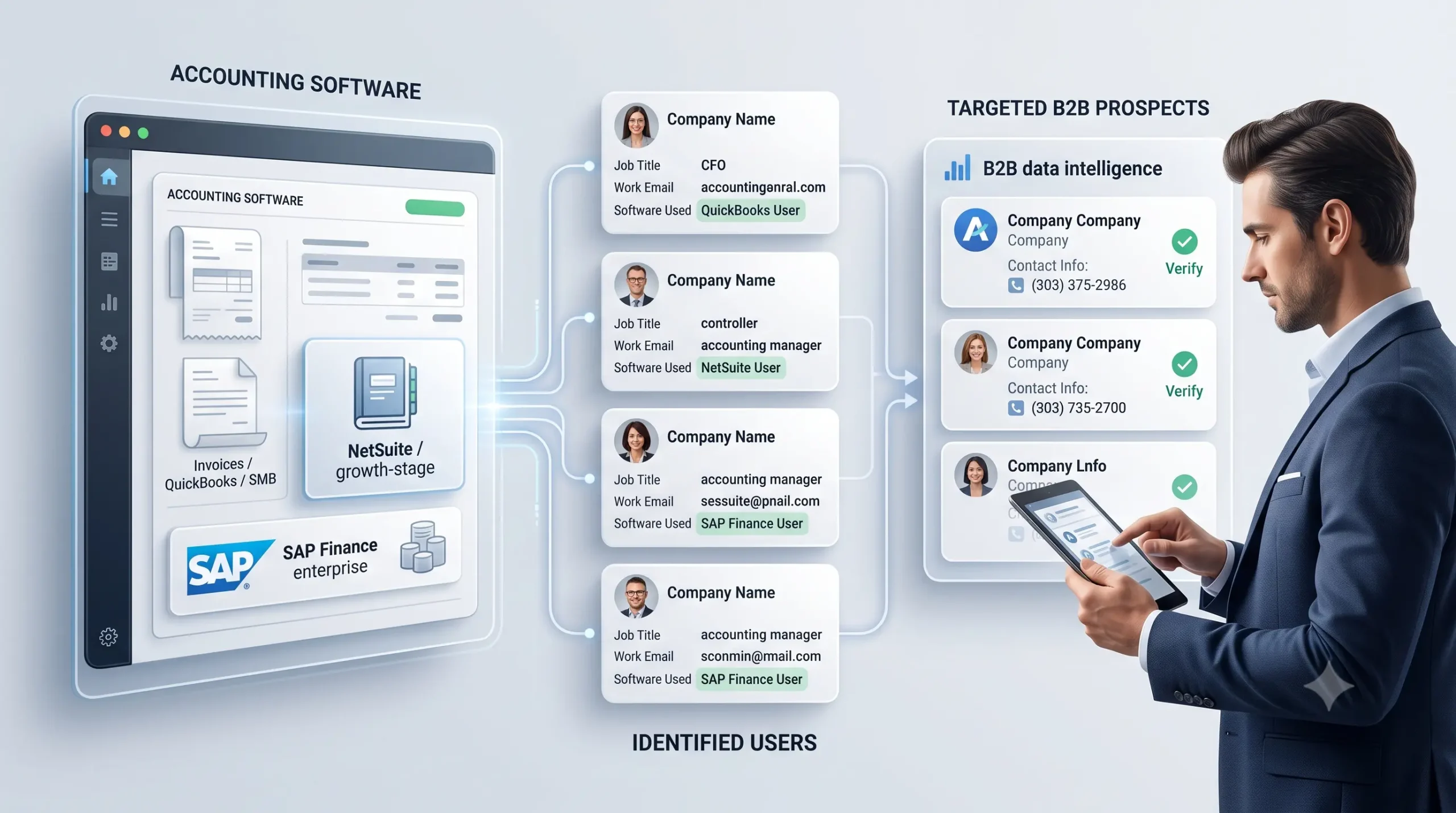
Purchased business lists provide essential foundational intelligence:
- Universe of companies in your target market
- Contact information (names, titles, phone numbers)
- Firmographic data (size, industry, location)
- Baseline qualification criteria
But purchased data, no matter how accurate, has inherent limitations:
It’s Snapshot Data: Lists capture a moment in time. By the time you receive them, changes have already occurred new hires, budget allocations, project kickoffs, pain points emerging.
It’s Generic: Every list vendor sells to your competitors too. You’re calling the same prospects everyone else is calling, at the same time, with similar pitches.
It Lacks Context: Purchased lists tell you who to call but not when to call, why they’d be interested, or what you should say to stand out.
It’s Reactive, Not Proactive: Lists identify existing companies but miss emerging opportunities new businesses forming, companies entering your market, trigger events creating urgency.
It Can’t Capture Intent: No list vendor knows which specific prospects are actively researching solutions right now, which are satisfied with incumbents, and which face internal politics preventing change.
This doesn’t mean purchased lists are bad it means they’re incomplete. The smartest sales teams recognize this and systematically fill the gaps.
The Hybrid Approach: Purchased Foundation + Proprietary Intelligence
High-performing sales teams follow this proven framework:
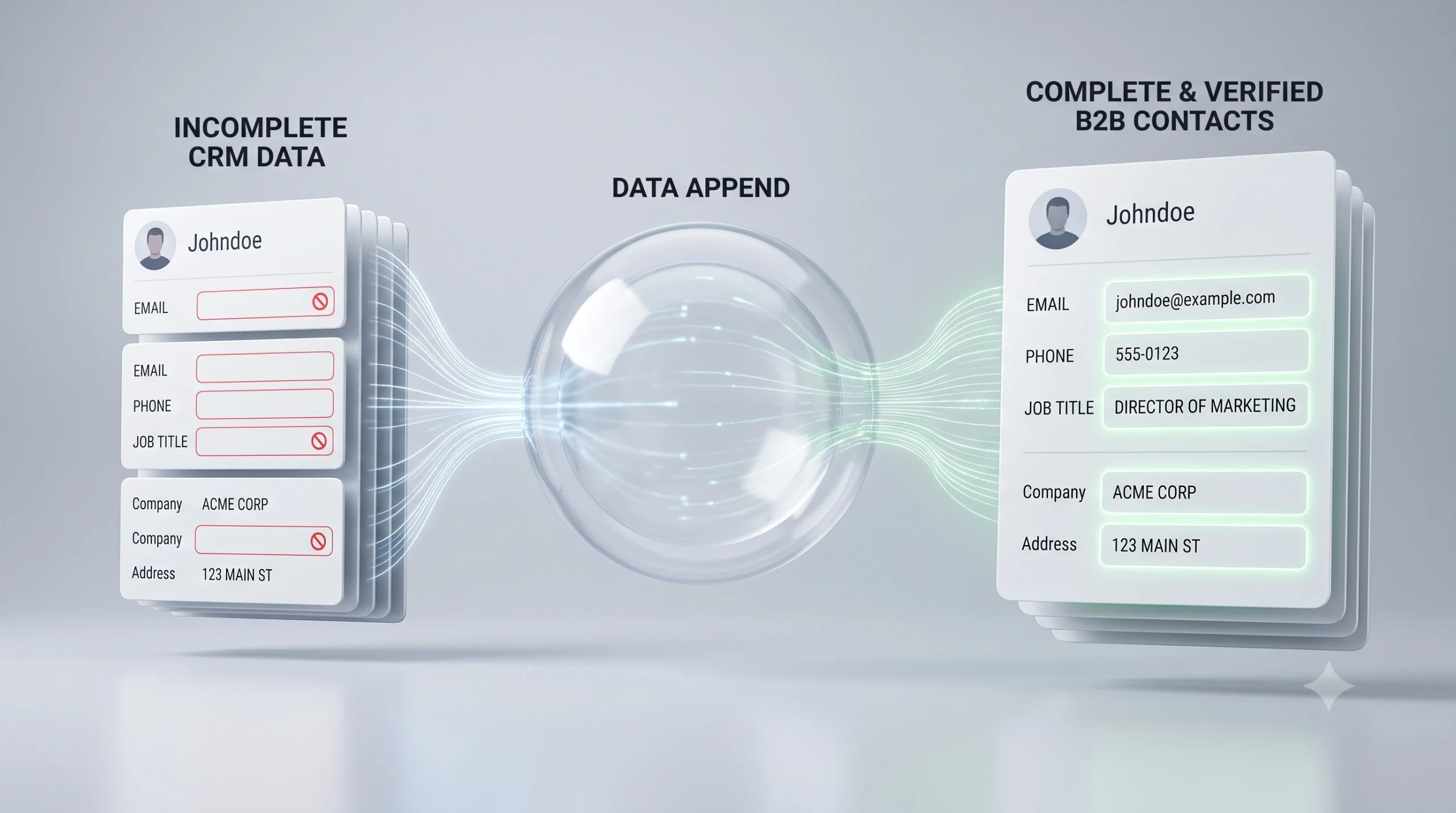
Step 1: Start with quality purchased data establishing your total addressable market and providing baseline contact information.
Step 2: Enrich that foundation with proprietary intelligence revealing buying readiness, competitive positioning, relationship pathways, and timing signals.
Step 3: Prioritize ruthlessly based on combined data, focusing effort where probability and potential both run high.
Step 4: Continuously update both purchased and proprietary data as market conditions and company situations change.
Let’s break down exactly how elite teams execute each component.
Building Block #1: Start with the Right Purchased List Foundation
Ironically, building effective hybrid lists requires starting with better purchased data, not eliminating it:
Choose Quality Over Quantity
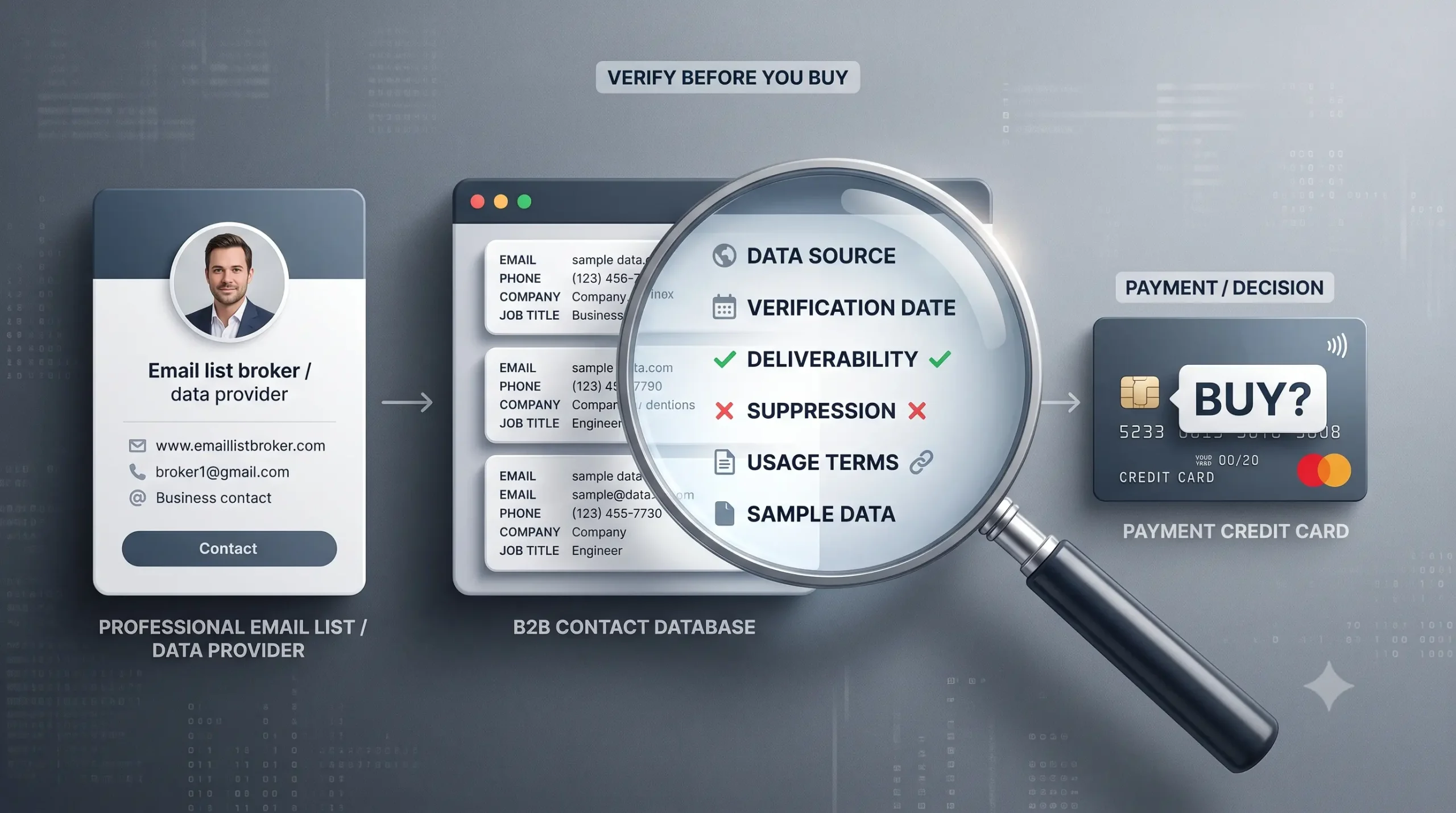
Elite teams invest in accurate, recently verified business telemarketing lists rather than cheap, massive databases.
What quality looks like:
- Monthly updates and verification
- 95%+ phone number connectivity
- Direct dial numbers, not just switchboards
- Named decision-makers with verified titles
- Recent firmographic data (within 6-12 months)
Why it matters: Starting with garbage data means your enrichment efforts polish junk. Start with verified contacts so your internal intelligence layers actually reach real people.
Target Precisely from Day One
Rather than buying broad lists, elite teams purchase tightly targeted segments:
Industry specificity: Not “manufacturing” but “automotive tier 2 suppliers with 100-500 employees”
Geographic concentration: Not “nationwide” but “within 200 miles of our service centers”
Technology indicators: Not “all companies” but “businesses using [specific CRM/ERP system]”
Life stage signals: Not “established businesses” but “companies 3-10 years old showing growth”
The narrower your purchased list, the more relevant your baseline contacts and the more efficiently your enrichment efforts apply.
Work with Strategic Brokers, Not Transactional Vendors
Elite teams don’t just buy lists they partner with experienced list brokers who:
- Understand their industry and ideal customer profile
- Recommend optimal targeting rather than just fulfilling orders
- Provide insights on list performance and optimization
- Help design testing strategies for different segments
- Source hard-to-find specialty data for niche markets
This strategic relationship ensures the purchased foundation is optimized before internal enrichment begins.
Building Block #2: Layer Publicly Available Intelligence
The best sales teams systematically mine public information most competitors ignore:
Company News and Press Releases
What to track:
- Funding announcements (Series A, B, C rounds)
- Expansion plans (new facilities, locations, markets)
- Executive hires (new C-suite, department heads)
- Partnership announcements (new client wins, strategic alliances)
- Product launches (new offerings creating new needs)
- Awards and recognition (growth indicators)
How to collect:
- Google News alerts for target company names
- Company website news sections
- LinkedIn company page updates
- Industry publication coverage
- Local business journal monitoring
Why it works: These events create buying windows. New funding means budget. Expansions create needs. New executives review vendors. Recent wins suggest growth challenges.
Application: A manufacturing equipment supplier monitoring expansion announcements from target manufacturing companies reached out within 30 days of announcements. Conversion rates hit 18.4% because timing aligned with equipment purchase decisions.
Building Permits and Public Filings
What to track:
- Commercial construction permits
- Renovation and expansion permits
- Equipment installation permits
- Business license renewals and changes
- Environmental permits (indicating process changes)
Where to find it:
- Local building department websites
- County clerk databases
- State licensing boards
- EPA and OSHA public records
Why it works: Permits signal investment budgets, future needs, and specific timelines. Calling at permit filing beats calling after projects complete and budgets are spent.
Application: A commercial HVAC company tracked building permits for warehouse expansions. They called within 60 days of filing before contractors locked in and won 14.7% of opportunities versus 2.3% from cold outreach.
Job Postings and Hiring Patterns
What to track:
- New positions being hired (indicates growth or pain points)
- Volume of openings (aggressive hiring signals scaling)
- Specific role types (hiring sales team suggests growth plans)
- Technology skills mentioned (reveals current systems and needs)
- Timeline and urgency language
Where to find it:
- LinkedIn job listings
- Indeed, Glassdoor, ZipRecruiter
- Company career pages
- Industry-specific job boards
Why it works: Job postings reveal growth, priorities, pain points, and technology gaps. A company hiring three new sales reps likely needs CRM, training, and lead generation support.
Application: An HR tech company monitored small businesses posting their first HR manager role a signal they’re professionalizing operations. Conversion rates exceeded 22% because companies were actively recognizing they needed HR systems.
Regulatory Filings and Compliance Records
What to track:
- Failed inspections (OSHA, FDA, EPA)
- Warning letters and citations
- Recall announcements
- Compliance violations
- Regulatory changes affecting industry
Where to find it:
- OSHA inspection database
- FDA warning letter archive
- EPA violation records
- State regulatory agency websites
- Recall.gov
Why it works: Companies facing regulatory pressure have urgent need for solutions and budget to avoid penalties or closures.
Application: A quality management software vendor monitored FDA warning letters. They contacted cited food manufacturers offering solutions specific to violations. Conversion rates reached 27.3% because urgency was extreme and need was documented.
Technology Stack and Digital Footprint
What to track:
- Current website technology
- Software and platforms used
- Marketing automation tools
- E-commerce platforms
- CRM systems
Where to find it:
- BuiltWith technology lookups
- Datanyze website profiling
- Job postings mentioning specific tools
- Integration partner directories
- Company careers pages mentioning systems
Why it works: Technology stack reveals compatibility needs, replacement opportunities, and sophistication level. Calling Salesforce users to pitch Salesforce integrations is vastly more relevant than generic pitches.
Application: A data analytics company identified prospects using specific CRM platforms then pitched pre-built integrations. Conversion rates jumped from 3.1% to 11.8% because technical compatibility was proven upfront.
Building Block #3: Leverage First-Party Intent and Engagement Data
Elite teams track behavioral signals showing active interest:
Website Visitor Identification
What to track:
- Which companies visit your website
- Which pages they view (product pages, pricing, case studies)
- How frequently they return
- How long they spend engaging
- What content they download
Tools to use:
- Website visitor identification platforms (Clearbit, LeadFeeder, Albacross)
- Google Analytics company-level data
- Marketing automation visitor tracking
- CRM integration for known contacts
Why it works: Companies researching your website demonstrate active interest and awareness. They’re self-qualifying while you watch.
Application: A B2B software company prioritized companies that visited their site 3+ times and viewed pricing pages. These “warm” prospects converted at 31.2% versus 2.7% for cold outreach.
Content Engagement Tracking
What to track:
- Webinar registrations and attendance
- White paper downloads
- Case study views
- Email opens and clicks
- Video views and completion rates
How to collect:
- Marketing automation platforms
- Email marketing systems
- Webinar platforms
- Content management systems with tracking
Why it works: Content engagement reveals specific interests, problem awareness, and buying stage. Someone downloading “CFO’s Guide to Selecting [Your Category]” is further along than someone who viewed your homepage once.
Application: A professional services firm tracked which companies downloaded their industry-specific guides. Follow-up calls referenced the guide and addressed specific challenges mentioned. Conversion rates reached 24.6%.
Sales Inquiry and Inbound Lead Data
What to track:
- Demo requests (even if they don’t schedule)
- Contact form submissions
- Chat conversations (even brief ones)
- Pricing inquiries
- Support questions from non-customers
Where to find it:
- CRM inquiry records
- Marketing automation lead scores
- Chat transcripts
- Support ticket systems
Why it works: Companies that previously expressed interest but didn’t buy remain warm prospects. Re-engaging with updated offers often converts stalled opportunities.
Application: A SaaS company re-contacted companies that requested demos 6-12 months prior but didn’t buy. Updated outreach with new features and pricing converted 16.3% versus 4.1% for never-engaged prospects.
Social Media Engagement
What to track:
- LinkedIn post engagement (likes, comments, shares)
- Following your company page
- Engaging with thought leadership content
- Joining LinkedIn groups you moderate
- Twitter mentions or interactions
Tools to use:
- LinkedIn Sales Navigator engagement tracking
- Social media management platforms
- Manual monitoring of key accounts
Why it works: Social engagement indicates awareness and interest. Commenting on your LinkedIn post suggests they’re paying attention.
Application: Sales reps monitoring LinkedIn engagement identified prospects regularly interacting with their content. Personal outreach referencing specific posts they engaged with converted at 19.7%.
Building Block #4: Build Relationship and Referral Intelligence
Top teams systematically map relationships and leverage them:
Existing Customer Intelligence
What to capture:
- Customer satisfaction and success metrics
- Willingness to provide referrals
- Industry connections and networks
- Involvement in industry associations
- Personal networks of key contacts
How to collect:
- Regular customer success check-ins
- Quarterly business reviews
- Post-implementation surveys
- LinkedIn connection mapping
- Casual conversations about their industry
Why it works: Warm introductions from satisfied customers convert at 5-10x rates of cold outreach. Yet most companies fail to systematically capture and use this intelligence.
Application: A commercial insurance broker asked each client for three referrals during annual reviews. Referral-based prospects converted at 41.3% versus 3.8% for cold calling.
LinkedIn Relationship Mapping
What to map:
- First-degree connections to target accounts
- Second-degree connections (friends of friends)
- Shared groups and associations
- Mutual employers (previous companies)
- Educational institution overlap
Tools to use:
- LinkedIn Sales Navigator relationship mapping
- Manual review of connections
- TeamLink for team-wide connection visibility
Why it works: Asking a mutual connection for an introduction is infinitely more effective than cold calling. Most companies have dozens of these pathways but never identify them.
Application: Sales reps reviewing LinkedIn before calls identified when colleagues had connections. Introduction requests converted these cold calls to warm intros, improving conversation rates from 18% to 67%.
Industry Association and Event Attendance
What to track:
- Trade show booth visitors
- Conference attendees in your sessions
- Industry association members
- Online community participants
- Professional certification holders
How to collect:
- Badge scanning at trade shows
- Conference registration lists (when available)
- Association membership directories
- Online community membership
- LinkedIn group participation
Why it works: People attending industry events are engaged professionals, often in buying roles or influencer positions. Shared event attendance provides conversation starters.
Application: An equipment manufacturer tracked which prospects visited their trade show booth. Post-show outreach mentioned specific booth conversations and converted at 28.4%.
Building Block #5: Capture Competitive Intelligence
Smart teams identify prospects using competitor solutions and time outreach strategically:
Competitor Customer Identification
What to identify:
- Companies using competitive solutions
- Contract expiration timelines
- Satisfaction levels with current providers
- Feature gaps and pain points
- Pricing dissatisfaction
How to collect:
- Customer review sites (G2, Capterra, TrustRadius)
- Job postings mentioning competitor products
- LinkedIn profiles mentioning competitor experience
- Case studies and testimonials on competitor sites
- Industry forums and discussion groups
Why it works: Competitor customers already understand the category and have budgets allocated. Timing outreach around contract renewals or dissatisfaction creates displacement opportunities.
Application: A software company monitored competitor review sites for negative reviews indicating dissatisfaction. Outreach offering free switching assistance converted 15.7% of frustrated users.
Trigger Event Monitoring for Incumbent Displacement
What to track:
- Contract expiration indicators
- New executive hires (review incumbents)
- Acquisitions and mergers (system consolidation)
- Rapid growth (outgrowing current solutions)
- Competitor service disruptions or issues
How to collect:
- LinkedIn job changes
- M&A announcement tracking
- Growth indicators (hiring, locations)
- Industry news monitoring
- Customer community complaints
Why it works: Most companies don’t switch vendors randomly they switch during specific trigger events creating dissatisfaction or forcing changes.
Application: A business services provider tracked acquisitions among target business lists. Newly acquired companies often faced vendor consolidation decisions. Outreach during these transitions converted at 19.8%.
Building Block #6: Implement Continuous Data Enrichment Processes
Elite teams don’t build lists once they continuously update them:
CRM Enrichment Workflows
What to automate:
- Contact verification and updating
- Company firmographic refreshes
- Social profile linking
- Email validation and correction
- Phone number verification
Tools to use:
- Automated enrichment platforms (Clearbit, ZoomInfo, Lusha)
- CRM native enrichment features
- Scheduled batch updates
- Trigger-based enrichment on new records
Why it matters: Manual enrichment doesn’t scale. Automated processes ensure every record stays current without rep intervention.
Regular List Segmentation Updates
What to reassess:
- Prioritization tiers (hot, warm, cold)
- Engagement scoring
- Buying stage classification
- Territory assignments
- Account ownership
Frequency: Monthly minimum for active lists, quarterly for nurture segments.
Why it matters: Yesterday’s cold prospect becomes today’s hot lead through behavioral changes. Regular re-segmentation ensures effort aligns with opportunity.
Dead Record Removal and Suppression
What to remove:
- Opted-out contacts
- Disconnected phone numbers
- Bounced email addresses
- Companies that closed
- Unresponsive after X attempts
Why it matters: Dead records waste time and hurt deliverability scores. Clean lists perform better than larger, dirty lists.
Building Block #7: Prioritize Based on Combined Scoring
With purchased data and proprietary intelligence combined, elite teams prioritize ruthlessly:
Multi-Factor Scoring Models
Firmographic factors (from purchased data):
- Company size match (30% weight)
- Industry alignment (25% weight)
- Geographic fit (15% weight)
Behavioral factors (from internal intelligence):
- Website engagement (10% weight)
- Content downloads (5% weight)
- Event attendance (5% weight)
- Social media engagement (5% weight)
Situational factors:
- Trigger events present (15% weight)
- Competitive displacement opportunity (10% weight)
- Relationship pathway available (10% weight)
Total scoring: Contacts exceeding threshold scores get immediate outreach. Lower scores enter nurture sequences.
Tier-Based Calling Strategies
Tier 1 (Top 10% of list): Immediate personalized outreach, multi-touch campaigns, senior rep assignment.
Tier 2 (Next 30%): Systematic calling, nurture email sequences, regular follow-up.
Tier 3 (Middle 40%): Periodic check-ins, automated email nurture, quarterly re-scoring.
Tier 4 (Bottom 20%): Minimal effort, long-term nurture, remove if unresponsive after 12 months.
Why it works: Not all prospects deserve equal effort. Concentrating resources on highest-probability opportunities multiplies results.
Building Block #8: Combine Channels for Maximum Impact
Elite teams don’t just call they orchestrate multi-channel campaigns:
Coordinated Outreach Sequences
Week 1: Personalized direct mail with relevant case study
Week 2: Email referencing mailer, offering valuable resource
Week 3: LinkedIn connection request with personalized note
Week 4: First phone call mentioning previous touchpoints
Week 5: Follow-up email with industry insights
Week 6: Second phone attempt with refined message
Ongoing: Nurture sequence for non-responders
Why it works: Multiple touchpoints across channels increase visibility and credibility. By the time you call, prospects already recognize your name.
Real-World Example: Putting It All Together
Company: B2B SaaS provider targeting manufacturing companies
Purchased List Foundation:
- 5,000 manufacturers (50-250 employees)
- Decision-maker contacts verified within 90 days
- Direct dial phone numbers
- Cost: $2,000
Internal Intelligence Layers:
Public Data Mining:
- Identified 347 with facility expansion permits (past 12 months)
- Found 892 recently hiring operations or IT staff
- Tracked 127 mentioning lean manufacturing initiatives
First-Party Intent:
- 89 visited website 2+ times
- 43 downloaded industry white paper
- 21 attended webinar
Relationship Mapping:
- 156 had LinkedIn connections to sales team
- 67 attended same trade show
- 34 were customer referrals
Competitive Intelligence:
- 203 using competitor legacy systems
- 78 posted jobs mentioning competitor software
- 45 left negative reviews of competitors
Scoring and Prioritization:
Tier 1 (163 companies): Multiple signals + trigger events Approach: Personalized multi-channel, senior rep assigned Results: 34% response rate, 18.4% conversion rate
Tier 2 (847 companies): Some signals, good fit Approach: Systematic calling, email nurture Results: 12% response rate, 6.2% conversion rate
Tier 3 (3,127 companies): Basic fit, minimal signals Approach: Periodic outreach, long-term nurture Results: 3.1% response rate, 1.4% conversion rate
Tier 4 (863 companies): Poor fit or no engagement Approach: Minimal effort, remove if unresponsive Results: <1% response rate
Overall Campaign Results:
- Overall response rate: 8.7% (vs. 2.1% industry average)
- Conversion rate: 4.9% (vs. 0.9% industry average)
- Cost per acquisition: $1,247 (vs. $3,800 previous)
- Sales cycle: 68 days (vs. 127 days previous)
Key insight: The purchased list provided the universe. Internal intelligence revealed who to prioritize and when to reach out. Combined approach delivered 4x industry average results.
Working with List Brokers as Strategic Partners
Here’s the crucial understanding: the hybrid approach doesn’t replace list brokers it makes them more valuable.
Elite teams work with experienced brokers who:
Provide optimized starting data: Clean, verified, precisely targeted foundation lists
Understand enrichment strategies: Recommend list characteristics that layer well with internal intelligence
Offer ongoing optimization: Analyze results and refine targeting based on performance
Source specialty data: Access hard-to-find segments matching internal scoring models
Enable testing: Structure tests comparing different targeting approaches
Coordinate multi-channel data: Provide multi-channel lists enabling coordinated outreach
The broker relationship evolves from “list vendor” to “strategic data partner” supporting the entire hybrid approach.
Common Mistakes Teams Make with Hybrid Lists
Avoid these pitfalls:
Mistake 1: Abandoning Purchased Data Entirely
Building everything internally takes enormous time and still misses market coverage. Purchased data provides foundation and scale.
Mistake 2: Over-Complicating Enrichment
Don’t let perfect be the enemy of good. Start with 2-3 high-value enrichment sources, prove value, then expand.
Mistake 3: Failing to Prioritize
Enriching data but treating all prospects equally wastes the insight. Scoring and tiering must follow enrichment.
Mistake 4: Static Lists
Build enrichment and updating into ongoing processes, not one-time projects. Lists decay daily.
Mistake 5: No Measurement Framework
Track performance by tier, data source, and enrichment type to quantify ROI and optimize continuously.
Final Thoughts: The Compound Effect of Hybrid Lists
Here’s the reality: your competitors are calling from purchased lists. They’re reaching the same prospects you are, with similar timing, delivering similar pitches.
But they’re doing it blind no context, no timing intelligence, no relationship pathways, no behavioral signals revealing interest.
You have the same foundational data they do. The difference is what you layer on top.
When you combine quality purchased business lists with systematic internal intelligence public data, behavioral signals, relationship mapping, competitive insights you transform cold calling into informed, timely outreach to prospects demonstrating buying readiness.
You call fewer contacts but have better conversations. You waste less time on dead ends and invest more time nurturing hot opportunities. You convert at multiples of industry averages because you’re reaching the right people at the right time with relevant messages.
This isn’t about choosing between purchased data and homegrown intelligence. It’s about strategically combining both for compound advantages neither delivers alone.
Stop relying on purchased data alone. Stop trying to build everything internally.
Start with quality business telemarketing lists as your foundation. Layer on proprietary intelligence revealing buying readiness. Prioritize ruthlessly based on combined scoring. Execute with multi-channel coordination.
That’s how high-performing teams consistently crush quota while competitors wonder what they’re doing differently.
Ready to build hybrid calling lists that combine quality purchased data with proprietary intelligence? Work with experienced list brokers who provide the verified business list foundation and strategic guidance to help your sales team achieve industry-leading conversion rates.