Choosing the right christian mailing list determines whether your fundraising campaign generates enough donations to justify costs or your community outreach fills seats at events. Get the targeting right and you connect with believers whose values align perfectly with your mission. Choose poorly and you waste budget mailing to Christians who have no interest in your specific cause.
The stakes are significant for churches and ministries operating on limited budgets. A well-targeted christian mailing list delivering 3 to 5 percent response rates can fund entire ministry initiatives. A poorly selected list generating under 1 percent response leaves organizations struggling to cover campaign costs.
Understanding how to evaluate list options, select appropriate targeting criteria, and match lists to specific campaign goals separates successful Christian outreach from disappointing results.
Define Your Campaign Goals Before Evaluating Lists
The most critical step happens before you even contact list providers. You need absolute clarity about what you’re trying to accomplish.
Fundraising campaigns require different targeting than community outreach. If you’re raising money for missions work, you need donor lists identifying Christians with proven giving histories. If you’re recruiting volunteers, you need Christians who’ve demonstrated servant leadership rather than just financial capacity.
Campaign objectives drive every list decision. Are you acquiring new donors? Building event attendance? Recruiting volunteers? Each goal requires different list characteristics.
Target audience definition becomes granular for Christian lists. Can you describe your ideal prospect beyond just “Christian”? What denominational traditions align with your message? What age ranges characterize your supporters? What behaviors demonstrate the engagement level you’re seeking?
Budget realities constrain choices. Know how much you can spend per thousand names, what your all-in campaign costs run per piece, and what cost per response you can afford while achieving campaign goals.
Understand Different Christian List Types
Not all Christian mailing lists serve the same purposes. Matching list types to campaign goals optimizes results.
Compiled consumer lists with Christian overlays identify individuals through various data sources. These cost $80 to $200 per thousand and work for broad awareness campaigns or community outreach where engagement history matters less than denominational alignment.
Response lists contain Christians who’ve taken specific actions proving active faith engagement. Donors to ministries, subscribers to publications, or purchasers of Christian products all demonstrate behavior predicting future response. These cost $150 to $300 per thousand but deliver 2 to 3 times higher response rates.
Denominational lists target specific Christian traditions. If your message resonates particularly with evangelicals, mainline Protestants, or Catholics, denominational filtering improves relevance and response.
Geographic lists combined with Christian filters work for local churches and community outreach. A church filling Sunday services needs Christians within reasonable driving distance. Geography matters tremendously for community engagement.
Lifestyle and interest lists identify Christians passionate about specific causes. Pro-life Christians, homeschooling families, or Christians interested in prison outreach represent targetable segments when interests align with your campaign.
Key Selection Criteria for Christian Fundraising Lists
When choosing lists specifically for fundraising, certain criteria matter more than others.
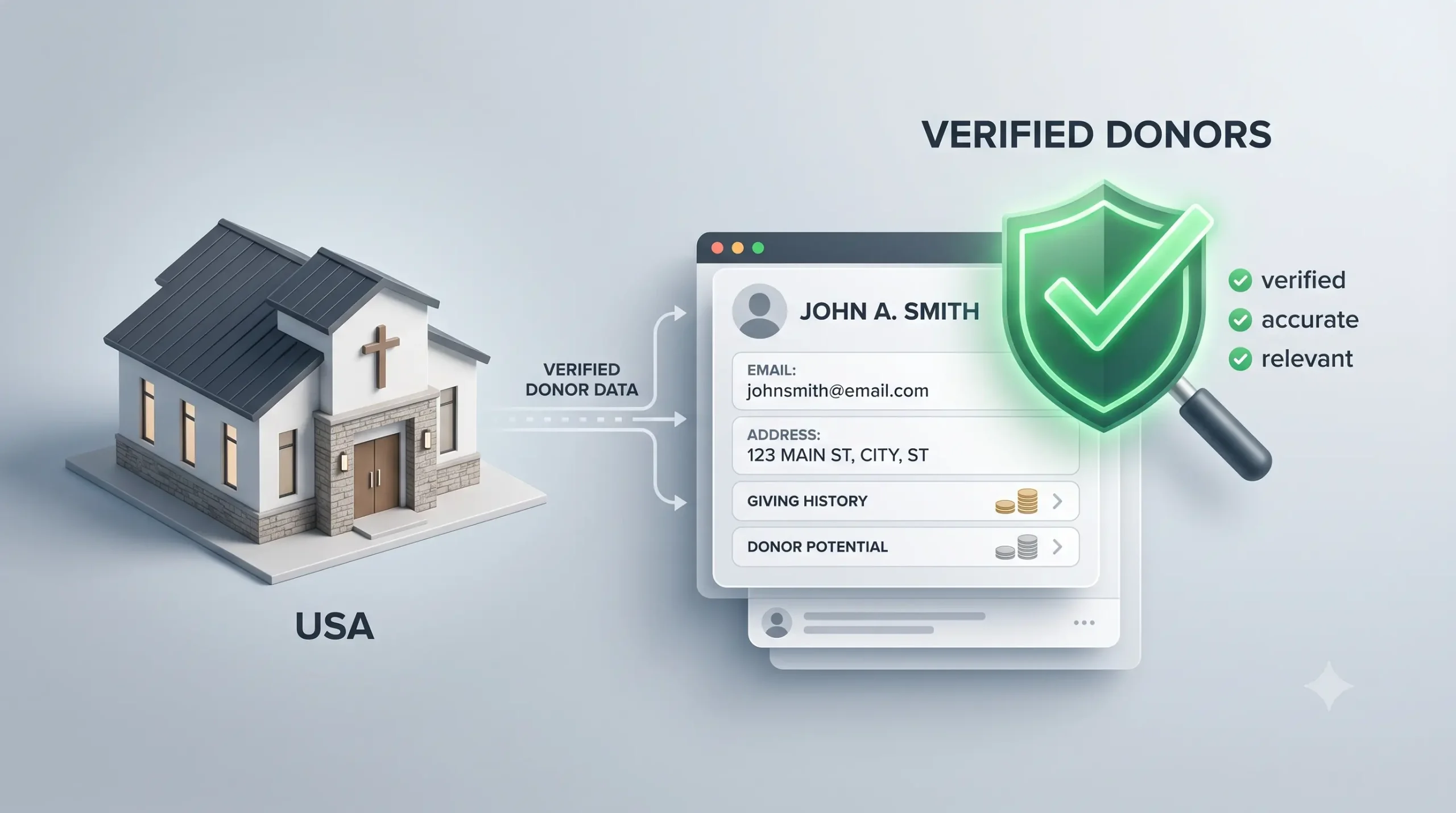
Proven giving history to similar causes represents the single most important criterion. A Christian who’s donated to international missions is exponentially more likely to support your missions work. Recency, frequency, and monetary value of giving all predict future donations.
Denominational alignment affects giving patterns. Evangelical Christians tend to give higher percentages of income to ministry than mainline Protestants. Matching your ministry’s theological tradition to donor denomination improves response.
Income indicators ensure you’re reaching Christians with capacity to give. While all economic levels include generous Christians, high-dollar campaigns targeting major gifts need affluent segments.
Age ranges influence giving capacity and causes supported. Retirees give to different causes than young families. Older Christians often have more disposable income for charitable giving.
Essential Selection Criteria for Community Outreach Lists
Community outreach campaigns prioritize different criteria than fundraising.
Geographic proximity matters critically for events, volunteer opportunities, and church attendance. People won’t drive across the state to volunteer weekly. Radius targeting around your location ensures you reach Christians who can actually participate.
Denominational matching improves attendance at church events. A Baptist church promoting Vacation Bible School targets Baptist families who share theological perspectives.
Demographic fit aligns lists with program characteristics. A seniors’ ministry targets Christians ages 65-plus. Youth programs need families with teenagers. Matching list demographics to program design increases relevant response.
Interest and lifestyle indicators help target engaged Christians likely to participate. Christians interested in missions respond to mission trip opportunities. Believers passionate about serving respond to volunteer recruitment.
Evaluating List Quality and Data Accuracy
A perfectly targeted christian mailing list delivers poor results if the data is old or inaccurate.
Update frequency determines deliverability and accuracy. Quality providers update lists monthly with NCOA processing. Ask when lists were last updated and what percentage of records are verified within 90 days.
Deliverability guarantees demonstrate provider confidence. Reputable sources guarantee 90 to 95 percent deliverability and replace undeliverable addresses.
Source transparency reveals compilation methods. Quality providers clearly explain where data originates. Self-reported survey data tends to be more accurate than modeled Christian identification.
Denominational accuracy varies significantly across providers. Some lists offer verified denominational membership through church records. Others infer denomination through modeling.
Budget Considerations and Pricing Models
Understanding true costs helps allocate budget effectively across all campaign components.
Base pricing for Christian lists ranges from $80 to $300 per thousand depending on list type and selection criteria. Compiled lists cost less. Response lists with proven giving histories cost more. Each additional selection criterion may add $5 to $20 per thousand to base pricing.
Minimum order quantities affect testing budgets. Most providers require 3,000 to 5,000 name minimums. Some specialty lists require higher minimums due to limited availability.
One-time versus multi-use licensing impacts costs. Standard rentals allow one-time use. If you want to mail the same names multiple times, negotiate multi-use rights upfront. Multi-use discounts typically range from 10 to 20 percent per additional use.
All-in campaign costs matter more than just list rental prices. Calculate total cost per contact including creative, printing, and postage when comparing list options.
Testing budgets should be separate from rollout budgets. Plan to test 3,000 to 5,000 names per segment before scaling campaigns. This protects you from committing full budgets to underperforming lists.
Testing Strategies Before Full Deployment
Smart testing protects investment and identifies highest-performing Christian segments before committing large budgets.
Test quantities of 3,000 to 5,000 names per segment provide statistically valid results without excessive risk. Testing smaller quantities may not generate enough responses for confident decisions. Testing larger quantities wastes money on unproven lists.
Segment testing reveals performance differences across audience types. Test different denominational segments like evangelical versus mainline Protestant. Test age ranges like 35 to 54 versus 55 and older. Test proven donors versus general Christian audiences. Test different geographic markets to identify regional variations.
Tracking mechanisms enable accurate attribution of responses to specific lists. Use unique phone numbers, reply codes, or URLs for each test segment. This definitively shows which lists generated responses rather than guessing which drove results.
Response windows for Christian audiences should extend 30 to 45 days. Christians often pray about giving decisions and take time for thoughtful consideration. Measuring results too quickly underestimates true campaign response.
Cost per acquisition calculations determine ROI by segment. The list with highest response rate might not deliver best ROI if costs per acquisition exceed donor lifetime value. Calculate cost per donor for each segment before scaling to identify true winners.
Rollout strategies should scale proven winners while dropping poor performers. Once testing identifies top-performing segments, commit larger budgets to those proven audiences while eliminating underperformers from future campaigns.
Questions to Ask List Providers
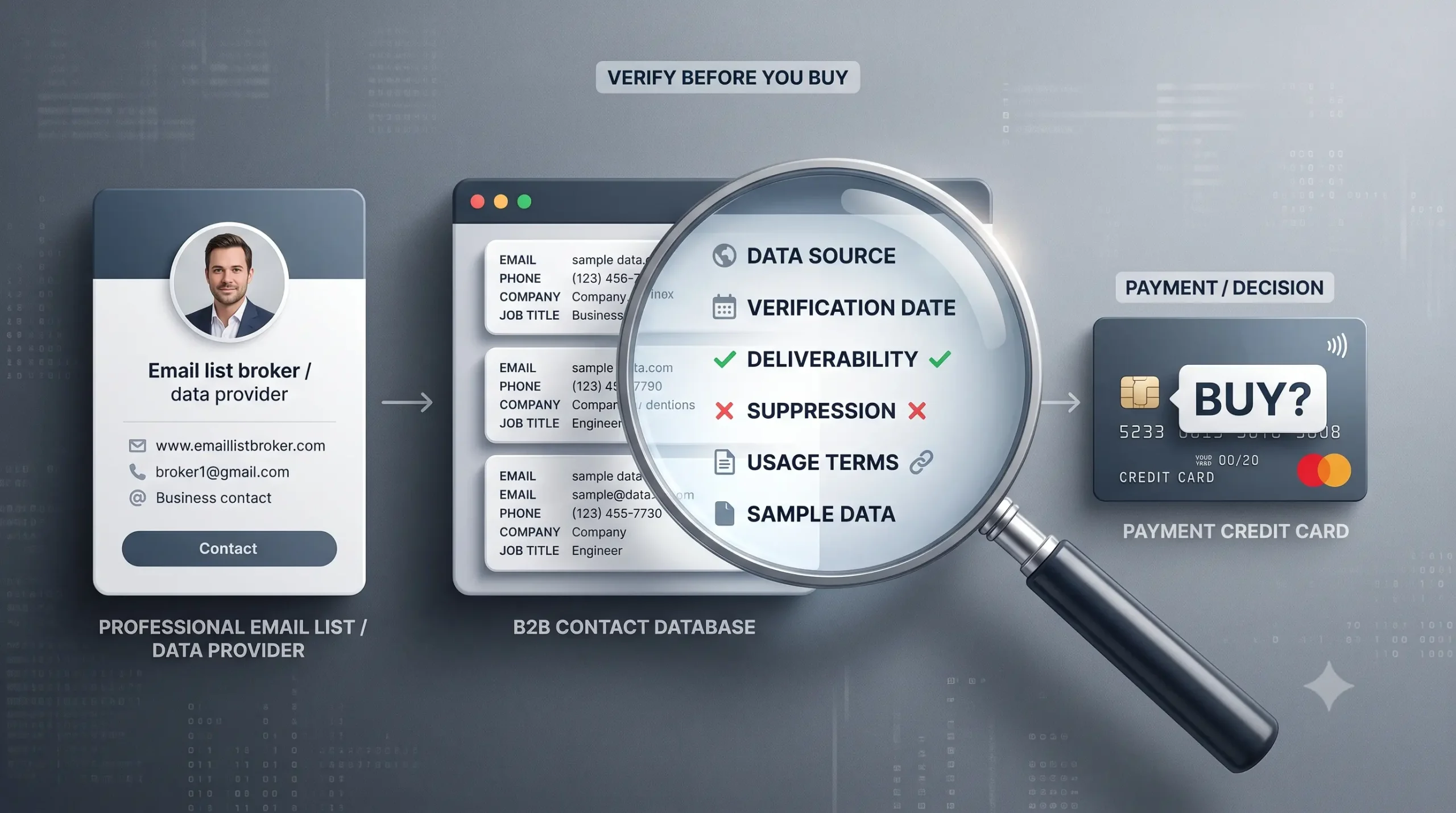
Thorough vetting prevents costly mistakes.
How recently was this list updated and what’s your update frequency? Look for monthly updates.
What’s your deliverability guarantee and replacement policy? Expect 90 to 95 percent guarantees.
Where does your Christian data originate and how do you verify it? Survey responses and church membership records are positive indicators.
What denominational breakdowns are available? Understanding which denominations are represented helps evaluate fit.
Can you suppress our house file and previous mailings? You shouldn’t pay to mail existing donors.
Can you provide preliminary counts before we commit? Reputable providers offer counts showing how many names match your criteria.
Multi-Channel Integration for Maximum Impact
The most effective campaigns combine multi-channel approaches with direct mail as foundation.
Email follow-up to opt-in email lists reinforces direct mail messages. Send email three to five days after mailings hit mailboxes.
Telemarketing to engaged prospects closes high-value donors. When Christians visit websites after receiving mailings, follow-up calls can secure larger commitments.
Social media retargeting extends reach. Email addresses from Christian lists can create custom Facebook audiences.
Working With List Brokers for Optimal Selection
Navigating dozens of Christian list options benefits tremendously from experienced list brokers who understand faith-based marketing.
Brokers access multiple Christian list sources including compiled data, ministry response files, and denominational records. They recommend optimal combinations based on campaign goals.
Targeting guidance helps refine selections. Rather than mailing all evangelical Christians in a region, brokers suggest age ranges, income levels, and behavioral indicators identifying most responsive prospects.
Compliance consulting ensures campaigns meet charitable solicitation laws and tax-exempt organization requirements.
Testing recommendations based on similar client campaigns save reinventing the wheel. Brokers know which Christian segments typically perform well for different ministry types.
Ongoing optimization refines targeting based on actual campaign results.
Choosing the right christian mailing list for fundraising and community outreach requires systematic evaluation of campaign goals, list types, selection criteria, data quality, and testing strategies.
Ready to choose the right Christian mailing list? Work with experienced list brokers who can guide you through consumer lists, specialty lists, and multi-channel campaigns.