Every B2B sales team targeting renewable energy companies faces the same frustration: they build a list of solar developers, wind farm operators, or clean energy consultants, launch their campaign, and get mediocre results.
Response rates hover around 2%. Conversion rates barely crack 1%. The sales team burns through hundreds of calls reaching companies that aren’t buying, don’t have budget, or already locked into multi-year contracts with competitors.
Meanwhile, a handful of renewable energy companies convert immediately. They respond enthusiastically. They have budget. They’re actively seeking solutions. The sales cycle is weeks instead of months.
What separates these high-potential prospects from the rest? It’s not luck. It’s not better timing. It’s data signals.
High-potential renewable energy companies demonstrate specific, identifiable characteristics that predict buying readiness. They’re experiencing growth that creates operational pain. They just secured funding and have capital to invest. They’re hiring aggressively and need infrastructure to support expansion. They’re adopting technologies that integrate with your solution.
These signals exist in public records, business databases, regulatory filings, and digital footprints. Most companies ignore them and market to entire lists the same way. Sophisticated teams identify these signals, build targeted segments of high-potential prospects, and achieve conversion rates that leave competitors wondering how they do it.
Let’s reveal exactly what data points identify high-potential renewable energy companies and how to access this intelligence for B2B targeting.
Why “High-Potential” Matters More Than “Qualified”
Traditional list targeting focuses on qualification: industry match, company size, geographic location, job titles. These criteria answer “could they buy?”
High-potential targeting goes deeper, asking “are they likely to buy soon?”
Standard Qualification:
- Industry: Solar installation companies
- Size: 20-100 employees
- Location: California, Arizona, Texas
- Title: Operations Manager
This describes thousands of companies. Some are thriving and investing. Others are struggling and cutting costs. Some just signed three-year software contracts. Others are frustrated with current solutions.
High-Potential Segmentation adds:
- Secured Series B funding in past 12 months (capital available)
- Expanded from 30 to 75 employees in past year (scaling challenges)
- Opened second location recently (multi-site management needs)
- Hiring project managers actively (capacity growth)
- Using complementary technologies (integration opportunities)
Suddenly, you’re not targeting thousands of qualified companies you’re targeting dozens of high-potential prospects demonstrating buying signals.
Response rates jump from 2% to 12%. Conversion rates climb from 1% to 8%. Sales cycles compress. Win rates soar.
The difference? Data signals revealing readiness.
Data Signal #1: Recent Funding and Capital Availability
Why it matters: Companies that just raised capital have budget to invest, pressure to deploy funds strategically, and growth mandates requiring new systems and infrastructure.
What to Track
Venture Capital Funding:
- Series A, B, C rounds (amounts and dates)
- Investors involved (strategic vs. financial)
- Use of proceeds statements
- Board composition changes
Private Equity Investment:
- Growth equity rounds
- Majority vs. minority stakes
- Add-on acquisitions funded
- Operational improvement mandates
Debt Financing:
- Project finance for specific developments
- Equipment financing availability
- Working capital lines
- Green bonds or sustainability-linked loans
Grants and Incentives:
- Department of Energy grants
- State renewable energy incentives
- R&D funding programs
- Tax credit monetization
Where to Find It
Funding Databases:
- Crunchbase (venture funding)
- PitchBook (private equity)
- CapitalIQ (institutional investment)
- AngelList (angel and seed rounds)
Public Announcements:
- Company press releases
- Investor announcements
- Industry publication coverage
- SEC filings for public companies
Government Databases:
- DOE loan guarantee program
- State energy office grant recipients
- ARPA-E funding announcements
High-Potential Indicators
Strong signals:
- Funding within past 6-12 months (capital still available)
- Growth equity vs. survival capital
- Multiple funding rounds (proven traction)
- Strategic investors (bring connections and mandates)
- Stated use of proceeds matching your solution category
Timing sweet spot: 3-9 months post-funding. Initial chaos has settled. Deployment planning is active. Budget hasn’t been fully allocated.
Application Example
A project management software company targeting solar developers identified 47 companies that raised Series A or B funding in the past year. Rather than generic pitches, they emphasized scaling project capacity and managing multiple simultaneous installations challenges funded companies face.
Conversion rate: 14.9% versus 2.1% for non-funded companies.
Why? Funded solar developers desperately needed better project management as they scaled from 5 simultaneous projects to 25. They had budget. The pain was acute. Timing was perfect.
Data Signal #2: Rapid Employee Growth
Why it matters: Companies scaling headcount experience operational chaos, infrastructure gaps, and urgent needs for systems supporting larger teams.
What to Track
Headcount Growth Patterns:
- Absolute growth (50 to 150 employees in 18 months)
- Percentage growth (30%+ year-over-year)
- Hiring velocity (number of open positions)
- Department expansion (engineering, sales, operations)
Key Role Additions:
- First-time executive hires (VP Operations, CFO, CTO)
- Department head positions
- Specialist roles (indicates sophistication)
- Administrative and support staff (infrastructure building)
Geographic Expansion:
- Multiple office openings
- Regional team builds
- Remote workforce expansion
Where to Find It
LinkedIn Data:
- Employee count over time
- Active job postings
- Profile analysis of when people joined
- Rapid growth companies lists
Job Boards:
- Indeed, Glassdoor, ZipRecruiter
- Industry-specific boards
- Company career pages
- Hiring surge patterns
Business Databases:
- D&B employee count trends
- ZoomInfo growth indicators
- PitchBook headcount data
High-Potential Indicators
Strong signals:
- 50%+ headcount growth in 12 months
- Multiple simultaneous openings (5+ positions)
- Executive-level hires (professionalizing operations)
- Department creation (new functions being built)
- Geographic expansion hiring
Red flags to avoid:
- Rapid hiring followed by layoffs (instability)
- Very high turnover (culture or management issues)
- Only entry-level positions (cost-cutting, not growth)
Application Example
An HR software company targeting renewable energy businesses filtered for companies that grew from 25-75 employees to 75-200 employees in 18 months crossing the threshold where manual HR processes break down.
Conversion rate: 18.7% versus 3.4% for stable-headcount companies.
Why? Companies crossing 100 employees hit regulatory triggers (ACA reporting, EEO-1 filing, formalized benefits), experienced coordination chaos, and desperately needed professional HR systems. They had budget from growth and urgent pain.
Data Signal #3: Facility Expansions and Geographic Growth
Why it matters: Physical expansion signals capital investment, growth trajectory, and immediate needs for equipment, systems, and services supporting new locations.
What to Track
New Facilities:
- Manufacturing plants (solar panel, wind turbine, battery production)
- Operations centers and regional offices
- Service and maintenance hubs
- R&D and testing facilities
Facility Modifications:
- Major renovations and expansions
- Equipment installations
- Technology upgrades
- Capacity increases
Real Estate Transactions:
- Commercial property purchases
- Long-term leases (5+ years)
- Build-to-suit developments
Where to Find It
Public Records:
- Building permit databases
- Commercial real estate transactions
- Environmental permits
- Zoning applications
Business News:
- Local business journals
- Industry publications
- Company announcements
- Economic development commission press releases
Mapping and Imagery:
- Satellite imagery changes
- Google Maps business listing updates
- Construction project databases
High-Potential Indicators
Strong signals:
- Building permits filed (budget committed)
- Ground breaking announcements (project active)
- Equipment installation permits (operational timeline)
- Multi-location expansion plans (systematic growth)
Timing considerations: Contact 60-120 days after permit filing. Early enough for budget consideration, late enough that project is committed.
Application Example
A commercial electrical contractor tracked building permits for solar manufacturing facilities and battery storage installations. They reached out during construction planning phases offering specialized electrical services for renewable energy applications.
Conversion rate: 22.4% versus 4.3% for cold outreach.
Why? Facilities under construction had budgets, timelines, and desperate needs for specialized contractors. Reaching them before general contractors locked in all subcontractors created opportunities.
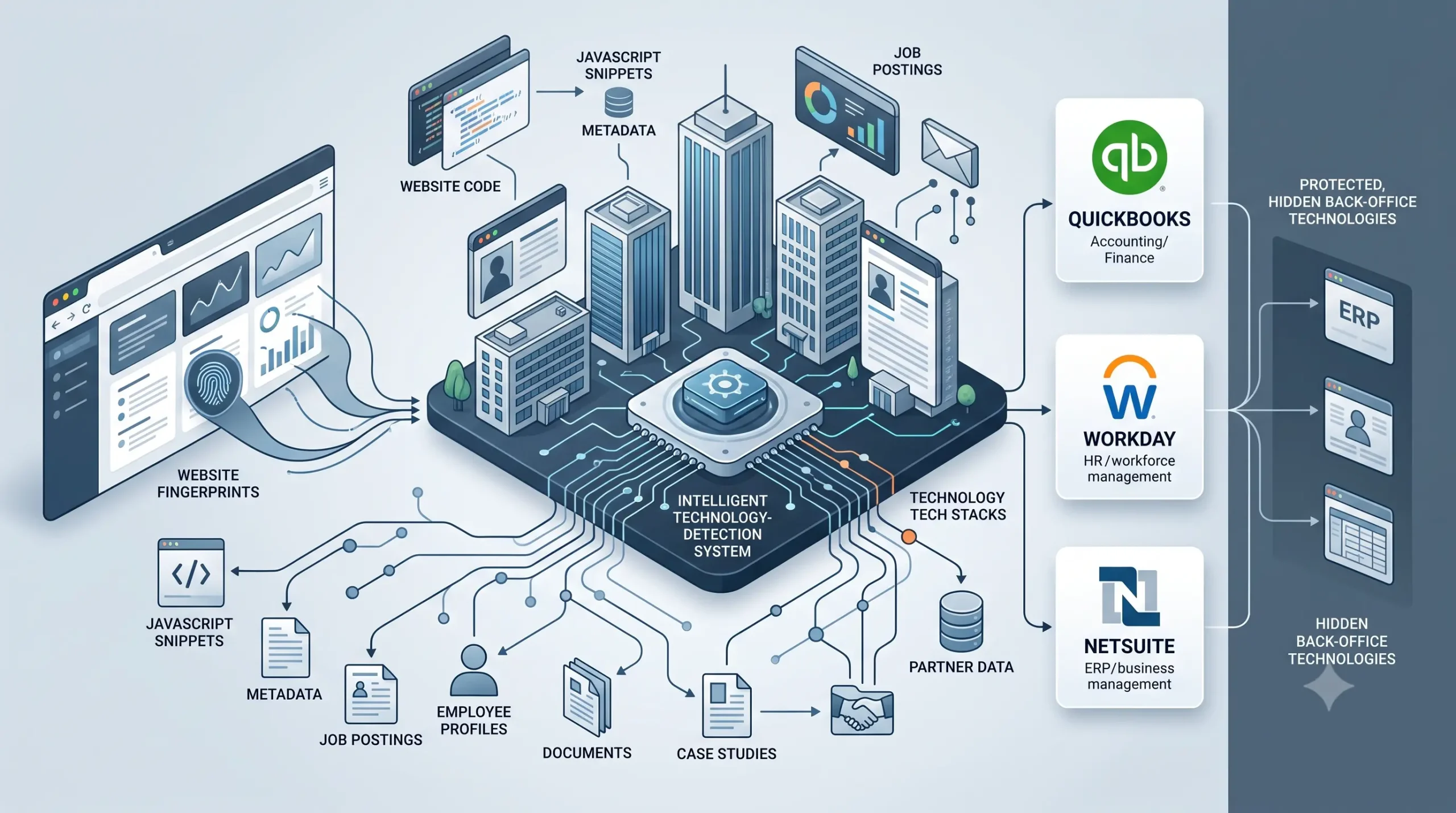
Data Signal #4: Technology Stack and System Adoption
Why it matters: Companies adopting specific technologies demonstrate sophistication, have integration needs, and show openness to modern solutions.
What to Track
Business Systems:
- ERP platforms (NetSuite, SAP, Microsoft Dynamics)
- CRM systems (Salesforce, HubSpot, Pipedrive)
- Project management tools (Procore, Monday.com, Asana)
- Financial systems and accounting software
Industry-Specific Tools:
- Solar design software (Aurora, Helioscope, PVsyst)
- Energy modeling platforms
- Asset performance management
- SCADA and monitoring systems
Infrastructure Indicators:
- Cloud adoption (AWS, Azure, Google Cloud)
- Marketing automation
- Advanced analytics platforms
- API integration capabilities
Where to Find It
Technographic Data:
- BuiltWith website technology detection
- Datanyze technology tracking
- ZoomInfo technographics
- G2 and Capterra user reviews
Job Postings:
- Required skills mentioning specific platforms
- System administrator positions
- Integration specialist roles
Digital Footprint:
- Website tracking codes
- Integration partner directories
- Technology vendor case studies
High-Potential Indicators
Strong signals:
- Recently adopted platforms (still building ecosystem)
- Enterprise-tier systems (budget and sophistication)
- Multiple modern tools (technology-forward culture)
- Integration requirements mentioned in job posts
Application opportunity: If you integrate with platforms they use, you eliminate a major objection and accelerate sales cycles.
Application Example
A data analytics company identified renewable energy developers using Salesforce CRM. They pitched pre-built Salesforce integrations delivering project pipeline analytics directly in the CRM environment.
Conversion rate: 16.3% versus 5.2% for technology-agnostic pitches.
Why? Integration with existing systems eliminated implementation friction, reduced IT resistance, and demonstrated immediate value within familiar workflows.
Data Signal #5: Regulatory Events and Compliance Triggers
Why it matters: Regulatory requirements, compliance deadlines, and policy changes create urgent needs with fixed timelines.
What to Track
Certification Milestones:
- First-time ISO certification pursuits
- Renewable energy certifications
- Industry-specific accreditations
- Quality management system implementations
Compliance Deadlines:
- New reporting requirements
- Safety standard implementations
- Environmental regulation compliance
- Grid interconnection standards
Regulatory Challenges:
- Failed inspections or audits
- Warning letters or citations
- Consent decrees requiring improvements
- Lawsuit settlements mandating changes
Where to Find It
Regulatory Databases:
- OSHA inspection records
- EPA compliance tracking
- State energy commission filings
- Grid operator interconnection queues
Certification Bodies:
- ISO registry searches
- Industry certification directories
- Accreditation announcements
Legal and News Sources:
- Court filings and settlements
- Regulatory agency announcements
- Industry publication coverage
High-Potential Indicators
Strong signals:
- Approaching compliance deadlines (3-6 months out)
- New certification pursuits (investment in quality)
- Regulatory pressure with timelines
- Settlement agreements requiring specific actions
Timing critical: Most regulatory compliance has hard deadlines. Too early and there’s no urgency. Too late and they’ve already selected solutions.
Application Example
A safety equipment supplier monitored OSHA citations to renewable energy construction companies. They reached out offering solutions addressing specific violations mentioned in citations.
Conversion rate: 31.2% versus 6.1% for general safety outreach.
Why? Companies facing OSHA citations had urgent needs, regulatory pressure, potential fines, and documented requirements for specific improvements. Timing and relevance were perfect.
Data Signal #6: Project Pipeline and Development Activity
Why it matters: Companies with active project pipelines need systems, services, and equipment supporting execution. Pipeline visibility predicts near-term spending.
What to Track
Interconnection Queues:
- Grid interconnection applications
- Project capacity and location
- Queue position and timing
- Transmission upgrade requirements
Permit Applications:
- Local planning approvals
- Environmental impact assessments
- Land use permits
- Construction permits
Power Purchase Agreements:
- Signed PPAs (revenue certainty)
- PPA announcements
- Utility procurement selections
- Corporate renewable energy agreements
Project Announcements:
- Press releases about new developments
- Community engagement meetings
- Investment announcements
- Partnership formations
Where to Find It
Grid Operator Databases:
- MISO, PJM, CAISO interconnection queues
- FERC submissions
- Transmission planning documents
Public Records:
- County planning departments
- Environmental review documents
- Public utility commission filings
Industry Sources:
- Trade publication project databases
- Developer announcements
- Utility RFP results
High-Potential Indicators
Strong signals:
- Multiple projects in active development
- Recent PPA signings (revenue secured)
- Advanced queue positions (near-term construction)
- Site control secured (committed projects)
Sweet spot timing: 6-18 months before construction start. Planning is active but vendor selection not yet complete.
Application Example
A construction equipment lessor tracked interconnection queue positions for utility-scale solar projects. They contacted developers 12 months before projected construction starts offering equipment leasing for site preparation.
Conversion rate: 19.8% versus 4.7% for developers without visible pipelines.
Why? Developers with projects approaching construction had certain equipment needs, timing visibility, and secured project financing making commitments possible.
Data Signal #7: Strategic Partnerships and Industry Relationships
Why it matters: New partnerships signal growth plans, technology adoption, market expansion, and potential needs for supporting infrastructure.
What to Track
Technology Partnerships:
- Equipment supplier agreements
- Software integration partnerships
- Joint development agreements
- Technology licensing deals
Market Access Partnerships:
- Distribution agreements
- Installation network expansions
- EPC contractor relationships
- Supply chain partnerships
Financial Partnerships:
- Bank lending relationships
- Investment partnerships
- Tax equity arrangements
- Insurance partnerships
Where to Find It
Public Announcements:
- Press releases
- Partnership announcements
- Integration partner directories
- Joint marketing materials
Events and Conferences:
- Speaking engagements together
- Co-exhibiting at trade shows
- Joint webinars
- Co-authored content
LinkedIn Activity:
- Partnership announcements
- Executive connections
- Company page posts
- Shared content
High-Potential Indicators
Strong signals:
- Multiple recent partnerships (aggressive expansion)
- Strategic vs. tactical relationships
- Technology platform partnerships (ecosystem building)
- Geographic expansion partnerships
Application Example
A professional services firm tracked renewable energy developers forming partnerships with national home builders. These partnerships signaled planned volume growth requiring operational infrastructure.
Conversion rate: 21.3% for partnership-driven outreach.
Why? Partnerships with major builders meant massive volume increases, operational complexity, quality control needs, and desperate requirements for professional management systems.
How to Layer Multiple Data Signals
Individual signals indicate potential. Multiple signals compound probability:
Single Signal: Moderate Potential
Company raised Series B funding 8 months ago. Estimated conversion probability: 6-8%
Two Signals: Good Potential
Company raised Series B funding 8 months ago AND expanded from 45 to 110 employees. Estimated conversion probability: 12-15%
Three+ Signals: High Potential
Company raised Series B funding 8 months ago AND expanded from 45 to 110 employees AND filed building permit for new operations center AND actively hiring project managers. Estimated conversion probability: 20-30%
The more signals align, the higher the buying probability and the more personalized your outreach should be.
Building High-Potential Lists: Practical Process
Here’s how to operationalize this intelligence:
Step 1: Start with Base Universe
Use business lists establishing your total addressable market:
- Renewable energy companies by subsector
- Geographic targeting
- Company size ranges
- Basic qualification criteria
Step 2: Layer High-Potential Signals
Enrich base lists with data signals:
- Funding database overlays
- LinkedIn employee growth tracking
- Building permit monitoring
- Technology stack identification
- Regulatory compliance tracking
Step 3: Score and Prioritize
Assign weights to different signals based on your solution’s buying triggers. Create tiered targeting:
Tier 1 (3+ signals): Immediate personalized outreach Tier 2 (2 signals): Systematic campaigns Tier 3 (1 signal): Nurture programs Tier 4 (0 signals): Minimal effort
Step 4: Personalize Messaging
Reference specific signals in outreach:
- “I saw you raised Series B last quarter…”
- “Noticed you’re expanding into Texas…”
- “Congratulations on your recent partnership with [Company]…”
- “I see you’re hiring project managers…”
Generic messaging wastes high-potential intelligence.
Step 5: Track Performance by Signal
Measure conversion rates by data signal to refine scoring:
- Which signals predict buying best?
- Which combinations perform strongest?
- What timing works optimally?
Continuous refinement improves targeting precision over time.
Multi-Channel Engagement for High-Potential Prospects
High-potential companies deserve high-touch approaches:
Direct Mail
Business direct mail for top-tier prospects:
- Personalized packages referencing specific signals
- Relevant case studies (similar company profiles)
- Executive-to-executive letters
Email Campaigns
Business email for systematic outreach:
- Signal-specific subject lines
- Personalized content
- Relevant resources addressing growth challenges
Telemarketing
Business telemarketing for direct conversations:
- Research-based opening (“I noticed you recently…”)
- Consultative approach
- Value-first positioning
Integrated Campaigns
Multi-channel approaches maximize impact:
- Direct mail announcing capability
- Email with relevant resource
- LinkedIn connection
- Phone call with informed approach
- Continued nurture sequence
Working with List Brokers for High-Potential Targeting
The complexity of layering multiple data signals makes experienced list brokers particularly valuable:
Multi-Source Coordination: They access funding databases, technographic data, permit records, and business databases combining sources most companies can’t access individually.
Signal Identification: They understand which data points predict buying in renewable energy specifically based on industry experience.
Custom Scoring: They help design scoring models weighting signals appropriately for your solution category.
Ongoing Updates: They monitor signals continuously, alerting you when prospects enter high-potential status.
Quality Vetting: They ensure signal data is accurate and current, not outdated indicators.
For businesses serious about renewable energy sector penetration, broker partnerships unlock intelligence independent efforts can’t match.
Final Thoughts: Precision Beats Volume
Marketing to 5,000 renewable energy companies generically delivers mediocre results. Marketing to 150 high-potential companies demonstrating buying signals delivers transformational results.
The data revealing high-potential prospects exists. It’s in funding announcements, hiring patterns, building permits, technology adoption, regulatory filings, and partnership agreements. Most companies ignore these signals and wonder why their renewable energy campaigns underperform.
Sophisticated teams identify these signals, build targeted segments, personalize outreach, and achieve conversion rates competitors think are impossible.
Whether you’re targeting solar developers, wind farm operators, battery storage companies, or clean energy consultants, the principle remains the same: data signals separate companies that could buy from companies likely to buy soon.
Stop marketing to entire lists the same way. Start identifying high-potential prospects demonstrating buying readiness. And watch your renewable energy pipeline fill with qualified opportunities.
Ready to identify high-potential renewable energy companies using advanced data signals? Work with experienced list brokers who specialize in business list optimization and specialty market targeting to reach renewable energy prospects demonstrating buying readiness signals.