Religious affiliation shapes how millions of Americans spend their money and attention. Faith influences where people shop, what they buy, which causes they support, and how they respond to marketing. For organizations seeking to connect with faith-based audiences, religious mailing lists open doors to one of the most engaged customer segments in North America.
Whether you’re a faith-based organization, nonprofit, publisher, or business offering products aligned with religious values, this guide explains what religious mailing lists are and how they support your marketing goals.
What Are Religious Mailing Lists?

Religious mailing lists are targeted databases of consumers who identify with specific faith traditions, attend religious services regularly, or demonstrate religious affiliation through their purchasing behaviors. These lists enable organizations to reach individuals based on their religious identity, beliefs, and practices.
Unlike generic consumer databases, religious mailing lists focus specifically on faith as a primary selection criterion. They segment audiences by denomination, worship attendance frequency, religious product purchases, charitable giving to faith-based organizations, or self-reported religious affiliation.
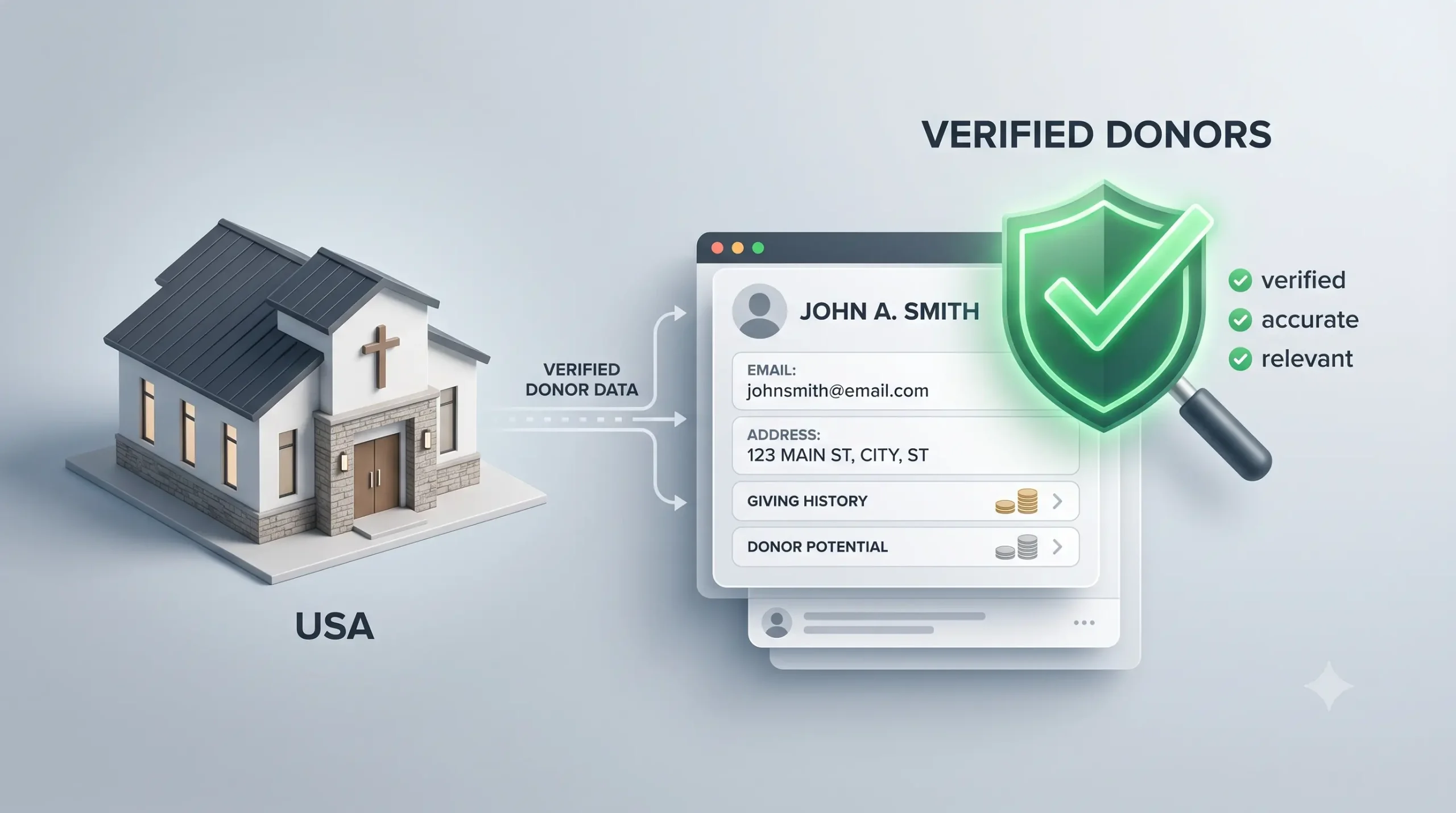
Consumer religious lists include individual households who identify with specific faiths or purchase religious products. Institutional lists contain churches, synagogues, mosques, and temples with contact information for clergy and administrators.
Data is compiled from self-reported religious affiliation on surveys, subscriptions to religious publications, purchases of faith-based products, donations to religious organizations, and attendance at religious events.
Major Religious Segments Available
Christian lists represent the largest segment, with over 230 million Americans identifying as Christian. Segments include Catholic households, Protestant denominations like Baptist, Methodist, and Lutheran, Evangelical Christians with higher engagement, and Nondenominational Christians.
Jewish community lists reach approximately 7 million Jewish Americans, segmented by observance level and synagogue affiliation.
Muslim lists provide access to 3 to 4 million American Muslims, with segmentation by mosque affiliation.
Other traditions include Buddhist, Hindu, Mormon/Latter-day Saints, and Jehovah’s Witnesses.
How Religious Mailing Lists Differ From General Consumer Lists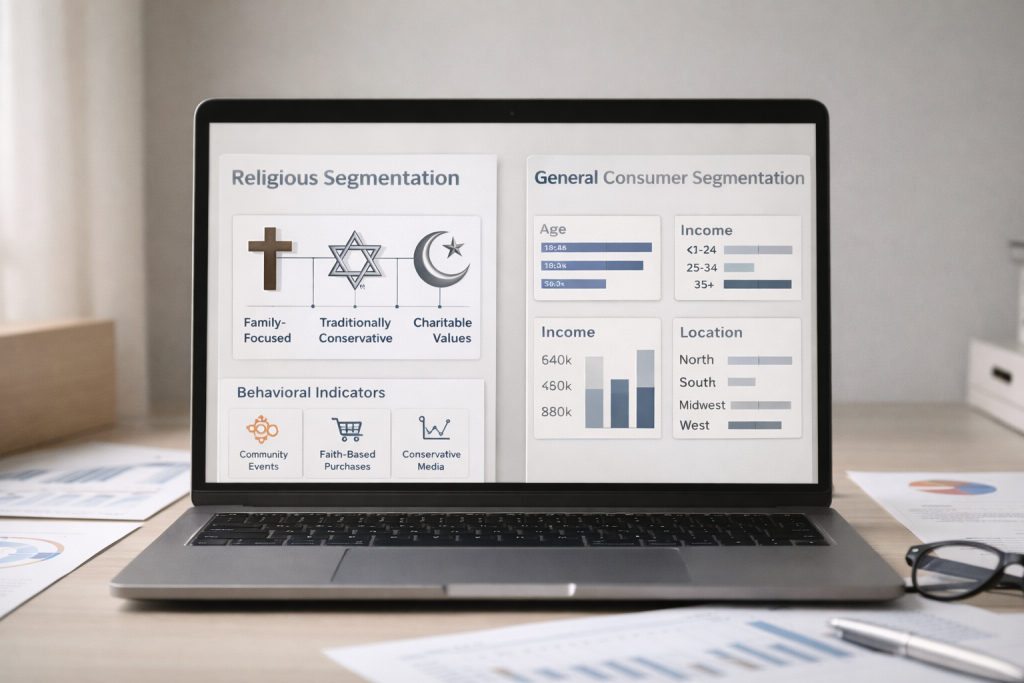
What makes religious mailing lists unique compared to standard consumer lists?
Values-based segmentation stands out as the primary difference. Religious lists segment by belief systems and spiritual commitments rather than just demographics. This creates deeper resonance when your message aligns with the audience’s worldview.
Faith-driven consumers actively seek brands that respect their values. They demonstrate greater loyalty and higher response rates to messages speaking to their faith-based priorities.
Religious communities are inherently social with strong word-of-mouth networks. Reaching one satisfied customer can lead to referrals throughout their congregation or faith community.
Faith influences media consumption, family structure, charitable giving, dietary practices, entertainment choices, and shopping patterns. Understanding these connections helps craft effective messaging.
Who Uses Religious Mailing Lists?
Faith-based organizations are primary users. Churches invite new families to services and connect with potential members. Religious publishers market books and devotional materials. Christian retailers promote faith-based products. Ministry organizations reach donors and invite supporters to conferences.
Nonprofit organizations working on causes aligned with religious values use these lists extensively. Pro-life groups, religious charities, adoption agencies, and faith-based educational institutions identify supporters who share their mission.
Educational institutions including Christian colleges, religious schools, and homeschool curriculum providers depend on faith-based targeting for enrollment.
Entertainment and media companies promoting faith-based films, family-friendly content, Christian music, and religious conferences all target these audiences.
Even mainstream businesses find value when products align with faith-based values. Financial services offering faith-based investing, travel companies promoting Holy Land tours, and food companies marketing products meeting religious dietary requirements successfully use religious mailing lists.
Common Applications
Fundraising campaigns represent the most common application. Religious donors give generously to causes aligned with their faith. Organizations use donor lists to reach people with proven giving histories.
Product marketing for faith-based products relies on religious targeting. Publishers launching Christian books, companies selling religious jewelry, and creators of Bible study materials need to reach consumers who actively purchase these products.
Event promotion drives attendance through targeted outreach. Religious conferences, concerts, and retreats achieve better turnout when promoted to pre-qualified audiences.
Membership recruitment helps organizations grow. Churches expanding their congregation and religious schools recruiting families use targeted mailing to reach prospects sharing their values.
Cause-based advocacy mobilizes supporters around issues important to religious communities, whether contacting legislators, signing petitions, or attending rallies.
Targeting Options
Religious mailing lists offer detailed segmentation.
Denomination targeting allows precision within Christianity, including specific Protestant denominations, Catholic versus Protestant, or Evangelical versus mainline.
Engagement level filters separate active members through weekly worship attendance, regular donors, publication subscribers, and product purchasers.
Geographic targeting focuses on specific states, cities, ZIP codes, or radius around your organization.
Demographic overlays add age, income, homeowner status, children presence, and marital status.
Behavioral indicators identify responsive prospects through purchase history, event attendance, and online engagement.
Compliance and Ethical Considerations
Marketing to religious audiences requires sensitivity to regulations and ethics.
The same direct marketing regulations governing all consumer mailing lists apply to religious lists. Honor opt-out requests promptly, maintain do-not-mail suppression files, comply with CAN-SPAM for email, and respect TCPA rules for telemarketing.
Ethical marketing to faith communities demands authenticity. Never misrepresent your organization’s religious affiliation, avoid exploiting faith for purely commercial gain, respect the sanctity of religious communities, and be transparent about how you obtained contact information.
Accuracy matters greatly. Sending Christian materials to Jewish households or Catholic resources to Protestant families damages your reputation. Regular list updates and maintenance are essential.
Selecting Quality Lists
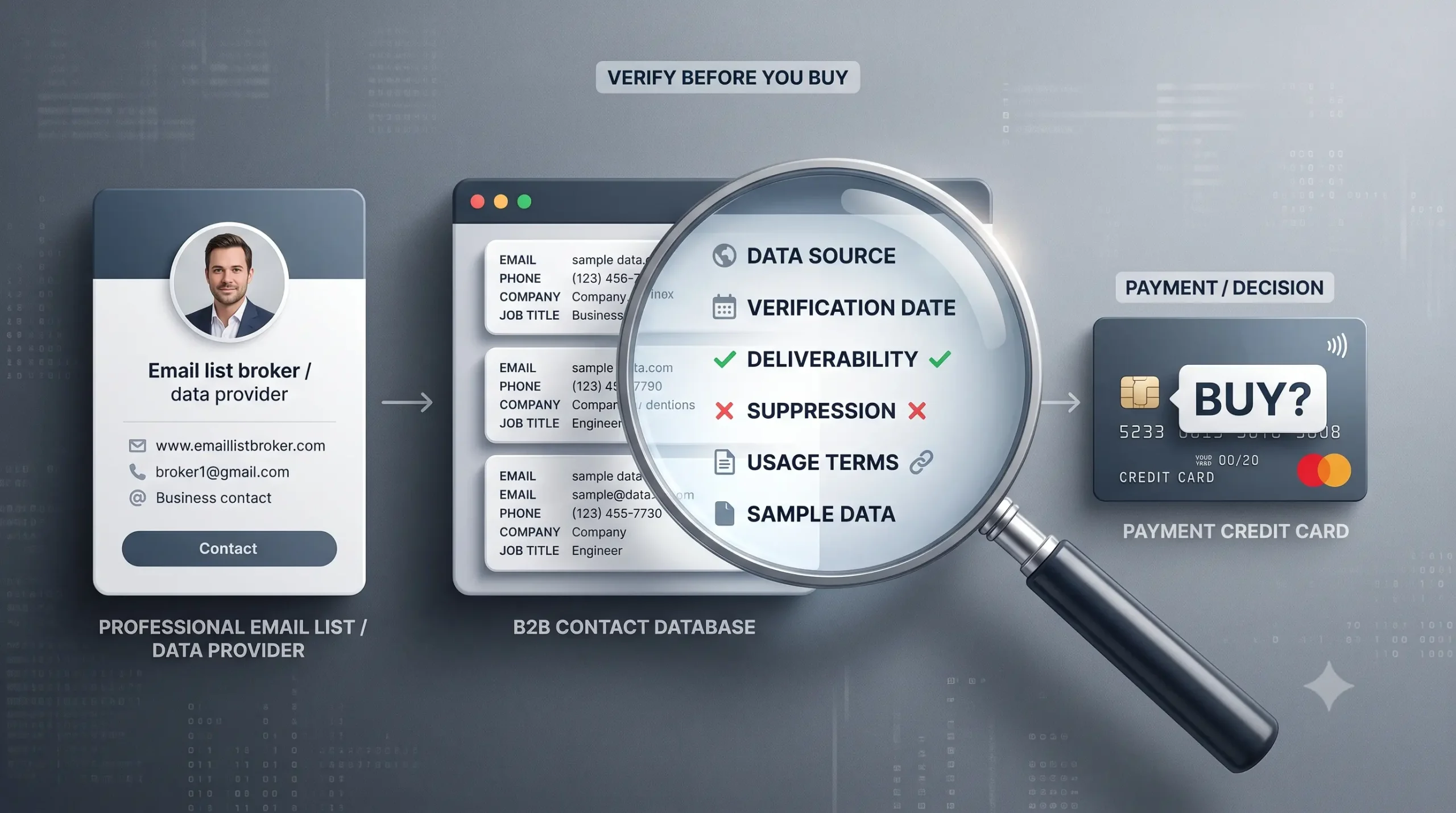
Data freshness determines deliverability. Ask how recently the list was updated and whether NCOA updates are performed.
Source transparency reveals quality. Reputable providers clearly explain data origins. Multi-source compilation delivers better accuracy.
Segmentation options enable precise targeting. More filtering options allow better audience refinement.
Deliverability guarantees protect your investment. Quality providers offer 90 to 95 percent deliverability with replacements for undeliverable addresses.
Multi-Channel Marketing
Religious mailing lists support campaigns across multiple channels.
Direct mail remains highly effective. Physical mail creates tangible connections recipients can share with family.
Email marketing provides cost-effective reach through newsletters, event invitations, and timely appeals.
Telemarketing works for high-value opportunities like donor cultivation and event invitations.
Multi-channel campaigns combining mail, email, and phone deliver strongest results.
Response Rates and Performance
Religious lists often outperform general consumer lists. Faith-based organizations typically see 2 to 5 percent response on cold prospects, 8 to 15 percent on reactivation campaigns, and 15 to 30 percent on renewals.
Product marketing varies by offer. Religious publishers might see 1 to 3 percent conversion, while high-ticket items like tours generate 0.5 to 1 percent response with higher transaction values.
Performance depends on message alignment, offer relevance, creative quality, and timing relative to religious calendar.
Cost Considerations
List rental costs vary based on targeting. Basic religious affiliation lists cost $80 to $150 per thousand names, while highly targeted lists range from $150 to $300 per thousand. Specialty lists with behavioral data command premium pricing.
Minimum orders typically range from 3,000 to 5,000 names. One-time use is standard. Multiple mailings require negotiating multi-use rights upfront.
Working With List Brokers
Experienced list brokers offer advantages for religious targeting.
Brokers provide access to multiple sources rather than limiting you to one provider. They recommend best options from dozens of sources.
Expertise in faith-based marketing helps brokers guide strategy beyond list selection. They understand which denominations respond best and optimal timing.
Testing recommendations save money. Brokers help design tests, compare segments, and scale successful approaches.
Ongoing optimization ensures improvement through result analysis and targeting refinement.
Common Mistakes to Avoid
Broad targeting without segmentation wastes money. Mailing to “all Christians” ignores vast differences within faith communities. Denominations have distinct traditions and cultural norms. Target specifically.
Generic messaging that fails to acknowledge faith undermines response. Your message should reflect understanding and respect for religious values.
Ignoring religious calendars costs opportunities. Major giving seasons like Christmas and Easter, specific religious holidays, and fiscal year-end all influence response timing.
One-touch campaigns expecting immediate results miss that relationship-building takes time. Religious audiences respond better to consistent contact building familiarity and trust.
Poor quality lists from questionable sources damage reputation. Invest in quality data from reputable providers.
Making Religious Mailing Lists Work
Strategic use of religious mailing lists transforms marketing effectiveness.
Define your target audience clearly. What faith traditions align with your mission? What engagement level characterizes your ideal supporter?
Test before large campaigns. Begin with 3,000 to 5,000 names, measure response, compare segments, and scale what works.
Integrate religious targeting with overall strategy. Lists work best as part of multi-channel campaigns.
Build relationships over time. Plan multi-touch campaigns that nurture prospects through repeated, respectful contact.
Measure rigorously. Track response rates, conversion rates, ROI, and long-term value to refine future campaigns.
The religious market represents enormous opportunity. With over 140 million Americans attending services weekly and faith-driven consumers controlling more than $2 trillion annually, this audience rewards marketers who approach them with respect.
Religious mailing lists provide the foundation for reaching these communities effectively. When used thoughtfully, they connect you with audiences predisposed to support organizations sharing their values.
Ready to reach faith-based audiences with targeted mailing campaigns? Work with experienced list brokers who can help you identify the right religious segments and design campaigns that resonate through consumer direct mail, email marketing, and multi-channel outreach.