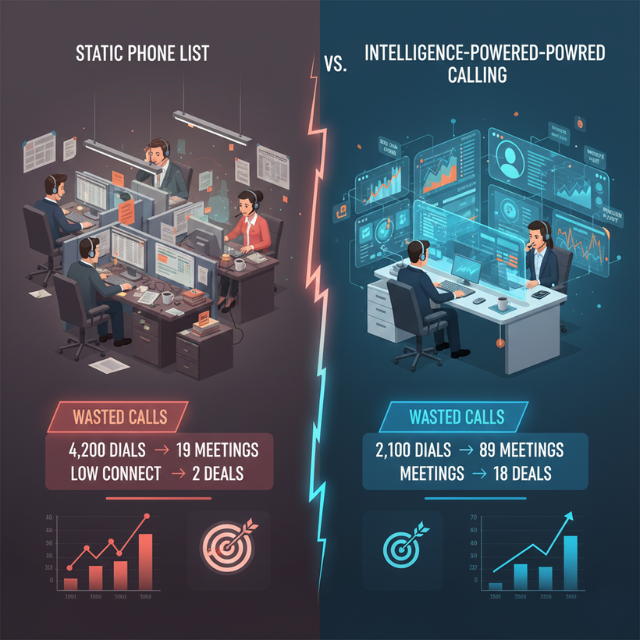
Two sales teams call the same list of 1,000 prospects. Same industry. Same offer. Same timeframe.
Team A makes 4,200 dials, reaches 380 people, books 19 meetings, closes 2 deals. Their cost per acquisition hits $8,400.
Team B makes 2,100 dials, reaches 740 people, books 89 meetings, closes 18 deals. Their cost per acquisition is $1,200.
What’s the difference? It’s not better salespeople. It’s not a superior pitch. It’s not luck.
It’s what they’re tracking in their calling list.
Team A treats their phone list as a static document: company name, contact name, phone number, industry. They dial alphabetically, leave generic voicemails, and move to the next contact. Their CRM tracks calls made but provides no intelligence guiding future attempts.
Team B treats their phone list as a living intelligence database. Beyond basic contact info, they track call outcomes, optimal contact times, decision-maker preferences, competitive intel, relationship pathways, engagement signals, and timing triggers. Every interaction adds data that makes the next call smarter.
The difference compounds. While Team A repeatedly calls the same contacts blindly, Team B systematically improves targeting, timing, and approach with each dial.
This isn’t about working harder it’s about capturing and using intelligence that transforms telemarketing from random prospecting into strategic outreach.
Let’s reveal exactly what high-performing teams track in their calling lists that average teams completely ignore.
Beyond the Basics: What Standard Lists Provide (And What They Don’t)
First, let’s establish the baseline. Standard business telemarketing lists and consumer telemarketing lists provide:
Basic Contact Information:
- Company or individual name
- Phone number (hopefully direct dial, not just switchboard)
- Mailing address
- Job title (for B2B)
- Industry classification
Firmographic or Demographic Data:
- Company size (employees, revenue)
- Age, income (for consumers)
- Geographic location
- Basic industry or interest indicators
This foundation is necessary but insufficient. These fields tell you who to call but nothing about when, how, or why they might respond.
Elite teams layer additional intelligence transforming static contacts into strategic opportunities.
Intelligence Layer #1: Call Outcome History and Patterns
High performers obsessively track every call attempt and outcome:
What to Track
Attempt History:
- Date and time of each call
- Day of week and time patterns
- Number of attempts per contact
- Time between attempts
- Seasonal patterns (quarterly planning periods, fiscal year-ends)
Outcome Classification:
- Connected vs. no answer vs. voicemail
- Gatekeeper encountered vs. direct reach
- Decision-maker reached
- Conversation quality (brief vs. substantive)
- Objection types encountered
- Competitive intel gathered
Next Action Intelligence:
- Optimal callback timing based on patterns
- Best day/time for this specific contact
- Voicemail effectiveness (do they return calls?)
- Email follow-up preferences
- Content requests or interests expressed
Why It Matters
Calling the same person at 2 PM every Tuesday when your call log shows they only answer Thursdays at 10 AM wastes time. Tracking reveals patterns:
Pattern discovery example:
- CFOs answer early mornings (7-8:30 AM)
- Operations managers answer mid-afternoon (2-4 PM)
- Retail managers answer late mornings (10-11 AM) after opening rush
- Healthcare administrators answer late afternoons (4-5 PM)
- Manufacturing plant managers rarely answer during shift changes
Without tracking, you never discover these patterns.
Application Impact
A software company tracking call outcomes by time discovered their manufacturing prospects answered 3.2x more often between 9:30-10:30 AM than afternoon calls. Shifting all manufacturing dials to morning windows increased connect rates from 18% to 57% with zero additional dials.
Intelligence Layer #2: Decision-Maker Mapping and Role Clarity
Most lists provide a contact. Elite teams map all relevant contacts and understand decision dynamics:
What to Track
Decision-Making Structure:
- Who researches and recommends (technical evaluator)
- Who has budget authority (economic buyer)
- Who experiences the pain (end user)
- Who can veto (blocker)
- Who champions internally (coach)
Relationship Mapping:
- Multiple contacts at same company
- Who reports to whom
- Who influences whom
- Previous employers (relationship history)
- LinkedIn connections to your team
Contact Preferences:
- Preferred communication channel (phone vs. email)
- Response patterns to different approaches
- Professional vs. casual communication style
- Technical depth vs. high-level preference
- Group vs. individual decision-making
Why It Matters
Calling only the IT Director when the CFO makes final decisions wastes weeks. Mapping reveals the real buying committee.
Complex sale example: Manufacturing equipment purchase involves:
- Plant Manager (experiences production bottlenecks)
- Operations Director (evaluates ROI)
- Maintenance Supervisor (assesses reliability)
- CFO (approves capital expenditure)
- CEO (signs off on major investments)
Calling only the Plant Manager ignores four other essential relationships.
Application Impact
A business services company tracked that 73% of their closed deals involved conversations with at least three different people at the target company. They shifted from single-threaded outreach to multi-contact strategies, improving close rates from 4.2% to 11.8%.
Intelligence Layer #3: Engagement and Intent Signals
Elite teams track behavioral signals revealing active interest:
What to Track
Website Behavior:
- Company visited your website (dates, frequency)
- Pages viewed (product pages vs. careers page)
- Time spent engaging
- Content downloaded (whitepapers, case studies)
- Pricing page visits (high intent)
Email Engagement:
- Emails opened (which ones, when)
- Links clicked (what interested them)
- Resources downloaded
- Forward to colleagues (buying committee expansion)
- Unsubscribe or complaint (suppression flag)
Content Consumption:
- Webinar attendance
- Video views and completion rates
- Podcast listening
- Social media engagement
- Blog post readership
Social Signals:
- LinkedIn profile views
- Company page follows
- Content sharing
- Comment participation
- Connection requests
Why It Matters
Calling someone who downloaded your buyer’s guide yesterday is qualitatively different from calling someone with zero engagement. One is demonstrating active interest; the other is completely cold.
Prioritization framework:
Tier 1 – Hot (call immediately):
- Pricing page visit + content download in past 7 days
- Webinar attendance with follow-up questions
- Multiple website visits in past 2 weeks
Tier 2 – Warm (call within week):
- Single content download in past 30 days
- Email clicks on specific product features
- LinkedIn engagement with your content
Tier 3 – Cool (call when capacity allows):
- Email opens but no clicks
- Single website visit over 60 days ago
- No engagement signals
Application Impact
A SaaS company integrated website visitor identification with their calling list. Reps calling companies that visited their site in the past week achieved 34% connect rates and 19% meeting-set rates versus 12% connect and 3% meeting-set for non-engaged contacts.
The talking point shifted from “Can I tell you about our software?” to “I noticed someone from your company was researching [specific feature] on our site. What prompted the interest?”
Intelligence Layer #4: Competitive Intelligence and Current State
Understanding what prospects currently use and their satisfaction levels transforms conversations:
What to Track
Current Solutions:
- Competitor products/services in use
- Technology stack for complementary systems
- Contract expiration dates (if known)
- Satisfaction indicators (reviews, complaints)
- Feature gaps in current solutions
Switching Indicators:
- Negative reviews of current providers
- Job postings mentioning “migration” or “implementation”
- Partnership announcements suggesting changes
- Recent leadership changes (often trigger vendor reviews)
- Dissatisfaction signals in social media or forums
Competitive Win/Loss:
- Who you lost to previously
- Why they chose competitor
- Contract length and renewal timing
- Pricing intelligence
- Feature requirements you didn’t meet
Why It Matters
Calling a company locked in a three-year contract signed two months ago wastes time. Calling one month before contract renewal with a competitor creates opportunity.
Conversation transformation:
Generic approach: “Are you happy with your current provider?”
Informed approach: “I saw you’re using [Competitor X]. We’ve helped several companies transition from them when they hit limitations around [specific common issue]. Is that something you’re experiencing?”
The second approach demonstrates knowledge, provides immediate relevance, and positions you as informed rather than intrusive.
Application Impact
An equipment supplier tracked when manufacturing customers purchased major capital equipment from competitors. They created 18-month reminder sequences aligned to typical replacement cycles. Calls timed to equipment lifecycles converted at 22.7% versus 3.1% for random timing.
Intelligence Layer #5: Trigger Events and Timing Signals
High performers track events creating immediate needs:
What to Track
Company Changes:
- Funding announcements (capital available)
- Executive hires (new decision-makers)
- Acquisitions and mergers (integration needs)
- Office expansions (infrastructure requirements)
- Partnership announcements (capacity implications)
Operational Triggers:
- Rapid hiring (scaling challenges)
- New locations (multi-site management)
- Product launches (marketing and sales capacity)
- Award wins (growth indicators)
- Negative events (problems creating urgency)
Regulatory and Industry:
- Compliance deadline approaches
- Regulation changes affecting operations
- Industry disruptions
- Technology standard shifts
- Economic conditions in their sector
Personal Triggers (Consumer):
- Life events (marriage, birth, home purchase)
- Job changes
- Major purchases
- Credit activities
- Address changes
Why It Matters
Calling at random times yields random results. Calling when trigger events create acute needs multiplies response rates.
Timing framework:
30-60 days post-trigger: Sweet spot for many B2B triggers. Initial chaos has settled but needs are still acute and budget discussions are active.
90-120 days post-funding: Funded companies have deployment plans finalized and are actively implementing.
6 months pre-contract renewal: Early enough to influence decisions before incumbents lock in renewals.
Application Impact
A professional services firm monitored LinkedIn for VP Sales hires at target companies. They called 45-60 days after start dates, when new VPs were evaluating existing processes but had settled into roles. Conversion rates hit 16.3% versus 2.8% for non-triggered timing.
Intelligence Layer #6: Relationship Pathways and Social Proof
Elite teams systematically identify warm introduction opportunities:
What to Track
Direct Connections:
- LinkedIn connections between your team and prospects
- Mutual employers (previous company overlap)
- Educational institution overlap
- Professional association membership
- Conference attendance overlap
Customer Connections:
- Existing customers who know prospects
- Customer willingness to provide referrals
- Industry relationships and networks
- Vendor/partner connections
Social Proof:
- Customers in same industry
- Customers in same geography
- Similar-sized customers
- Companies solving similar challenges
Why It Matters
“Hi, [mutual connection] suggested I reach out…” immediately transforms a cold call into a warm introduction.
Conversion comparison:
Cold approach: “Hi, this is [name] from [company]…” Connect rate: 12-18% Meeting set: 2-4%
Warm introduction: “Hi, I’m calling because [mutual connection] thought we should connect…” Connect rate: 45-67% Meeting set: 18-29%
Application Impact
A business software company required reps to check LinkedIn connections before every call. When connections existed (38% of list), they requested introductions rather than calling cold. Introduction-based conversations converted at 31.2% versus 4.7% for cold calls a 6.6x improvement.
Intelligence Layer #7: Call Quality and Conversation Intelligence
Beyond outcomes, track conversation quality and content:
What to Track
Call Recording Insights:
- Topics discussed
- Objections raised
- Competitor mentions
- Budget indicators
- Timeline signals
- Stakeholder names mentioned
- Pain points expressed
- Next steps agreed
Conversation Quality:
- Rep adherence to methodology
- Question quality and discovery depth
- Talk-to-listen ratio
- Objection handling effectiveness
- Closing technique execution
Intelligence Gathered:
- Current challenges and priorities
- Budget availability signals
- Decision-making timeline
- Evaluation criteria
- Competing priorities
Why It Matters
Most reps hang up and immediately forget conversation details. Documenting intelligence transforms every call into research informing future interactions.
Example scenario:
Call 1: Prospect mentions they’re evaluating solutions but waiting until Q4 when budget is approved.
Without tracking: Rep calls back randomly in 6 weeks. Prospect annoyed: “I told you we’re not looking until Q4.”
With tracking: Rep notes “budget available Q4” and schedules October follow-up. October call: “You mentioned when we spoke in June that you’d have budget in Q4. I wanted to reconnect as you enter evaluation phase.”
Second approach demonstrates attention, respects timing, and positions perfectly.
Application Impact
A sales team using call recording and conversation intelligence tools increased discovery quality scores (measured by key data points captured) from 3.2/10 to 8.1/10. More importantly, close rates improved from 6.3% to 14.7% because reps had intelligence needed for effective follow-up.
How Modern CRM Systems Enable Intelligence Tracking
Capturing this intelligence requires systems, not spreadsheets:
Essential CRM Capabilities
Custom Fields:
- Trigger event tracking
- Engagement score calculation
- Competitor currently used
- Contract renewal dates
- Relationship pathway notes
- Preferred contact times
Activity Timeline:
- Chronological interaction history
- Call recordings linked to contacts
- Email threads integrated
- Meeting notes accessible
- Attachment storage (proposals, presentations)
Automation and Workflows:
- Lead scoring based on engagement
- Task creation for optimal callback times
- Alert notifications for trigger events
- Sequence enrollment based on behavior
- Data enrichment on new records
Analytics and Reporting:
- Connect rate by time of day/day of week
- Conversion rate by lead source
- Pipeline velocity by segment
- Win/loss analysis
- Activity tracking and coaching metrics
Integration Requirements
Website and Marketing:
- Visitor identification integration
- Email platform synchronization
- Content management system connection
- Webinar platform integration
Data Enrichment:
- LinkedIn Sales Navigator
- ZoomInfo or similar business data
- Funding databases (Crunchbase, PitchBook)
- Technographic data providers
Communication Tools:
- Call recording platforms
- Email tracking
- Calendar scheduling
- Video conferencing integration
Building Intelligence-Rich Lists: Practical Process
Here’s how to operationalize comprehensive tracking:
Step 1: Start with Quality Foundation
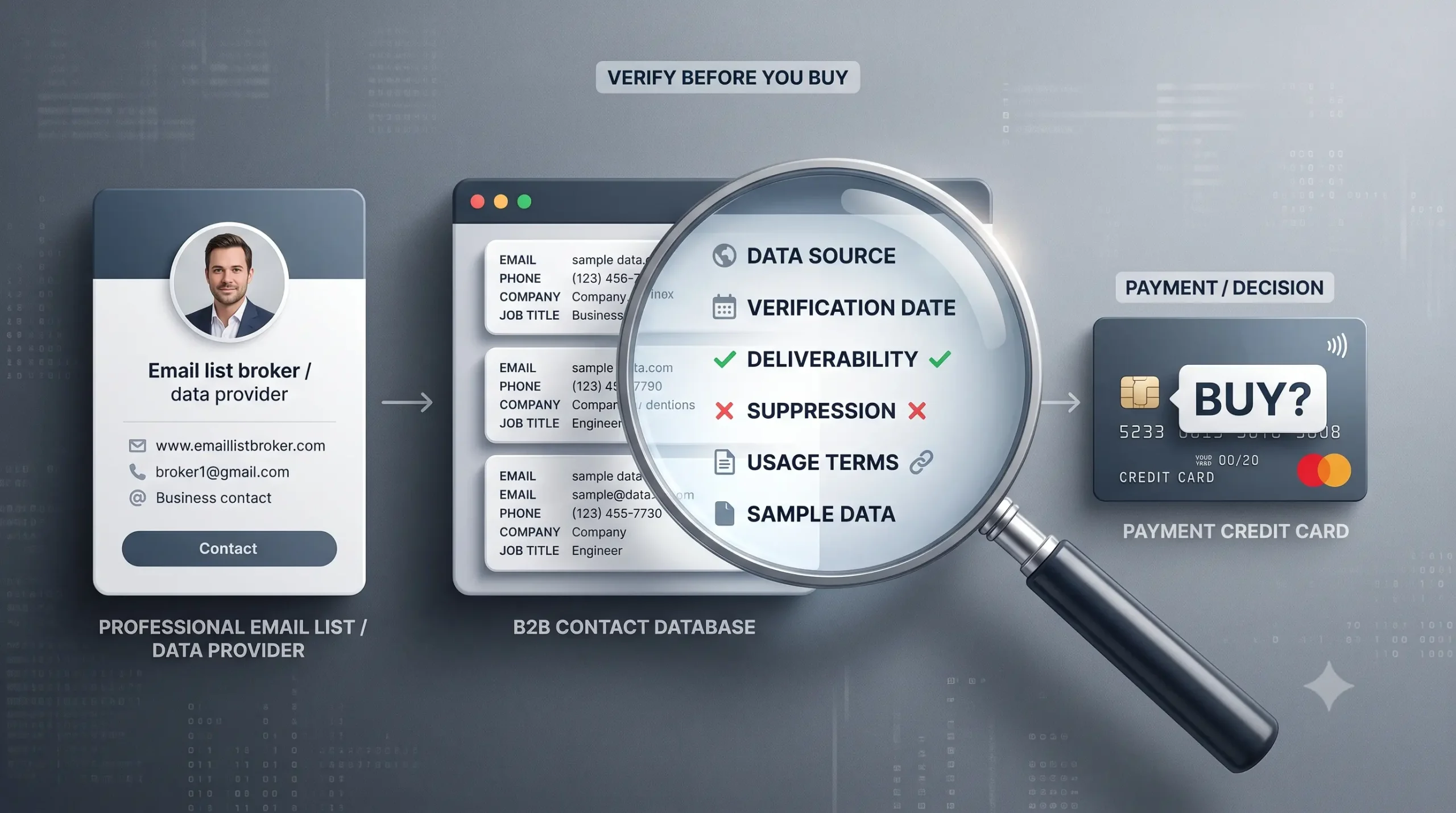
Purchase accurate business lists or consumer lists with verified phone numbers and recent data.
Step 2: Enrich Immediately
Before first call, append:
- Email addresses for multi-channel
- LinkedIn profiles for relationship mapping
- Company websites for research
- Technology stack data
- Funding information
Step 3: Create Tracking Framework
Establish custom fields capturing:
- All call outcomes
- Engagement signals
- Trigger events
- Competitive intel
- Relationship pathways
Step 4: Train Team on Discipline
Require reps to:
- Log every call attempt
- Classify outcomes consistently
- Document key intelligence
- Update next action dates
- Note optimal contact times
Step 5: Review and Optimize
Weekly analysis:
- Which contacts showing engagement?
- Which time slots performing best?
- Which messages resonating?
- Which objections recurring?
- Which reps capturing intelligence?
Multi-Channel Integration Amplifies Intelligence
Phone lists shouldn’t operate in isolation:
Coordinated Approach
Email reconnaissance: Send valuable content before calling. Track opens and clicks. Call engaged recipients with relevant context.
LinkedIn warming: Connect on LinkedIn. Engage with content. Build familiarity before calling.
Direct mail softening: Send direct mail to high-value targets. Reference in calls: “I sent you a package last week about…”
Post-call nurturing: Immediately email resources discussed on calls. Continue multi-channel engagement between call attempts.
Intelligence Flows Across Channels
Email click → CRM flag → Priority call Someone clicks pricing link in email → CRM creates high-priority task → Rep calls within 2 hours while interest is hot.
LinkedIn connection → Relationship mapping → Warm introduction request Prospect accepts LinkedIn connection → CRM identifies mutual connections → Rep requests introduction rather than cold calling.
Website visit → Trigger alert → Informed outreach Company visits website multiple times → Alert sent to assigned rep → Call references specific pages visited.
Working with List Brokers for Intelligence-Ready Lists
Experienced list brokers provide foundations supporting intelligence tracking:
Verified Phone Numbers: Accurate direct dials reduce wasted attempts and improve tracking quality.
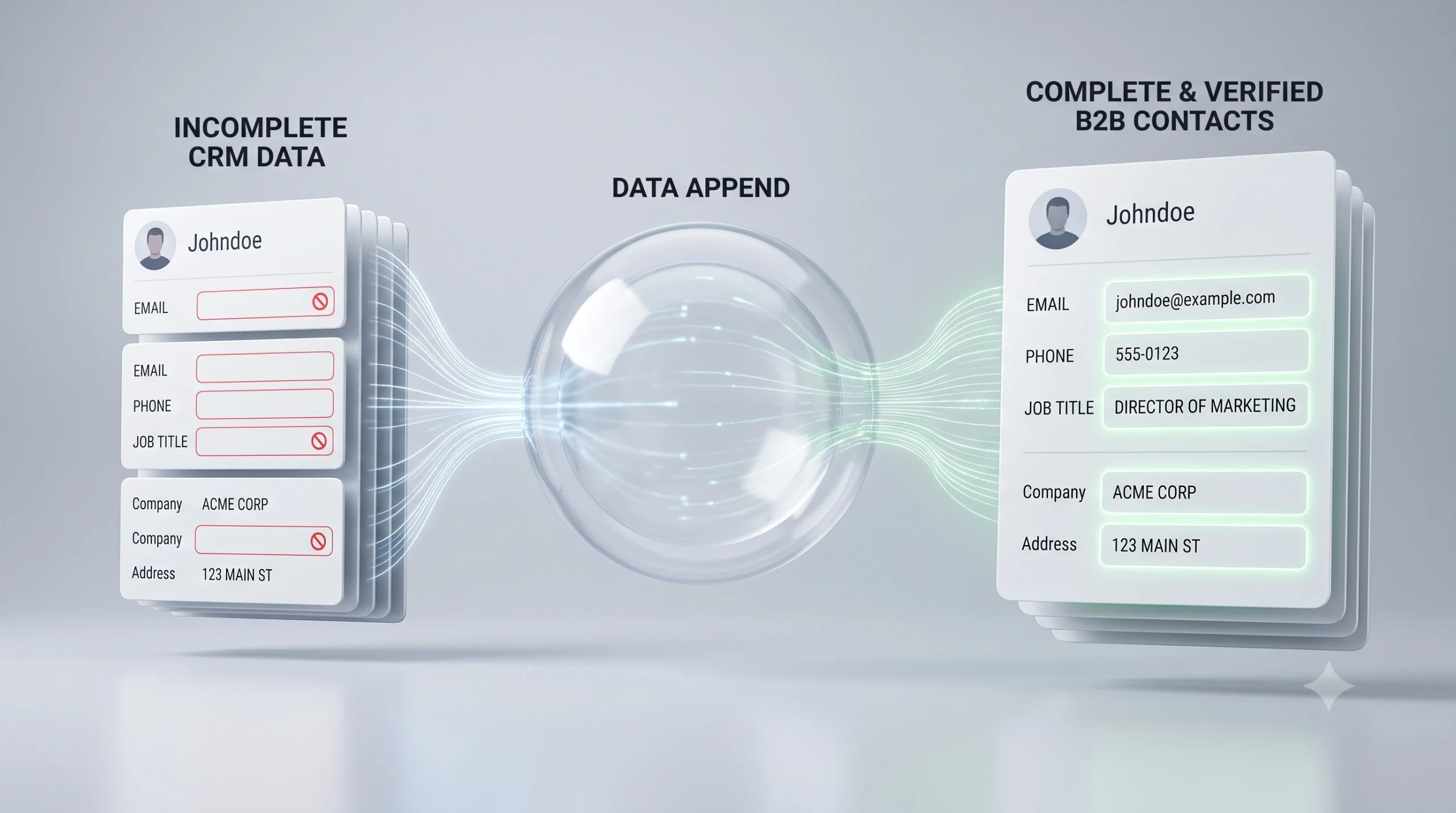
Enriched Records: Lists appended with email, LinkedIn, and firmographic data enable immediate multi-channel intelligence gathering.
Specialty Segments: Access to specialty lists with trigger events, funding data, or technology indicators built in.
Quality Guarantees: Reputable brokers stand behind data quality, ensuring your intelligence tracking starts with accurate foundation.
Ongoing Updates: Regular list refreshes keep intelligence current as companies change, people move, and contact information evolves.
Common Mistakes That Undermine Intelligence Tracking
Mistake 1: No System Discipline
Reps skip logging calls when busy. Intelligence gaps emerge. Patterns can’t be identified. Fix: Make logging mandatory, not optional.
Mistake 2: Inconsistent Categorization
Different reps classify outcomes differently. Analytics become meaningless. Fix: Standardize outcome definitions with clear examples.
Mistake 3: Ignoring Gathered Intelligence
Reps document information but don’t use it. Pattern recognition never happens. Fix: Review intelligence before every call attempt.
Mistake 4: No Follow-Through
Intelligence reveals optimal timing but reps don’t execute. Fix: Automated task creation and management accountability.
Mistake 5: Technology Without Training
Fancy CRM without teaching reps how to use it. Intelligence capabilities go unused. Fix: Ongoing training and coaching on intelligence utilization.
Final Thoughts: Intelligence Compounds Over Time
Here’s the powerful reality about intelligence-rich calling lists: they get better with every interaction.
Average teams make calls, check boxes, and move to next contact. Their lists never improve. Their 1,000th call is as random as their first.
Elite teams make calls, capture intelligence, identify patterns, and optimize continuously. Their 1,000th call benefits from insights gained in previous 999 dials. Connect rates climb. Conversation quality improves. Conversion rates multiply.
This compounding effect separates the 2% close rate teams from the 18% close rate teams using identical base lists.
The difference isn’t the contacts it’s the intelligence tracked about those contacts and how systematically teams leverage that intelligence.
Whether you’re running B2B campaigns with business telemarketing lists or consumer outreach with consumer calling lists, the principle remains: beyond basic contact information lies intelligence that transforms effectiveness.
Stop treating phone lists as static documents. Start building intelligence databases that make every call smarter than the last.
Your competitors will keep dialing randomly. You’ll systematically improve with every interaction.
Ready to build intelligence-rich telemarketing lists that improve with every call? Work with experienced list brokers who provide verified business and consumer calling lists that integrate seamlessly with modern CRM systems and intelligence tracking workflows.